

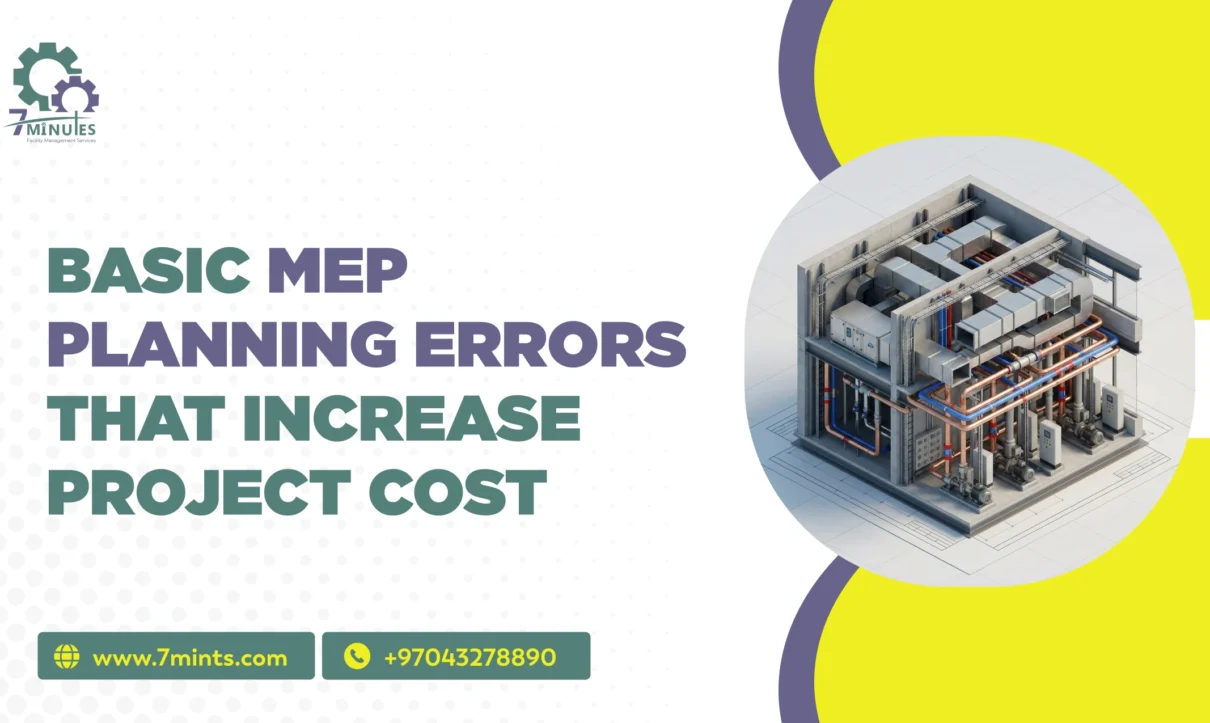
MEP (Mechanical, Electrical, and Plumbing) planning is of utmost importance when it comes to the overall success and cost-effectiveness of a construction project. In most cases, bad design and elaborate changes are the result of MEP systems not being integrated properly in the very beginning, and as a result, the project gets delayed for a long time. Overpricing is a common issue faced by many projects, not due to the prices of materials or labor shortages, but due to MEP mistakes in planning that are avoidable.
Inadequately designed and planned MEP impacts all construction stages, namely, design, execution, and eventually, long-term operation and maintenance. Mistakes that have been made during planning have a tendency to get multiplied as the project continues, thus making them costly and hard to fix later. By revealing these common mistakes, stakeholders are enabled to eliminate unnecessary costs and thus deliver projects on time and within the planned budget.
The present article will discuss the principal MEP planning mistakes that lead to an increase in project cost, the reasons for their occurrence, and their effects on construction projects.
-
Inadequate Coordination Between MEP and Architectural Designs
An error made frequently in MEP planning is a lack of proper coordination between architectural designs and MEP system designs. If MEP engineers do not collaborate and only complement architectural drawings, then there will be conflicts during execution. For instance, ducts might clash with beams, electrical conduits might interfere with ceiling heights, or plumbing lines might conflict with structural elements.
Often, these clashes are not detected until the construction phase, and the teams will have to either redesign or relocate the systems on-site. Such alterations will not only incur costs for additional materials and labor but also take time, which will directly increase the project’s costs. Rework will also disrupt workflow and slow down progress, thereby leading to more overhead costs.
Early-stage coordination meetings and integrated design reviews are the first steps to tackle potential present-day construction issues. In case of a lack of coordination, a good MEP system may still turn out to be an expensive problem during the time of building.
-
Ignoring Load Calculations and Future Capacity Requirements
Another critical error during the planning stage is making wrong or incomplete load calculations for the mechanical and electrical systems. Once the building gets occupied, and the HVAC load, electrical demand, or water usage has been underestimated, the systems will be inadequate. This will result in breakdowns, defective operations, and the necessity of upgrading the system earlier than planned.
On the contrary, taking loads beyond the actual results leads to an oversized plant, which consequently raises the initial purchase and installation cost. Bigger systems will require more energy; hence, higher maintenance will be needed, making the operational cost long-term expensive. Both under-sizing and over-sizing distort the project budget negatively.
In addition, skipping consideration of the future expansion scenario is a very expensive error. Usually, as the building’s usage increases, it will require more capacity, and consequently, the MEP systems retrofitting will be at a higher cost than planning for scalability right from the start.
-
Late Involvement of MEP Consultants
The involvement of MEP consultants not until after the architectural and structural designs have been finalized is a serious mistake. When MEP planning is that late, engineers have to “fit” systems into restricted areas rather than designing efficiently. This results in layouts that are not only compromised but also poorly routed services.
Late participation raises the chances of design alterations, which turn out to be costly and take a long time to fix. Usually, some kind of structural change will have to be made in order to fit MEP systems; thus, the construction cost will be raised considerably. Sometimes, even the intervention of temporary fixes is used just to keep the project going, which ultimately makes it inefficient for a long time.
The early enlistment of MEP consultants means better integration, optimized layouts, and cost-effective choice of systems. Not doing this step will almost certainly result in incurring unnecessary costs.
-
Poor Space Planning for MEP Services
Not giving enough room for MEP systems is another frequent error that adds to project cost. The area needed for mechanical rooms, electrical panels, shafts, and service corridors is usually underestimated in planning. Consequently, the systems become congested, hard to reach, and inefficient for maintenance.
In case of a lack of space, contractors might have to divert services or downsize equipment, and thus their performance might be affected. In very rare instances, not just the removal of obstructions but also the addition of construction work is required to create space, such as the expansion of shafts or modification of ceilings. All these changes will not only increase the labor cost but also delay the project duration.
Good space planning will guarantee the smooth installation, access to maintenance, and operating efficiency in the system. Not considering this factor will result in repeated adjustments and thus higher overall project costs.
-
Lack of Proper MEP Clash Detection
Not doing appropriate clash detection is a costly and avoidable MEP planning mistake. Without the use of BIM (Building Information Modeling) and similar technologies, fights between MEP systems and structural or architectural parts will often remain unnoticed until it is too late and the building has started. Discovering clashes around the site causes an immediate work stoppage and turning around of plans.
Resolving clashes on-site is a lot more costly than resolving them in the design phase. It means taking down the structure, putting it back up, and disposing of waste materials. These incidents, which were not part of the original plan, disturb the timelines and increase the direct costs for supervision, site management, etc.
A good planning process with effective clash detection will help to minimize rework and lead to smooth execution. Neglecting this stage will practically ensure that the project will go over budget. Check out our latest blog post on Role of MEP Contractors in Construction Projects
-
Choosing Low-Quality or Incompatible MEP Materials
Settling for low-quality materials to get a cheaper initial cost sometimes turns out to be a bad decision in the long run. Bad-quality MEP parts break down more often than the good ones, need constant maintenance, and generally do not last long. All this leads to increased maintenance costs and interruption of building activities.
Incompatibility of materials can also lead to system failures, like plumbing lines getting corroded or electrical systems getting overheated. The cost of replacing the defective parts after the installation is high, and it usually demands that the finished areas be partially dismantled.
A well-thought-out MEP design considers both cost and quality. The temptation to save during planning will only result in bigger bills during operation and maintenance.
-
Poor Planning of Installation Sequence
Another main hidden cost factor is inadequate planning of the MEP installation sequence. If mechanical, electrical, and plumbing works are not scheduled correctly, systems will overlap one another, with the result of each having to be dismantled and reinstalled.
As an illustration, if the electrical conduits are laid before the plumbing lines without proper coordination, then there will be clashes requiring rework. Each time there is a reinstallation, the labor costs rise, and the project duration extends. The delays also impact other trades, and this, in turn, increases the cost.
An installation sequence that is well-determined and coordinated minimizes resource wastage and usage of resources time-efficiently. Not including this planning step results in extra costs.
-
Overlooking Maintenance and Accessibility Requirements
The planning of MEP (Mechanical, Electrical, Plumbing) is, in most cases, restricted to the period of installation, while long-term maintenance needs are neglected. Systems that are hard to access use more time and workforce for repairs, thus increasing the cost of operation. Incorrect positioning of access panels, lack of service clearances, or inadequate maintenance routes are all facets of the problem.
Where maintenance is difficult, the owners of the building may incur frequent shutdowns and higher service charges. Sometimes, it is even necessary to make major changes to access the equipment, which then becomes both costly and disruptive.
Planning for access from the outset results in not-so-high lifecycle costs. Ignoring this aspect adds to the expenses long after the construction works are done.
Summary
Fundamental MEP planning mistakes can raise project costs greatly and even double them if they are not seen too early. Problems like bad coordination, wrong load calculations, late consultant involvement, and poor space management cause rework, interruptions, and inefficient systems. These mistakes not only influence construction budgets but also lead to increased operational and maintenance costs throughout the lifecycle.
Early collaboration, accurate calculations, selection of good-quality materials, and proper use of technology like BIM form the essential elements of MEP planning. If time and effort are invested in the planning phase, then many corrections might be avoided later. Contact us as by recognizing and eliminating these common mistakes in MEP planning, construction projects can gain better cost control, improved performance, and sustainable development over time.







1 Comment
Comments are closed.