

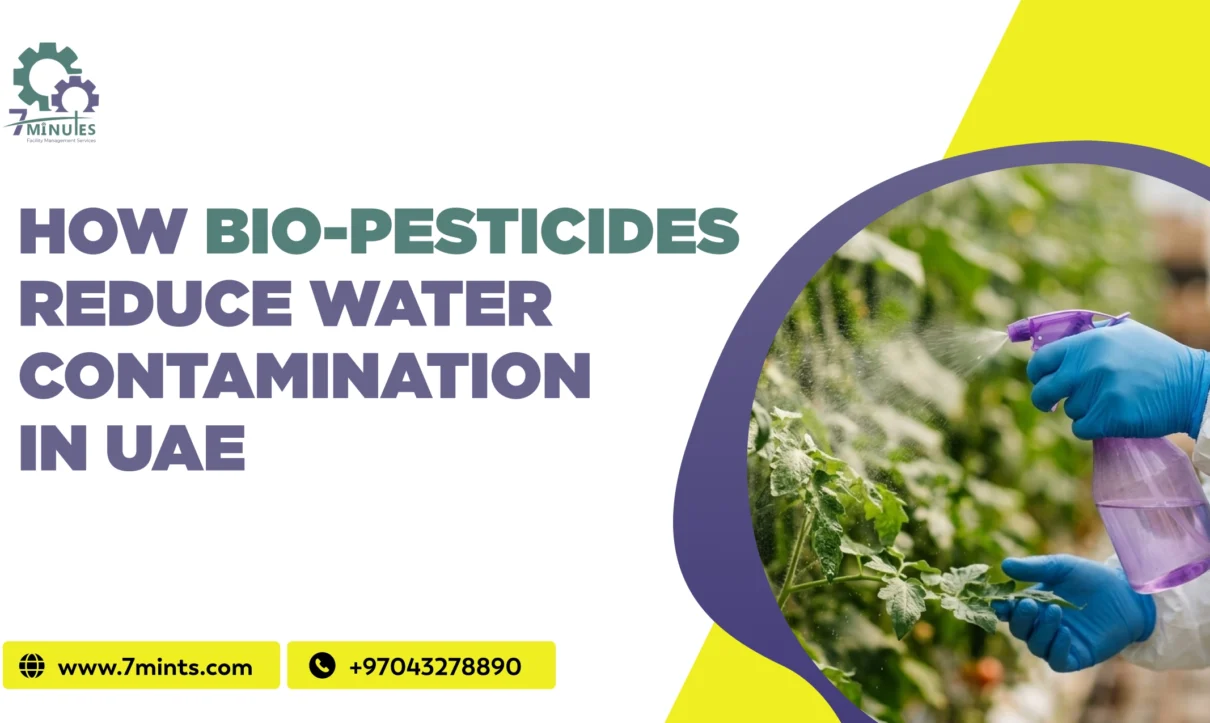
The United Arab Emirates faces unique agricultural challenges that it must address through its agricultural practices. The country faces freshwater scarcity because its water supply relies on desalination plants and underground aquifers, which provide most of its water. The maintenance of water quality becomes essential because it supports agricultural work and protects the environment. Farmers use conventional chemical pesticides for pest control, but these pesticides leave behind harmful residues that contaminate both soil and water.
Biopesticides that provide safe and sustainable pest control solutions have gained popularity in modern times. Biopesticides consist of natural materials, which include plants, microorganisms, and minerals as their base components. The products enable farmers to control pests while they reduce environmental harm. The UAE agricultural sector shows progress toward water resource protection through its use of biopesticides, which achieve environmentally sustainable farming practices.
Understanding the Water Contamination Problem in Agriculture
Agricultural water contamination occurs when pesticides and fertilizers enter the soil and reach groundwater or surface water bodies. The problem results in environmental damage, which endangers human health and decreases the water quality used for both irrigation and drinking purposes.
Chemical pesticides contain toxic substances that persist in the environment for extended durations. The irrigation water transports these hazardous substances through drainage systems, which subsequently reach natural water bodies. The situation becomes more critical in the UAE, which possesses limited water resources, because of the pollution that occurs in this desert region.
The increase in agricultural production needed to secure food supplies requires farmers to control their pesticide applications. Farmers should switch to safer pest management methods, which include biopesticides, according to environmental organizations and experts who support this approach.
Biopesticides represent pest control solutions that scientists create through natural extraction from bacterial, fungal, plant, and mineral sources. Their application delivers better environmental results because they operate with specific target areas instead of full chemical pesticide use.
How Chemical Pesticides Pollute Water Sources
Traditional pesticides can enter water systems through several pathways during and after agricultural use. These pathways require investigation because they demonstrate the necessity for implementing less hazardous pesticide alternatives.
-
Surface Runoff
Pesticide residues on the soil surface become lost through runoff when farms face irrigation or rain, which washes them into adjacent canals and ponds and drainage systems. The runoff process delivers harmful substances to water bodies, which results in negative effects on both aquatic creatures and the quality of water. The chemical substances that build up in the environment over time create dangers that threaten both fish, plants, and microorganisms that sustain ecological balance.
-
Groundwater Leaching
Chemical pesticides penetrate deep into the soil until they reach underground water reserves, which exist below the surface. This situation creates significant dangers that affect drinking water protection in areas that depend on groundwater resources. The movement of groundwater occurs at a slow rate, which causes water sources to become contaminated for several years.
Many traditional pesticides contain compounds that dissolve in water and can travel through soil layers. The chemicals will eventually reach aquifers, which provide drinking water and irrigation water. The process of cleaning contaminated groundwater becomes extremely challenging after the water becomes polluted.
Persistence in the Environment
The pesticide maintains its effectiveness against pests through its extended period of active existence. The property causes environmental contamination because it enables pollutants to escape from their designated sites.
Rainfall, together with irrigation and soil erosion activities, enables these chemicals to reach rivers and lakes and groundwater sources. The persistent pollutants create environmental damage because they take a long time to degrade. The ongoing existence of these hazardous substances creates extreme dangers to ecological systems.
Bioaccumulation in Ecosystems
The process affects multiple species that inhabit aquatic ecosystems. Fish, birds, and other animals that depend on polluted water bodies face risks of suffering from dangerous chemical exposure and losing their ability to reproduce. Chemical exposure can lead to severe population declines of certain species in extreme cases. This situation creates disruptions to the natural ecological equilibrium.
How Bio-Pesticides Help Reduce Water Contamination
Faster Natural Decomposition
Bio-pesticides exist for the purpose of natural decomposition after their effective pest control period. Soil microorganisms possess the ability to decompose these products, which originate from biological sources, into non-toxic materials. The process operates at a faster speed than the breakdown of synthetic chemical pesticides. The resulting outcome leads to a substantial decrease in the potential for lasting environmental contamination.
This process reduces the possibility that irrigation water and rainfall will transport these materials into adjacent water bodies. Water bodies receive only small amounts of these substances, which usually decompose before they can create major damage. The process of rapid decomposition acts as a primary method that preserves water quality.
Natural decomposition offers another benefit because it prevents chemical buildup in the ground. Soil layers can hold onto persistent chemicals for decades, which allows them to continue contaminating the environment. The design of biopesticides enables them to completely vanish from their environment.
The agricultural sector gains environmental benefits through biopesticides, which decrease chemical residues present in agricultural fields. Soil pollutants decrease when biopesticides are used, which results in cleaner water flowing through waterways. This situation takes on special significance within areas that require meticulous preservation of their water supplies.
Target-Specific Pest Control
Biopesticides possess their main strength through their capability to identify and eliminate particular pest species. The product functions as a pest control solution that targets only specific insect species and plant diseases instead of providing general protection against all types of pests. The method allows operators to safeguard essential insect species, which include pollinators and soil microbes, and natural pest control organisms. The ecosystem functions effectively when these organisms remain intact.
The agricultural sector relies on beneficial insects because their survival enables them to maintain their traditional activities. Some insects serve as natural pest control agents, which decreases the frequency of required pesticide treatments. Other insects function as pollinators, which enhance the productivity of crops. The ecosystem of farms becomes stronger through the conservation of these vital organisms.
Target-specific pest control also reduces the number of chemicals released into the environment. Farmers require less bio-pesticide because the products concentrate on specific pest targets. The system decreases through chemical usage because it creates direct routes for hazardous materials to flow into soil and water systems.
The use of targeted pest control methods creates a predictable pattern that results in better ecosystem health and cleaner water resources. The environment reaches its balanced state when natural biological processes start to control harmful substance levels in the system. The method supports sustainable agricultural practices by enabling land users to conserve necessary natural resources.
Reduced Chemical Runoff
Biopesticides effectively decrease harmful chemical residues that remain on agricultural fields. The reduced toxicity of these substances allows their application in smaller amounts, which prevents their accumulation on soil surfaces, unlike synthetic pesticides. The system decreases runoff potential, which would transfer polluted water from farmland through irrigation systems. The system helps to maintain water bodies that are found nearby in a state of lesser pollution.
Conventional farming practices require farmers to apply pesticides in large amounts, which results in significant chemical residue accumulation on both crops and soil. The residues from these systems can enter drainage channels and rivers when farmers use irrigation systems. The runoff pollution spreads pesticides over extensive regions. The solution to this issue is achieved through biopesticides, which decrease the remaining pesticide substances.
The agricultural system benefits from reduced runoff pollution, which enhances both irrigation systems and agricultural infrastructure. The system, which delivers water through canals and pipes, becomes less likely to accumulate chemicals when water remains clean. The system maintains safe water flow inside agricultural systems. The system enables farmers to reuse their irrigation water while maintaining a minor environmental impact.
Biopesticides decrease pollution risks, which helps to protect essential water sources necessary for agricultural and other activities. This tool functions as an essential requirement for sustainable farming because it delivers vital operational assistance to their activities.
Improved Soil Health
Healthy soil acts as an essential water protection system, which maintains water quality throughout agricultural areas. Bio-pesticides usually enhance the growth of helpful soil microorganisms that exist naturally in the ground. The microorganisms perform three functions: breaking down organic material, recycling nutrients, and creating better soil conditions. Strong soil ecosystems function as effective systems that clean up pollutants before those pollutants enter groundwater supplies.
The presence of different types of microbes in soil creates a system that naturally purifies the soil. The soil system breaks down or traps dangerous materials that enter it before those materials can reach deeper soil layers. This natural filtration process helps to protect underground aquifers from contamination. As a result, cleaner water resources are maintained.
The excessive use of chemical pesticides creates a harmful impact on soil organisms, which leads to a decrease in biodiversity. The destruction of beneficial microbes causes the soil system to lose its capacity for effective pollution control. This results in an increased risk of chemical substances entering groundwater, which leads to environmental destruction. Water protection requires the continuous maintenance of soil health.
Biopesticides maintain the natural equilibrium that exists between soil organisms in an ecosystem. The soil microbes maintain their normal activities because these substances do not affect their beneficial functions. The process creates farmland areas that have better health while it decreases water pollution risks, which result from agricultural practices.
Conclusion
Water resource protection serves as an important objective for the United Arab Emirates because its limited freshwater resources hold exceptional value. Agricultural practices need strict management to prevent any contamination of soil and water resources through farming operations. Contact us as chemical pesticides, which have been used traditionally worldwide, have contributed to environmental pollution. Scientists work to create more secure alternatives.
UAE sustainable agriculture investments, together with environmental protection efforts, will increase biopesticide usage in agricultural practices. The adoption of eco-friendly pest control methods by farmers will protect essential natural resources for future generations. The country can sustain its agricultural production through innovative practices while protecting its water resources.


1 Comment
Comments are closed.