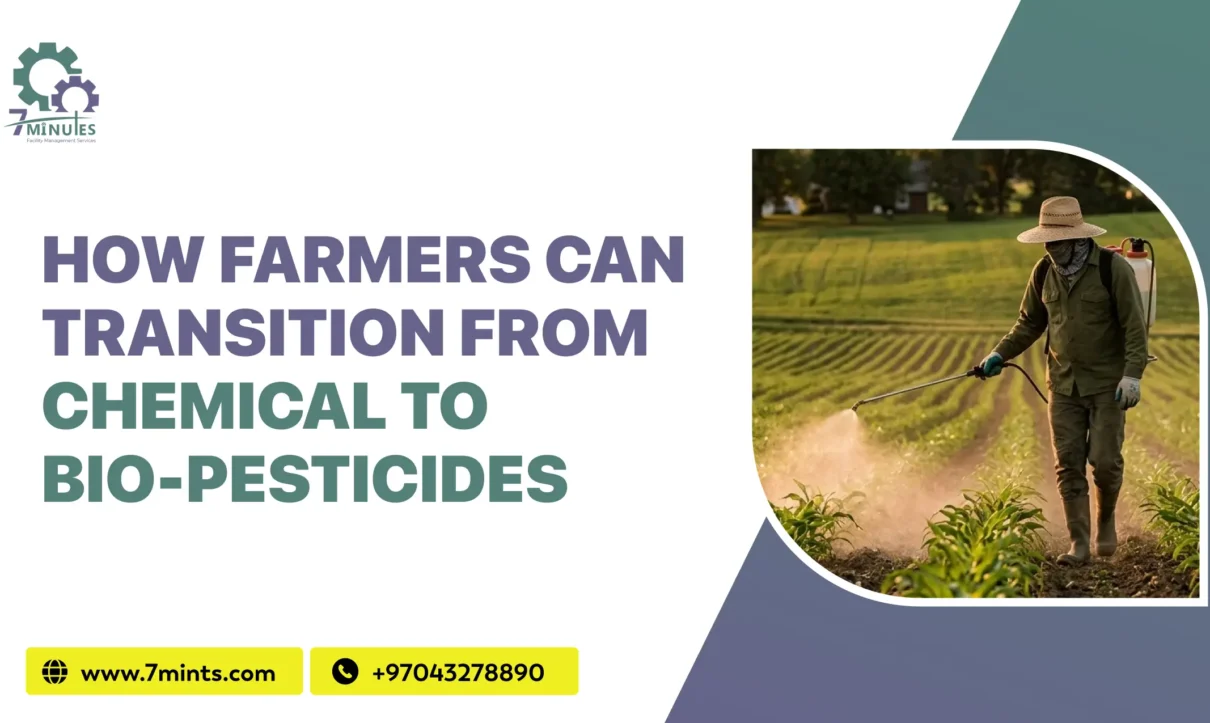
Current farmers are discovering that their ongoing usage of chemical pesticides will create long-lasting negative impacts on soil fertility, water quality, and human health over time. The use of chemical pesticides enables farmers to achieve immediate pest control results, but these chemical products create long-lasting effects that produce pest resistance and decrease the numbers of helpful insect species. The present market shows that customers increasingly value food safety standards, which leads them to choose products that contain no chemical residues. The rising market demand has prompted farmers to investigate environmentally safe farming practices, which include using bio-pesticides as their sustainable farming solution.
The process of changing from chemical pesticides to bio-pesticides requires an organization to implement an organized transition strategy. Farmers need proper knowledge, training, and patience to make the shift successful. The process requires farmers to learn about new products, improve their soil health, and enhance their pest control methods. The appropriate method for this transition enables organizations to raise their output while decreasing expenses and safeguarding nature.
-
Understand What Biopesticides Are
Farmers should first learn about biopesticides and their pest control capabilities before they proceed with their conversion process. Biopesticides are natural substances that exist in plants, bacteria, fungi, and minerals, and they provide a safer alternative to synthetic chemical products. The products operate by targeting harmful pests, which they control while protecting beneficial organisms from harm. This selective action helps maintain ecological balance in the farm ecosystem.
Using Bacillus thuringiensis (Bt) products, farmers can control caterpillars without causing harm to humans or livestock. In India, people extensively use neem-based bio-pesticides because these products naturally repel insects while stopping their growth. The natural solutions to pest control break the pest life cycle instead of killing all insects immediately. Farmers need to understand these differences, which assist them in selecting proper biopesticides for their agricultural crops.
-
Start with a Small Test Plot
At the initial biopesticide implementation phase, farmers should not establish biopesticides as their complete agricultural method. The test plot enables them to study local biopesticide performance through their biopesticide testing. The study allows them to evaluate pest control efficiency and crop development and yield results from chemical-treated areas and bio-treated areas. The method lowers financial exposure while establishing trust in the new procedure.
The trial plot enables farmers to learn proper dosages, timing, and spraying methods. Bio-pesticides require application before pests develop into higher populations. The process of observing smaller areas enables people to identify errors that they can easily fix.
-
Improve Soil Health First
Healthy soil creates ideal conditions that increase the effectiveness and sustainability of biopesticides. Farmers who use chemical substances on their fields will lose beneficial microorganisms that help plants to grow. Farmers should begin improving soil health by adding compost, organic manure, and crop residues to their fields. The study shows that these practices restore microbial activity while they make nutrients more accessible.
Farmers can use crop rotation and green manuring practices to achieve two benefits, which will improve their soil structure and agricultural productivity. When soil develops biological activity, plants will grow stronger while they build their ability to fight against insects and illnesses. Strong plants need fewer external inputs to maintain their health. Therefore, improving soil health makes the transition to biopesticides smoother and more successful. Check out our latest blog post on The Science Behind Bio-Pesticides: How They Work
-
Adopt Integrated Pest Management (IPM)
Bio-pesticides work best when combined with Integrated Pest Management (IPM) practices. The Integrated Pest Management system uses two environmentally friendly methods for pest control while tracking pest population levels. The methods include crop rotation with resistant crop varieties, trap crops, and biological predators. The combination of these methods will create natural pest control, which decreases pest outbreaks.
Farmers can use ladybugs as natural enemies to control aphids on their farms. The Food and Agriculture Organization and other organizations promote Integrated Pest Management because it provides sustainable farming solutions that work in all parts of the world. The Integrated Pest Management system reduces chemical use while it helps farms achieve sustainable productivity. The combination of Integrated Pest Management and biopesticides creates an environmentally friendly pest management system.
-
Learn Proper Application Techniques
Farmers need to study product instructions, which include information about appropriate dilution rates, spraying intervals, and storage requirements. The recommended practices should be followed because they lead to the highest performance results.
Bio-pesticides show variations in effectiveness because environmental conditions, such as temperature, sunlight, and humidity levels, change. The results become better when spraying occurs during the day between its cooler periods. Farmers should conduct regular pest level assessments, which help them determine appropriate treatment times. Farmers who receive agricultural specialist training will achieve better results with product usage.
-
Seek Government Support and Certification
Many governments provide financial aid, together with training initiatives and subsidy programs, to support environmentally sustainable agricultural practices. The Indian government established Paramparagat Krishi Vikas Yojana (PKVY), which promotes organic farming and bio-input implementation. Farmers should stay informed about such programs to reduce transition costs. The support from government organizations enables individuals to become more efficient during the process.
Obtaining organic certification can also improve market opportunities for farmers. The certified agricultural products command higher prices because consumers trust them more. Export markets especially prefer residue-free agricultural products. Certification enhances a farmer’s income while it builds his market reputation.
-
Be Patient and Monitor Results
The process of shifting to bio-pesticides needs both time and people should have correct expectations about the process. Bio-pesticides work to control pests through gradual processes that disrupt their reproduction and growth, whereas chemical pesticides provide immediate effects. Farmers need to conduct field inspections to monitor both pest populations and plant health. The process of watching things carefully leads to prompt action.
Farmers use records of their yields, their pest attacks, and their soil conditions to track their development through time. The soil structure will show improvement, while their pest resistance problems will decrease over time. The costs of inputs will decrease when the natural ecosystem achieves its balanced state. Sustainable farming requires two essential elements, which are continuous observation and the ability to wait until results become evident.
Benefits of Transitioning to Bio-Pesticides
The use of biopesticides protects the environment by eliminating chemical waste, which would otherwise contaminate water bodies. This method safeguards aquatic species and sustains the natural equilibrium of ecosystems. Bio-pesticides protect essential pollinators and other beneficial insects, which support crop growth. Biodiversity preservation enables farms to maintain stable operations throughout extended periods.
Farmers can achieve economic advantages when they decrease health threats while minimizing their need for costly chemical substances. When businesses gain access to organic and premium markets, their overall profit margins increase. Consumers are more willing to pay higher prices for safe and sustainable food. The environmental advantages and financial benefits of biopesticides will grow over time through their implementation.
Conclusion
The transition from chemical pesticides to bio-pesticides represents a viable option for achieving sustainable agricultural practices. The process needs structured organization together with educational activities and gradual execution, but it delivers extensive advantages. Contact us as the farming system becomes more sustainable through its integrated approach, which produces healthier soil, together with safer food and enhanced biodiversity. Farmers who adopt these methods contribute to environmental conservation and food safety.
Farmers can manage their transition process by learning about biopesticides and enhancing their soil health through IPM and biopesticide use while seeking help from government agencies. Proper monitoring combined with patience will lead to progressive performance enhancements. The implementation of sustainable farming practices has become essential for all modern agricultural operations.