

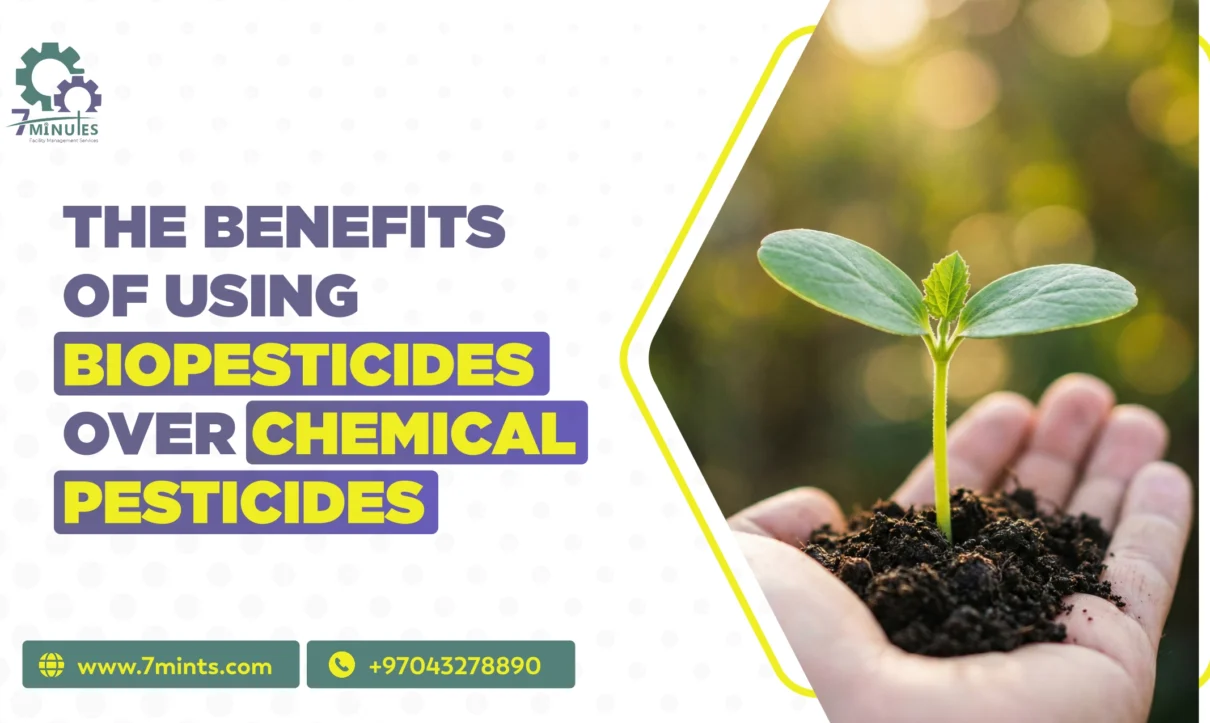
Modern agriculture has no option but to constantly raise productivity levels and, at the same time, reduce environmental and health risk factors. Chemical pesticides have been the leading method of pest management for decades, during which they have made it possible for farmers to save their crops from damage caused by insects, weeds, and diseases.
Nonetheless, scientific studies have come up with a strong case against their use due to the widespread and continuous application of chemical pesticides, resulting in various adverse situations such as soil degradation, toxic residues, water contamination, loss of biodiversity, and human health issues. The above-mentioned problems have led to a worldwide trend towards the adoption of pest-control methods that are less harmful and more sustainable.
Biopesticides, derived from natural biological sources, have received the recognition of a scientifically valid replacement, together with the sustainability rules of agriculture. Their characteristics include selective pest control, low toxicity, and minimum environmental impact. Hence, the use of biopesticides is becoming more important in the world, where eco-friendly farming practices are getting the attention of governments, consumers, and the agricultural sector, and organic pesticides are in the same category.
The blog presents a viewpoint that reveals the technical superiority of biopesticides over chemical pesticides through a comparison of their modes of action, environmental impact, safety profile, and long-term agricultural benefits.
What Are Biopesticides?
Biopesticides refer to pest-control agents obtained from natural sources such as microorganisms (bacteria, fungi, and viruses), plant extracts, mineral substances, or biochemical compounds. In contrast to chemical pesticides, which are produced through industrial processes, biopesticides function via biological mechanisms that interfere with pest life cycles, behavior, or physiology.
Biopesticides can be classified into three main categories:
Microbial biopesticides—These are made up of naturally occurring microorganisms like Bacillus thuringiensis (Bt), Beauveria bassiana, and baculoviruses.
Biochemical biopesticides—Pheromones, plant extracts, insect growth regulators, and natural repellents are included in this category.
Plant-Incorporated Protectants (PIPs)—Genetic modification of plants so that they can produce pest-resistant compounds.
The use of biopesticides is restricted to certain insects; they do not harm any other organisms and thus easily fit IPM and organic farming.
Chemically and Biologically Produced Pesticides: Major Differences
Usually, chemical pesticides act like omnivorous toxic agents, being the broadest of the spectra. They kill the pests by mainly affecting their nervous systems and, at the same time, try to poison or interfere with their metabolism. The chemicals used to kill pests are not selective and thus benefit the soil organisms, aquatic life, and even humans.
Major distinctions are:
Persistence: Chemical residues can last one to several years. In contrast, biopesticides are constantly being broken down.
Toxicity: Pesticides carry potential risks of carcinogenic, endocrine, or neurotoxic effects on humans and other living beings.
Impact on Biodiversity: Biopesticides maintain beneficial organisms, while chemicals often do harm and upset the ecological balance.
All these differences justify the use of biopesticides as tools for achieving long-term sustainable agricultural practices.
Friendly to the Environment and Sustainable
One of the biopesticides’ main benefits or plus points, is that they are environmentally friendly. Their effect on the environment is minimal. The reason behind it is that they undergo rapid breakdown through natural processes like the action of sunlight, microbes, and/or water. Thus, they do not stay for long periods of time in the soil, groundwater, or lakes and rivers.
On the other hand, chemical pesticides, especially organophosphates, neonicotinoids, and synthetic pyrethroids, are recognized for their long-term presence in the soil and for getting passed along through food chains in larger amounts. This kind of chemical contamination is detrimental not only to birds and fish but also to the overall ecosystem.
Biopesticides, however, promote sustainability by:
– Supporting soil health: Their presence in soil is not harmful to microflora; in fact, they help in naturally maintaining the cycling of nutrients.
– Preserving water quality: The quick degradation of biopesticides is a way through which the pollution of water is prevented to a large extent.
– Avoiding the occurrence of ecological imbalance: Using biopesticides reduces the impact on the natural predators and pollinators; thus, they become stronger, and the ecosystem is maintained.
– Lessening the carbon footprint: The processes involved in the production of biopesticides require less energy when compared to the complex chemical routes for synthesis.
Individually and collectively, these points make biopesticides the most important part of the crop production system that is environmentally friendly.
Safe for Human and Animal Health
Chemical pesticides cause a wide range of health hazards that experts have well-documented and cannot ignore. The risk, in any form of exposure that is either inhalational, dermal, or via ingestion of contaminated food, of respiratory complications, endocrine dislocations, CNS disorders, and even cancers occurring over a long period, is there. People whose living conditions or occupations are in close contact with chemical pesticides, such as farm workers, children, and pregnant women, are at the highest risk.
Biopesticides, on the other hand, are substances that are produced from natural sources and are highly non-toxic. The EPA and FAO have evaluated their safety and have classified them as environmentally friendly pesticides due to the following reasons:
- They leave residue that is not detectable on crops
- They do not build up in the body
- They are not harmful via the inhalation route or via skin contact
- They allow for more secure conditions for the workers on the farms
Biopesticides protect animals, domestic pets, and wildlife by lessening risks. Farmers control pests with biopesticides using lower dosages, preventing accidental poisoning and contamination of animal feed and water sources. Check out our latest blog post on What Are Biopesticides? An Introduction to Natural Pest Control
Protection of Beneficial Insects and Pollinators
One of the major benefits of biopesticides from an ecological standpoint is their ability to coexist with the populations of beneficial insects. Natural enemies like bees, butterflies, ladybugs, parasitic wasps, and others not only pollinate but also help in controlling pests biologically.
Biopesticides are used more accurately:
- Microbial agents only attack the specified pest
- Pheromone traps only target one species by disrupting their mating
- Plant extracts and repellents stop pests from entering, but do not affect the helpful insects
Lower Risk of Pest Resistance
The development of pest resistance is one of the major drawbacks that comes along with the use of synthetic pesticides. Eventually, target pests gradually become resistant to the chemical by developing a gene mutation that allows them to thrive even in the presence of the chemical. Consequently, through the cycle of increased pesticide usage, the application of higher doses, and incurring greater costs, the situation gets worse.
Biopesticides lower the risk by:
- Taking advantage of several modes of action
- Natural variability makes resistance development slower
- Natural biopesticides often infect pests more effectively than chemical pesticides.
Microbial biopesticides like Bt are one such example, which work by producing specific proteins that are only toxic to certain pests. This flexibility guarantees that the solution will be effective for a long time and, at the same time, will not lead to increased costs.
Suitable for Organic and Sustainable Agriculture
As the consumers’ preference for chemical-free products increases, the organic sector is not only expanding but also becoming global. Biopesticides that are produced from natural materials and are safe for humans, animals, and the environment can be used in these certifications.
Some of their contributions to sustainable agriculture are
- Filling the organic certification requirements
- Reducing the chemical fertilizers and pesticides
- Maintaining the soil biodiversity and nutrients’ equilibrium
- Facilitating the climate-smart agri-practices
Organic farmers use biopesticides as pest control tools when they strictly follow guidelines. By doing so, they protect the environment and sell their products at higher market prices.
Cost-Effective Over the Long Term
It may seem that some biopesticides are expensive at the beginning, but their long-term economic advantages are really huge. Farmers must apply chemical pesticides repeatedly because pests develop resistance or the chemicals persist in the environment, which drives input costs higher over time.
Biopesticides tend to be more economically efficient because they:
- Need fewer frequent applications
- Clean-up of the environment does not cost a lot
- Soil health gets better, thus yielding higher output
- Reduce the chances of crop rejections caused by chemical residues
Manufacturers in the country can produce a great number of biopesticides through fermentation or natural extraction, dramatically reducing reliance on imported chemicals.
Biopesticides’ Problems (and Solutions)
On the one hand, the biopesticides have, among others, shorter shelf life, slower action in comparison to chemicals, and sensitivity to environmental factors, like UV light and temperature. But on the other hand, the modern techniques are quickly in an uproar.
We Solve Problems By:
- Microencapsulation technology has better stability and a longer shelf life.
- Integrated Pest Management techniques combine biopesticides with monitoring and ensure precise application.
- New formulation technologies are improving field performance and persistence.
- Government support and research initiatives are making biopesticide adoption more widespread.
With ongoing innovation, biopesticide limitations are turning into a challenge that is easier to overcome, thus making the use of these materials even for large-scale commercial agriculture quite feasible.
Wrap-up
Usage of biopesticides signifies the future of pest management that is safe, sustainable, and scientifically advanced. The advantages, such as being friendly to the environment and human health, lacking resistance, and being compatible with organic farming, place them above chemical pesticides as an alternative.
In the future, biopesticides will be the main method of protecting our food and environment, as the agricultural industry continues to shift towards sustainable methods everywhere.
The conversion from chemical to biological pest control is undeniably a permanent solution that eventually leads to healthier ecosystems, safer food, and more resilient agricultural systems, which are all desired by the stakeholders. Contact us as application of biopesticides as a standard in modern crop protection will be a win-win situation for farmers, policymakers, and consumers.




1 Comment
Comments are closed.