
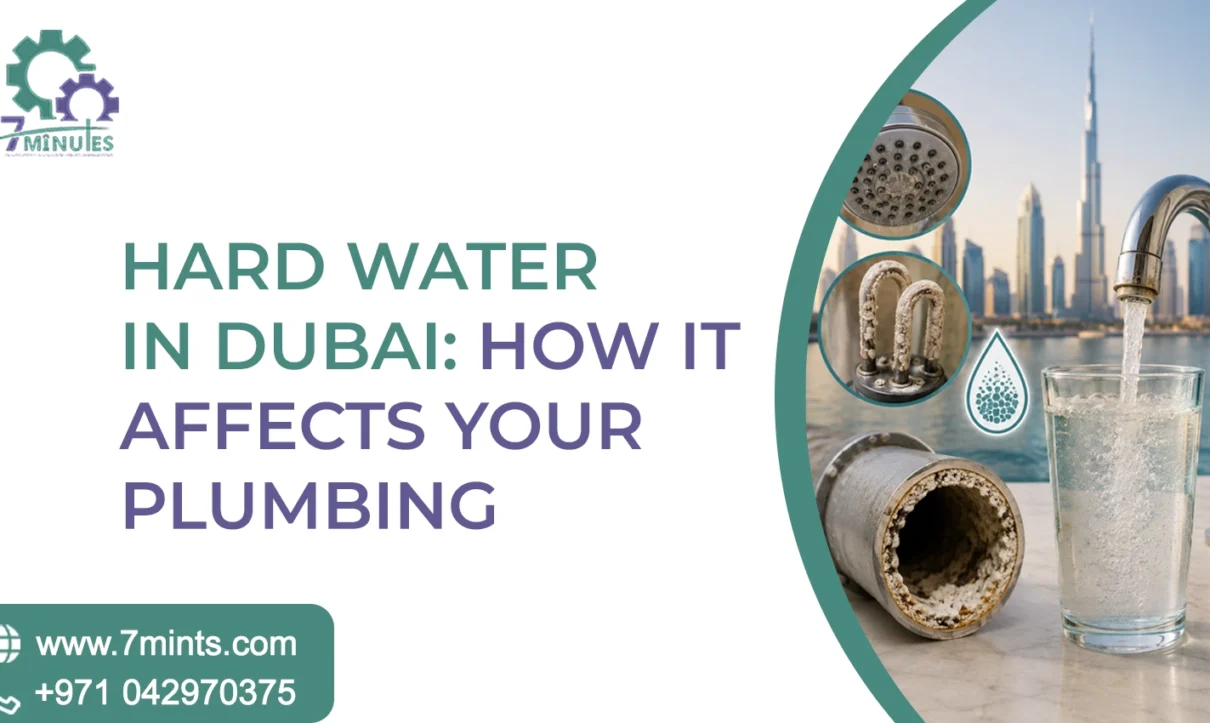
The calcium and magnesium in Dubai’s hard tap water create limescale deposits that form in the plumbing, especially in the pipes, showerheads, and water heaters. These are among the most common hard water problems UAE property owners experience. The limescale restricts water flow, increases the time it takes to heat the water, and cuts the lifespan of plumbing equipment and appliances. Limescale can form in the pipes after about a month of hard water use. There is little you can do to combat the water’s effect on your pipes, other than having the plumbing serviced and the heater flushed regularly. some hard water inhibitors that can slow the rate at which scale forms.
There are many causes for low shower pressure and rising DEWA bills, but in your case it’s probably the water in Dubai. Your water is likely causing scale to form inside your plumbing. Hard water in Dubai has high concentrations of calcium and magnesium. Independent tests show Dubai’s water as having high concentrations, generally 150-250 mg/L (as CaCO₃), which puts it in the “hard to very hard” range. Over time, the scale will narrow your pipes, cut your water pressure, and force your appliances to work harder to do the job. The best line of defence against hard water is regular maintenance and appropriate hard water treatment Dubai solutions.
How Hard Water Affects Dubai Plumbing
As you might guess from the name, hard water is water that is high in minerals like calcium and magnesium, and it forms a scale on plumbing surfaces. The mineral deposits in water pipes reduce the diameter of pipes, and, as you would imagine, this increases resistance to water flow. These hard water effects on plumbing can make a huge difference to your plumbing in the long run. There are many hard water treatment methods that work against hard water in plumbing in Dubai. One of the best options is to have hard water regularly addressed by professionals.
It takes a lot of care to keep your plumbing systems free from scale. Fortunately, there are many hard water solutions Dubai property owners can consider to reduce the negative effects of hard water in their plumbing, including suitable water treatment equipment and regular maintenance.
The Reasons Hard Water in the UAE Is a Concern
Hard water in the UAE has a negative impact on energy systems. Because of scale, pipes become blocked. In Dubai, water is first desalinated and then remineralised before it hits your tap. Heat can cause these minerals to leave the water and attach to metal surfaces. The resulting calcium buildup in pipes and mineral deposits can affect water flow and equipment efficiency.
According to a report in an industry analysis, 1.6 mm of limescale reduces heating system efficiency by 12%. According to a plumber based in Dubai, scale can increase energy costs by 15-25% and result in the early breakdown of equipment.
For hard water, the limit is considered 120 mg/L, while water that exceeds 180 mg/L is extremely hard. Understanding water hardness levels UAE residents may encounter can help property owners decide when additional treatment or maintenance is necessary.
| Hardness (mg/L as CaCO₃) | Classification | Typical effect |
|---|---|---|
| Below 120 | Moderate / soft | Minimal scale |
| 120–180 | Hard | Visible scale on taps and kettles |
| Above 180 | Very hard | Heater and pipe scale within months |
| Dubai tap (reported) | 150–250 | Hard, very hard |
What Hard Water Does to Your Pipes and Fixtures
Hard water causes a buildup of scale on the inside of pipes, thereby narrowing the flow and restricting it. In Dubai, a buildup of magnesium and calcium creates scale inside the pipes and fixtures. The resulting restriction significantly reduces the flow of water. Booster pump systems feel it first, since the pump has to overcome the resistance to push water. This occurs in high-rise apartments and in houses. The presence of magnesium in hard water, along with calcium, contributes to the formation of these deposits.
Here is how you can tell your water is hard:
1. Crystalline build-up on taps, kettles, showerheads: These are known as ‘lime scale’. It forms after water evaporates, leaving behind the minerals it contained. Outside fixtures are a strong indication of more deposits on the inside of appliances and pipes you can’t see. Regular hard water stains removal can help maintain the appearance of these fixtures.
2. Low shower water pressure: Mineral deposits slowly begin to narrow the shower head and the pipework. Eventually, your shower will have a very weak stream and an odd spray pattern. Low water pressure from all taps can mean that the blockage has developed within the booster pipework or main pipework.
3. Slow-draining sink/minor drain blockage: Minerals in waste pipework tend to form an uneven coating, allowing drain-blocking materials like grease, soap, hair, etc. to catch. Eventually, the pipe diameter decreases, and the sink drains slowly. Recurrent drain blockages even after cleaning the waste pipework can indicate that the minerals in the waste pipework are causing blockages.
4. Dripping taps/faulty cartridges: Minerals damage the tap and mixer cartridge, washers, and seals. When this happens, the tap will not completely shut off, and water will drip. Frequent tap cartridge replacements could point to mineral buildup.
5. Cloudy tableware/soap failing to foam: Mineral buildup in water tends to react with soap, forming an unattractive film rather than foam. This leaves you with spots on your glass and dull-looking tableware and even shower screens that you cleaned moments ago. You will end up overusing soaps and detergents.
What Are the Effects of Hard Water on Appliances and Water Heaters?
Hard water significantly reduces the lifespan of appliances. It builds up on heating elements in water heaters and collects as sediment at the bottom of the tank. The typical water heater issue in Dubai is the result of sediment accumulation, thermostat malfunctions, and even elements beginning to fail. Hard water starts to take a toll on appliances like washing machines and dishwashers as well. These appliances have spray arms and elements that become obstructed with the buildup.
Suitable water softening systems UAE property owners install can help reduce the minerals responsible for scale formation. Depending on the property’s requirements, a water softener Dubai solution may be considered to protect plumbing equipment and appliances.
How to Prevent Limescale in Dubai
There is a routine for preventing limescale. First, check your water. Use a total dissolved solids or a hardness kit, and test the water from the cold tap. This is a practical approach to hard water testing Dubai property owners can perform. If the hardness readings are more than 180 mg/L, your water is too hard, and you should perform every step in this section. As with the total hardness test, the total dissolved solids readings should also be monitored on a monthly basis, because they vary due to building storage tanks and changing seasons.
In between total hardness checks, periodically perform other tests for total dissolved solids to ensure your building storage tank is not deteriorating, especially if the total dissolved solids readings vary significantly from week to week. A suitable hard water filtration system may also help address specific water quality concerns, depending on the system selected.
Flush your water heater every 6 to 12 months. Start by turning off the power. Next, shut off the water inlet and then draw out several litres to flush loose sediments from the tank. The goal is to remove sediments that have settled to prevent them from forming an insulating layer that slows the heater. This can increase energy usage as the heater will not be as efficient. More frequent heater cleaning is needed for older models and very hard water.
Descale your showerheads and taps. Simply let removable parts of showerheads and taps soak in a mixture of white vinegar and water for about 30 minutes to an hour, then lightly rub and rinse, and wipe it all down to dry. The process is so simple that it can prevent scale from hardening. Note, however, not to use white vinegar on natural stone or marble, and definitely not on gold finishes, as it can cause harm to them. Professional limescale removal Dubai services can help when deposits become difficult to remove.
Clean and dry after each use. You can keep a squeegee or even a microfibre cloth in the bathroom and make a point to wipe everything down – taps, shower doors, and the sink – to prevent spotting. Droplets can be harmful if left to dry, as they can result in the buildup of visible scale. It’s better to be proactive and make a habit of keeping things dry.
Case Study A Marina Apartment
The owner of a 3-year-old apartment reported issues of low shower pressure and a slow water heater. A technician identified scale on the water heater heating element, as well as clogging in the showerhead and sediment in the heater. In the time it took to descale and clear the heater and showerhead, pressure was restored. After scheduling periodic heater maintenance every six months, a scale inhibitor was added to the heater inlet to address any further buildup. Hot water started coming through in a shorter time, and the owner did not report any further issues with scale in the next year. This is an example of how regular maintenance supports hard water damage prevention in residential properties.
How Much Does Hard Water Maintenance Cost in Dubai?
The cost of installing scale preventative measures in Dubai is a fraction of the cost of repiping or heater replacement. These numbers are broad ranges. Make sure you check with a licensed service provider.
For effective residential water treatment Dubai, property owners should compare available treatment options based on water hardness, plumbing conditions, property size, and maintenance requirements. Professional water purification services Dubai can also help assess water quality and recommend suitable solutions for specific needs.
Frequently asked Question
Q1. How hard is tap water in Dubai?
Hardness is assessed at around 150-250 mg/L. Some places are even harder than that. Factors like the distance of your building’s storage tank from the treatment facility affect the numbers.
Q2. Does Dubai’s hard water affect drinking water quality?
It doesn’t. Hardness is more about the wear and tear it does to your plumbing and appliances. Drinking water is heavily regulated in Dubai.
Q3. How do I know if I have a buildup of hard water in my pipes?
Watch out for reduced water pressure and crustiness on plumbing fixtures. Heating becomes slow, and clogs may recur. If you believe your pipework has issues, hire a professional to inspect it.
Q4. Is a water softener worth it for Dubai hard water?
It prevents calcium and magnesium from entering the rest of your system. You have to maintain it by adding resin or salt, and you might need the okay from your landlord.
Q5. How long should I wait between water heater flushes in Dubai?
An individual should flush it every six months if your water heater is ageing or if it is making rumbling noises. Otherwise, every twelve months is fine.