

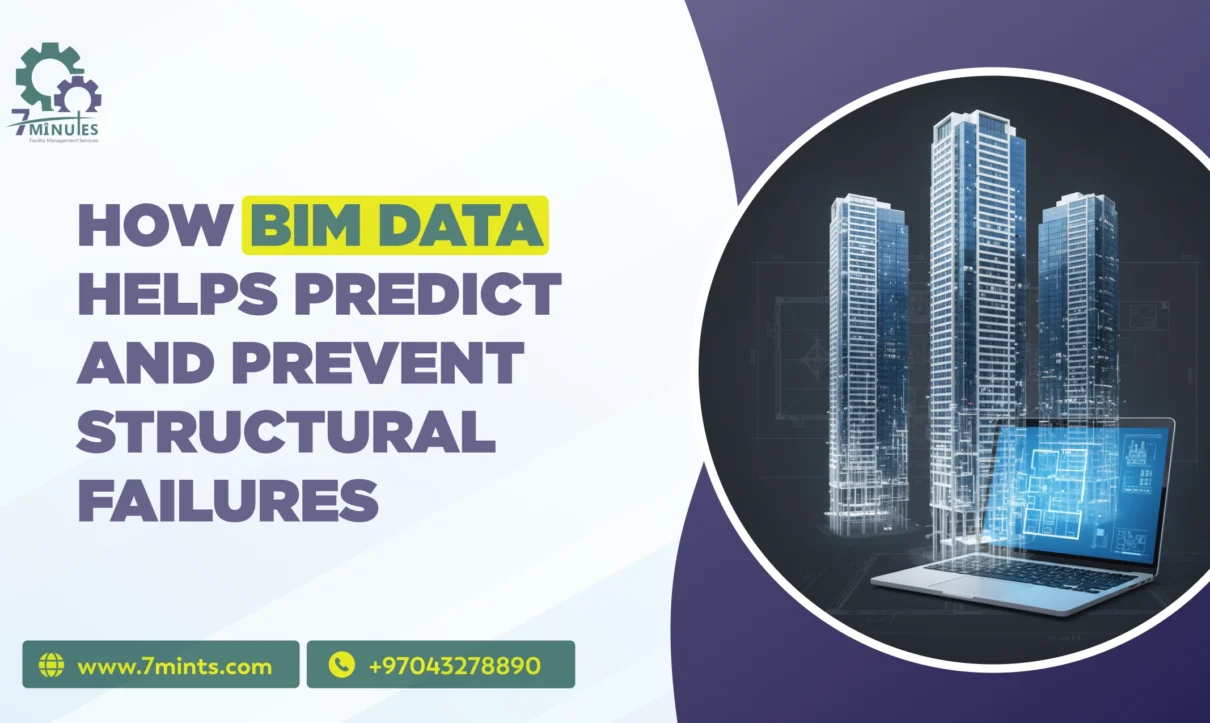
Structural failures are the outcomes that occur when buildings or structures are not capable of withstanding the loads, pressures, or climatic conditions imposed on them. Such failures may arise as a result of design errors, the use of low-grade materials, construction mistakes, or insufficient upkeep. The construction industry, therefore, is continually looking for smarter and data-oriented approaches to safety.
Among the best methods for predicting and preventing structural failures, Building Information Modeling (BIM) has left the rest behind. BIM furnishes the engineers with highly precise 3D models, live data, material specifications, and digital simulations. This post will examine not only how BIM data contributes but also in what way it turns out to be very helpful throughout the lifecycle of a building.
What Is BIM Data?
BIM, or Building Information Modeling, is a very sophisticated digital process that builds a highly accurate 3D model of a building with all its physical and functional information. What the data comprises is the shape, the materials used, the load-bearing capacities, the mechanical systems of the building, and even the schedule of the whole project. This information enables the engineers to have a clear view of every component and to know how the different parts will interact.
BIM data is not merely a graphical representation; it is a full-fledged data system. The model houses every beam, column, joint, and material with in-depth technical specifics. Through this, engineers can perform different kinds of analyses, such as the interactions of parts and the manner in which the whole structure reacts to the different kinds of real-world conditions, like stress, heat, earthquakes, and so on. In the case of BIM models, their potential to predict risks is even more heightened when they are updated with real-time data during the process of construction or operation.
Risk Detection at an Early Stage Through BIM Models
Detecting risks during the design stage before the construction starts is one of the major advantages of BIM. BIM technology enables the engineers to perform clash detection, which uncovers conflicts among structural elements such as electrical and plumbing systems and other parts. If not resolved at the initial stage, these clashes may lead to the weakening of the structure or pave the way for major safety issues during the construction process.
BIM is also a great help in virtually putting the building through its paces and applying the loads, stresses, and forces it would naturally experience. Engineers are able to see and test from the structure’s point of view how it behaves under wind, earthquakes, and heavy loads, and during heat conditions.
Technology takes over, and through digital simulations, weak points in the design can be identified and corrected instantly. This process shortens the chances of the building experiencing structural failure because of poor designs and also ensures that the building is up to safety standards right from the start.
BIM’s advanced algorithms, empowered by real-time data, can alert in no time if they detect anything unusual. For example, the system not only informs engineers if cracks in a column get bigger, but also if the vibrations from the machines reach an unhealthy level. The advanced notice is the reason why accidents are prevented, repair costs are significantly lowered, and lastly, all the small issues are kept from turning into big structural failures. Real-time monitoring technology greatly contributes to the overall safety of the structure.
Material Tracking and Performance Forecasting
BIM tracks and stores all the data related to the different materials used in the project, their quality, their resistance to fire, and their expected life. Since the engineers know how the materials will act in different conditions, they will be able to predict the material’s life and find faults in advance. Having the right materials in the right places is a surefire way to prevent future failures.
Aging, the process where the materials slowly lose their strength, is the main reason why the entire structure could be weakened. BIM has the power to tell when different construction materials are getting old by using the current performance data and the original specifications.
If the deterioration of any of the materials is going faster than anticipated, then the engineers can very quickly do the right thing. This predictive capacity gives the assurance that the materials will either be kept in good condition or replaced long before they turn out to be a hazard.
BIM Analytics as the Medium of Predictive Maintenance
Predictive maintenance has become the hallmark of BIM and is one of its greatest features. Instead of letting the problem take its course, BIM will be able to tell the engineers the likelihood of future risks based on the last and current performance data. With 4D and 5D BIM models, the engineers can calculate the extent of wear and tear that would affect the structure and its hardships.
The predictive analysis also plays a vital role in the optimization of maintenance budgets. The engineers are now able to select the areas that are in dire need of repairs and bypass the areas that do not need repairs at all, cutting down repair costs. Also, the BIM system, by providing very accurate and detailed predictions of the behavior of its components, makes maintenance very strategic, timely, and cost-effective. This practice reduces failure and breakdown occurrences to a great extent.
Enhancing Quality in Construction and On-Site Safety
One of the major reasons for structural failures is construction errors, and BIM eliminates this problem through the application of its strategies. With the provision of ubiquitous construction animations and visuals in a detailed manner, BIM makes sure that the contractors implement the right installation techniques. Check out our latest blog post on The Role of BIM in Achieving Long-Term Building Resilience
In addition to that, BIM can also ensure quality control throughout the whole construction period. To spot discrepancies, engineers can juxtapose the actual construction with the digital BIM model. Digital inspections provide the possibility for the teams to discover errors and rectify them before they pose a threat to the integrity of the structure. The quantity of precision on the site is so high that it directly contributes to safety, and at the same time, it reduces the occurrence of defects, which might eventually lead to failures of the structure.
Increasing Cooperation Between Engineers and Stakeholders
Poor coordination among architects, structural engineers, and contractors is one of the leading reasons why structural problems arise. BIM has tackled this issue by creating a single platform where all project stakeholders can cooperate. BIM facilitates the collaboration of all the involved parties, making it very easy to see the discrepancies that exist in the design, planning, or construction.
The engineers can make changes, share their views, and rectify them all in real-time. This openness has a positive impact on the decision-making process and also prevents errors that would otherwise render the structure weak. Good cooperation brings about buildings that are not only safe but also have better stability.
Examples of BIM Preventing Structural Failures
- Preventing Beam Failure Through Early Simulation
In global projects, engineers performed BIM-based simulations to test beam strength under the influence of heavy loads, and these led to the discovery that some of the beams were prone to failure due to insufficient reinforcement.
- BIM + IoT Detecting an Expanding Crack
A commercial building with sensors embedded to monitor its wall vibrations and to measure them within an observable range caused a crack, and this data made available to the BIM model reveals that in that part of the building, the accumulation of stress is taking place. The engineers acted by stepping in with preventive measures, curing the zone, and thus averting a possible downfall.
- Large Infrastructure Projects Using BIM for Predictive Maintenance
Many countries have put to use BIM for the long-term structural monitoring of railway bridges, tunnels, highways, etc., and this has become the norm. Sensors feeding real-time data help in spotting the very first signs of material fatigue. The maintenance crew can spring into action immediately, thereby preventing both material wastage and the need for replacing the infrastructure regularly.
Conclusion
BIM can be seen as a huge leap forward in the construction and engineering sector; it offers an extremely profound insight into the entire building’s life cycle and its relations with the environment. It enables engineers to spot potential hazards much earlier due to the remarkably precise digital model, real-time data, and the use of predictive analytics. Contact us, as apart from that, BIM also plays a significant role in managing materials accurately, quality control of construction, and planning of interaction and maintenance, thus making buildings much safer and more reliable.
At the same time, the increasing intricacy of buildings sharply raises the demand for more sophisticated and data-driven solutions. BIM is at the forefront of using technology, engineering, and real-time data to prevent structural failures. The use of BIM by the construction companies, engineers, and developers is not a matter of choice now but rather a crucial long-term investment into safety and resilience.






1 Comment
Comments are closed.