

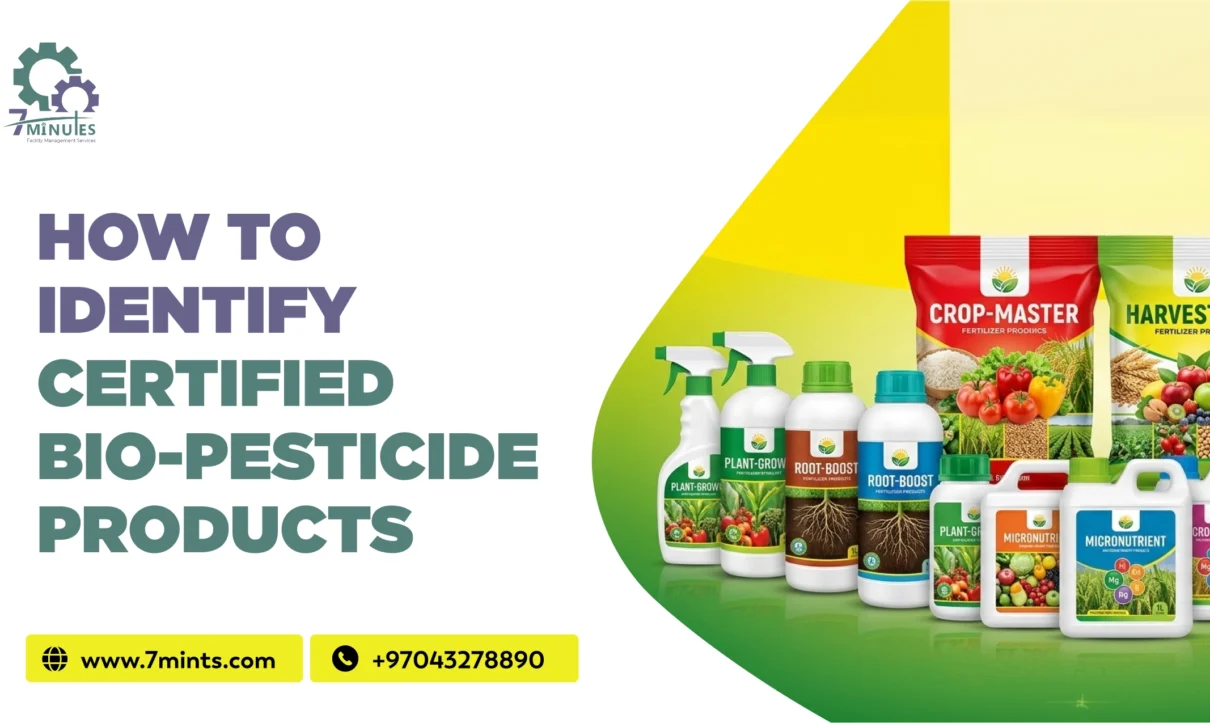
Bio-pesticides are increasingly used in agriculture, landscaping, gardening, and pest management because they can offer targeted alternatives to some conventional chemical pesticides. These products may contain microorganisms, plant-derived substances, or naturally occurring compounds that help manage insects, weeds, and other pests.
However, not every product marketed as natural, organic, or environmentally friendly is officially approved or appropriately tested. Choosing certified bio-pesticide products requires careful attention to registration details, product labels, ingredients, manufacturer information, and applicable regulatory requirements.
For farmers, gardeners, distributors, and pest management professionals, knowing how to verify a product can help support responsible pest control and reduce the risk of purchasing unsuitable or unauthorized products.
What Are Certified Bio-Pesticide Products?
Certified or registered bio-pesticide products are products that have undergone the applicable regulatory review or certification process for their intended use. Requirements vary by country, product category, active ingredient, and application.
Bio-pesticides generally include several categories:
- Microbial pesticides: Products containing microorganisms, such as certain bacteria, fungi, or viruses, used to control specific pests.
- Plant-based pesticides: Products formulated using botanical ingredients or extracts.
- Biochemical pesticides: Products containing naturally occurring substances that control pests through mechanisms such as repellency, attraction, or growth regulation.
The term bio-pesticide does not automatically mean that a product is harmless, suitable for organic farming, or approved for every crop. Its safety and effectiveness depend on the formulation, application rate, target pest, and conditions of use.
1. Check Bio-Pesticide Certification and Registration Details
One of the first steps in how to identify certified bio-pesticides is to verify whether the product has the required registration or authorization for the market where it will be used.
Bio-pesticide certification can refer to different processes. A pesticide may require government registration, while an organic certification may apply to particular production practices or inputs. These are not interchangeable.
Before purchasing a product, check:
- The official product name and manufacturer.
- Active ingredient and formulation.
- Registration or authorization number, where applicable.
- Approved target pests and permitted uses.
- The validity and authenticity of supporting documentation.
- Whether the registration matches the exact product formulation.
Do not rely solely on a seller’s statement that a product is certified. Verify the details through the relevant regulator or certification body whenever possible.
2. Verify Registered Bio-Pesticides in the UAE
Businesses and agricultural users should confirm the applicable requirements before importing, distributing, or using pesticides in the United Arab Emirates.
When evaluating registered bio-pesticides UAE suppliers offer, check the relevant UAE authority’s current registration requirements and official records. Requirements can vary depending on whether a product is intended for agricultural use, public health pest control, or another application.
Bio-pesticide registration UAE requirements may involve product documentation, ingredient details, safety information, labeling, and evidence supporting the intended use. Importers and distributors should confirm that the specific product is authorized for the relevant purpose.
Ask the supplier for the registration details and supporting documents. If the product’s authorization cannot be verified, contact the relevant authority before purchasing or applying it.
You May Also Read: Economics of Bio-Pesticides
3. Read Bio-Pesticide Labels Carefully
Product labels provide important information about how a pesticide should be stored, handled, mixed, and applied.
Understanding bio-pesticide labeling requirements helps buyers assess whether a product provides the information needed for responsible use.
A suitable label should provide the information required under the applicable regulations, which may include:
- Product name and formulation.
- Active ingredients and concentrations.
- Manufacturer or registration holder details.
- Registration number, where applicable.
- Target pests and approved application sites.
- Application rates and instructions.
- Required protective equipment and precautions.
- Storage, disposal, and first-aid information.
- Batch number and expiry date, where applicable.
Labels should be readable and consistent with the product’s official documentation. Missing information, spelling inconsistencies, suspicious claims, or altered packaging can be warning signs.
If instructions are unclear or the label is not in a language you can understand, obtain reliable guidance before use.
4. Identify Authentic Bio-Pesticide Products
Counterfeit, diluted, expired, or improperly stored pesticides may fail to control pests and could create avoidable risks.
Authentic bio-pesticide products should be traceable to a legitimate manufacturer or authorized supplier. Buyers should review the packaging, batch details, seals, and supporting documentation before accepting a product.
For stronger bio-pesticide product verification, compare the product details with information from the manufacturer or regulator. Where available, use official verification tools or contact the manufacturer directly to confirm the batch or registration details.
Be cautious when a seller offers unusually low prices, refuses to provide documentation, or promises that a product will eliminate every pest immediately.
Also inspect the packaging for damage, leakage, broken seals, or signs of improper storage. Biological formulations can be sensitive to temperature and storage conditions, so follow the manufacturer’s storage instructions.
5. Understand the Difference Between Organic and Bio-Pesticides
The terms organic, natural, and biological are often used in marketing, but they do not always indicate the same thing.
Organic pest control products may be suitable for certain organic production systems, but their acceptability depends on the applicable organic certification rules and the product’s ingredients.
Similarly, certified organic pesticides should not be assumed to be officially certified simply because a label uses the word “organic.” Verify any certification claim with the named certification body and confirm that it applies to the exact product and intended use.
Some naturally derived substances can still be harmful to non-target organisms or people if handled incorrectly. Conversely, a registered bio-pesticide may be approved for a specific use without being certified for organic production.
Choose products according to verified approval, intended application, and the requirements of the farming or pest management system.
Also Read: Farmers Can Transition from Chemical to Bio-Pesticides
6. Check Ingredients and Bio-Pesticide Quality Standards
The active ingredient determines how a bio-pesticide works and which pests it may control. Understanding the formulation can help buyers select a product that matches their needs.
Bio-pesticide quality standards may address ingredient identity, concentration, purity, formulation stability, and manufacturing consistency, depending on the product category and applicable regulations.
For microbial products, microbial pesticides certification or registration-related evaluation may involve information about the organism, its identity, product composition, and relevant safety or effectiveness data.
For plant-based pesticides, examine the declared botanical ingredient, concentration, intended use, and product specifications. Do not assume that all plant extracts provide the same level of pest control.
Where necessary, request a technical data sheet, safety data sheet, certificate of analysis, or other relevant documents from the supplier. These documents can support product evaluation, but they do not replace mandatory regulatory approval.
7. Evaluate Safety and Environmental Claims
Products marketed as environmentally friendly still require responsible handling. Their effects can vary according to the active ingredient, dose, application method, and exposure conditions.
Bio-pesticide safety standards help guide the evaluation and safe use of products. Before application, review precautions for people, pets, crops, beneficial insects, and nearby water sources.
Consider these precautions:
- Follow the approved application rate.
- Wear the protective equipment specified on the label.
- Avoid applying products in prohibited weather conditions.
- Observe any pre-harvest or re-entry intervals.
- Protect pollinators and other non-target organisms.
- Store products securely and dispose of containers correctly.
The term eco-friendly pesticides UAE suppliers use should be supported by credible product information rather than broad marketing promises. Environmental performance depends on the specific formulation and how it is used.
8. Choose Suitable Products for Sustainable Pest Management
The right pesticide should address the identified pest rather than serve as a universal solution. Incorrect pest identification can lead to ineffective treatment, unnecessary costs, and avoidable environmental exposure.
Natural pest control solutions UAE users consider should be evaluated according to the target pest, application site, product authorization, and expected results.
Whenever practical, combine appropriate products with monitoring, sanitation, physical barriers, habitat management, and other integrated pest management practices.
This approach supports sustainable pest management by reducing unnecessary pesticide applications and prioritizing interventions according to the level of pest activity.
Before purchasing, compare verified product claims, instructions, and costs. Ask qualified agricultural or pest management professionals for advice when dealing with difficult infestations or unfamiliar formulations.
Frequently Asked Questions
Q1. How can I identify certified bio-pesticide products?
Check the product label, active ingredients, manufacturer details, registration or certification number, and approved uses. Verify the information with the relevant regulator or certification body instead of relying only on marketing claims.
Q2. Are all bio-pesticides safe for humans and pets?
No. Safety depends on the active ingredient, formulation, exposure, and application method. Always follow the product label and required protective measures, and keep pesticides away from children and pets.
Q3. How can I verify bio-pesticide registration in the UAE?
Check the current requirements and official records of the relevant UAE authority. Confirm that the exact product is authorized for the intended use and request supporting documentation from the supplier.
Q4. Are bio-pesticides the same as organic pesticides?
Not necessarily. Bio-pesticides may contain microbial, botanical, or biochemical ingredients. Organic certification is a separate matter and depends on the relevant certification rules and permitted inputs.
Q5. What documents should I request before purchasing a bio-pesticide?
Depending on the product, request its registration details, product label, technical data sheet, safety data sheet, and certificate of analysis where available. Verify the documents with the manufacturer or relevant authority if necessary.
Q6. Can bio-pesticides be used in integrated pest management?
Yes. Suitable registered bio-pesticides can form part of an integrated pest management program alongside monitoring, sanitation, physical controls, and other appropriate interventions. Use only products approved for the intended application.
Conclusion
Farmers need to know how to identify certified bio-pesticide products because this knowledge enables them to practice safe and sustainable farming methods. By checking regulatory approval, certification labels, active ingredients, manufacturer details, packaging information, and official documentation, you can confidently select genuine products. Contact Us as authorized dealers allow you to buy products, and price comparison helps you to reduce your chances of being defrauded.
Certified bio-pesticides not only protect crops but also safeguard soil health, water quality, and human well-being. As more people learn about sustainable agriculture, they need to make better choices because they understand what their safer options are. The verification process becomes necessary before you proceed to purchase because certified bio-pesticides will deliver an investment return that benefits your entire operation.






5 Comments
Comments are closed.