

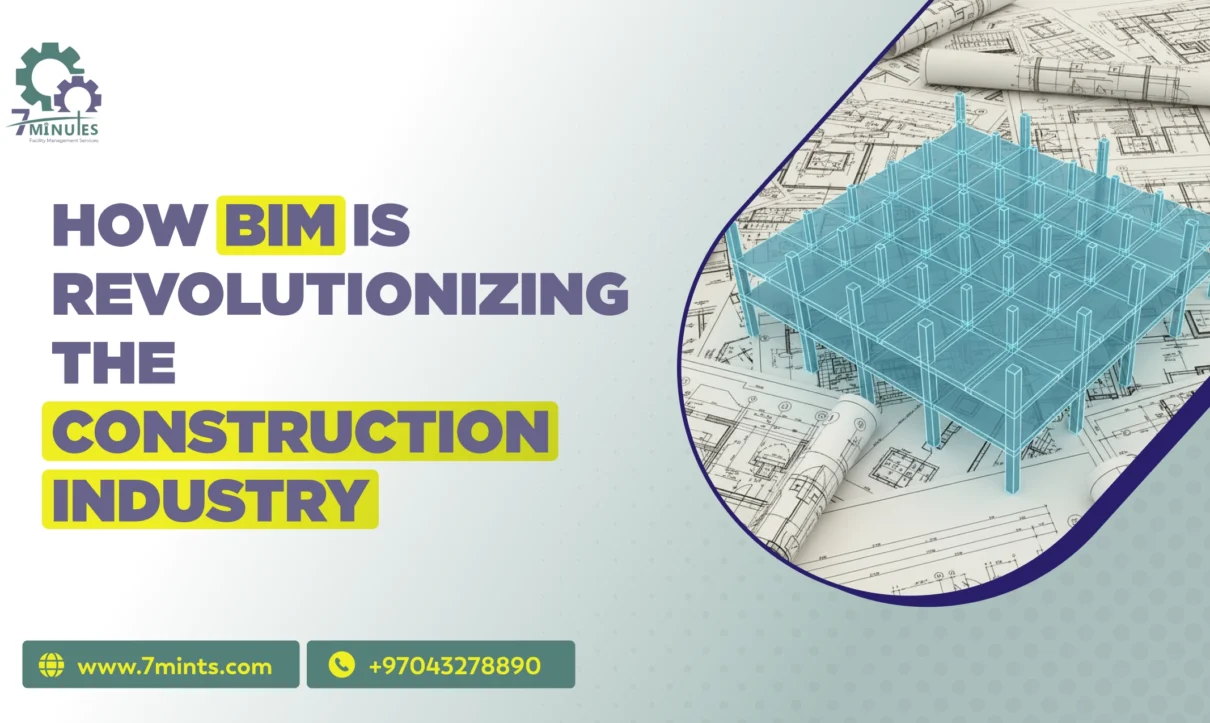
The construction industry has always been acknowledged for its complex nature, the difficulty in managing different activities, and the need for accuracy. However, on the other hand, Building Information Modeling (BIM) has emerged as a revolutionary technology and has significantly changed the whole procedure of planning, designing, and carrying out construction projects in a big way.
BIM is a process that changes the way of communication and interaction among all the people involved in a construction project—like designers, engineers, contractors, and clients—by connecting them to a virtual platform. This not only makes collaboration easier but also reduces the number of errors caused.
In this paper, we are going to highlight the various features of BIM that are making the construction industry more productive, less costly, and more accurate, not to mention the eco-friendliness aspect, thus changing the whole scenario. We shall first take a glimpse of the key benefits of BIM and then its significance in the construction industry of the next decade.
What Is BIM?
BIM is a digital representation of the physical and functional aspects of a building
To begin with, BIM (Building Information Modeling) is a digital visualization that represents all types of physical, functional, and operational characteristics of a structure. It is also a way of connecting all the different phases of a project—from the initial design to building management—into a single system.
Real-time access to project data
Among the main benefits of BIM, improved collaboration between all the project stakeholders is at the very top of the list. Being on the cloud, BIM allows the architects, engineers, contractors, and clients to access the most current project data at the same time, thus leading to quicker decision-making and eliminating misunderstandings and communication breakdowns.
Centralized platform for all stakeholders
BIM provides a shared platform where all the people in the project can see, change, and add to the model. Such openness keeps all the people at the same level in terms of understanding and also helps to settle conflicts and keep the same goals.
Enhanced coordination between disciplines
In normal construction projects, architects, engineers, and other trades often work independently from one another, which is to say that they work in silos. Nevertheless, BIM dissolves these barriers through granting a disciplined presence in the form of collaboration across the three. For instance, the structural engineer can check the design and confirm its feasibility while the contractor can organize the construction schedule relying on the information in the BIM model.
BIM Improves Precision and Minimizes Mistakes
Spotting potential problems at an early stage
This mechanism of early issue detection in the design phase prevents the occurrence of severe or costly errors during the construction process. The said mechanism not only ensures precision but also minimizes the number of reworks along with their costs.
Automatic mistake identification
Correct quantities and material forecasts
BIM Saves Time and Reduces Costs
Shortened project timelines
BIM provides accurate planning and visualization so that the construction teams can perform their workflows more efficiently and, at the same time, reduce the project timelines. The building can be faster and smoother with fewer interruptions/delays since potential issues have already been solved at the design stage. Thus, the final result is faster delivery of the entire project.
Better resource management
BIM lays the groundwork for a very effective resource allocation by revealing the minute details regarding the project timelines, costs, and even the materials required. It is like pulling up the resources from underground; the right people and materials are chosen at the right time, and thus no delays or bottlenecks occur.
Reduced operational costs post-construction
BIM does support facility management after the construction is done. For maintenance and operations, the digital model can be given to building operators. This provides the area with accurate information about systems, structures, and components that will need maintenance, thus cutting down on operational costs.
BIM Promotes Sustainability
Energy efficiency and environmental impact
BIM is a vital player in the green construction process. It allows designers to create energy performance simulations, analyze lighting, heating, and cooling needs, and recognize eco-friendly materials. Such simulations facilitate the development of energy-efficient buildings that meet the sustainability objectives.
Optimizing material use
Enhancing long-term sustainability
One of the major advantages of smart building systems in conjunction with BIM is that they provide a pathway for construction companies to design buildings that are energy-efficient and adaptable throughout the years.
BIM Crosses Over into Facility Management and Maintenance
Digital twin for regular upkeep
The BIM method, once the building is finished, will pass the property over to the facilities management team as a digital twin. Maintenance schedules, warranties, and equipment data will be just a click away through this.
Seamless renovation and retrofit scheduling
In the future, in case of renovation or retrofit, the BIM model will serve as a plan for the work to be done most efficiently. Facility managers will be able to access correct data on existing systems and structures, thereby making it easier to plan updates with minimum disruption to the building’s operations.
Proactive maintenance
BIM and Health and Safety
Better method, planning
Involving BIM with the process of safety surveillance and hazard visualization, the safety teams can detect hazards in advance and develop work practices less prone to accidents. Check out our latest blog post on How BIM Data Helps Predict and Prevent Structural Failures
Precise site planning
BIM models can depict the construction process in detail, including the movement of workers and the operation of the machines. This precise site planning not only reduces risks but also creates a safer working environment by detecting potential hazards like a lack of space for work, poor visibility, or improper use of equipment.
BIM in Project Lifecycle Management
Project management is integrated
BIM is not just for design and construction; it is for the entire project lifecycle. From the very start to the end, BIM provides an uninterrupted data flow, which is the basis for smooth shifting among designing, procuring, building and maintaining.
Nurtured collaboration and decision-making
BIM offers a collaborative platform for all the project stakeholders to monitor progress, update data, and make smart decisions throughout the project lifecycle. The involvement in the decision-making process is vital for ensuring on-time and within-budget delivery of the project.
BIM has become a tool that effectively organizes all documents related to a project, and this new order allows for easy monitoring of contracts, approvals, schedules, and alterations.
Conclusion
Building Information Modeling (BIM) is a technological innovation that is reshaping the construction industry; thus, the projects are becoming more modern and cheaper and have a lower environmental impact. It is becoming a must-have component in the modern construction industry, step by step, albeit with some resistance. Contact us due to its functionalities in providing real-time collaborative work, improving accuracy, managing resources effectively, and being environmentally friendly at the same time.
The construction industry is in a state of flux. BIM will still be the change agent and will continue to impose its impact on the streamlining of the processes involved in the design, construction, and maintenance of the built environment.






1 Comment
Comments are closed.