

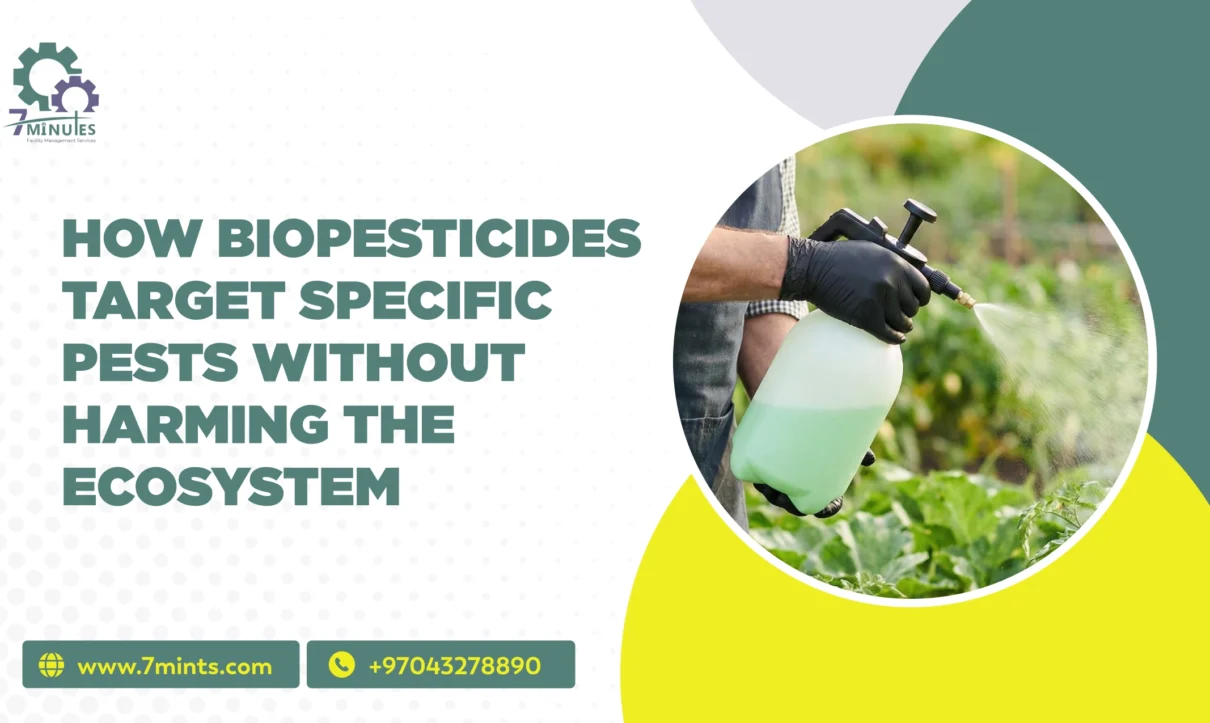
The biopesticides have appeared as a green and more eco-friendly alternative. These are made from natural sources like bacteria, fungi, plants, and minerals, and they are hard to control on a broad scale. Biopesticides do not annihilate everything that comes in their way but rather focus on the specific pest and largely protect beneficial organisms and the environment around them. This blog elaborates on the working of biopesticides, their selectivity, and their role as environmental protectors.
Modern agricultural practices have invariably relied on chemical pesticides to shield crops against insects, weeds, and diseases. The application of these chemicals has contributed significantly to an increase in food production; however, their overutilization has led to serious environmental and health risks. Chemical pesticides not only target the harmful pests but also wipe out the beneficial ones, pollute the soil and water, and disrupt the natural habitats. Besides, resistance to pesticides builds up with time, and farmers are left with no other option but to turn to stronger and more frequent applications of chemicals.
What Are Biopesticides?
Biopesticides are ecological pest control agents that are made exclusively from natural materials found in the environment. What these materials consist of are microorganisms (like bacteria and fungi), plant extracts, and the special substances that are found in nature. Unlike chemical pesticides that are mainly synthetic and broad-spectrum, biopesticides can penetrate the biological activity and thus affect only the targeted pests.
Another important trait of biopesticides is their selectivity. They can affect only the specified insects, weeds, or diseases without harming the non-target species. This property of biopesticides is a great advantage for the integrated pest management (IPM) approach, where the goal is to eliminate pests while keeping the ecosystem in harmony.
Though slowly, biopesticides are undoubtedly on their way to becoming widely accepted due to growing environmental and food safety concerns. A gradual path is being created towards sustainable agriculture and eco-friendly farming through the cooperation of farmers, governments, and consumers who are increasingly acknowledging the importance of biopesticides.
Classification of Pest Control Biopesticides
Microbial biopesticides consist of living microorganisms such as bacteria, fungi, viruses, or protozoa. The kill does not occur directly, but rather the microbe infects or disrupts the specific pest while leaving the other organisms untouched. The most well-known case is Bacillus thuringiensis (Bt), which is employed to control certain caterpillars and larvae.
Biochemical biopesticides are substances that are obtained through plant sources like botanical extracts, pheromones, and essential oils. These substances can control the pests by secretly interfering with their behavior, growth, or reproduction rather than by poisoning them.
Plant-Incorporated Protectants (PIPs) are composed of substances from genetically enhanced plants that also work as deterrents for specific insects. The PIPs produced by these plants consist of proteins that are only harmful to certain insect species, thus being non-toxic to humans and animals.
How Biopesticides Target Specific Pests
The operation of biopesticides is based on the distinct biological features of the pests. Rather than going the way of toxic chemicals that would kill all insects, biopesticides only penetrate the actual Physiology of the target pest, thus also being non-toxic to the rest of the insects. One of the biopesticide methods is the death of the pest through the disruption of its digestive tract when it eats the poison. For the same cycle of growth or reproduction, another biopesticide uses the same method but causes the detoxification of the target pest’s environment through microorganism biopesticides.
The biocides are still very effective among the harmful insect populations since the absence of these biological phenomena in the good insects, birds, and mammals is what makes them so. This is the very ability of biopesticides that makes them not only effective but also ecologically safe.
Role of Natural Microorganisms in Targeted Pest Control
Natural microorganisms, meanwhile, are the ones who are responsible for the biopesticides to work in the first place. Bacteria, fungi, and viruses that are used for biocontrol have evolved with the pests and thus, control their populations naturally. One of the bacterial biopesticides, Bacillus thuringiensis, produces proteins that can only kill specific insect larvae. The larvae that consume the bacteria have their intestines damaged, causing their death, but, of course, no other creatures are made extinct.
Fungus and virus biocontrol have the same action—the first one just putatively invades the pest through its body, and the latter one attacks a particular insect from the inside. Then, pest management is achieved without disturbing the ecosystem, as these microorganisms are so specific to hosts.
Why Biopesticides Do Not Harm Beneficial Insects
Probably the most important benefit of using biopesticides is that they do not harm the beneficial insects like bees, butterflies, ladybugs, and worms. These insects and other organisms are important for pollination, soil health, and natural pest control. Biopesticides have not been designed for total slaughter but rather with selective toxicity, meaning that they only target the pest-and-doom side. Beneficial insects do not have the bioreceptors or digestion conditions inside them for the biopesticides to be in vogue.
Thus, the pollinators and natural predators are still there, and they never go away; their presence actively contributes to the ecological balance and, at the same time, facilitates the production of healthy crops. Check out our latest blog post on Overview of Natural Ingredients Used in Biopesticides
Environmental Advancements with the Use of Biopesticides
Biopesticides have much less impact on the environment than chemical ones. The most significant merit of biopesticides is that they pose no threat to nature since they last only for a while in nature and then break down. Biopesticides are not a liability in that they do not last in the soil and water for years like chemical residues do; they naturally degrade and also do not get accumulated in the environment.
This, in turn, lowers the chances of groundwater being polluted and aquatic life being harmed. The non-toxic nature of biopesticides then leads to the preservation of diversity, the protection of fauna, and a reduced chemical burden for the earth as a whole.
Biopesticides and Soil Health
Sustainable agriculture requires healthy soil, and biopesticides promote soil health while chemical pesticides destroy it. The killing of beneficial soil microorganisms, which are involved in nutrient cycling, is one of the ways chemical pesticides contribute to soil exhaustion.
Biopesticides work on the principle of co-growth with soil microbes. They do not affect the diversity of microbes but in fact usually stimulate the beneficial biological activity. This results in the soil fertility being increased, the soil making better use of the water that is applied to it, and thus being able to support agricultural production for a longer period of time.
The Role of Biopesticides in Reducing Pest Resistance
Pest resistance is an increasing issue with chemical pesticides. Over time, with the exhaustive use of the same chemicals, the resistance of pests becomes hardened, and they become quite tricky to manage. Using it means that there will be no resistance because there are several biological modes of action that can be used to apply to the pest. The very fact that these modes of action are not easy for pests to quickly adapt to is the reason the resistance is reduced. Thus, biopesticides become the source of pest control that is long-lasting, and chemical treatments that are strong and harsh are required less often.
Challenges and Limitations of Biopesticides
Biopesticides represent a plus to the growers’ arsenal; nevertheless, they still have to deal with some drawbacks. These organisms generally take more time to kill than the chemical products, and hence, farmers might be worried about the inevitable wait for the results.
Moreover, the right storage and use are crucial since biopesticides are not the hardiest, and the factors that can affect them include temperature and sunlight, which are all part of the environment. Eventually, the hurdles can be effectively overcome with the right training and awareness.
Future of Biopesticides in Sustainable Agriculture
The future is bright, as their effectiveness is being continually enhanced by research and innovation. Eco-friendly agricultural practices are supported by the governments and the agro-industrial organizations. The organic farming trend and customer preference for non-chemical-treated food are other factors that will lead to biopesticide use. Biopesticides, therefore, will be one of the important factors in meeting the global demand for food whilst being considerate about the environment in the future.
Conclusion
These are an excellent option for pest management that does not impact the ecosystem negatively. They kill the targeted pests using natural biochemical traits while keeping the good ones and the environment healthy. Contact us, as Biopesticides are the best quality and most responsible solution in the course of agriculture, moving towards sustainability. Their capability to contaminate the environment through pest control is one of the most important features.





1 Comment
Comments are closed.