

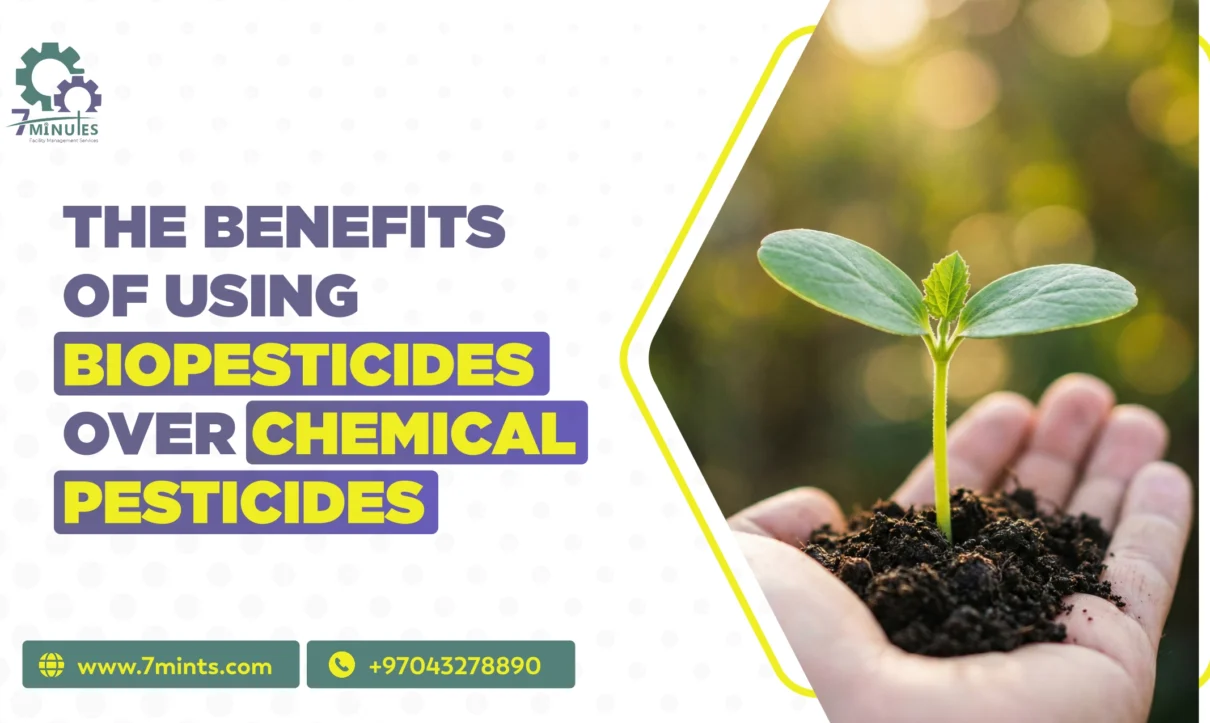
Pest management plays an important role in agriculture, gardening, landscaping, and commercial pest control. For decades, chemical pesticides have been widely used to control insects, weeds, fungi, and other pests. However, growing interest in sustainable pest management has increased the use of biopesticides as an alternative or complementary approach.
The benefits of biopesticides include targeted pest control, compatibility with integrated pest management (IPM), and the potential to reduce reliance on certain conventional chemical products. At the same time, biopesticides are not automatically risk-free, and their effectiveness depends on the product, target pest, application method, and environmental conditions.
Understanding the advantages and disadvantages of biopesticides can help farmers, property managers, gardeners, and pest-control professionals make more informed decisions.
What Are Biopesticides?
Biopesticides are pesticides derived from certain natural materials, including microorganisms, plants, naturally occurring substances, and other biological sources.
They can generally be grouped into three broad categories:
- Microbial biopesticides: Products based on microorganisms such as bacteria, fungi, or viruses.
- Biochemical biopesticides: Naturally occurring substances that control or interfere with pests.
- Plant-incorporated protectants: Certain protective substances produced by plants through the introduction of specific genetic material.
The way a biopesticide works depends on its active ingredient and target pest. Some affect pest feeding or reproduction, while others may infect, repel, or otherwise interfere with the pest.
Benefits of Biopesticides Over Chemical Pesticides
The main reason people consider biopesticides is their potential to provide effective pest control while supporting more targeted and integrated approaches to pest management.
1. Targeted Pest Control
One of the important advantages of biopesticides is that some products have relatively specific target ranges.
This can be useful when pest managers need to control a particular pest while limiting unnecessary effects on other organisms. However, selectivity varies considerably between products, so the label and product information should always be checked before application.
Also Read: Biopesticides Target Specific Pests Without Harming
2. Supports Integrated Pest Management
Biopesticides can be incorporated into an Integrated Pest Management program.
IPM does not depend on a single pest-control product. Instead, it combines several approaches, including:
- Pest monitoring
- Sanitation
- Physical control
- Biological control
- Cultural practices
- Preventive measures
- Appropriate pesticide use
This makes biopesticides useful as one component of a broader pest-management strategy.
3. May Reduce Reliance on Certain Chemical Pesticides
Another potential benefit is that biopesticides can provide an additional pest-control option when a management program aims to reduce reliance on particular conventional chemical pesticides.
This does not mean chemical pesticides should always be eliminated. In some situations, conventional pesticides may provide faster or more reliable control. The appropriate choice depends on the pest, severity of infestation, site, and available products.
4. Can Support Resistance Management
Pests can develop resistance when the same pesticide or mode of action is repeatedly used.
Using appropriate products with different modes of action as part of a resistance-management program can help reduce selection pressure.
Biopesticides may provide additional modes of action that can be incorporated into such strategies, depending on the active ingredient.
5. Potentially Favorable Environmental Characteristics
Some biopesticides have characteristics such as relatively short environmental persistence or targeted activity.
These characteristics can make certain products useful in pest-management programs where environmental considerations are important.
However, environmental impact is product-specific. A natural origin does not automatically mean a product has no environmental risks.
Check out our latest blog post on What Are Biopesticides? An Introduction to Natural Pest Control
Advantages of Biopesticides
The advantages of biopesticides can make them useful in agriculture, horticulture, landscaping, and other pest-management situations.
Some potential advantages include:
- Targeted pest-management options
- Compatibility with IPM
- Additional tools for resistance management
- Potentially shorter persistence for some products
- Useful alternatives for certain pest situations
- Potential to reduce dependence on selected conventional pesticides
- Suitability for some sustainable pest-management programs
The effectiveness of each advantage depends on the specific active ingredient and how the product is used.
Uses of Biopesticides
The uses of biopesticides cover a wide range of pest-management applications.
1. Agricultural Applications
Farmers may use approved biopesticides to manage certain insect pests, plant diseases, weeds, and other agricultural problems.
Depending on the product, applications can include:
- Crop protection
- Insect control
- Fungal disease management
- Seed treatment
- Plant disease prevention
- Pest suppression
2. Horticulture and Gardening
Biopesticides may also be used in gardens, nurseries, greenhouses, and landscaping.
They can provide additional options for managing specific pests while supporting broader plant-health and IPM programs.
3. Professional Pest Management
Some approved biopesticide products can be incorporated into professional pest-management programs.
The product must always be registered or approved for the intended use, and professionals should follow the label, application requirements, and relevant regulations.
Pesticides and Biopesticides: What Is the Difference?
The terms pesticides and biopesticides are sometimes used as though they represent completely different categories. In reality, biopesticides are a category of pesticides. A pesticide is broadly a substance or product used to prevent, destroy, repel, or control pests. Biopesticides are pesticides derived from biological or naturally occurring sources.
| Feature | Chemical Pesticides | Biopesticides |
|---|---|---|
| Source | Often synthetic chemical compounds | Biological or naturally occurring sources |
| Target range | Varies by product | Often more targeted, depending on product |
| Mode of action | Varies | Varies |
| Persistence | Varies significantly | Varies significantly |
| Application | Depends on product | Depends on product |
| Regulation | Subject to applicable regulations | Also subject to applicable regulations |
Neither category should automatically be considered universally better. The correct choice depends on the pest, environment, application requirements, safety considerations, and product characteristics.
Benefits of Pesticides in Pest Management
Although this article focuses on biopesticides, the benefits of pesticides should also be understood.
Conventional pesticides can provide effective and sometimes rapid pest suppression. They can be particularly useful when pest populations reach levels that threaten crops, property, public health, or other important resources.
Potential benefits include:
- Rapid pest suppression
- Effective control of serious infestations
- Protection of agricultural crops
- Control of certain plant diseases
- Management of invasive pests
- Support for public-health pest management
- Protection of stored products
Chemical pesticides remain important tools in many pest-management programs. However, they should be selected and applied responsibly according to their labels and applicable regulations.
Disadvantages of Biopesticides
Despite the many potential benefits, there are also disadvantages of biopesticides. Understanding these limitations is important before choosing a product.
1. Environmental Conditions Can Affect Performance
Some biopesticides can be sensitive to temperature, humidity, sunlight, rainfall, and other environmental conditions. If conditions are unsuitable, the product may not perform as expected.
2. Application Timing Can Be Important
Certain biological products work best when applied at a particular stage of the pest’s life cycle. Missing the appropriate application window can reduce effectiveness.
3. Some Products May Act More Slowly
Depending on the active ingredient and target pest, some biopesticides may not provide the rapid knockdown associated with certain conventional pesticides. This can be an important consideration when immediate pest suppression is required.
4. Storage Requirements
Some products require specific storage conditions to maintain their effectiveness. Users should always follow the manufacturer’s storage instructions.
5. Availability Can Vary
The availability of biopesticides depends on the region, target pest, crop, regulatory approvals, and commercial supply.
Advantages and Disadvantages of Biopesticides
When evaluating the advantages and disadvantages of biopesticides, it is important to consider the entire pest-management situation rather than focusing on whether a product is natural or synthetic.
Advantages
- Can provide targeted pest-control options
- Can support IPM programs
- May provide alternative modes of action
- Can contribute to resistance-management strategies
- Some products have favorable environmental characteristics
- Can reduce dependence on certain conventional products
Disadvantages
- Effectiveness can depend on environmental conditions
- Some products require precise application timing
- Certain products may act more slowly
- Storage conditions may be important
- Product availability can vary
- Effectiveness depends heavily on the target pest and active ingredient
Are Biopesticides Harmful?
A common question is, are biopesticides harmful?
The answer depends on the specific product, active ingredient, exposure level, and method of use.
Biopesticides are not automatically harmless simply because they come from natural sources. Some naturally occurring substances can still cause health or environmental effects if they are misused.
For this reason, users should always:
- Read the product label
- Follow the recommended dosage
- Use appropriate protective equipment
- Follow application instructions
- Avoid unnecessary exposure
- Store products safely
- Keep products away from children and pets when required
- Follow local regulations
Professional pest-control operators should also follow applicable training and safety requirements.
Biopesticides and Integrated Pest Management
One of the strongest applications for biopesticides is their use within IPM. A successful IPM program generally begins with identification and monitoring rather than immediately applying a pesticide.
Step 1: Identify the Pest: Correct pest identification helps determine which control methods are appropriate.
Step 2: Monitor Pest Activity: Monitoring helps determine pest population levels and whether intervention is necessary.
Step 3: Use Preventive Measures: Sanitation, exclusion, crop rotation, physical barriers, and other preventive practices can reduce pest pressure.
Step 4: Select an Appropriate Control: If treatment is necessary, choose an appropriate biological, mechanical, physical, or chemical method.
Step 5: Evaluate Results: After treatment, monitor the site to determine whether the pest population has been reduced and whether additional action is necessary. This approach can make pest control more strategic and reduce unnecessary applications.
When Should You Use Biopesticides?
Biopesticides may be suitable when:
- The target pest has been correctly identified.
- An approved product is available.
- The product is suitable for the intended site.
- Environmental conditions support effective application.
- The product fits the overall IPM strategy.
- The application can be performed according to label instructions.
Biopesticides should not be selected solely because they are described as “natural.” Product effectiveness, safety, regulatory status, and application requirements should all be considered.
How to Use Biopesticides Effectively
Getting the best results from biopesticides requires proper application.
1. Read the Product Label: The label provides important information about approved uses, dosage, application timing, safety precautions, storage, and other requirements.
2. Identify the Pest Correctly: Different pests require different control methods. Misidentifying the pest can result in ineffective treatment.
3. Follow Application Timing: Some biopesticides work best at specific pest-development stages or environmental conditions.
4. Monitor Results: Monitoring after application helps determine whether the treatment achieved the desired result.
5. Combine With Other IPM Methods: Combining biopesticides with sanitation, exclusion, monitoring, and other appropriate methods can improve overall pest management.
Frequently Asked Questions
Q1. What are the main benefits of biopesticides?
The main benefits of biopesticides include targeted pest-control options, compatibility with IPM, potential support for resistance management, and potentially favorable environmental characteristics for some products.
Q2. What are the advantages of biopesticides over chemical pesticides?
The advantages of biopesticides can include targeted action, additional modes of action, and compatibility with sustainable pest-management strategies. However, their performance varies by product and environmental conditions.
Q3 What are the disadvantages of biopesticides?
The main disadvantages of biopesticides can include sensitivity to environmental conditions, precise application requirements, potentially slower action, storage requirements, and variable availability.
Q4. Are biopesticides harmful?
If you are asking are biopesticides harmful, the answer depends on the particular product and exposure. Biopesticides can still present risks, so they should always be used according to their labels and applicable safety requirements.
Q5. What are the uses of biopesticides?
The uses of biopesticides include managing certain insects, weeds, plant diseases, and other pests in agriculture, horticulture, gardening, and approved professional pest-management applications.
Q6. What is the difference between pesticides and biopesticides?
Pesticides and biopesticides are not completely separate categories. Biopesticides are a type of pesticide derived from biological or naturally occurring sources.
Conclusion
The benefits of biopesticides make them valuable tools for modern pest management, particularly when they are incorporated into an integrated pest-management strategy. They can provide targeted control, alternative modes of action, and additional options for reducing reliance on particular conventional pesticides.
However, understanding the advantages and disadvantages of biopesticides is equally important. Biopesticides are not automatically risk-free, and their effectiveness can depend on environmental conditions, application timing, pest biology, and the specific active ingredient.
The conversion from chemical to biological pest control is undeniably a permanent solution that eventually leads to healthier ecosystems, safer food, and more resilient agricultural systems, which are all desired by the stakeholders. Contact us as application of biopesticides as a standard in modern crop protection will be a win-win situation for farmers, policymakers, and consumers.




1 Comment
Comments are closed.