

Every firm building, every mountain-like skyscraper, and every family-friendly house cuddle cozily amongst the harsh conditions of nature with the help of civil engineers. These mighty professionals mix different proportions of science, mathematics, creativity, and planning with extra care to make long-lasting structures that save lives.
Why Building Safety Matters
Houses, offices, hospitals, schools, bridges, and other public buildings are essential for modern life, and all of them rely on one indispensable characteristic: structural integrity. The best of buildings are those that not only impress or are utilitarian but also provide safety to their occupants and the surrounding neighborhoods.
By civil and structural engineers, the guardians of our built environment are invisible. They evaluate the behavior of buildings when subjected to stress, determine the capacities of the loads they can bear, choose appropriate materials, and oversee construction work to make sure each detail conforms to the design specifications. Their efforts are based on years of continuous research, strict building codes, and hard-earned lessons learned from past mistakes.
Role of Civil and Structural Engineers
Civil engineers are the ones who create, build, and take care of the era’s most important infrastructures, like buildings and bridges, roads, dams, and water supplies. Structural engineers are a specialized area of civil engineering that deals with the load-bearing framework of structures. The main duty of structural engineers is to check if the skeletons of buildings can safely hold the forces during the buildings’ lifespan.
A larger team includes structural engineers in their midst. When architects design, they think and show the aesthetic; when contractors build, they manage the execution of the construction, and when building inspectors control, they check the compliance with codes. Yet, the structural engineer connects the gaps in the architect’s vision and engineering reality. They provide answers to the following questions, which are necessary: Could this design be executed? Could it withstand stress? Which materials would be best? What would be the strength of each part? The professional seal on the design documents of the engineer signifies an ethical and legal obligation that the building is safe for people to occupy.
Structural engineers carry a very high responsibility because they cannot allow a structure to fail. This moral obligation compels structural engineers to obtain licenses, follow standards of conduct, and keep their knowledge up-to-date throughout their working lives.
Understanding Loads: What Buildings Must Withstand
Before the safe building design can be put forward by the engineers, the very forces that will be acting on the building during its lifetime have to be understood. This process is known as load analysis, and it is one of the most important steps in the structural design process.
Structural engineers have to consider various types of loads that buildings undergo:
Dead Loads compile the weights that will be supported by the buildings without interruption. These comprise the weight of the building structure itself (concrete, steel, beams, and walls), as well as fixed equipment and systems like HVAC units, electrical systems, and permanent fixtures. Dead loads are consistent over time, and they never change until there is a building modification.
Live Loads are the weights that come and go depending on the building. These include the weights of the people inside the building, furniture, equipment, and also movable items. Engineers have to work on the basis of the maximum number of occupants and the heaviest loads likely to be in different areas—different live load requirements will apply to a residential floor, a parking garage, or a warehouse.
Environmental Loads are nature’s forces imposed on buildings. Earthquake or seismic (earthquake) loads create complicated phenomena that cause buildings to suffer extensive damage if unprepared, since buildings must be able to absorb such forces without collapsing.
Other Loads might consist of, for instance, impact forces, dynamical loads from machines, temperature changes affecting structures, and rare loadings during construction or future renovations.
Smart Structural Design: Conceptualizing Systems of Safety
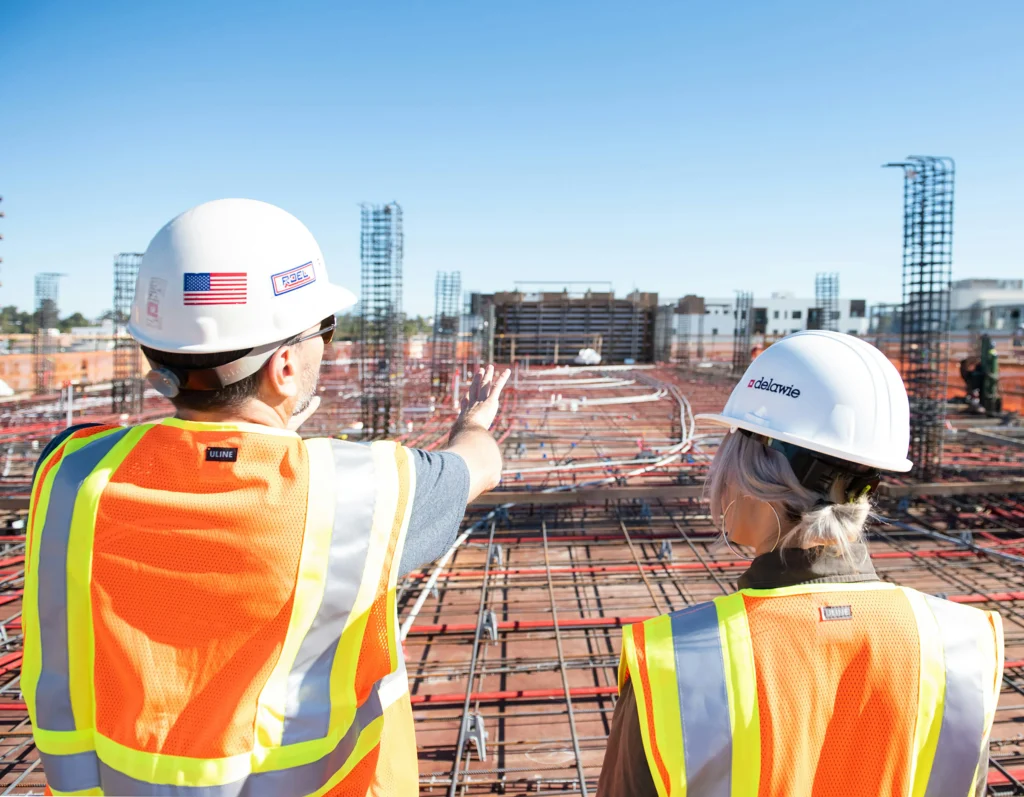
After determining the forces a structure has to bear, the engineers proceed to design the structural system—the load-bearing framework that will subsequently pass these forces down to the earth. This is the junction where inventiveness and engineering discipline become one. Different types of structures pose different requirements in terms of manufacturing and site conditions.
A moment-resisting frame is a type of frame that resists bending forces due to its connections between beams and columns, thus becoming very popular for buildings located in seismic zones, since it allows movement. The shear wall system employs very sturdy walls that can hold up against lateral (sideways) forces, thereby being suitable for habitable buildings and structures facing high winds. Braced frames utilize cross bracing to form triangular constructions that can strongly resist horizontal forces. In small or masonry buildings, walls that carry loads support the upper floors directly.
On the other hand, each system has its respective qualities of strength, flexibility, cost, and visual effect. A hospital building may need a moment-resisting frame to provide and ease the future modifications and earthquake damage control, whereas a warehouse might go for a simpler braced frame system.
-
Material Selection: Choosing Strength and Durability
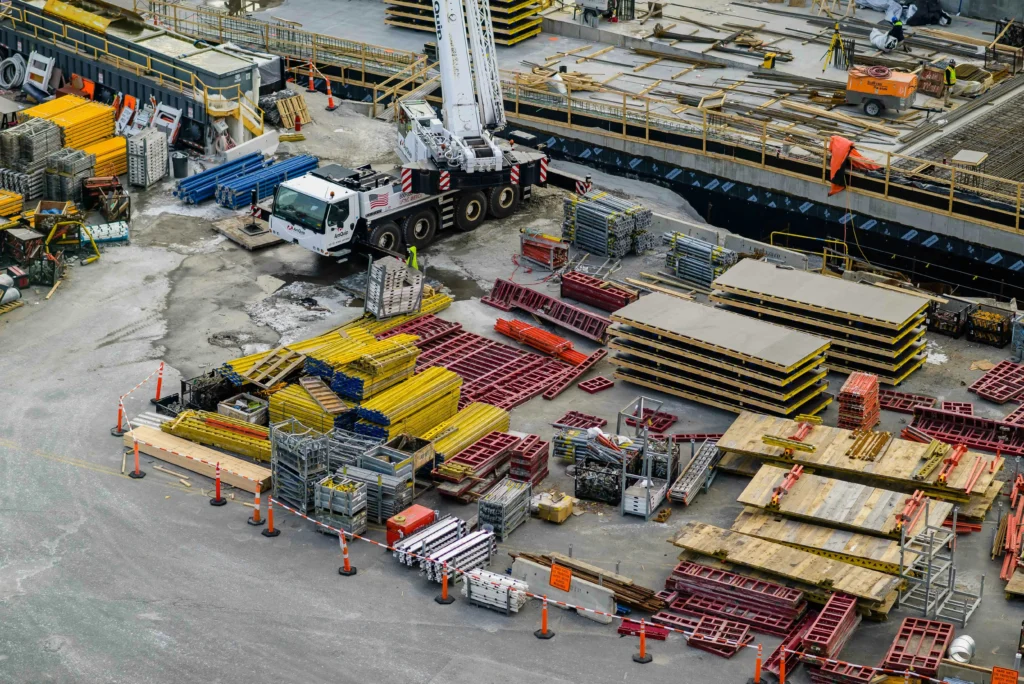
Material quality is the first step in assuring the safety and longevity of the structures. The different materials have their own properties, such as strengths, weaknesses, and reactions to stress, and the designers have to carefully pick the materials that would cope with the demands of each specific project.
Reinforced Concrete
Essentially, it fuses together the compressive strength of concrete, which is the best at resisting crushing forces, and the tensile strength of the steel reinforcement bars (rebars), which hold pulling and bending forces at bay. Although concrete also has its drawbacks—it is heavy, and if not up to standard-reinforced and maintained, it can crack.
Wood and Timber
These are among the renewable materials having the highest strength-to-weight ratios. The use of modern engineered wood, such as cross-laminated timber (CLT) and glulam, has resulted in structural performance that is impressive and environmentally friendly at the same time. Check out our latest blog post on the Difference Between RCC, PCC, and Precast Construction
Composite Materials
On the other hand, Composite Materials such as fiber-reinforced polymers (FRP) have the properties of being very strong, light in weight, and not easily corroded, which is why they are slowly but surely becoming the foremost choice in bridge repair, reinforcing of structures, and special uses.
The Hidden Science Behind Everyday Safety
The vibrating skyscraper in the wind, the hospital that is earthquake-proof and still functional afterwards, and the bridge that has been carrying cars safely for decades are all examples of the application of science and the use of skills, knowledge, and trust in creating structures.
The moment you next walk into a building, you will be taking advantage of the concealed science of structural engineering. Contact us as It is civil engineers who design buildings that are not merely striking or habitable but, above all, safe places where humans can live, work, and socialize free of anxiety, since the buildings they are in are strong enough to last.





1 Comment
Comments are closed.