

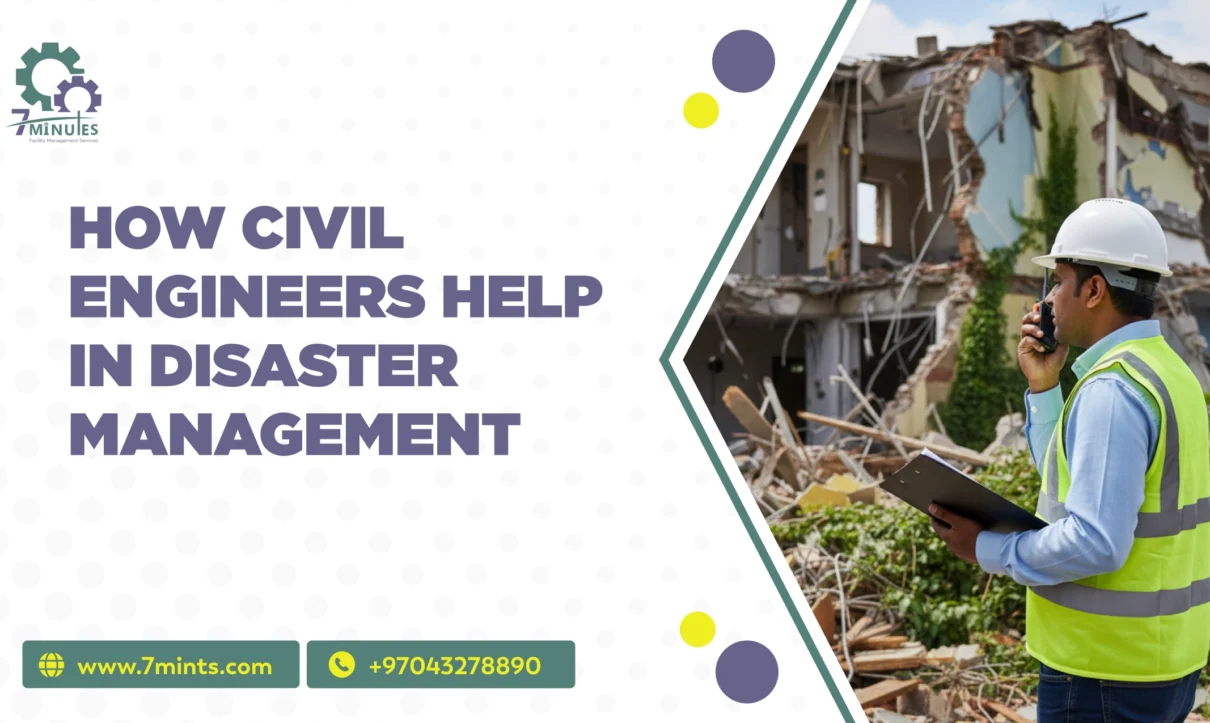
Disasters, regardless of their nature and cause, can happen anytime, anywhere, and they all lead to terrible consequences in the same way—by killing huge numbers of people, destroying property everywhere, and damaging infrastructure severely. Climate change is playing a significant role in increasing the occurrence of such disasters, and thus the entire world has to come up with a more resilient system to protect the population and to be able to repair the affected areas in a short time.
Here is where the role of civil engineers becomes vital. They are the ones who not only create the safe and sound buildings but also work towards making the entire city safer, direct rescue packs, and assist the people while getting over the disaster. This blog unfolds the role of civil engineers throughout the entire process of disaster management—preventing disasters, responding to emergencies, and rebuilding communities afterward.
Understanding the Role of Civil Engineers in Disaster Management
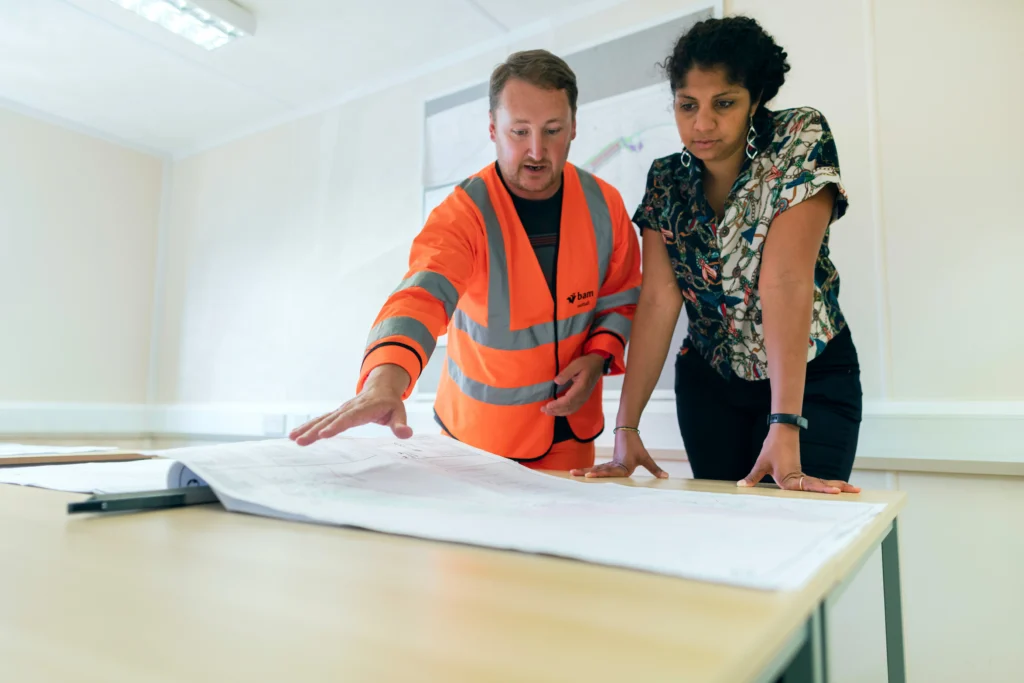
Civil engineering is a big factor in society’s security infrastructures. They are designing buildings and bridges and other structures that are strong enough, as well as managing and maintaining road systems that can cope with harsh conditions and even disasters.
Their work impacts the lives of millions since they develop the cities and provide the necessary services to the people in the cities where the infrastructures are located. When disasters occur, the engineers will use their skills and knowledge to assess the areas and help the rescue teams to work safely.
After a disaster has happened, it will be the engineers’ turn to lead the reconstruction that will help cities and towns return to a semi-normal situation. Thanks to their broad knowledge of building materials, building physics, and the influence of nature on buildings, they are proactive partnerships in the fight against the hazards of the future.
Pre-Disaster Phase: Planning and Prevention
-
Conducting Risk Assessments
Civil engineers engage in disaster management even before a disaster happens; this is their profession and thus they start it with the study of potential hazards. At 7mints we use historical data of earthquakes, floods, cyclones, and landslides to identify the worst-hit areas.
Their studies of different types of soil, GIS mapping, and environmental data help to monitor the potential areas for the maximum spread of damage. They are able to prepare these detailed assessments and reports that the authorities use as guidance in deciding the safe areas for construction and the no-development zones. The scenario of civil engineers spotting the risks earlier has the benefit of not only reducing the occurrence but also or more importantly, the degree of damage in case of calamities.
-
Designing Disaster-Resistant Infrastructure
Creating a disaster-resistant structure is among the most crucial tasks of civil engineers. The professionals are responsible for designing buildings that can withstand earthquakes, hurricanes and torrential rains. This involves using reinforced materials, putting up flexible structures, and using strong foundations and shock-absorbing technologies.
-
Urban Planning for Safety
A well-planned city is the key to reducing the effects of a disaster. Civil engineers put in place drainage systems that are able to suck rainwater away quickly and thus eliminate the problem of urban flooding to a large extent.They also take care of the existence of wide roads for easy access by emergency vehicles, create open spaces where people can safely gather during emergencies, and install signs to direct them to the nearest shelters.
Their urban development plans also include a ban on construction close to rivers, at the bottoms of hills, and on the lines of fault where earthquakes are most likely to occur. Through the implementation of disaster safety considerations in the city layout, civil engineers are able to substantially reduce the impacts of natural disasters in the long run.
During Disaster: Emergency Support
-
Quick Structural Evaluation
Determining the safety of buildings is one of the biggest problems during a calamity. Civil engineers provide quick and efficient assessments of structures. Their judgement is based on the evaluation of deteriorated buildings becoming unstable, and they also direct the rescue forces according to the safe points of entry.
The usage of methods and tools like crack mapping, load distribution analysis, rapid visual inspection, and more helps locate danger areas. Their evaluations help carry out rescues but only where no one is taken at more risk.
-
Technical Support in Rescue Operations
Civil engineers are very active, to say the least, in the whole operation of rescue. They facilitate the safe demolition of dangerous structures and at the same time, they manage to remove debris from the site without triggering further collapse.
Also, they help in building temporary shelters and emergency bridges under very limited conditions. Their ongoing decisions are very critical, as they tell the rescue personnel where and how to enter the buildings, how to lift heavy debris, and how to lower risks—all of which accelerate rescue operations.
Post-Disaster Phase: Recovery and Reconstruction
-
Damage Assessment
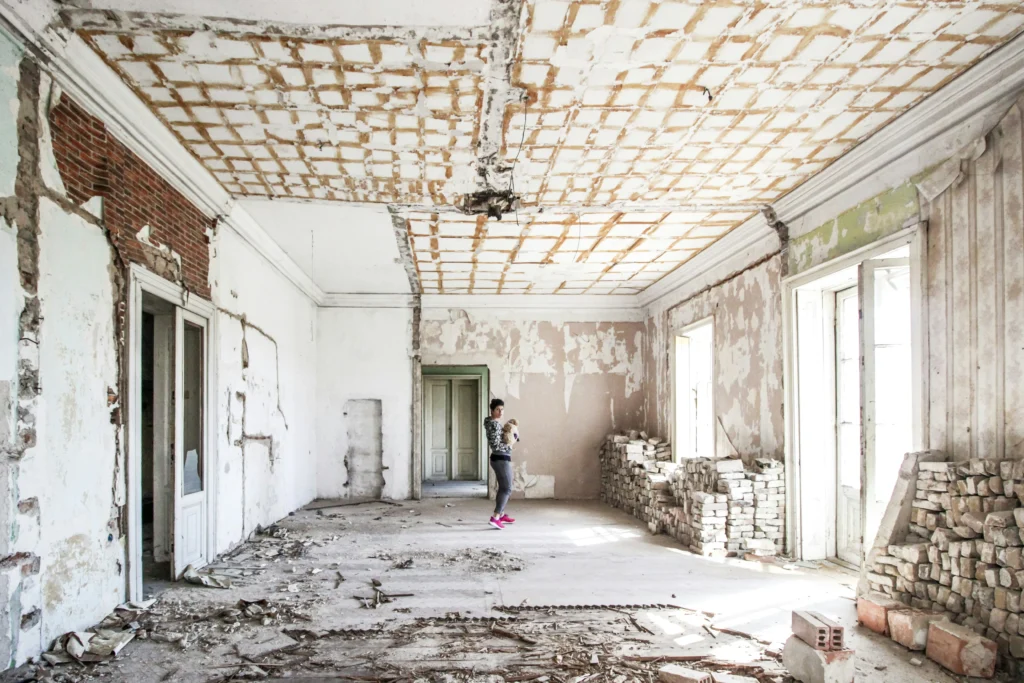
As soon as a disaster is over, the extent of the damage is to be understood. To do so, civil engineers see to it buildings, roads, hospitals, bridges, pipelines and all public utilities are inspected and their respective levels of destruction are determined. Structural cracks, failures, and material breakdown are being documented in detail through reports. These assessments not only help to know the value of total loss but also are a basic need for the governments and the insurance companies to calculate their total losses.
The reconstruction is the aspect where civil engineers give the most of their help. With the help of contemporary engineering practices and disaster-proof materials, they make sure that the rebuilt infrastructure is not only capable of withstanding imminent disasters but also able to last for a longer time than the previous one.
2. Restoration of Essential Services
Essential services such as water supply, sewage disposal systems, electricity networks, and transport routes are usually the ones that get the most damage during catastrophes. Also, they facilitate the public buildings, such as hospitals and schools, to become operational again in the shortest time possible. By using smart techniques and thorough planning, civil engineers reduce the recovery period so that the people can get back to their normal lives sooner.
Use of Modern Technology in Disaster Management
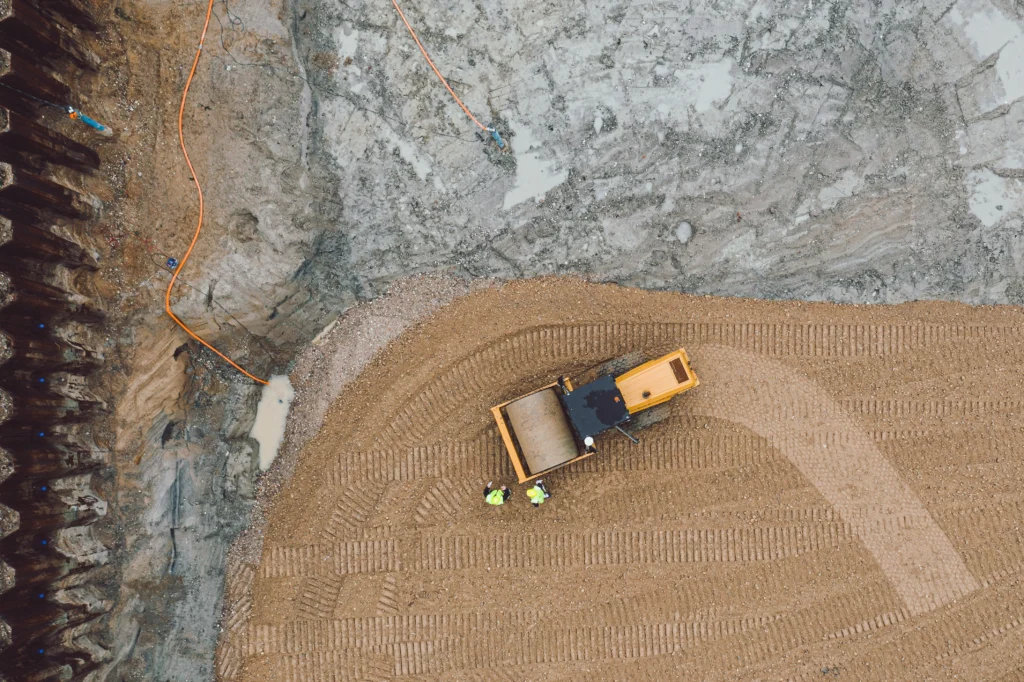
Modern technology has revolutionized the disaster management process of civil engineers. The use of agencies such as GIS, drones, and satellite imagery not only gives them the power to oversee and monitor disaster zones but also enables them to determine the extent of the damage with precision.
The use of drones gives engineers the opportunity to investigate areas that are at risk without entering them, which makes it very safe. There are reliable tools that can simulate the disaster area so engineers can anticipate the behavior of buildings and surrounding structures depending on the type and magnitude of the disaster.
In addition, civil engineers employ artificial intelligence-based systems that are capable of giving beforehand alerts to people so that they can evacuate before the main disaster occurs. All these technological advancements play a significant role in the mitigation of risks, enhancing response time, and possibly saving more lives.
Real-World Examples of Civil Engineering in Disaster Management
-
Earthquake-Resistant Designs in Japan
Japan is famous for its cutting-edge techniques in earthquake engineering. The builders there create infrastructures that twist and turn rather than break apart. They install shock absorber devices, drill deep into the ground for foundations, and go for pliable structures. Their extraordinary engineering has allowed Japan to survive and even save thousands of lives during or after earthquakes of high magnitudes.
-
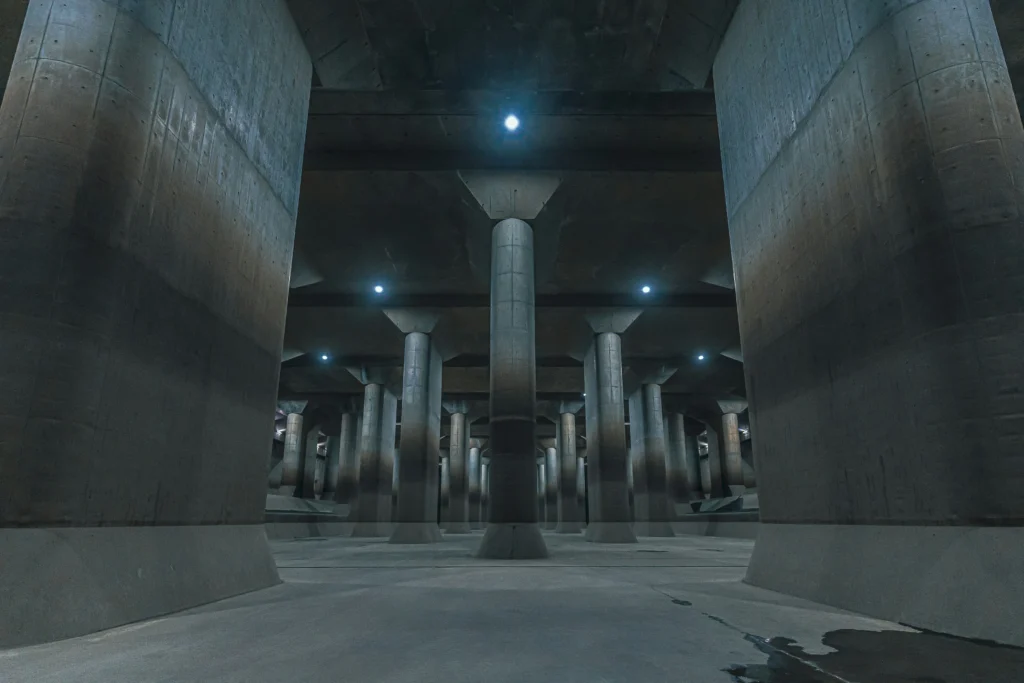
Flood Management in the Netherlands
The Netherlands is a flat country with below sea-level areas, and engineers have made the situation secure through the building of large flood walls, raising of ground levels, and installing sophisticated water removal systems. The new methods developed for such engineering works not only keep the cities safe from the sea that keeps rising and storms of high winds and rains but also trap the kingfishers and vultures who come to learn from them and therefore are now gathering worldwide. Check out our latest blog post on Why Net-Zero Construction Is the Next Big Trend in Civil Engineering
-
Cyclone Shelters in Odisha, India
Odisha has come up with immense shelters that can withstand cyclones that were built by civil engineers after the state went through some of the super deadly cyclones. These are almost impregnable to the forces of nature comprising strong winds, heavy rains, and flooding. Cyclone Fani was one of the storms that led to the enactment of these shelters and the number of lives saved has been in the hundreds as a result.
Why Civil Engineers Are Essential for a Safer Future
The backbone of disaster-safe cities is civil engineers. Moreover, the heavyweight of climate change has made it even more necessary to have robust infrastructure.
Civil engineers help society to be more ready, to take action faster, and to be more robust in coming back from the disaster. They bring the technical know-how, the practical skills, and the innovative ideas that not only reduce the risk but also distribute it over a larger area and eventually save lives.
Having professional civil engineers and state-of-the-art infrastructure is no longer an option but a must for making the world a safer place for everyone.
Conclusion
Civil engineers are at the forefront of disaster management in all stages—before, during, and after a catastrophe. They assist in the risk assessment process, erect structures that are resistant to disasters, provide help in rescue operations, and rebuild communities in ways that make them both safer and stronger. Contact us as their efforts make it possible to say that even in the most challenging natural scenarios where human lives need to be protected and swift recovery facilitated, our preparedness is in place.
With natural disasters occurring more regularly, the role of civil engineers will be increasingly important. Whether you are considering civil engineering as a career or want to work on buildings that are resilient to disasters, this area of engineering guarantees you that your efforts and contributions will be made in a significant way.






1 Comment
Comments are closed.