

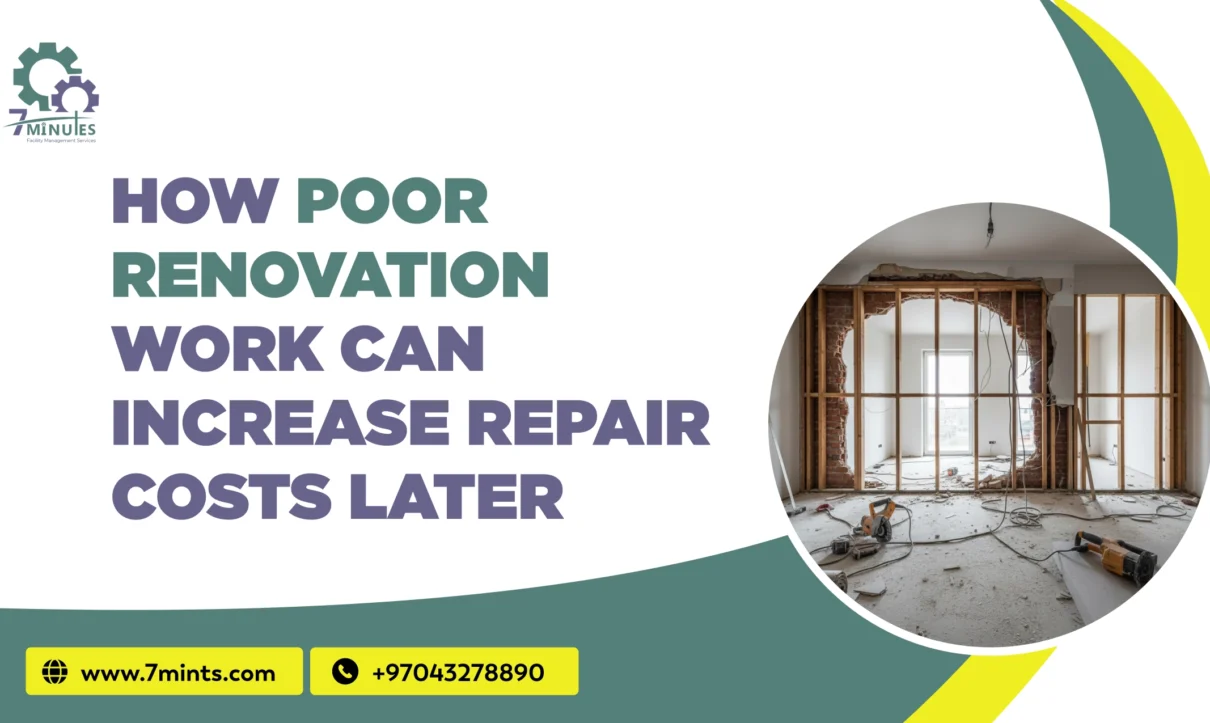
The common belief about property renovation is that it serves as an effective method to boost property value while enhancing its visual appeal and operational capabilities. Business and residential property owners choose to renovate their buildings because they want to update their facilities and secure future financial gains. Renovation work conducted with insufficient planning or inadequate execution methods results in installation faults because of unsafe work methods on sites. Renovation projects that use poor materials will result in future expenses because they cause ongoing equipment breakdowns that need costly repairs.
Renovation work that contractors perform with poor execution will show its flaws when they start their work on the project. The paint may look fresh, the tiles may appear well-fitted, and everything may seem functional. The concealed errors that builders constructed in walls and floors, and through electrical and plumbing systems, will begin to create problems. The concealed problems that exist in the system will develop into major repair problems, which will require further financial resources.
-
Use of Low-Quality Materials
The practice of using low-grade materials for building renovations results in future expenses, which become the highest cost factor according to industry experts. Immediate renovation expenses decrease when people purchase affordable tiles, weak cement, low-quality paint, and substandard building materials. The materials used in this construction project will not last beyond their initial period because they cannot handle normal operational use. The materials will start developing cracks, peeling, and breakage defects at an earlier point than the expected time frame.
The need for repairs arises when materials experience early failure because this situation results in costly expenses. The process of replacing damaged materials often requires complete removal, which leads to higher expenses for both labor and materials. Property owners end up paying twice for the same work because they initially chose cheaper options. High-quality materials used for renovation projects will extend the life of the building while decreasing costs for future maintenance work.
-
Improper Electrical Installation
The electrical errors that happen during renovation projects create both safety hazards and financial damages. The problems of poor wiring connections, overloaded circuits, and incorrect cable installations will not become visible until after a certain period. The worst effects of these problems will develop into short circuits, power outages, and fire risks as time goes on. The existing problems will drive up maintenance expenses while putting people at risk of danger.
The process of fixing broken electrical systems demands extensive work because technicians need to break through walls and ceilings to find hidden electrical wiring. The project will bring extra reconstruction costs, painting expenses, and expenses for completing final work. The electrical system will incur extra expenses because damaged wiring will destroy electrical appliances. The installation process needs certified electricians for proper installation because their work will protect against expensive and hazardous repairs that might take place in the future.
-
Poor Plumbing Work
Plumbing errors are another major reason renovation costs increase in the future. Hidden leaks occur when pipe connections fail, joints become weak, and water pressure control systems are improperly installed. The leaks remain hidden while they slowly damage walls, ceilings, and floors for several months. Mold growth occurs because moisture accumulation weakens the building structure.
Repairing plumbing damage requires expensive work because it needs tile removal, pipe replacement, and restoration of all affected areas. The entire repair expenses increase because water damage affects both furniture and electrical systems. The implementation of proper plumbing standards during renovation work will help to prevent expensive problems from developing. The building needs proper plumbing systems because they provide ongoing safety and protection for its structural elements.
-
Weak Structural Modifications
Property owners who want to renovate their buildings should not remove walls or make structural changes without professional guidance. Such decisions may compromise the strength and stability of the building. The building structure experiences damage through wall cracks and the development of uneven surfaces.
The most expensive building repairs occur when structural components sustain damage that needs complete restoration work. The repair process needs both structural strengthening elements and professional assessment and extensive building work. The building’s entire structural system encounters safety threats during critical emergencies. The use of proper structural design methods during building renovation work establishes long-lasting structural integrity, which reduces upcoming maintenance expenses.
-
Poor Waterproofing
Renovation projects frequently neglect waterproofing or execute it incorrectly. Water penetration issues occur most often in bathrooms, kitchens, balconies, and rooftops of the building. Buildings become vulnerable to water infiltration through their walls and floors because they do not have essential waterproofing components installed. This process creates damp areas, which cause paint damage and structural deterioration over time.
The process of restoring waterproofing damage becomes both expensive and time-consuming after waterproofing has failed. The process requires both tile removal and flooring installation and wall treatment work. Indoor air quality suffers from persistent moisture issues, which create health risks for people who live in the space. Check out our latest blog post on Electrical and Plumbing Issues That Indicate Urgent Building Repairs
-
Unskilled Labor and Poor Workmanship
The choice to hire untrained workers for budget control in renovation projects leads to inferior building results. Workers who lack necessary skills tend to make errors when they install tiles and fittings, doors, and electrical systems. The finishing may look uneven, and minor mistakes may go unnoticed during inspection. The maintenance of the renovated area becomes necessary to maintain its optimal condition.
The installation of components that receive incorrect installation will result in their eventual loosening, cracking, and functional failure. The process of repairing errors requires complete project reconstruction instead of using simple fixes. The project will experience substantial financial increases because all required materials and workforce expenses will rise. The selection of experienced workers for renovation projects will result in permanent building solutions that decrease maintenance expenses.
-
Ignoring Building Codes and Safety Standards
Building codes, together with safety regulations, work to establish safe buildings that remain structurally sound. The violation of these regulations during renovation work leads to future legal and financial complications. The United Arab Emirates enforces strict construction standards that monitor building standards to protect both quality and security. The rules establish penalties that require organizations to either face financial punishment or perform required changes.
The authorities will mandate property owners to redo specific parts of their building when they discover that renovation standards do not match approved regulations. The process of repairing damages will increase costs while it results in interruptions to both building operations and business activities. The renovation process needs to follow legal regulations because it prevents extra costs while maintaining the property’s value. The implementation of safety standards becomes the most cost-effective solution for businesses throughout their operations.
-
Poor Planning and Lack of Supervision
The absence of proper planning in renovation projects results in both design flaws and technical defects. The combination of improper layout selection, together with measurement errors and hasty implementation, results in operational problems. Water drainage problems will occur because poorly designed floor slopes create water accumulation problems. The planning errors will require their future restoration through corrective steps.
The absence of expert oversight enables minor problems to continue until they transform into significant problems. The process of correcting errors that show up at a later time requires reconstruction work, which creates extra costs. Proper project management ensures that every renovation phase receives complete and accurate execution. The combination of planning and monitoring activities protects the organization from incurring future maintenance expenses.
Conclusion
Initial savings from substandard renovation work will result in more expensive repairs that emerge during upcoming maintenance periods. The concealed defects within materials and plumbing, electrical systems, and structural components lead to escalating costly issues over time. Contact us, as the process of making multiple repairs creates financial strain on property owners while generating distressful situations that they need to handle.
Quality materials, experienced workers, and thorough planning and adherence to legal requirements create products with extended life cycles. A successful renovation project protects your property value while decreasing your ongoing maintenance costs. The renovation process benefits from smart spending because it prevents unnecessary expenses that would arise from future repairs.





4 Comments
Comments are closed.