

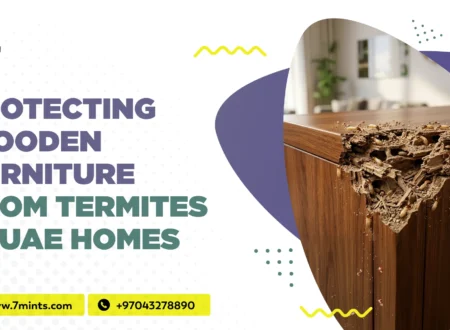
Termite damage to wooden structures in the UAE usually happens through three main mechanisms, and they can work together without you even realizing it. First, termites feed on the cellulose inside the wood. Second, they tunnel through beams and frames from the inside outward, so the surface can look mostly normal. Third, they create mud tubes, which let them move between soil and timber without being spotted.
The UAE’s warm and humid conditions keep subterranean termites active all year, and most modern homes provide steady “food” in the form of wooden doors, flooring, cabinets, and even furniture. If no one treats the issue, this hidden feeding pattern can weaken structural timber, turn into costly wood damage repair, and quietly reduce property value long before most owners notice anything is off. Professional termite control, applied early, is basically what separates a small fix from a much bigger structural bill.
An Individual noticed a door that suddenly won’t close right, or paint on a windowsill that’s started bubbling for no obvious reason — and you’re thinking, is it just wear and tear or something worse? In the UAE, “something worse” is very often termite damage, and the frustrating part is that by the time it shows up, the real destruction has usually been going on out of sight for months. This guide explains, in a straightforward way, how termite damage affects wooden structures across the UAE, what early signs to watch for, why termite control matters more here than in most places, and what wood damage repair might cost, so you’re not left guessing or second-guessing every small change.
Why Termite Damage Is a Serious Risk in the UAE
The UAE’s climate isn’t just tolerable for termites; it’s kind of close to perfect, which is why termite damage ends up being such a persistent worry for property owners here. Warm and fairly stable temperatures help subterranean termite colonies reproduce quicker and then keep expanding pretty much year-round, instead of “taking a pause” during a colder spell like it naturally happens in a lot of other places. Then add that with widespread landscaping, irrigation setups, and those imported wooden bits and pieces you often see in modern villas or commercial sites, and well, you basically get a steady mix of moisture plus ready food sources, so termite damage stays a real, live threat in Dubai, Abu Dhabi, Sharjah and beyond.
And yes, the money side is not theoretical. Professional termite control in Dubai can easily run into the thousands of dirhams once you include treatment, wood damage repair, and follow-up monitoring— and that’s before you even think about the bigger ticket items, like swapping structurally compromised beams, door frames, or flooring that has been quietly deteriorating for too long. Honestly, regular inspections cost far less than repairs, which is exactly why spotting early signs of termite damage makes such a difference.
Check out our latest blog post on Why Humidity Increases Pest Activity in Coastal UAE Cities
How Termites Attack Wooden Structures
Termite damage to timber doesn’t show up in one dramatic moment—it follows a pattern that is usually pretty consistent, so it helps to know what you’re actually looking for before you inspect your own property for signs of an infestation that’s active.
1. Feeding on cellulose within wood. Termites rely on specialized enzymes to break down cellulose, the stuff that wood and plant material are made of, and they consume it from the inside while the outside can still look normal, pretty untouched. This is exactly why the real harm tends to stay hidden for so long, even when it’s already underway.
2. Tunnelling through the wood. Instead of eating at random, termites carve an organized tunnel web through timber, hollowing it out from inside, until the whole structure gives up under surprisingly little force.
3. Damaging structural components. Beams, door frames, and flooring—not only furniture—end up being target material, and once these weight-bearing pieces are compromised, the safety of the entire building drops, not just how it looks on the surface.
4. Building mud tubes. Subterranean termites build pencil-thin mud tubes that link their underground nests to the timber above ground, so they can stay protected from dry air and predators, while holding on to the moisture they need to survive. If you spot those tubes along foundations or walls, that’s one of the clearest indicators of a live, active infestation.
Warning Signs of Termite Damage to Look For
| Sign | What It Looks Like | What It Means |
| Hollow-sounding wood | A dull, papery tap instead of a solid knock | Termites have eaten the interior, leaving a thin outer shell |
| Cracked or bubbling paint | Uneven, blistered paint on wooden surfaces | Structural movement underneath is disrupting the surface layer |
| Discarded wings | Small, shed insect wings near windows, doors, or lights | A termite colony has recently swarmed and is establishing itself |
| Tight-fitting doors/windows | Frames that suddenly stick or won’t close properly | Termite feeding and added moisture are warping the wood |
| Mud tubes | Thin brown tubes along walls, foundations, or timber | Active subterranean termites are travelling between soil and wood |
Warning signs of termite damage to look for in a house
- Hollow-sounding wood—tap suspect areas; a papery or hollow echo means the interior has already been eaten away.
- Cracked or bubbling paint—often mistaken for water damage, but it can signal termite activity disrupting the wood underneath.
- Discarded wings—finding these near entry points confirms a colony has already swarmed and settled nearby.
- Tight-fitting doors and windows—frames that suddenly stick are an easy-to-miss but reliable early indicator.
- Mud tubes—the single most direct visual proof of subterranean termite activity connecting soil to your timber.
The Long-Term Impact of Untreated Termite Damage
It mostly shifts the full risk profile of a property. When the early signs are ignored, wooden structures start losing usable lifespan, sometimes by years. Then the act of repairing or replacing compromised timber gets more and more expensive the longer the infestation stays hidden and keeps spreading. In commercial spaces, that can also turn into operational slowdowns and lost income while repairs are being done. For homeowners, there’s often a drop in resale valuation, and in difficult situations, real safety concerns too, if structural beams or frames were compromised by termite damage.
Termite Control and Prevention Tips for UAE Property Owners
1. Schedule regular termite control inspections. If your property has lots of wood elements—doors, flooring, structural beams—the risk level is usually higher. So it makes more sense to do routine professional checks rather than waiting for visible termite signs, because by then the damage may already be there.
2. Control moisture around the property. Fix leaks fast and keep bathrooms, kitchens, and basements properly ventilated. Subterranean termites are very drawn to consistent moisture, so reducing dampness makes a home far less “tempting” to them.
3. Use termite-resistant or treated wood. In new construction or renovations, chemically treated timber or naturally resistant wood adds a meaningful shield, basically before termites ever manage to get a foothold and begin causing harm.
4. Book professional termite control services. Licensed technicians use targeted, UAE-registered termiticides, and they can apply preventive barrier treatments on a maintenance schedule that blocks re-infestation. This helps stop future wood damage repair costs from starting in the first place.
Step-by-Step Process How to Handle a Suspected Termite Infestation
Start by inspecting the place yourself first. Give the wooden bits a light tap, check for mud tubes close to the foundation, and watch for discarded wings near windows or doorways—this is so you get a more accurate idea before you call a professional, because it can be easy to misjudge.
Then document everything you notice. Take clear photos of hollow-sounding areas, cracked paint, or those mud tube lines; it helps the technician estimate how serious it is faster when they arrive.
1. Book a licensed inspection. Verify the company is approved by your local municipality (Dubai Municipality, for instance) before you pay—this approval is usually a legal requirement for pest control providers in the UAE.
2. Ask what treatment is actually going to be used; don’t be shy. Solid technicians should tell you the active ingredient and explain if the plan is a liquid soil barrier, a bait station setup, or direct wood treatment. If they dodge that question, you should treat it as a yellow flag.
3. Get the warranty in writing. A spoken promise, even if it sounds confident, is hard to enforce—so make sure the service contract states the treatment warranty, the length of coverage, and exactly what it includes.
4. Don’t forget the moisture situation; fix it together with the treatment. If there’s a leak or irrigation is doing too much nearby, resolving that root cause stops the same problem from returning after the termites are handled.
5. Treatment, schedule follow-up monitoring. Most warranties include a follow-up visit in about 90 days; use that check to confirm the treatment was held and that no new activity has appeared.
Finally, repair structurally damaged wood quickly. Once termites are eliminated, replace or reinforce compromised beams, frames, or flooring before normal load is placed on them again; otherwise, you just invite new stress cracks.
Mini Case Study: Catching an Infestation Early
Think about a pretty common situation in a Dubai villa. One day the homeowner notices a bedroom door is starting to stick, and they brush it off as just seasonal humidity, you know the usual excuse. Then a few weeks pass, and suddenly they see faint mud tubes along an exterior wall, right close to an irrigation line, so they arrange a professional check.
The technician comes in and, after inspecting, confirms it’s early-stage subterranean termite activity mostly limited to a door frame and a short little stretch of skirting. The key point is that it was caught before it could reach the load-bearing beams, which is the part that really gets expensive.
With a targeted treatment plus a minor repair, the total cost ends up being a fraction of what full structural remediation would look like. All of that simply happened because the homeowner noticed a small early sign and acted on it, rather than waiting until bigger, unmistakable damage showed up first.
Frequently Asked Question
Q1. Why is termite damage such a common issue in the UAE, like, specifically?
The UAE’s warm, humid atmosphere helps termite colonies stay active and reproduce through the year, unlike cooler places where seasons naturally slow them. Add landscaping that’s pretty much everywhere, plus irrigation, and all those wooden building parts, and you get conditions that are almost always favorable for an infestation.
Q2. What are the earliest signs of termite damage to watch for?
Listen for wood that sounds hollow when you tap it. Also check for cracked or bubbling paint, see discarded wings near windows or bright light areas, and look out for mud tubes running along walls or near the foundation; those are usually the most dependable first clues.
Q3. How much does termite treatment cost in the UAE?
In general, it can go from around AED 300 for small, contained problems up to about AED 7,000 for full coverage treatment of a larger villa. The final number depends on the property size, how serious the infestation is, and which treatment approach is used.
Q4. How long does termite treatment protection last?
If the barrier or bait system is applied correctly, protection often lasts 5 to 10 years. Still, it really depends on soil conditions and whether maintenance continues as needed.
Q5. Can termite damage affect a building’s structural safety?
Yes, absolutely. Termites don’t just focus on furniture; they can chew into structural beams, door frames, and flooring. If the load-bearing parts are left untreated, the building safety can be genuinely reduced over time.



1 Comment
Comments are closed.