

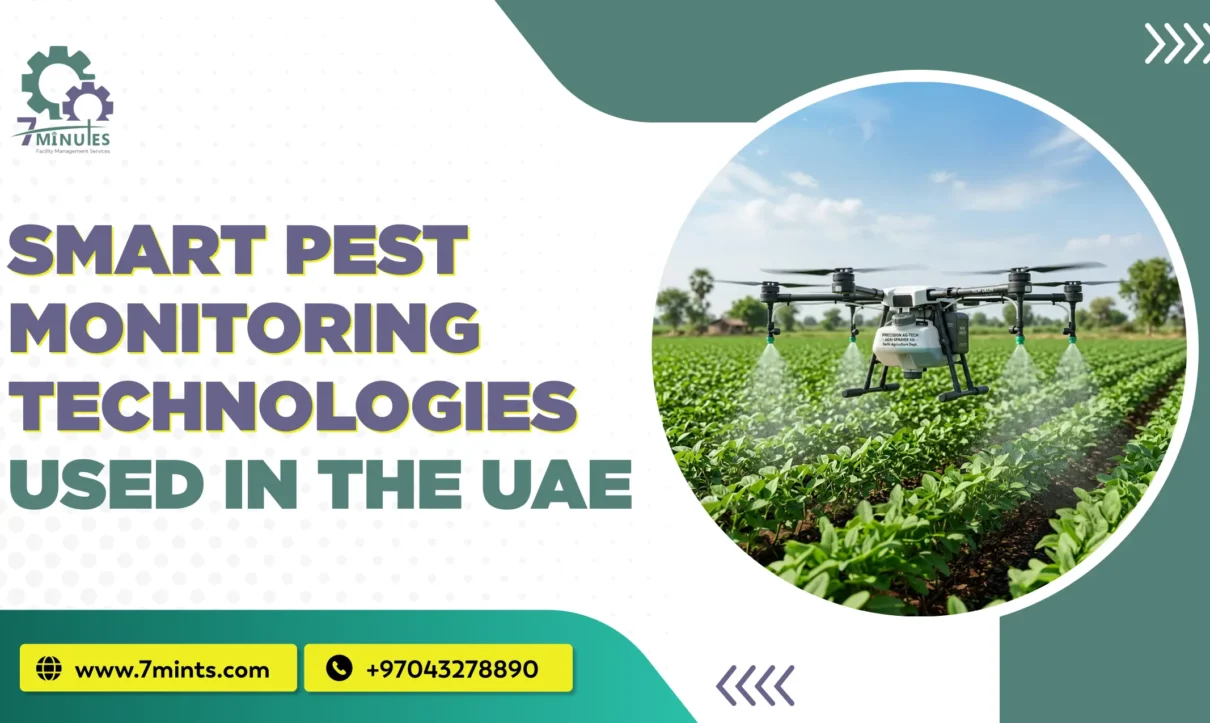
The UAE currently implements smart technologies throughout its various industries, while pest control operations develop according to this technological advancement. The traditional method of pest control depends on two main practices, which use heavy chemical applications together with scheduled inspections, but this approach does not guarantee effective and safe results. Smart pest monitoring technologies provide real-time information, which enables users to identify pest issues before they develop into major infestation problems. The approach contributes towards making the UAE vision of development into sustainable smart urban environments a reality.
The rising urban population in Dubai and Abu Dhabi creates an important need for cities to establish pest-free spaces that meet essential hygiene standards. The systems operate continuously to gather data, which enables pest control teams to execute their tasks with speed and precision. The new pest management system results in safer and more effective solutions, which benefit both businesses and residential customers.
1. IoT-Based Pest Monitoring Sensors
The installation of IoT-based pest monitoring sensors requires placing compact smart devices in locations that serve as entry points for pests, which include kitchens, storage spaces, and drainage systems. The sensors detect motion, temperature variations, and vibrations, which enable pest detection in locations that are difficult to access. The real advantage of these devices is their ability to work continuously without human intervention. The system operates pest activity monitoring throughout all hours of the day and night.
The system operates its integrated system and mobile software to notify pest control staff whenever the sensors identify unexpected events. Technicians can quickly resolve emergencies because they have the ability to treat specific areas without needing to use chemicals throughout the entire facility. The system delivers two advantages through its operational efficiency improvements, which reduce environmental impacts. The implementation of IoT sensors enables commercial facilities in the UAE to achieve and maintain their required hygiene standards.
2. AI-Powered Pest Identification Systems
Artificial Intelligence (AI) technology enables users to identify pests at a quicker speed while delivering higher identification accuracy because of better pest tracking techniques. The smart traps and cameras establish visual content that the AI software uses to identify different pest species. The identification process holds vital importance because different pests need distinct treatment approaches for successful pest management. AI systems use their intelligence to classify insects into two groups, which include harmless insects and harmful pest species.
AI provides organizations with their primary competitive advantage because it enables them to detect patterns that assist them in predicting upcoming pest infestations. The systems use historical data to identify pest behavior patterns, which they use to recommend upcoming preventive steps. The system establishes future infestation protection through its active pest control methods, together with its ongoing pest management. AI-based pest monitoring systems function effectively in large commercial environments found in UAE malls, hotels, and warehousing facilities.
3. Thermal Imaging Technology
The thermal imaging technology system operates through infrared cameras, which identify temperature variations present within walls, floors, and ceilings. The cameras can detect pest presence because termites and rodents emit heat, which their cameras use to detect. This technique efficiently discovers hidden pest infestations without causing any damage to the building.
The technology proves especially beneficial throughout the UAE because its implementation throughout substantial buildings and construction sites enables detection. The property owners who detect pest activity before it reaches advanced stages can take immediate steps that help them prevent expensive damage. The inspection process becomes faster through thermal imaging because it provides better results than traditional inspection methods.
4. Smart Traps and Automated Devices
Certain devices have the capability to document essential information, which includes the specific time and location of pest capture events that occur in pest control operations. The pest management approach achieves better results through the implementation of data-based solutions.
The smart traps of the UAE function as common monitoring tools that track mosquito populations and fly populations in both urban areas and outdoor spaces. Many of these devices operate on solar energy, which makes them environmentally friendly and allows them to function continuously. The system eliminates manual inspection requirements while enabling authorities to monitor vast territories with ease. The technology functions as a crucial component that supports public health protection and disease transmission containment efforts.
5. Data Analytics and Predictive Monitoring
The system processes sensor data, which includes information from traps and cameras, to analyze how pests behave and move throughout their environment. Pest control companies use this data to make better decisions, which help them develop successful treatment plans. The use of actual data enables them to identify specific areas that require their attention.
Predictive monitoring uses historical data to create predictions about upcoming pest activity that will occur in the future. Businesses can implement preventive measures that help them avoid infestations, thus decreasing both operational risks and financial losses. Maintaining hygiene standards becomes crucial for the food processing and hospitality industries, which operate in this sector. The UAE now uses predictive monitoring as its primary approach for managing pests in large-scale operations.
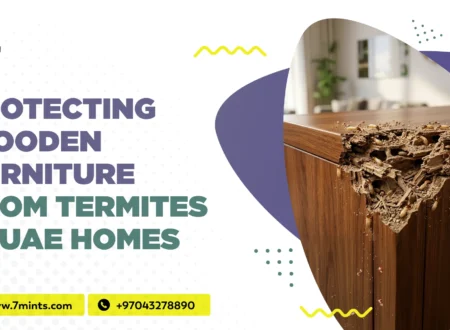
Check out our latest blog post on Protecting Wooden Furniture from Termites in UAE homes
6. Remote Monitoring and Digital Reporting
Pest control experts can monitor pest activity through remote monitoring technology, which eliminates the need for them to visit restricted sites. The system enables staff members to view live operational information from any location through mobile applications and cloud-based control panels. The system provides essential benefits that organizations require to manage their operations across multiple locations and their entire business facilities. The procedure enables fast reaction times while it decreases the time needed to handle pest control problems.
Digital reporting serves as a main element of advanced pest monitoring solutions. The systems create complete reports that present detailed information about pest behavior, treatment procedures, and expert suggestions. This system enhances transparency while it supports businesses in meeting health and safety standards that they must follow. The system provides clients with simple access to reports, which enhances organizational flow and trustworthy document management. The system improves the way service providers and clients share information with each other.
Benefits of Smart Pest Monitoring in the UAE
The implementation of smart pest monitoring systems provides multiple benefits that exceed the advantages of traditional pest control techniques. The system introduces an essential feature that enables early discovery of pest problems, thus preventing minor pest issues from developing into major pest infestations. The process requires fewer chemical applications, which results in decreased health risks for people and the environment. The system delivers complete pest control results that exceed its basic operational functions.
Targeted treatments generate cost savings for businesses because they eliminate the need for treatment processes that do not require operational time. Businesses can sustain their hygiene requirements through ongoing operations, which require neither major cleaning sessions nor complete facility closures. The combination of data usage with technological tools enhances both precise measurements and effective choices. The advantages of these systems support the United Arab Emirates’ mission of establishing sustainable development together with its smart city initiatives.
Challenges and Limitations
The smart pest monitoring system provides multiple benefits, yet its smart pest monitoring systems face specific restrictions. The pest detection systems demonstrate high accuracy in identifying pest movements; however, they struggle to determine the precise nest locations. People still require professional pest control services because the complete elimination of pests needs both human inspection and expert knowledge. Humans must stay involved at all stages of operation because technology lacks the power to substitute human work.
Conclusion
The smart pest monitoring technologies of modern times have transformed pest control across the UAE because of their advanced operational capabilities, accurate monitoring systems, and ecologically sustainable outcomes. Contact Us as the system uses a combination of IoT sensors with AI technologies, thermal imaging systems, and data analysis methods to identify and stop pest infestations before they develop into full infestations. The process establishes better health protection measures while maintaining superior hygiene conditions throughout residential areas and commercial buildings.
The smart city initiatives in the UAE will drive more people to adopt advanced pest monitoring technologies. The implementation of these technologies by businesses and homeowners will result in two main advantages. The future development of urban environments will rely on smart pest monitoring systems, which will become vital components. The solution serves as an innovative approach that functions as a fundamental requirement for achieving sustainable development.

1 Comment
Comments are closed.