

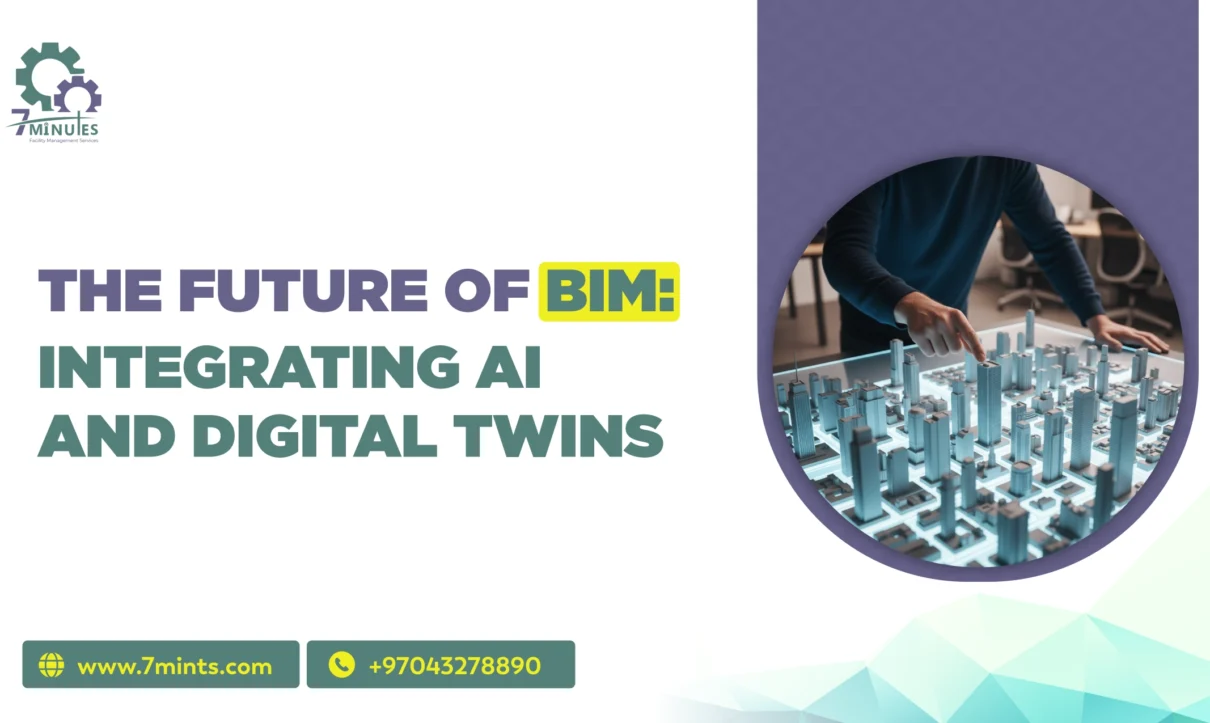
Building Information Modeling (BIM) has completely changed the construction world by providing architects, engineers, and builders with the means to work together in a much more efficient way through 3D digital models. The merger of Artificial Intelligence (AI) and Digital Twins with BIM is a major factor in the new way of mankind interacting with nature through building, constructing, and operating the built environment.
In this article, we will discuss how AI and Digital Twins are going to shape the future of BIM in a way that makes it more accessible, adaptable, and lasting. Once the technologies are made clear, the construction industry will be able to utilize the smart project outcomes, safety enhancements, cost reductions, and faster decision-making as the main benefits that these technologies offer.
What is BIM and Why is It Important?
Understanding BIM
Building Information Modeling (BIM) is a methodology that encompasses the creation and management of 3D renderings of a structure or a facility showing its physical and functional attributes. In contrast to the conventional methods of 2D blueprints or models, BIM involves the use of real-time communication and detailed 3D renderings that are very important during the design, construction, and operation stages.
BIM’s Role in the Construction Industry
Architects, engineers, contractors, and stakeholders rely on BIM to do away with misunderstandings, thus enhancing workflow and saving time. In addition, it offers assistance in revealing design ideas, measuring and evaluating performance, and making up-to-date decisions. Via BIM, different scenarios can be invented and played out so that the team can choose the best design based on price, performance, and sustainability.
The Current Limitations of BIM
BIM has brought huge positive changes to the construction sector, but it still has some drawbacks. They are not capable of considering real-time performance and gathering the information from different sources—like sensors, climatic conditions, and building performance—into BIM can be quite challenging. This is the point where AI and Digital Twins step in, providing the possibility of the continuous updating and refining of BIM models with the help of real-time data.
AI and BIM: Boosting Design and Construction Efficiency
Automating Repetitive Tasks
The role of AI in the BIM process will be very significant, and it can assist in the workflow automation of the BIM process. Day-to-day operations such as scheduling, ordering of materials, and allocation of resources can all be managed by AI-based algorithms that first predict the very best possible scenario using both the past data and the present conditions. Besides, this results in a quicker project timeline and less human error, and cost savings in the operation.
AI-Driven Design Optimization
The AI algorithms are capable of doing the so-called data triage combined with sophisticated modeling to provide design optimization recommendations. The AI can go through the massive data comprising architectural, structural, and environmental information and provide the necessary changes that not only make the building more efficient, eco-friendly, and comfortable but also add up to a safe and cheaper design by pointing out the issue of structure before it occurs.
Predictive Analytics for Project Management
AI has the capability of predicting future project outcomes based on analyzing past project data, thus enabling the foresight of delays, unplanned expenditures, and highlighting possible risks. Gold dust of predictive analytics is these BIM digital twins, which will add real-time info of the project to them, thus helping the construction crew in driving their decisions through data and in a quicker way. To illustrate, the data could reveal that soon a certain element of the project will encounter some kind of trouble and, therefore, the team will get ready with their preventive action.
What Are Digital Twins and How Do They Integrate with BIM?
Defining Digital Twins
A Digital Twin can be referred to as an exact copy of a physical entity or process in a digital form. In the field of construction, it can be identified as a virtual representation of a building or infrastructure that gets data from sensors located in the physical part of the building continuously for updating the virtual model.
Integrating Digital Twins with BIM
Digital Twins not only take BIM but also the project to the next level since building performance feedback will be provided continuously and constantly. In contrast to the static BIM models, the Digital Twins are interactive and dynamic since they include data from the IoT (Internet of Things) sensors, environmental influences, and even building systems.
The union of these factors will give the project teams the ability to monitor, analyze, and even optimize the building performance continually through its life cycle. For instance, temperature sensors may continuously send data to the Digital Twin, which will then use it as the basis for adjusting HVAC systems that will eventually lead to cutting down energy consumption.
Real-Time Data Integration
Digital Twins manage to incorporate real-time data from all sources, such as the sensors, the GPS, the environmental data, and even the social media sentiment. Consequently, the data is becoming a part of the BIM model, and teams are able to make more informed choices during the construction and operation phases. The up-to-date performance metrics being part of the building performance evaluation process, the team can consider all the parameters, such as energy consumption, structural robustness, and comfort of the occupants simultaneously and thus, make sure that the building remains throughout the whole period of its existence at the highest level of performance.
The Synergy Between AI and Digital Twins in BIM
Continuous Learning and Adaptation
Among the various benefits that the AI and Digital Twins integration brings, the most important one is the ability for continuous learning and adaptation. Machine learning algorithms can process the information that the Digital Twins produce to find correlations, identify changes in the system, and carry out forecasting in real time. Such as in the case of AI, which could alert the facility manager about the presence of weakness or damage in the building structure beforehand, escalating prompt maintenance, and thus reducing the cost of repair.
Advanced Simulation and Scenario Testing
AI-enabled Digital Twins permit the performance of advanced simulations and scenario testing. For instance, BIM models integrated with Digital Twins can illustrate how a building might cope with severe weather incidents, earthquakes, or other disturbances. The AI-backed simulations can show the way to making the right design choices, which will pass the resilience test posed by the future hazards.
Enhancing Building Performance and Sustainability
One of the most significant applications of AI is energy management, wherein it can control the energy consumption of a building by manipulating lighting, heating, and cooling systems according to the patterns of occupancy. Moreover, AI can advocate for the reconfiguration of building spaces so as to facilitate the movement of air, lowering energy costs, and at the same time, making the environment more comfortable for the people using it. Hence, it leads to the making of buildings that are smart, eco-friendly, and cost-efficient.
Practical Applications of BIM, AI, and Digital Twins in Real-World Projects
Smart Cities and Infrastructure
The integration of BIM, AI, and Digital Twins signifies a great leap in the evolution of smart cities. As an example, municipalities could represent the whole of their infrastructure digitally—roads, utilities, and the like—and, thus, be able to monitor and even optimize the performance of the whole urban area instantaneously. The system would utilize AI to evaluate the movement of vehicles and, subsequently, to make changes to the signals that lead to the best flow, thus preventing jams and predicting the requirement for maintenance before the latter becomes serious.
Building Maintenance and Facility Management
The AI-supported Digital Twins could be the game-changer in the world of facility management. Continuous surveillance of the building and its systems’ conditions would allow the AI-based Digital Twins to detect faults and fix problems before they become big and costly. The outcome would be a longer lifespan, less time lost due to repairs, and more efficient management of facilities, which translates into savings in both cost and time.
Construction Site Monitoring and Safety
Digital Twins paired with AI can really allow it to be safe and super organized on construction sites. To make this happen, AI would be monitoring the entire construction process in real time, thus helping pinpoint the probable dangerous situations, whereas Digital Twins would give the construction manager a chance to see the site from afar.
The Challenges of Integrating AI and Digital Twins into BIM
Data Privacy and Security Concerns
The real-time data that is generated and used in Digital Twins and AI systems brings up the issue of data privacy and security. Due to the very large amounts of sensitive data that are being generated, collected, processed, and shared, ensuring the security of that data will be the most important thing to do. Construction companies will have to invest heavily in data protection measures and also comply with both local and international laws and regulations in order to reduce their vulnerabilities to security attacks.
High Initial Investment and Skills Gap
The process of bringing together AI, Digital Twins, and BIM is a costly affair right from the very start because of the need for technology, training, and hiring a skilled workforce. Still, as the technology becomes more widely used and cheaper, the learning curve for the companies will be indirect. Check out our latest blog post on How BIM Is Revolutionizing the Construction Industry
Integration of Multiple Data Sources
The creation of an AI-backed Digital Twin, which brings together data from various origins such as IoT sensors, environmental systems, and BIM models, can prove to be a highly intricate task. It requires a significant amount of time to devise a plan and impose standards that will ensure smooth interaction among all systems and technologies without any disturbances to the business activities.
Conclusion: The Next Step in Construction Innovation
Building Information Modeling (BIM) predicts an exceptionally bright future and a plethora of new prospects, notably through the synergy of Artificial Intelligence (AI) and Digital Twins. Contact us as these technologies will sweep across every construction activity from design through building and up to management. The construction realm is already experiencing some of the benefits, like predictive maintenance, green practices, and real-time performance monitoring courtesy of AI paired with Digital Twins.






1 Comment
Comments are closed.