

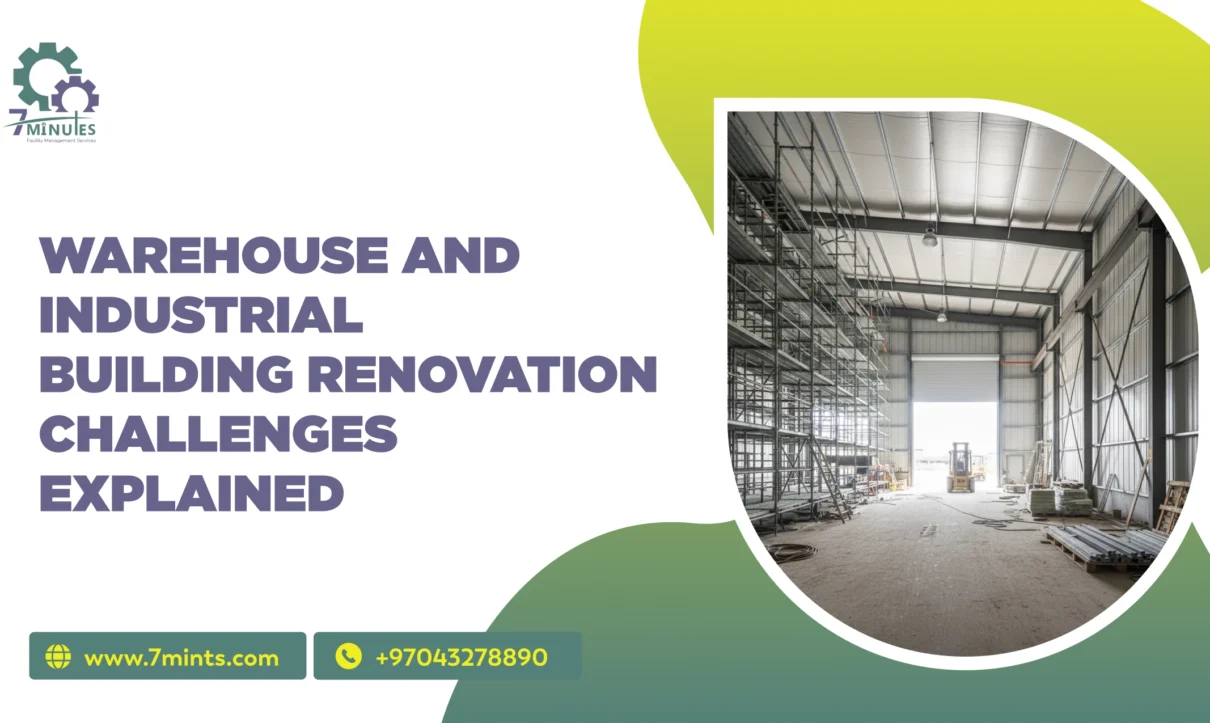
Warehouse and industrial buildings serve essential functions across multiple sectors, which include supply chain management, manufacturing operations, logistical activities, and storage facilities. Facilities require updates because business expansion and technological progress demand current safety regulations, operational efficiency improvements, and additional operational capabilities.
The process of upgrading industrial buildings requires more complicated procedures compared to upgrading residential spaces or commercial office buildings. The process of renovating these structures becomes difficult because of their distinctive design, their substantial equipment usage, their extensive building space, and their mandatory building codes.
Common renovation obstacles that affect warehouse and industrial building projects help businesses understand their operational needs, decrease downtime, and achieve effective budget management. The blog explores major renovation challenges that require industrial renovation projects to receive expert organizational guidance and meticulous development.
-
Maintaining Business Operations During Renovation
Industrial renovation projects face their greatest difficulty when businesses need to maintain operational functions without experiencing extended work stoppages. The continuous operation of warehouses and manufacturing facilities through all 24 hours creates financial risks when companies need to shut down these facilities for their complete operation time. The timing of renovation activities needs to be planned carefully because it will affect how work processes are performed throughout the day.
The construction process divides renovation activities into different phases, which enable specific warehouse sections to function normally while other parts undergo development. The approach needs thorough planning, which includes workforce management and safety measures to create a secure workplace that protects both workers and employees. The production schedule faces delays because poor planning of activities creates disruptions that impact supply chain operations.
-
Structural Limitations of Existing Buildings
The structural design of many industrial and warehouse buildings that were constructed during previous decades fails to meet modern requirements for building renovation. Buildings that were constructed in the past contain foundations that lack strength and load-bearing elements that have become outdated, and ceiling heights that fail to meet the demands of modern equipment and automation systems.
The structural evaluation of a building needs to take place before renovation work begins, which requires testing the building materials for their structural integrity and stability. Engineers need to create better structural designs, which involve building stronger columns and constructing more robust floors while designing new structural systems to accommodate heavy equipment and extra inventory. Structural enhancements to the building project will result in more complicated tasks and higher expenses, thus making it necessary to get a professional assessment.
-
Compliance with Safety and Regulatory Standards
Industrial buildings need to meet strict safety requirements, together with environmental standards and fire protection regulations. All renovation projects need to ensure that the facility has implemented updated building codes, together with occupational safety regulations and environmental protection standards. Organizations that fail to comply with these regulations face legal consequences, which result in project delays and create dangerous conditions for employees.
Renovation work needs to include fire suppression systems and emergency exits, along with ventilation systems and safety monitoring systems. The regulations for industries that handle hazardous materials and operate heavy machinery require more stringent compliance than other industries. The process of working with regulatory bodies to secure the required approvals will take a considerable amount of time, yet it is vital for maintaining safety throughout future operations.
-
Upgrading Electrical and Mechanical Systems
The industrial operations of facilities depend on their electrical and mechanical systems to deliver power, which operates machinery, lighting, HVAC systems, and automation systems. Many older warehouses continue to function with electrical systems that have become obsolete, and their existing electrical systems lack compatibility with modern operations.
The process of renovation requires the elimination of existing electrical wiring, the installation of advanced power distribution systems, and the enhancement of mechanical systems to achieve better operational efficiency, together with improved system reliability. The renovation project requires detailed design because the project needs electrical power shut down and mechanical systems to be operational during the entire construction period. The implementation of energy-efficient solutions will produce cost savings throughout the entire period of building operation. Check out our latest blog post on How to Plan a Building Renovation Without Overspending.
-
Flooring and Load-Bearing Challenges
The continuous application of weight to floors leads to the development of cracks, uneven surfaces and structural weaknesses over time. The process of industrial flooring renovation requires multiple steps, which include developing durable surfaces that can handle weight while providing operational efficiency.
The process of floor restoration requires the application of new surface material together with the installation of industrial-grade flooring solutions and reinforcement of existing concrete foundations. Process of flooring repair requires businesses to stop their operations so that work can be done, which will lead to changes in their logistics and storage systems.
-
Space Optimization and Layout Redesign
Industrial operations in contemporary times need organizations to use their available space in an efficient manner so they can reach maximum output, together with optimal storage utilization. The design of traditional warehouses is incompatible with modern storage systems, automated conveyor systems, and robotic operational procedures. The primary objective of renovation work is to create new building designs that will boost operational productivity.
The process of redesigning layouts needs to examine how storage areas and equipment locations and staff movement pathways work together. The operation of an organization becomes inefficient when its operational procedures face interruptions from unplanned operational breaks, which also create dangerous conditions. The renovation specialists in industrial facilities depend on cutting-edge development instruments and work planning procedures to achieve reconstruction goals.
-
Managing Environmental and Sustainability Requirements
Environmental regulations and sustainability requirements now govern industrial building renovation projects, which need to meet both these standards. Businesses are now focusing on energy-efficient lighting, improved insulation, waste management systems, and eco-friendly construction materials.
The sustainable renovation of warehouses needs solar panel installation together with energy-efficient HVAC systems and water conservation technologies. The project needs financial resources because upgrades will decrease energy costs over a long period, while they also lower environmental impact. Building sustainability measures requires designers to solve technical problems that arise during implementation at current facilities.
-
Handling Hazardous Materials and Safety Risks
Asbestos and hazardous chemical residues and old insulation materials create health hazards in industrial buildings that need to be renovated. The process of industrial renovation needs to start with identifying hazardous materials before their safe removal.
The management of hazardous materials requires organizations to establish dedicated safety protocols, implement safety gear, and follow approved hazardous material disposal methods. The absence of appropriate safety measures creates health risks for workers and leads organizations into legal complications, which impede their operational activities. The site inspection procedure enables workers to identify potential dangers while establishing secure work environments that protect safety.
-
Budget Management and Cost Control
The execution of warehouse renovation work incurs extra costs because hidden structural issues, outdated systems, and new regulatory requirements emerge during the project. The construction process creates challenges for budget oversight during renovation projects because unplanned maintenance work and equipment upgrades occur throughout the construction period.
The establishment of a successful budget requires businesses to conduct thorough inspections, which create emergency reserve funds and establish partnerships with qualified contractors who can deliver exact budget forecasts. Through transparent financial planning, businesses can monitor their expenditures while maintaining their renovation budgets through ongoing assessment of their projects.
-
Coordination Between Multiple Stakeholders
Industrial renovation projects need architects and engineers, contractors and safety inspectors, equipment suppliers, and business management teams to collaborate in a unified manner. The management of stakeholder communication needs to proceed systematically because it serves as the backbone that enables projects to run efficiently.
Design conflicts, project delays, and increased costs happen because organizations fail to establish proper coordination. The project team accomplishes its objectives through planned meetings, which enable it to use the correct communication methods to transmit project information.
Conclusion
The renovation process for warehouse and industrial facilities needs to proceed through multiple stages, which require both technical knowledge and detailed project schedules while following all safety requirements and regulatory guidelines. Contact us as Industrial renovation projects require strategic management to address diverse challenges, which range from construction maintenance needs to structural system upgrades and modern technological system integration throughout the renovation process.
Industrial companies can achieve their goal of creating safe and efficient work environments through proper renovation planning. Contact us as Industrial facilities require professional design work through renovation to achieve their operational efficiency goals while maintaining safety standards and environmental sustainability objectives.
Industrial companies that need to renovate their warehouses or industrial facilities should partner with specialized building renovation experts. Building renovation specialists help businesses with their renovation projects by implementing solutions that decrease operational interruptions and lead to business success.




2 Comments
Comments are closed.