

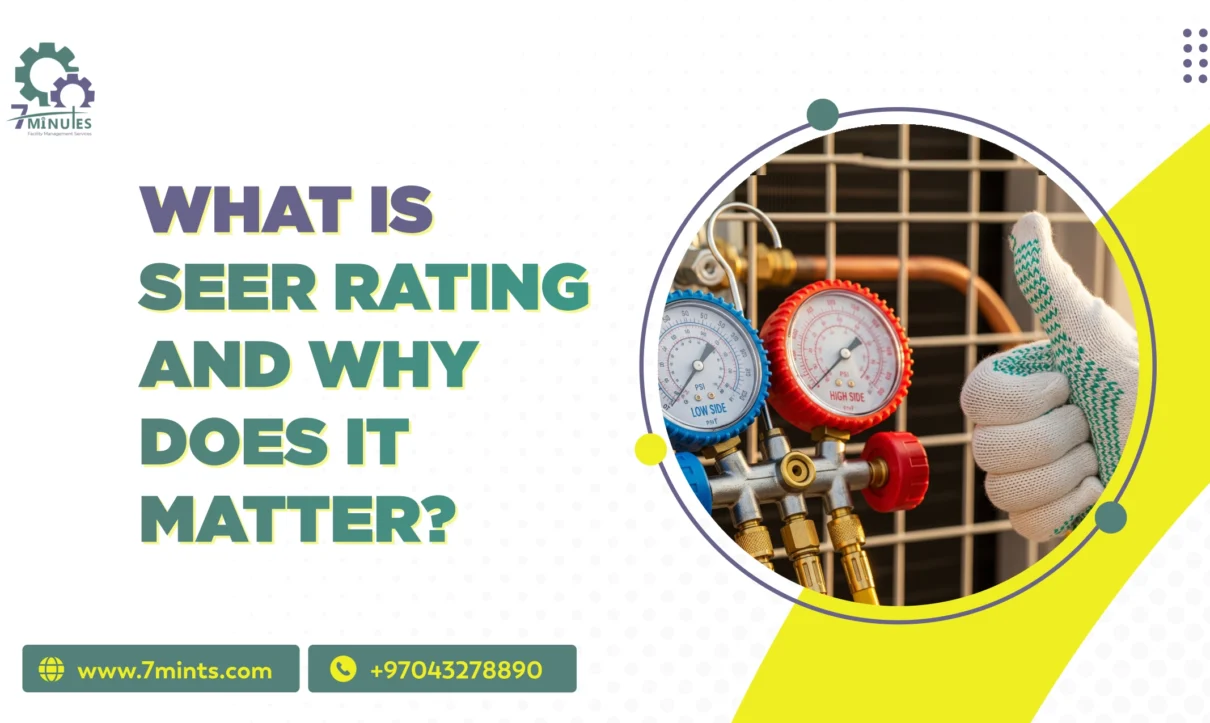
Air conditioning is essential for maintaining comfortable indoor temperatures, particularly in hot climates such as the UAE. However, running an air conditioner for long hours can significantly increase electricity consumption. Choosing an energy-efficient cooling system is therefore important for controlling energy costs and improving indoor comfort. One important factor to consider when purchasing an air conditioner is its SEER rating.
But what is SEER rating, and why should homeowners and businesses pay attention to it? Understanding the SEER rating meaning can help you compare air conditioning systems, evaluate their energy performance, and make a more informed purchasing decision.
What Is SEER Rating?
SEER stands for Seasonal Energy Efficiency Ratio. It measures how efficiently an air conditioning system operates over an entire cooling season. In simple terms, the SEER rating compares the total cooling output of an air conditioner with the electricity it consumes during that period.
A higher SEER rating generally indicates better energy efficiency because the system can deliver more cooling while using less electricity under standard testing conditions.
For example, an air conditioner with a SEER rating of 20 is generally more efficient than a similar system with a rating of 14. However, actual electricity consumption also depends on factors such as operating hours, outdoor temperature, insulation, maintenance, and thermostat settings.
How SEER Rating Works in HVAC Systems
Understanding how SEER rating works makes it easier to choose the right cooling equipment. In HVAC systems, SEER evaluates cooling performance across different operating conditions rather than measuring efficiency at just one temperature.
The basic calculation is:
SEER = Total Cooling Output (BTU) ÷ Total Electrical Energy Consumed (Watt-hours)
This calculation provides an overall efficiency measurement for the cooling season.
The SEER rating in HVAC is particularly useful because air conditioners do not always operate at maximum capacity. Modern systems, especially those with variable-speed compressors, can adjust their cooling output according to indoor temperature requirements.
This allows the equipment to operate more efficiently under changing conditions.
Why Does SEER Rating Matter?
The air conditioner SEER rating matters because it directly relates to the cooling system’s energy performance. Selecting an appropriate rating can offer several advantages.
1. Lower Electricity Consumption
Air conditioners with higher efficiency ratings can provide the required cooling while consuming less electricity under comparable conditions. This can help reduce household and commercial electricity usage, particularly in buildings where cooling systems operate for extended periods.
2. Better Long-Term Cost Management
Although energy-efficient air conditioners may have a higher initial purchase price, their lower electricity consumption can help reduce operating expenses over time.
When comparing different systems, consider the purchase price, installation cost, expected usage, maintenance requirements, and electricity tariffs. This provides a more realistic understanding of long-term value.
3. Improved Energy Performance
A higher AC efficiency rating indicates that an air conditioner is designed to deliver cooling more efficiently under standardized testing conditions. This can support better energy management in residential properties, offices, retail spaces, and commercial buildings.
4. Support for Sustainable Buildings
Reducing unnecessary electricity consumption can help lower the environmental impact associated with building operations. Choosing energy-efficient air conditioners is one practical step towards improving overall building energy performance.
What Is a Good SEER Rating for an Air Conditioner?
The ideal SEER rating for AC depends on the climate, building type, cooling requirements, budget, and applicable local regulations.
In general, a higher rating indicates greater seasonal efficiency. However, the best option is not necessarily the air conditioner with the highest available rating. Buyers should compare the additional upfront cost with the expected energy savings over the system’s useful life.
For properties in hot climates, where cooling demand can be high, investing in a more efficient system may provide meaningful long-term benefits. Always check local minimum efficiency requirements before purchasing equipment.
SEER2 vs SEER Rating: What Is the Difference?
When researching modern air conditioning systems, you may come across both SEER and SEER2 ratings.
SEER2 is an updated efficiency measurement introduced in the United States to reflect revised testing procedures. The updated testing process uses higher external static pressure to better represent the resistance that HVAC equipment can experience in real installations.
The main difference is the testing methodology, not simply the equipment’s physical design.
| Feature | SEER | SEER2 |
|---|---|---|
| Measurement | Seasonal cooling efficiency | Updated seasonal cooling efficiency |
| Testing method | Earlier testing procedure | Revised testing procedure |
| External static pressure | Lower test pressure | Higher test pressure |
| Purpose | Compare cooling efficiency | Provide updated efficiency comparisons |
SEER and SEER2 values should not be compared directly as if they were measured under identical conditions. Check the applicable product documentation and regional efficiency standards when evaluating equipment.
SEER Rating Comparison: How to Choose the Right System
A SEER rating comparison can help identify the differences between air conditioning models. However, it is important to compare systems with similar cooling capacities and operating characteristics.
Consider the following factors before making a decision:
- Cooling capacity: Select a system that matches the building’s cooling load.
- Energy efficiency: Compare SEER or SEER2 values using the appropriate regional standard.
- Compressor technology: Inverter and variable-speed systems can adjust output according to cooling demand.
- Installation quality: Incorrect sizing or poor installation can reduce system performance.
- Maintenance requirements: Clean filters, coils, and well-maintained components support efficient operation.
- Total ownership cost: Evaluate purchase, installation, electricity, and maintenance expenses.
A professional HVAC assessment can help determine which system is suitable for the property.
SEER Rating and Energy Savings in the UAE
The UAE experiences high outdoor temperatures for significant periods of the year. As a result, air conditioning is a major part of residential and commercial electricity consumption.
Understanding air conditioning efficiency UAE requirements can help property owners make better decisions when selecting cooling equipment.
In homes, offices, hotels, retail outlets, and industrial facilities, cooling systems may operate for many hours daily. Choosing suitable energy-efficient AC systems UAE can help manage HVAC energy consumption and support more efficient building operations.
The potential savings depend on several factors, including the existing air conditioner’s efficiency, replacement system rating, cooling load, operating hours, thermostat settings, and electricity tariffs.
For businesses, an HVAC energy audit can identify inefficient equipment, poor airflow, inadequate insulation, and other issues that contribute to unnecessary electricity use.
Practical Ways to Reduce AC Electricity Consumption
A high SEER rating is helpful, but equipment efficiency alone cannot guarantee low electricity bills. Proper usage and maintenance also matter.
Here are some practical ways to support AC electricity consumption reduction:
- Clean air filters regularly: Dirty filters restrict airflow and can make cooling systems work harder.
- Maintain indoor temperature settings: Avoid unnecessarily low thermostat settings.
- Seal air leaks: Properly sealed doors and windows reduce unwanted heat entering the building.
- Schedule professional servicing: Regular inspections help identify refrigerant, airflow, and component issues.
- Improve insulation: Effective roof and wall insulation can reduce heat transfer.
- Use programmable controls: Smart thermostats and suitable controls can help manage cooling schedules.
- Choose the correct AC capacity: Oversized or undersized systems may operate inefficiently and provide inconsistent comfort.
Combining these practices with an efficient air conditioner can improve overall cooling performance.
Conclusion
Understanding the SEER rating is essential when choosing an air conditioning system for residential or commercial use. It provides a standardized way to evaluate seasonal cooling efficiency and compare different models. A higher rating generally means better efficiency, but the right choice also depends on installation quality, cooling requirements, operating conditions, and overall cost.
For properties in the UAE, selecting suitable energy-efficient cooling equipment and maintaining it properly can support lower electricity consumption and better building performance. Before purchasing an air conditioner, compare its efficiency rating, cooling capacity, features, and long-term operating costs to find a system that meets your requirements.
Frequently Asked Questions
Q1. What is SEER rating in an air conditioner?
SEER stands for Seasonal Energy Efficiency Ratio. It measures how efficiently an air conditioner delivers cooling over a standard cooling season.
Q2. Is a higher SEER rating better?
Generally, yes. A higher SEER rating indicates greater seasonal energy efficiency under standardized testing conditions. However, the best system also depends on its price, capacity, installation, and operating requirements.
Q3. Does SEER rating affect electricity bills?
Yes. A more efficient air conditioner may consume less electricity to deliver comparable cooling, potentially reducing operating costs. Actual savings depend on usage and local conditions.
Q4. What is the difference between SEER and SEER2?
SEER2 uses updated testing procedures, including higher external static pressure, to evaluate seasonal cooling efficiency. The two ratings should not be treated as directly interchangeable.
Q5. How can I improve my air conditioner’s energy efficiency?
Clean filters, schedule regular maintenance, seal air leaks, improve insulation, use suitable thermostat settings, and ensure the system is correctly sized for the property.




1 Comment
Comments are closed.