The UAE is pretty much known for its world-class infrastructure, modern skyscrapers, luxury residential communities, big commercial hubs, hospitals, shopping malls, and industrial facilities. Under all that smooth daily running, there is a solid facility management setup that helps buildings stay safe, efficient, sustainable, and also cost-effective. Facility management is not just about tidying up or fixing a few things; it feels more like a full lifecycle process. It starts during planning, and it keeps going all the way through the building’s operation.
In the UAE, facility management has become sort of a must-have part of real estate, hospitality, healthcare, retail, and industrial sectors. As demand grows for smart buildings and sustainable infrastructure, many businesses now lean toward professional facility management solutions that boost operational performance and help extend the life of their assets. If property owners and companies understand the facility management lifecycle, they can make better calls from project planning to final execution, instead of reacting late.
Understanding the Facility Management Lifecycle
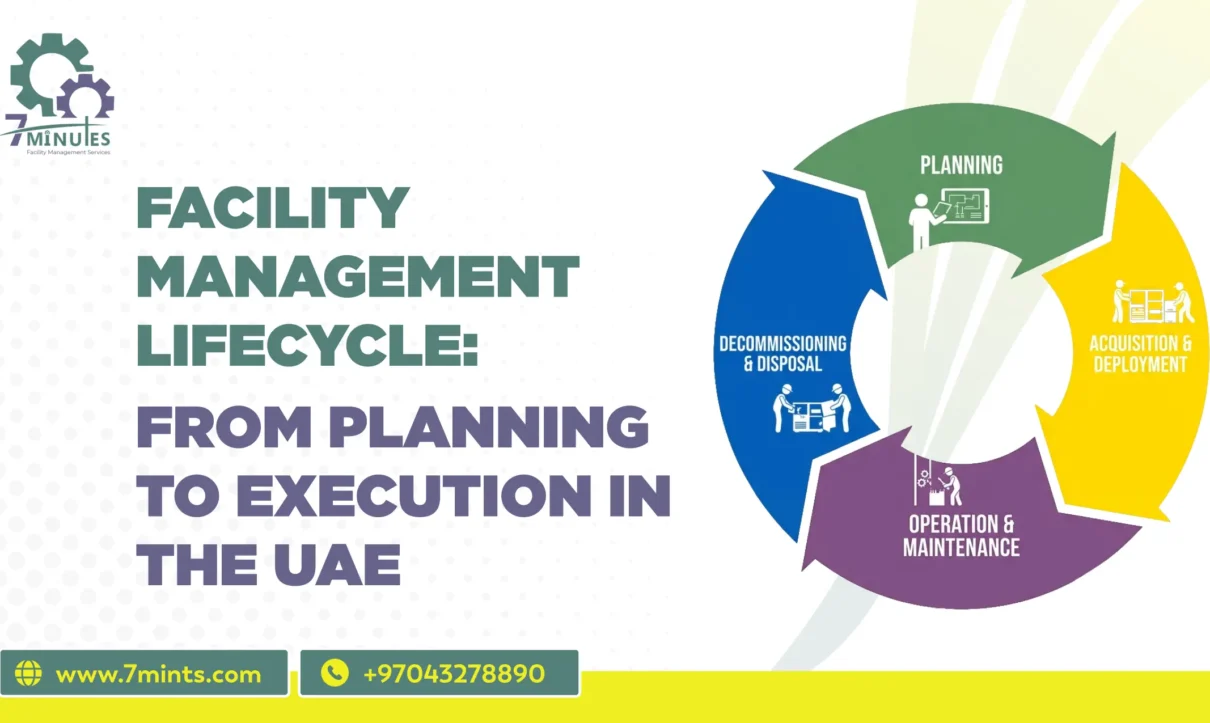
The facility management lifecycle is basically the whole journey of managing a property, from the early planning stage to day-to-day operations, maintenance work, upgrades, and finally the asset replacement part. It includes different phases that somehow connect and cooperate, so the facility keeps doing its job well through its full lifespan. Each step matters a lot, because it can cut down operational costs and also help occupants feel more comfortable.
In the UAE, this facility management lifecycle gets extra attention because the weather is extreme, buildings rely heavily on air conditioning, and occupancy levels are often high. If the planning and implementation are done the right way, businesses can sidestep unexpected failures, reduce energy waste, and keep in line with government requirements. A structured lifecycle approach also supports sustainability objectives and smart city efforts throughout the country, even when things get complicated.
Planning Stage: Building the Foundation
The planning phase is the first stage and, honestly, one of the most important in facility management. During this stage, businesses decide operational needs, maintenance approaches, budget limits, safety rules, and sustainability targets for the facility. When planning is tight, future operations tend to run smoothly, and there are fewer unnecessary expenses.
Facility managers in the UAE usually work alongside architects, engineers, contractors, and property owners during this phase. Together they work out what equipment is needed, how space should be used, which energy management systems make sense, and what the risk management plan should cover. Early planning also helps fold in smart technologies like automated lighting, HVAC controls, and building management systems, so operational efficiency improves later on, not just in theory.
1. Design and Development Phase
Once the planning process is finished, the project sort of slides into the design and development stage. At this time, facility management teams work closely with construction professionals to make sure the building design supports easy upkeep and long-term operational efficiency. The idea here is kind of simple: choose durable materials, energy-efficient systems, and maintenance infrastructure that is actually accessible, not just on paper.
In the UAE, modern facilities are more and more designed with sustainability, plus smart technology integration in mind. Developers lean into green building standards, water-saving systems, and efficient cooling technologies because the climate conditions are not exactly forgiving. When facility management involvement happens early during the design stage, it helps cut down future operational headaches, and it also makes sure the systems are running efficiently after the project is completed, as intended.
2. Procurement and Resource Allocation
Procurement is another critical stage in the facility management cycle. During this phase, organizations buy equipment, bring in service providers, and assign resources needed for smooth facility operations. The choice of high-quality materials and reliable vendors really affects how the property performs over time.
Facility management companies in the UAE carefully evaluate suppliers for HVAC systems, electrical equipment, cleaning services, security solutions, and maintenance tools. They also keep an eye on cost control, while at the same time trying to maintain quality benchmarks and stuff. Good procurement planning, you know, helps prevent delays, cuts down on maintenance expenses, and makes sure the facility keeps running smoothly once it’s actually operational.
3. Implementation and Execution
This part, the implementation stage, is basically where facility management plans get put into motion. It covers installation of systems, operational setup, staffing levels, safety inspections, and coordination across different facility services.
In the UAE, execution is not simple because many facilities run on a large scale. Think hotels, shopping malls, hospitals, airports, and commercial towers, all at the same time. Facility management teams monitor HVAC systems, electrical infrastructure, plumbing, and fire safety systems and also oversee cleaning operations. The goal is to make sure everything follows the planned sequence, not only in theory but also in real life.
4. Operations and Daily Maintenance
Once the facility becomes operational, daily maintenance and management activities start right away. This stage is ongoing, and it’s focused on keeping every building system working efficiently. It usually involves preventive maintenance, cleaning routines, security management, waste management, landscaping, and technical support services.
In the UAE, preventive maintenance is extremely important because the harsh climate conditions can mess with equipment performance in a pretty direct way. Regular inspections and then timely servicing help avoid those big, unexpected breakdowns and the costly repairs that follow. These tools let them keep an eye on building performance in real time and then improve operational efficiency bit by bit.
5. Sustainability and Energy Management
Sustainability has become a major priority in the UAE facility management sector. Businesses and property owners are now putting more weight on reducing energy consumption, cutting down operational costs, and aligning with environmental standards. In that sense, facility management plays a key role in reaching these targets, mainly through efficient energy management practices.
Many modern facilities across the UAE use smart lighting systems, energy-efficient HVAC units, water-saving fixtures, and even renewable energy solutions. The point is to reduce environmental impact while still maintaining comfort. Sustainable facility management not only supports government initiatives but also strengthens brand reputation and can improve tenant satisfaction overall.
6. Technology Integration in Facility Management
Smart building technologies, automation systems, and data-driven management tools are helping organizations boost operational efficiency and keep maintenance costs more controlled. Digital transformation has now become one of those important parts of the facility management lifecycle, not just an extra step.
In the UAE, preventive maintenance is extremely important because the harsh climate conditions can affect equipment performance in weird ways. Routine inspections and timely servicing help avoid major breakdowns and expensive repairs, too, which is not a small thing. Also, facility management companies often rely on advanced technologies like IoT sensors and computerized maintenance management systems to track building performance in real time and then improve operational efficiency. It’s kind of like staying ahead, rather than fixing stuff after it already went wrong.
7. Sustainability and Energy Management
Sustainability has become a big deal in the UAE facility management sector. Businesses and property owners now focus on lowering energy consumption, keeping operational costs down, and meeting environmental requirements. In this context, facility management plays a key role, not only in “doing less damage” but also in reaching actual energy targets through efficient energy management practices that are practical.
Modern facilities in the UAE use smart lighting systems, energy-efficient HVAC units, water-saving fixtures, and renewable energy solutions to reduce overall environmental impact. Sustainable facility management also supports government initiatives, and it tends to improve brand reputation along the way, plus tenant satisfaction, which you can usually feel pretty fast.
8. Technology Integration in Facility Management
Smart building technologies, automation systems, and data-focused management tools are helping organizations boost operational efficiency and reduce maintenance costs. Digital transformation has slowly become a sort of standard part of the facility management lifecycle, whether people admit it or not.
Building management systems let facility managers keep an eye on lighting, air conditioning, security, and energy usage from one centralized platform. Predictive maintenance tools will help spot possible equipment failures before they even show up, so downtime shrinks and repair costs tend to calm down a bit. In the UAE’s competitive real estate world, this technology-led facility management gives a kind of strong edge to companies that want to offer more comfortable occupant experiences.
9. Risk management and compliance
Risk management is still a vital part of facility management in the UAE because buildings need to follow strict health, safety, environmental, and fire protection regulations. The goal is basic, really: occupant safety first and also avoiding legal headaches. Facility management groups have to put safety procedures in place and then run regular inspections, even when everything seems fine.
This phase also includes emergency response planning and fire safety drills, plus equipment testing and compliance audits that feel never-ending. Facility managers make sure that maintenance actions line up with UAE regulations and broader industry standards.
10. Asset management and lifecycle optimization
Asset management is basically about keeping the lifespan and the day-to-day performance of building equipment and infrastructure as strong as possible. Facility managers track the status of assets like HVAC systems, elevators, generators, electrical networks, and the plumbing system through the whole operational period, not just at the beginning, and then hope for the best.
In the UAE, having solid asset management can help organizations cut down on replacement costs and also boost return on investment. Facility management teams often rely on maintenance schedules, continuous performance monitoring, and lifecycle analysis to decide if a piece of equipment should be repaired, upgraded, or replaced. This sort of proactive mindset improves operational dependability, and it also reduces the chance of unexpected failures showing up out of nowhere.
Check out our latest blog post on How Facility Management Supports LEED Certification in the UAE?
Challenges in facility management in the UAE
Even if the UAE has a very modern, fast-moving infrastructure sector, facility management companies still meet a few persistent problems. Extreme heat, heavy energy use, quick urban growth, and rising expectations around sustainability mean they have to keep innovating and managing things in a more efficient way.
Then there is the bigger issue of managing large mixed-use projects. These places bring residential, retail, hospitality, and commercial areas under one roof, so to speak. Facility managers need to coordinate multiple services but still keep a consistent level of quality and safety. Workforce skills, training, and how well the teams adapt to new technology also remain areas that need more work, because the pace doesn’t really slow down.
The future of facility management in the UAE
Looking ahead, facility management in the UAE seems really promising. This is partly because the country is still putting resources into smart cities, greener developments, and more advanced infrastructure projects. Things like artificial intelligence, IoT, robotics, and predictive analytics are expected to reshape how facilities operate in a more connected and more practical way over time, and yes, even the daily routine. Technologies are moving, and the operations will likely move with them, faster than before, at least for the next stretch.
Facility management companies will be put more and more on the automation trail and sustainability as well, and also occupant experience, you know, sort of. With smart maintenance systems and digital monitoring tools, businesses can speed things up and lower operational costs. And since the UAE keeps pushing its vision for sustainable urban development, facility management will still be one of those critical pieces that help keep buildings highly performing and future-ready.
Conclusion
The facility management lifecycle is kind of like a wide process that touches every phase in a building’s journey, from planning and design to the actual execution, then maintenance, and, later on, asset optimization. Contact us as In the UAE, where infrastructure standards are among the highest in the world; having facility management that actually works well is needed to keep operational efficiency, safety, sustainability, and long-term asset value in good condition.
If businesses move forward with a structured lifecycle approach, they can end up improving building performance, cutting maintenance costs, lifting occupant satisfaction, and supporting those sustainability objectives. Meanwhile, technology and smart infrastructure keep developing in the UAE, so facility management will gain an even larger role in shaping the next era of modern buildings and broader urban development.