
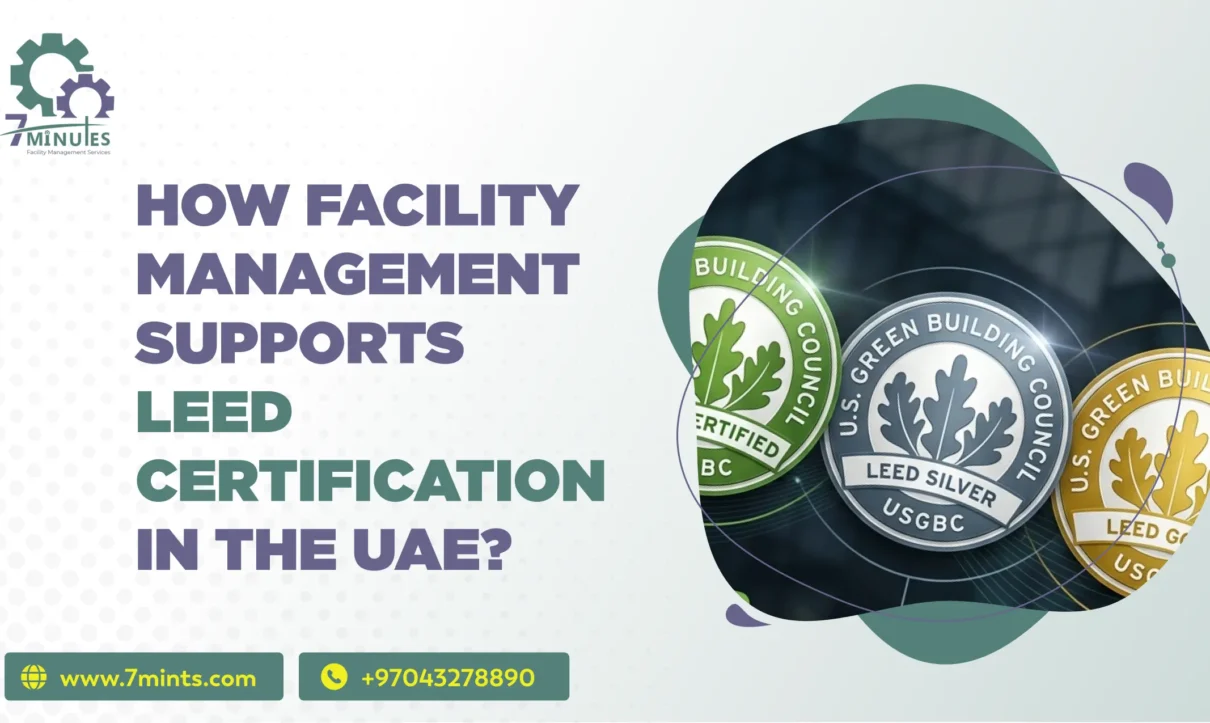
The UAE has kind of become one of the leading places in sustainable construction and green building development. With cities like Dubai and Abu Dhabi putting a lot of focus on environmental sustainability, a huge amount of commercial, residential, and industrial buildings are now chasing LEED certification. LEED, which is short for Leadership in Energy and Environmental Design, is one of the most well-known green building certification systems around the world. In the UAE, facility management actually plays a big role in helping buildings reach these certifications and then stay on track after.
Also, facility management is no longer just cleaning and basic maintenance services. Modern facility management is more like energy optimization, water conservation, waste management, indoor air quality monitoring, and even more sustainable operational habits. All of these tasks end up supporting the specific LEED certification requirements and the longer-term sustainability objectives.
Understanding LEED Certification in the UAE
Green Building Council (USGBC). It looks at buildings through the lens of energy efficiency, environmental performance, water usage, indoor environmental quality, and sustainable operations. Projects collect points across different categories, and the final score is what decides whether the building gets certified, silver, gold, or Platinum status.
In the UAE, LEED certification has sort of become more popular because the government is really pushing sustainable development and greener infrastructure. A lot of businesses and developers pursue LEED-certified buildings, partly to cut down on operational costs and also to boost brand reputation and meet broader environmental objectives. And in all of this, facility management teams end up playing a major role; they help keep those sustainability standards alive through the whole building’s lifecycle, not just at handover.
Role of Facility Management in LEED Certification
Facility management backs LEED certification by handling the day-to-day operations of buildings in a more environmentally aware manner. The operational stage of a building is usually one of the longest and also one of the most resource-heavy phases, so facility managers are essential for sustainability outcomes. Their tasks often include tracking energy systems, minimizing waste, tuning up maintenance routines, and making sure the building keeps performing in a sustainable way.
Facility managers also work with sustainability consultants, contractors, and building owners to help guarantee that LEED requirements are actually met. They keep and update documentation, follow environmental performance metrics, and roll out green operational practices that can contribute toward LEED credits. Without solid facility management habits, plenty of buildings end up failing to sustain their certification standing later on.
1. Energy Efficiency Management
One of the biggest areas where facility management actually supports LEED certification is energy efficiency, kind of the whole backbone of the thing. Facility managers keep an eye on HVAC operations, lighting controls, electrical equipment, and building automation systems to cut down energy use. When they tune energy performance carefully, buildings can often earn better LEED scores while also trimming operational costs, which feels good for everyone involved.
In the UAE, where the cooling load is huge because of extreme temperatures, energy-efficient facility management becomes even more critical. Facility managers regularly check and service cooling systems, district cooling operations, and ventilation equipment, so everything runs at maximum effectiveness.
2. Water Conservation Practices
Water conservation is also a major part of LEED certification in the UAE, mostly because regional water resources are limited. Facility management teams use methods like leak detection systems, low-flow fixtures, greywater recycling, and well-designed irrigation systems to reduce overall water demand. These sustainable choices support buildings in meeting LEED water efficiency requirements.
Facility managers further track water consumption trends and make sure plumbing systems work efficiently. Through routine maintenance, they prevent unnecessary water loss, and this supports longer-term environmental sustainability. Buildings that actively lower water usage usually see stronger LEED outcomes, and they also reduce utility expenses significantly.
3. Waste Management and Recycling
Proper waste management plays a critical role in earning LEED certification. Facility management teams organize recycling and waste reduction programs, ensuring that waste segregation systems function effectively. They treat recyclable materials responsibly and manage paper, plastic, glass, metal, and electronic waste with care.
In a lot of UAE buildings, people are now using sustainable waste disposal practices to help meet environmental aims and to cut down landfill waste. When waste management works well, the buildings feel cleaner, and the environmental performance ratings tend to improve.
4. Indoor Environmental Quality Improvement
LEED certification really leans into occupant health, and indoor environmental quality is basically a core focus. Facility management teams support this by monitoring air quality, ventilation systems, humidity levels, and even cleaning practices. Green cleaning products and more sustainable maintenance methods reduce exposure to harsh chemicals, and they can also improve occupant well-being noticeably.
In the UAE, where most buildings stay heavily air-conditioned most of the year, keeping indoor air quality right is extremely important. Facility managers see that air filters, ventilation systems, and HVAC units are cleaned and maintained on a regular basis. When the indoor environment is better, employee productivity goes up, comfort improves, and overall building performance becomes stronger.
Check out our latest blog post on Why Facility Management is Crucial in Abu Dhabi’s Commercial Spaces
5. Sustainable Maintenance and Building Operations
Sustainable building operations are required if LEED certification is going to stay valid over the long term. Facility management teams build preventive maintenance schedules that help equipment run better and lower environmental impact.
Facility managers also use digital monitoring systems and kind of smart technologies to track building performance in real time, and this is not just a “nice to have”. These technologies help spot operational inefficiencies and improve sustainability reporting. In a lot of UAE projects, smart facility management systems get integrated directly into building operations in order to support green building goals and optimize resource consumption, even when things change throughout the year.
6. Supporting LEED Operations and Maintenance (O+M)
LEED Operations and Maintenance (O+M) certification is aimed at existing buildings and how they actually perform in use, not only what was built on day one. Facility management is one of the most important factors, because LEED O+M assesses how buildings are managed after construction is already over.
In the UAE, several organizations have managed to reach LEED O+M certification thanks to consistent, structured facility management practices. For instance, the Environment Agency – Abu Dhabi received LEED certification for its sustainable operations and maintenance practices, and at the same time, projects like Burj Khalifa achieved LEED O+M Platinum recognition through sustainability-focused facility management initiatives that stay active well after handover.
Benefits of LEED-Focused Facility Management
LEED-focused facility management brings certified long-term benefits for building owners and occupants across the UAE. With sustainable operations, teams can reduce energy and water costs, improve equipment lifespan, and lower maintenance expenses. Buildings with LEED certification can also attract environmentally conscious tenants and investors, which often increases property value and makes it more competitive in the market.
In addition, sustainable facility management helps make the day-to-day experience feel better for occupants, and it also boosts productivity and overall health. Companies that operate in green-certified buildings often see higher employee satisfaction, plus a stronger corporate sustainability reputation, kind of like a ripple effect that goes beyond the site itself.
Challenges Faced by Facility Managers in LEED Projects
Even if facility management sits in the background of LEED certification, there are still some hurdles to running truly sustainable building operations. Those factors together can turn into real operational headaches for building owners.
Facility managers also need to stay current with changing sustainability regulations, newer technologies, and evolving environmental benchmarks. Even with all that effort, the long-term environmental gains and financial advantages make sustainable facility management a solid and worthwhile choice for the UAE market.
Conclusion
Facility management is now, like pretty much a make-or-break part of LEED certification success in the UAE. It is not just, you know, fixing things. It touches energy efficiency and water conservation, as well as waste management and indoor environmental quality. Contact us as Facility managers help buildings run in a sustainable way and keep that high level of environmental results. Honestly, their job goes way beyond maintenance, and they become real partners in long-term sustainability goals.
Since the UAE keeps investing in green buildings and sustainable infrastructure, the need for skilled facility management services will keep growing. Firms that use green approaches support LEED, and they also build healthier, smarter, and greener spaces for tomorrow.

1 Comment
Comments are closed.