

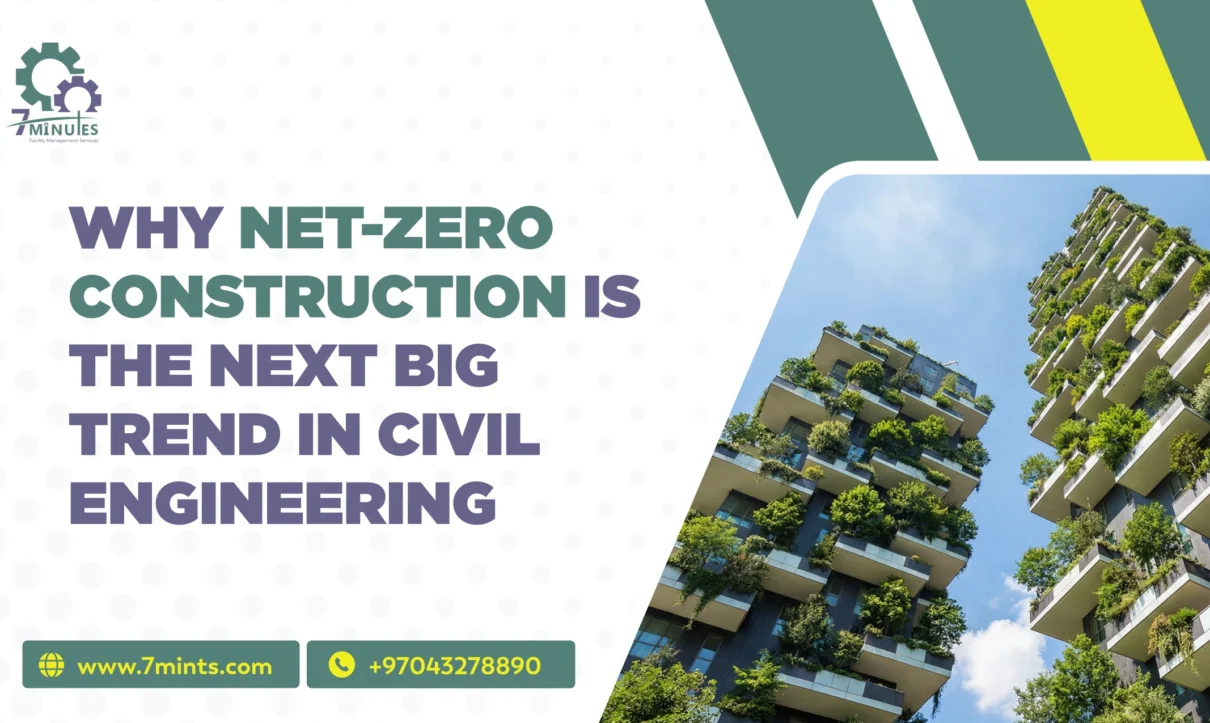
The construction industry is undergoing a major transformation as businesses, governments, and property developers look for ways to reduce environmental impact while improving building performance. Rising energy demands, climate concerns, and the need for sustainable infrastructure are encouraging the industry to adopt more responsible construction practices. One of the most important developments is net-zero construction UAE, which focuses on reducing a building’s energy consumption and balancing its remaining carbon emissions.
Net-zero construction is becoming an important part of modern civil engineering because it combines energy efficiency, renewable energy, sustainable materials, and innovative building design. As the UAE continues to invest in modern infrastructure and sustainable development, net-zero buildings are expected to play an increasingly significant role in the future of construction.
What Is Net-Zero Construction?
Net-zero construction refers to designing and developing buildings that aim to balance the energy they consume with renewable energy they generate over a defined period. Some net-zero approaches also consider the carbon emissions associated with building materials, construction activities, transportation, and operations.
The concept goes beyond installing solar panels. It involves creating efficient buildings that require less energy for lighting, cooling, ventilation, and other daily operations.
The growing interest in net-zero buildings UAE reflects the need for buildings that support environmental goals while providing comfortable and functional spaces for residents and businesses.
1. Reducing Carbon Emissions in the Construction Industry
Traditional construction activities can contribute significantly to carbon emissions through material production, transportation, machinery, and building operations. Cement and steel production, for example, require substantial energy and can have considerable environmental impacts.
Low-carbon construction methods help address these challenges by encouraging efficient material selection, reduced construction waste, responsible sourcing, and improved project planning.
Civil engineers can also evaluate the environmental impact of materials before selecting them for a project. Using recycled materials, lower-carbon alternatives, and efficient construction techniques can help reduce the overall carbon footprint.
The adoption of carbon emission reduction in construction is therefore becoming an important consideration for developers, contractors, and engineering consultants.
2. Improving Energy Efficiency in Buildings
Energy efficiency is one of the foundations of net-zero construction. Buildings that consume less electricity require fewer resources to operate and can reduce long-term operating expenses.
Modern energy-efficient construction UAE projects use technologies and design strategies that reduce unnecessary energy consumption. These may include:
- High-performance insulation systems.
- Energy-efficient windows and glazing.
- LED lighting and smart controls.
- Efficient air-conditioning and ventilation systems.
- Building orientation that reduces unwanted heat gain.
- Automated systems that manage energy consumption.
In a hot climate such as the UAE, cooling requirements are an important factor in building energy performance. Proper insulation, shading, efficient cooling equipment, and smart temperature controls can improve indoor comfort while reducing electricity demand.
3. Integrating Renewable Energy into Building Design
Renewable energy is an important component of many net-zero projects. Solar power, in particular, offers opportunities to generate electricity directly from sunlight.
Modern renewable energy in construction can include rooftop solar panels, solar carports, and other building-integrated energy solutions. When combined with energy-efficient equipment, these technologies can help buildings meet a larger share of their electricity requirements.
However, renewable energy systems should be planned according to the building’s energy demand, available space, technical requirements, and local regulations.
The integration of renewable energy during the design stage is generally more effective than treating it as an additional feature after construction is complete.
4. Encouraging Sustainable Civil Engineering Solutions
Net-zero construction is changing the way civil engineers approach project planning and execution. Instead of focusing only on structural performance and construction costs, engineering teams increasingly consider energy use, material efficiency, environmental impact, and long-term building performance.
Sustainable civil engineering solutions may include efficient structural systems, responsible material sourcing, water conservation, waste reduction, and environmentally conscious site planning.
These strategies can also support sustainable infrastructure development UAE, particularly as cities expand and demand for residential, commercial, and industrial facilities increases.
By considering environmental performance from the beginning, civil engineers can create infrastructure that supports both present-day requirements and future sustainability objectives.
5. Using Green Building Materials and Innovative Technologies
Material selection has a major influence on the environmental performance of a construction project. Traditional materials may have high embodied carbon due to energy-intensive manufacturing and transportation.
The growing use of green building materials UAE is encouraging developers to explore alternatives that reduce environmental impact without compromising safety, durability, or structural requirements.
Examples include:
- Recycled steel and construction materials.
- Lower-carbon concrete alternatives.
- Responsibly sourced timber where suitable.
- Recycled insulation materials.
- Materials designed for durability and reduced maintenance.
In addition, net-zero building technology is improving how buildings monitor and manage energy consumption. Smart meters, automated lighting, efficient HVAC systems, and building management platforms can help facility managers identify energy waste and improve operational performance.
6. The Role of Smart Energy Management Systems
A building cannot achieve strong energy performance through design alone. Its systems must also be monitored and managed throughout operation.
Smart energy management systems help property owners understand how electricity is being consumed across different areas of a building. These systems can monitor lighting, cooling, ventilation, and other equipment.
For example, automated controls can adjust air-conditioning based on occupancy, while smart lighting systems can reduce unnecessary electricity use in unoccupied spaces.
These technologies help improve building efficiency and provide useful performance data. Regular monitoring also allows facility management teams to identify equipment problems before they lead to unnecessary energy consumption.
7. Supporting Green Building Standards and Sustainability Goals
Green building certification frameworks encourage developers to consider energy efficiency, water conservation, indoor environmental quality, and material selection.
LEED-certified buildings UAE demonstrate how sustainability principles can be incorporated into commercial, residential, and institutional projects. LEED is one recognised certification framework, although achieving net-zero performance requires specific energy and carbon assessments beyond simply obtaining a green building certification.
Developers should evaluate the relevant local building regulations and sustainability requirements during project planning. This helps ensure that building designs are practical, compliant, and aligned with the project’s environmental objectives.
8. Preparing for Climate-Resilient Construction
Buildings must be designed to perform reliably under changing environmental conditions. In the UAE, high temperatures and demanding cooling requirements make thermal performance particularly important.
Climate-resilient construction UAE focuses on creating buildings and infrastructure that can better withstand environmental stresses while maintaining functionality and safety.
Strategies may include heat-resistant materials, effective insulation, suitable drainage systems, efficient cooling technologies, and landscape planning that reduces heat exposure.
Combining climate resilience with eco-friendly construction methods helps developers create infrastructure that is designed for long-term performance rather than short-term requirements.
Challenges in Adopting Net-Zero Construction
Although net-zero construction offers significant benefits, implementing it can involve several challenges. Initial investment costs, technology selection, material availability, technical expertise, and coordination between project teams can affect adoption.
Developers may also need to consider renewable energy availability, building orientation, maintenance requirements, and the performance of different systems over time.
A practical approach is to establish clear sustainability targets early, conduct energy modelling, select suitable materials, and monitor performance throughout the building’s lifecycle. This helps make net-zero strategies more achievable and cost-effective.
Why Net-Zero Construction Is the Future of Civil Engineering
The future of the construction industry will increasingly depend on how effectively buildings and infrastructure use energy and natural resources. Net-zero construction brings together engineering innovation, renewable energy, efficient design, and responsible material selection.
As demand for sustainable properties grows, developers and engineering professionals will need to adopt solutions that improve building performance while reducing environmental impact. From net-zero construction UAE to large-scale sustainable infrastructure projects, this approach represents an important direction for the industry.
Conclusion
Net-zero construction is more than a passing trend. It represents a significant shift towards energy-efficient, environmentally responsible, and future-ready infrastructure. By adopting sustainable materials, renewable energy, smart management systems, and low-carbon construction methods, the civil engineering industry can contribute to a more sustainable built environment.
For developers, contractors, and civil engineering professionals in the UAE, investing in net-zero principles can help prepare projects for changing environmental expectations and long-term performance requirements. As technology advances and sustainable building practices become more accessible, net-zero construction is likely to become an increasingly important part of the region’s construction landscape.
Frequently Asked Questions
Q1. What is net-zero construction?
Net-zero construction aims to balance a building’s energy consumption with renewable energy generation over a defined period. Some approaches also address embodied carbon from materials and construction.
Q2. Why is net-zero construction important in the UAE?
It can help reduce building energy demand, improve operational efficiency, support sustainability objectives, and address the challenges of constructing in a hot climate.
Q3. What materials are used in sustainable construction?
Common options include recycled steel, lower-carbon concrete alternatives, recycled insulation, and responsibly sourced materials selected according to project requirements.
Q4. How does renewable energy support net-zero buildings?
Renewable energy systems, such as solar panels, generate electricity that can offset some or all of a building’s operational energy consumption.
Q5. What is the difference between green buildings and net-zero buildings?
Green buildings follow broader sustainability principles, including water efficiency, material selection, and indoor environmental quality. Net-zero buildings have a specific goal of balancing energy consumption with energy generation or addressing defined carbon emissions.




1 Comment
Comments are closed.