

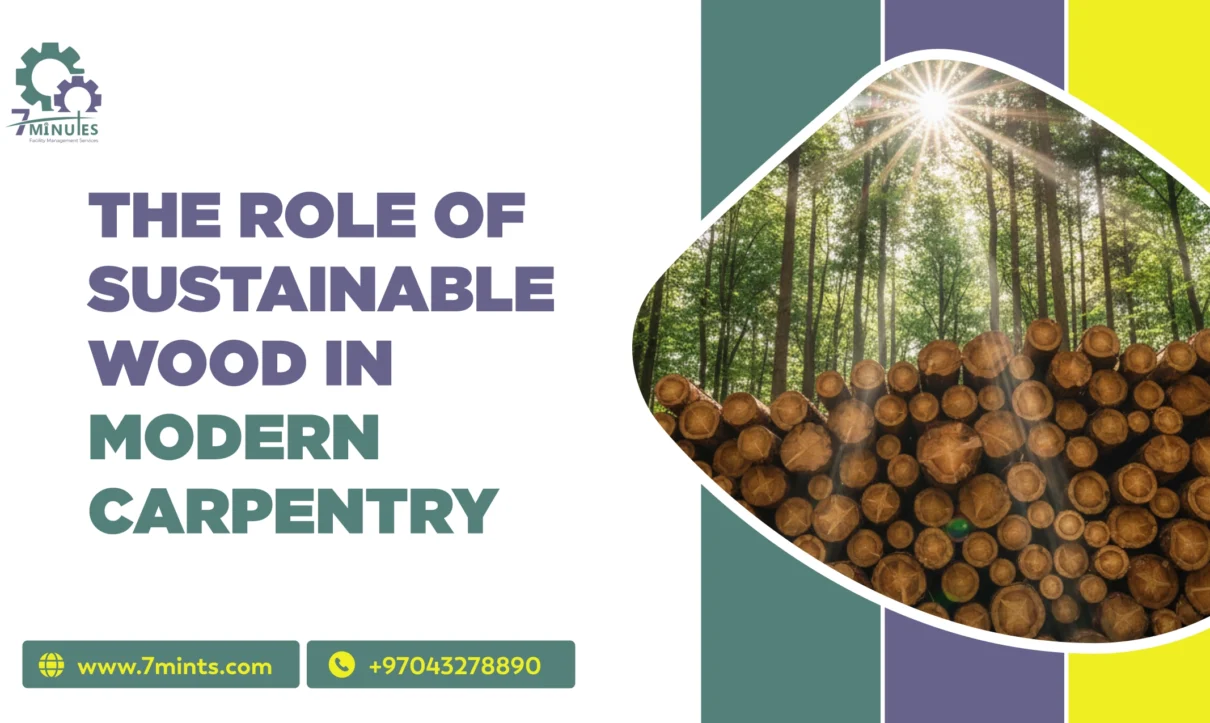
Sustainability has become an important consideration in modern construction, furniture manufacturing, and interior design. As businesses and homeowners look for ways to reduce environmental impact, wood remains a popular material because of its versatility, natural appearance, and wide range of applications. However, the way wood is sourced, processed, used, and disposed of plays a significant role in determining its environmental impact.
Sustainable wood in carpentry offers an approach to creating durable furniture, functional interiors, and high-quality wooden structures while supporting responsible resource management. By selecting suitable timber, reducing waste, and adopting efficient production methods, carpenters can contribute to more environmentally responsible construction and design.
What Is Sustainable Wood in Carpentry?
Sustainable wood is timber obtained and managed in ways that consider forest regeneration, biodiversity, responsible harvesting, and long-term resource availability. It can also include reclaimed or recycled wood that is reused instead of being discarded.
Using sustainable carpentry materials helps reduce unnecessary pressure on natural resources while supporting durable and practical woodworking projects.
For example, a carpenter creating wardrobes, cabinets, doors, or office furniture can choose responsibly sourced timber, reuse suitable wood from previous projects, or select certified products from suppliers with credible sustainability documentation.
The objective is not simply to use wood labelled as sustainable. It is to consider the material’s origin, processing, durability, transportation, and expected lifespan.
1. Why Sustainable Wood Matters in Modern Carpentry
Traditional woodworking can generate considerable waste through cutting, shaping, sanding, and material selection. Unsustainable sourcing can also contribute to forest degradation and habitat loss.
Choosing eco-friendly wood for carpentry can help businesses address these concerns while maintaining the strength and appearance required for different applications.
The main benefits include:
- Supporting responsible forest management.
- Reducing demand for newly harvested timber where reclaimed alternatives are suitable.
- Encouraging efficient use of available materials.
- Supporting durable furniture and interior components.
- Reducing waste through better design and production planning.
- Improving the environmental credentials of construction and renovation projects.
The benefits of sustainable wood depend on the material selected and how it is produced and used. Responsible sourcing, long service life, and efficient manufacturing can all contribute to better environmental outcomes.
2. Choosing Responsibly Sourced Timber
One of the most important steps in sustainable carpentry is understanding where timber comes from.
Responsibly sourced timber comes from suppliers who can provide credible information about the wood’s origin and sourcing practices. Depending on the product, this may include documentation covering forest management, chain of custody, or other relevant sustainability requirements.
Carpenters and contractors should ask suppliers about species, country of origin, treatment methods, and supporting certifications.
FSC-certified wood is one option to consider. The Forest Stewardship Council provides certification systems intended to support responsible forest management and traceability through relevant supply chains. Buyers should verify that the product’s certification claims and documentation are valid and applicable to the specific purchase.
Certification can improve transparency, but it is still important to choose timber that suits the project’s technical requirements, including moisture exposure, load, durability, and finish.
3. Using Renewable and Eco-Friendly Wood Materials
Wood is a renewable resource when forests are managed responsibly and regeneration keeps pace with harvesting over time. This makes renewable wood materials an important consideration in environmentally conscious construction and interior design.
The suitability of a timber product depends on its species, availability, growth cycle, harvesting practices, processing, and transportation.
Some projects may benefit from engineered wood products, while others require solid timber for structural or aesthetic reasons. The best option depends on the intended application and performance requirements.
Selecting appropriate modern carpentry materials involves balancing sustainability, durability, cost, and ease of maintenance. Material selection should also account for adhesives, coatings, preservatives, and other treatments that may affect indoor air quality or end-of-life disposal.
4. Reclaimed and Recycled Wood in Carpentry
Reusing existing wood is another effective way to support sustainable woodworking. Reclaimed wood in carpentry involves recovering timber from sources such as old furniture, buildings, flooring, doors, and other wooden structures.
After appropriate inspection and preparation, reclaimed timber can be used for furniture, decorative wall panels, shelving, counters, and selected interior features.
Similarly, recycled wood materials may be processed into suitable panels, boards, or other products for new applications.
Reusing wood can reduce demand for virgin timber and divert usable materials from disposal. It may also provide distinctive textures and finishes that are difficult to reproduce with newly manufactured products.
However, reclaimed timber must be checked for structural damage, moisture, pests, contaminants, old coatings, and embedded metal. Not every recovered piece is suitable for every application, particularly where structural strength or hygiene is critical.
5. Sustainable Wood for Furniture and Interior Design
Furniture and interior features are important areas where sustainable materials can make a practical difference.
Sustainable wood furniture can include tables, chairs, cabinets, beds, shelving, and storage units made from responsibly sourced, reclaimed, or appropriately certified materials.
Designing furniture for durability is equally important. Strong joints, replaceable components, repairable finishes, and timeless designs can extend a product’s useful life and reduce the need for frequent replacement.
In sustainable interior design UAE projects, carpenters and designers can consider responsibly sourced timber for wardrobes, kitchen cabinetry, wall panelling, office furniture, and decorative features.
The UAE’s climate also requires careful material selection. Temperature changes, humidity, air conditioning, and moisture exposure can affect wood movement and performance. Suitable timber selection, proper acclimatisation, moisture control, installation, and finishing help reduce warping, cracking, and premature deterioration.
6. Adopting Sustainable Woodworking Practices
Material selection is only one part of sustainable carpentry. Production methods also influence waste, energy consumption, and the overall environmental impact of a project.
Sustainable woodworking practices focus on using materials efficiently, extending product life, and minimising unnecessary waste.
Carpentry businesses can improve their processes by:
- Measuring accurately before cutting timber.
- Planning cutting layouts to maximise usable material.
- Reusing suitable offcuts for smaller components.
- Maintaining tools to improve cutting precision.
- Separating clean wood waste for appropriate reuse or recycling.
- Selecting durable finishes and suitable low-emission products.
- Designing furniture for repair and disassembly where practical.
These measures support wood waste reduction and may also improve productivity by lowering material losses and reducing avoidable rework.
Environmentally friendly woodworking should also consider dust collection, worker safety, energy-efficient equipment, and responsible disposal of treated wood, coatings, and chemical products.
7. Green Carpentry Solutions for UAE Projects
The demand for environmentally responsible construction and renovation creates opportunities for green carpentry solutions across residential, commercial, and hospitality projects.
Carpenters can support sustainability goals by recommending suitable timber, reducing waste during installation, repairing existing wooden components where practical, and designing products for longer service life.
Businesses looking for eco-friendly carpentry services should ask about material sourcing, waste-handling procedures, product durability, and the documentation available for sustainability claims.
For projects seeking sustainable timber UAE suppliers, it is useful to compare local availability, certification, transportation requirements, material specifications, and suitability for the local climate.
Sustainability claims should be supported by evidence rather than relying on terms such as “green” or “natural” alone. A product’s environmental performance depends on its complete lifecycle, including production, transport, maintenance, and disposal.
8. Emerging Sustainable Carpentry Trends
Several developments are shaping sustainable carpentry trends. These include greater interest in reclaimed materials, more efficient cutting technology, durable modular furniture, traceable timber sourcing, and designs that make repair easier.
Digital design tools can help carpenters calculate material requirements more accurately and reduce cutting waste. Prefabricated components may also improve consistency and reduce unnecessary material use on site.
Another growing consideration is the selection of low-carbon construction materials. Wood can store biogenic carbon during its service life, but its overall climate impact depends on forest management, processing energy, transportation, product lifespan, and what happens when the product reaches the end of its life.
Comparing materials using reliable lifecycle information can help project teams make better decisions rather than assuming that every wooden product automatically has a lower environmental impact.
Conclusion
Sustainable wood usage was a major factor in the development of modern carpentry. By using forest-managed and ethically sourced wood, carpenters and homeowners alike are taking an active part in the safeguarding of forests, lowering CO₂ emissions, and promoting a healthier Planet.
In the 21st century, where sustainability has become an imperative, the use of sustainable wood still reigns as the foundation of responsible design and construction. It is not just about creating the most beautiful spaces; Contact Us as it is also about building a future that lasts. Thus, the next time you see a beautifully designed wooden product, just remember that real craftsmanship does not just shape wood; it also shapes the world it has come from.
Frequently Asked Questions
Q1. What is sustainable wood in carpentry?
Sustainable wood in carpentry refers to responsibly sourced, reclaimed, or recycled timber used in ways that consider resource conservation, durability, and environmental impact.
Q2. Is FSC-certified wood a sustainable choice?
FSC-certified wood can be a useful option because certification supports responsible forest management and supply-chain traceability. Buyers should verify the relevant product claims and documentation.
Q3. Can reclaimed wood be used for modern furniture?
Yes. Reclaimed wood can be used for tables, cabinets, shelving, wall panels, and other furniture after appropriate checks for strength, moisture, pests, and contamination.
Q4. How can carpenters reduce wood waste?
Carpenters can plan cutting layouts, measure accurately, reuse suitable offcuts, maintain tools, and separate recoverable wood waste for reuse or recycling.
Q5. What should UAE homeowners consider when choosing sustainable timber?
Homeowners should consider sourcing documentation, durability, moisture resistance, suitability for the local climate, maintenance requirements, and the environmental impact of finishes and treatments.






1 Comment
Comments are closed.