

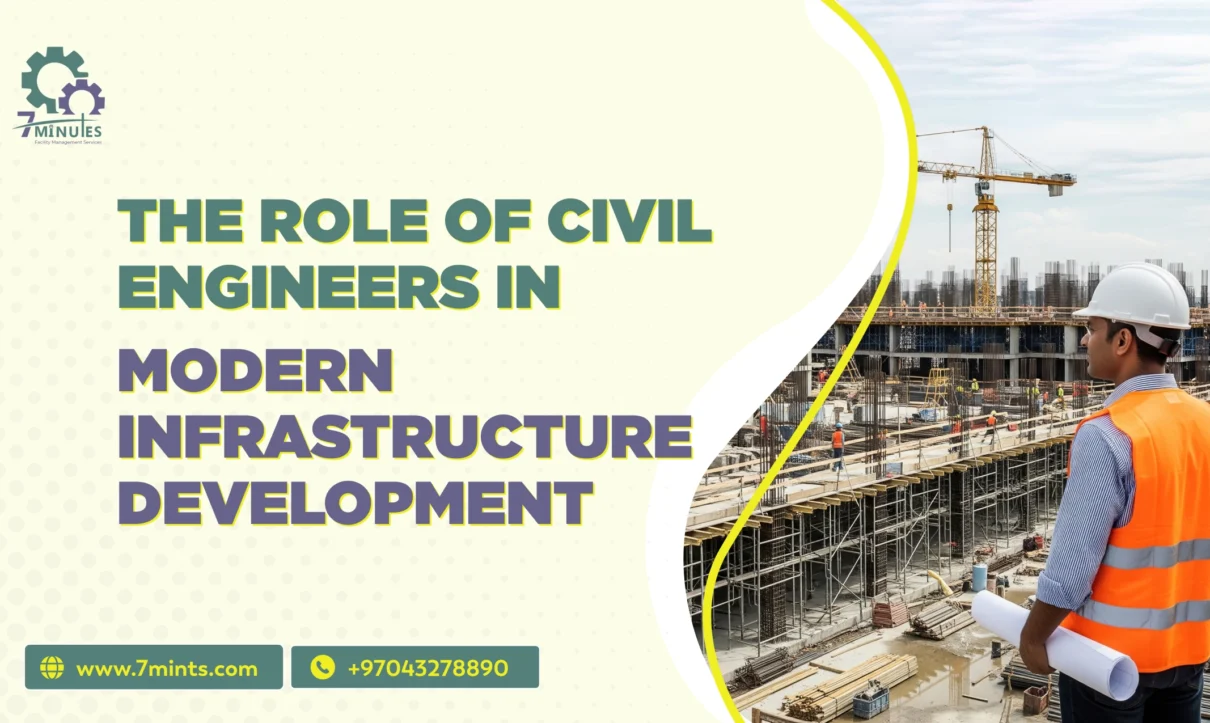
Civil engineering is the backbone of modern infrastructure; it is the site on which cities flourish and exist. In the UAE, it had grown even more important, given the rapid growth of the country and its ambitious vision for the future. From iconic skyscrapers like the Burj Khalifa to the far-flung transport network of the Dubai Metro, every project that marks the nation would have its civil engineer.
The expertise of civil engineers in modern urban planning ensures that every structure is safe, sustainable, and optimized for efficiency. Modern infrastructure development relies heavily on the technical knowledge and innovative solutions that civil engineers bring to the table, making them indispensable to the UAE’s rapid growth.
The civil engineer’s domain does not end with construction but also includes sustainability, planning, and ensuring that projects align with the long-term requirements of both residents and industry. Simply put, civil engineers are the unseen force behind the UAE’s desire to be a modern, smart, and sustainable economy.
Civil Engineering in Modern societies, particularly in the UAE, focuses on combining technology with traditional engineering principles. Civil engineers in infrastructure projects adopt the latest software, sustainable materials, and innovative construction techniques to deliver modern infrastructure development that is both efficient and future-ready.
The Role of Civil Engineers in the UAE’s Growth
Civil engineers are the nucleus of the UAE’s development story. From designing buildings to planning and executing projects that modulate the economy and society of the country, these engineers do it all.
Making Vision into Reality: The UAE government has grand schemes such as “UAE Vision 2030” and “Dubai 2040 Urban Master Plan.” And civil engineers are the ones who turn these layouts into projects. They provide specialized technical knowledge and use the latest in engineering tools and methods to either design or provide the opportunity that any vision may be turned into sustainable and safe structures. In other words, these plans could stay only on paper without civil engineers.
Building the Core: Mega-projects such as building bridges, roads, ports, and airports need to have their designs supported by engineers, who then ensure the quality and safety of construction within international standards. For instance, advanced engineering was, to a great extent, involved in the extension of Abu Dhabi International Airport and the development of the road networks in Dubai. Such infrastructure is the very bloodline of daily existence and thus goes a long way in giving the UAE recognition at the international stage as a business and tourism hub.
The contribution of civil engineers in modern infrastructure development extends to smart transportation systems, energy-efficient buildings, and disaster-resistant structures. These engineers integrate planning with technology to enhance public safety, reduce costs, and ensure the longevity of infrastructure assets.
From Innovation to Practicality: They look into feasibility, calculation of loads, and design systems against environmental factors such as heat or sandstorms. A mix of creativity and functionality is how these engineers will pave the way for smart cities and artificial islands in the future.
Urban and Economic Growth: Potential economic activities determine the quality of every civil engineering project. The construction of roads, for example, may better trade routes, whereas housing developments could accommodate a growing population.
Importance of Civil Engineering in Modern UAE Cities
Cities such as Dubai, Abu Dhabi, and Sharjah highlight the significance of civil engineering in the conversion of deserted landscapes into thriving business and tourist hubs.
Promoting Sustainable Construction: The UAE has embraced sustainability as a cornerstone of its long-term development strategy. The civil engineers stand in support of this by applying aspects of renewable energy technologies and other green technologies in construction, sustainable materials, and water conservation technologies in building projects. Their designs help lower the energy consumption, which in turn makes the cities in the UAE greener and more resilient to climate change.
Putting Life into Iconic Structures: These are some of the most famous landmarks that architects and civil engineers in the UAE collaborated on. Projects as large as Palm Jumeirah or the Dubai Metro needed artistic designs that called for very complex engineering solutions. The civil engineers were to ascertain that the designs were structurally the considered ones and safe, thus creating icons all around the globe as symbols of modern development.
Civil engineers in modern infrastructure development also contribute to urban resilience, ensuring that cities are prepared for environmental and social challenges. By combining creativity with technical precision, civil engineers in infrastructure make sure that Dubai, Abu Dhabi, and other cities continue to thrive as modern hubs for commerce and tourism.
Making Cities More Livable: Civil engineering is not only for towering buildings and vast roads; it is a recipe for life quality enhancement. By creating drainage systems, safe roadways, and sustainable housing, civil engineers make cities livable places wherein residents and tourists enjoy being associated with the steel and concrete U.A.E. cities of efficient, smiling, and comfy competition.
How Civil Engineers Shape Infrastructure in Dubai & Abu Dhabi
A considerable role has always been played by civil engineers in setting the unique infrastructure of the two big cities of the UAE, Dubai and Abu Dhabi.
Working on Mega Projects to Transform Dubai: The growth of Dubai as a global hub largely depends on civil engineering. Infrastructure delivery should always conform to the scales of speed, safety, and innovation while raising the name of Dubai as a futuristic city. Check out our latest blog post on Top 5 Advantages of Preventative A/C Maintenance
Spearheading Sustainability Goals in Abu Dhabi: Abu Dhabi is establishing itself as the capital for sustainable growth. Civil engineers, therefore, spearhead the developments for Masdar City Masdar being one of the greenest urban communities in the world. Employing green construction technologies and renewable energy systems, the engineers push the title of Abu Dhabi to the forefront in green infrastructure.
Using Advanced Engineering Tools: In the UAE, civil engineers are redefining project management with BIM and 3D simulation techniques. These techniques reduce the chances of error in the construction process and reduce construction costs and time duration for the delivery of projects. Thus, technical solutions improve the operation and thereby ensure higher accuracy in the completion of the project.
Ensuring Regulatory Compliance: Any infrastructure work has to be in accordance with stringent government rules and international building codes of the UAE. Civil engineers have to make sure that every single fiber of construction conforms to such laws, from the choice of material to the structural design, indicating that any hazards must be eliminated, durability must be ensured, and public safety must be enhanced.
Civil engineers in infrastructure play a strategic role in ensuring modern infrastructure development aligns with both economic goals and environmental standards. Their work ensures that every Dubai skyscraper, Abu Dhabi road network, or green building contributes to the UAE’s sustainable future.
Benefits of Civil Engineering in the UAE’s Infrastructure Development
There are the following benefits returned by way of the civil engineering contributions to the economy, society, and international reputation of the UAE.
Boosting Economic Development: Infrastructure is an important component driving economic development. Civil engineering projects like airports, seaports, and highways will facilitate trade and tourism in the country. Travelers and tourists would provide thousands of job opportunities with the creation of such infrastructure, and foreign investments would be drawn in. The UAE will hence be hailed as one of the best destinations for doing global trade.
Supporting Sustainability Goals: The country has committed to lowering its carbon footprint, and the civil engineers were the ones able to make this happen. These engineers have set us on a path towards a sustainable future through the implementation of renewable energy technologies, green buildings, and smart city planning. These projects will protect and conserve the environment while, in the long term, decreasing operational costs.
Increasing Public Safety: Civil engineers thus ensure that all projects comply with the highest possible degree of safety standards and that these standards are maintained. For example, they consider safety to be the primary principle of their work when designing a seismic-resistant skyscraper or a bridge that will withstand heavy traffic; this, in turn, reduces accidents and assures that people can safely live, work, and travel.
Through the expertise of civil engineers in modern infrastructure development, the UAE continues to set global standards for city planning, smart transportation, and sustainable urban growth. Civil engineers in infrastructure integrate safety, innovation, and sustainability, ensuring that the nation remains a hub of economic and cultural progress.
By erecting structures never seen before, such as underwater hotels or artificial islands, the UAE has impressed the world. Projects of such enormity attract global attention and, therefore, give the UAE an edge as a country where imagination meets world-class engineering.
Conclusion
Civil engineers provide the backdrop for the one-of-a-kind, innovative, sustainable, and economically viable transformation that the UAE is harboring. They ensure the safety of every project in line with future-ready measures and the vision of the nation, starting from the skyscraper in Dubai to the landscape of sustainable communities in Abu Dhabi. As the nation grows, the engineering needs will increase. This makes it an important field at present.
When seeking trusted civil engineering services in the UAE, working with professionals will be instrumental in ensuring on your behalf that your infrastructure project stands a chance to be successful and sustainable. Contact us, as the future of infrastructure in the UAE depends upon civil engineers, whereby the imprint of their work will continue to broker the language of cities for generations.
Civil engineers in modern infrastructure development are the silent architects behind the UAE’s skyline and urban landscape, ensuring that every project is not only impressive but functional, sustainable, and future-ready. Their role cements the UAE’s reputation as a hub of innovation, design, and economic prosperity.







1 Comment
Comments are closed.