

Buying land, breaking ground, and then watching a housing project slip over budget or get stuck during an inspection are among the most common worries developers and homeowners share in the UAE’s fast-moving construction market. A weak soil assessment, unclear structural planning, or designs that do not meet required standards can easily turn a promising project into something delayed and expensive, and, honestly, that fear sticks.
Civil engineers help real estate and housing projects by managing site evaluation, structural design, infrastructure planning, quality control, and regulatory compliance, from the very first soil test through to final handover. Because of that work, construction delays are reduced, cost overrun risk goes down, and every residential building tends to be safer, tougher, and code-compliant—so they are one of the more important hires in basically any real estate development.
What Does a Civil Engineer Do in Real Estate Development?
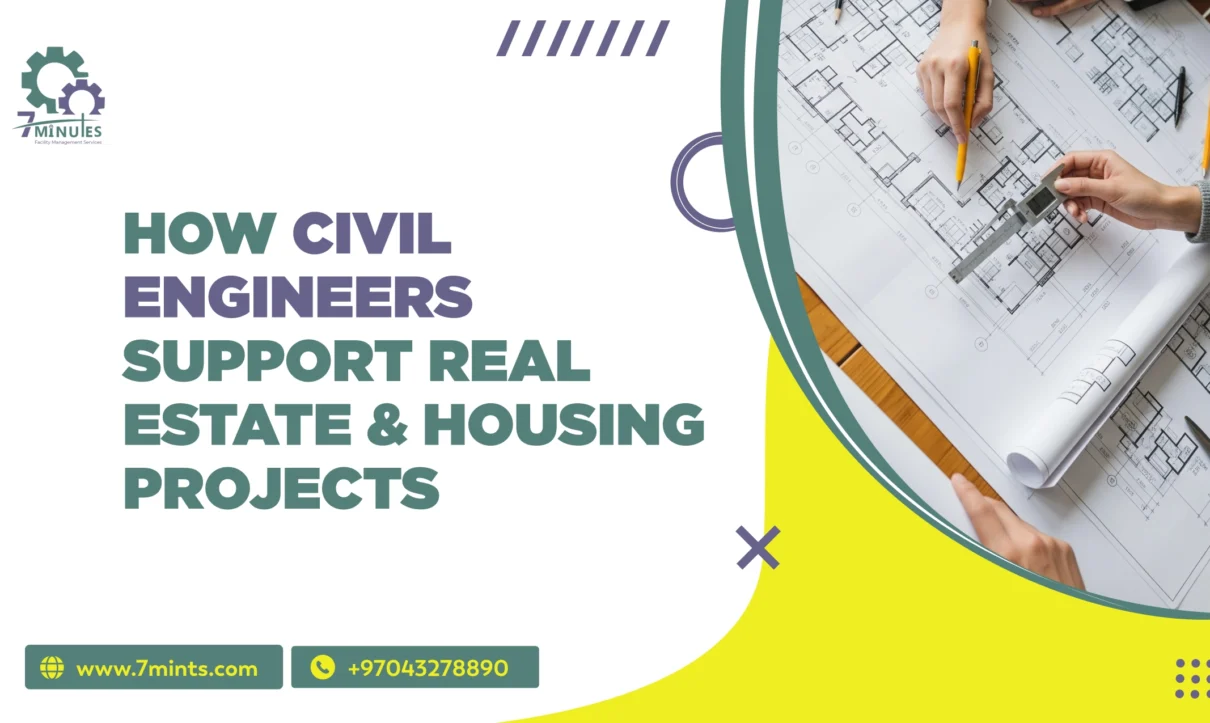
A civil engineer in real estate development is the specialist who turns architectural drawings into a structure that is safe, buildable, and can actually be delivered on-site. They typically work across four main areas: land and site assessment, structural design, infrastructure planning, and construction supervision.
Before a single brick is laid, civil engineers study soil composition, drainage behavior, flood risk, and how much load the ground can handle, just to verify the land is truly fit for development. This early input affects nearly everything afterward – foundation type, building height, material selection, and even how the schedule is set. In other words, their assessment is what helps architects and developers move from an idea into a practical permit-ready plan.
Civil engineers are responsible for
- Assessing land and soil before purchase or design begins
- Engineering the structural foundation and load-bearing system
- Planning roads, drainage, and utility infrastructure
- Supervising construction quality and contractor compliance
- Signing off on regulatory and safety compliance before handover
| Development Stage | Civil Engineer’s Role |
| Pre-construction | Soil testing, land survey, feasibility study, flood/traffic risk assessment |
| Design | Structural design, foundation planning, load calculations, drainage layout |
| Construction | Site supervision, material quality checks, contractor coordination |
| Post-construction | Compliance sign-off, inspection reports, maintenance recommendations |
- A civil engineer’s role changes at every stage—it isn’t a one-time consultation
- Pre-construction work (soil testing, feasibility) is where most risk gets removed before money is spent
- Design and construction phases focus on safety, structural accuracy, and contractor accountability
- Post-construction sign-off confirms the finished building actually matches what was approved
Also Read: Civil Engineering Improves Quality of Life in Urban Areas
Why Civil Engineering Support Matters for Housing Projects
Civil engineering support matters because building costs and risk levels are rising faster than most developers can really swallow without solid, expert planning. Material prices in the UAE apparently climbed around 18–22% between 2022 and 2024, mostly due to steel price swings plus labor shortages, so now one planning slip can be a lot more expensive to correct than it was a few years back.
At the same time, the UAE construction sector is expected to keep growing, at a compound annual rate near 5.6% through 2031, which should push annual output beyond AED 120 billion. That speed is basically turning every housing project into a sort of race for land, materials, and skilled supervision, and somehow it leaves less tolerance for engineering shortcuts. A civil engineer joining early, at the very start of the project, is what keeps a development aligned with budget and timeline, even with all those pressures.
| Market Factor | Data Point | Impact on Housing Projects |
| Material cost rise (2022–2024) | 18–22% increase | Higher risk of budget overruns without precise planning |
| UAE construction sector growth | ~5.6% CAGR through 2031 | More competition for land, labor, and materials |
| Annual construction output | AED 120+ billion | Greater need for structured, code-compliant execution |
| Bank credit to construction/real estate (Q3 2025) | AED 273.1 billion | Signals sustained investment and project volume |
- Rising material costs mean planning mistakes are now more expensive than they used to be
- Sector-wide growth is increasing competition for land, labor, and skilled engineering oversight
- High construction output and bank lending both point to more active projects competing for the same resources
- Together, these numbers explain why early civil engineering input has become more valuable, not less
Why it matters: Every 1% saved through better material planning and structural efficiency can translate into hundreds of thousands of dirhams on a mid-size residential project — savings that come directly from accurate civil engineering input at the design stage.
Check out our latest blog post on The Role of Civil Engineers in Modern Infrastructure Development
The Civil Engineering Process for Housing Projects, Step by Step
For most housing projects, the civil engineering process kind of runs through six stages, and each one builds on the previous one, not really in a random way:
1. Site investigation – They do soil testing, a topographic survey, and groundwater checks, just to make sure the plot can actually handle the planned structure.
2. Feasibility and risk analysis – This is where they review flood zones, road access, and zoning restrictions before anything gets drawn up, because you don’t want surprises later.
3. Structural design – Engineers plan the foundation, columns, beams, and load-bearing walls. The goal is resisting wind, seismic activity, and everyday stresses.
4. Infrastructure planning – Roads are laid out, drainage systems, stormwater management, and utility connections are designed so the whole development works as a unit, not as separate pieces.
5. Construction supervision – There’s on-site monitoring of material quality, contractor performance, and whether the work matches the approved drawings.
6. Compliance and handover – Final inspections are done against local building code requirements before the project is signed off for occupancy.
Real-World Example: Civil Engineering in a UAE Residential Development
Imagine a mid-size villa community planned in one of the UAE’s northern emirates. The land there is sandy, and seasonal flash flooding can happen, so the site challenges are not exactly minor. At the start, a civil engineer handles a soil and drainage assessment, and it points to raised foundations plus a reinforced stormwater network. Those decisions get made early, before construction starts, not after water damage; by then it’s usually a mess.
That kind of early groundwork is pretty typical across the region: the Northern Emirates saw some of the highest volumes of newly launched residential units last quarter, and many developments now need engineering plans that balance affordability with long-term durability. When drainage and foundation design are done right during planning, the project is less likely to hit expensive rework once construction is already underway
How to Choose the Best Civil Engineer for your Real Estate Project
Choosing the right civil engineer, honestly, it comes down to more than hiring someone who is “good at construction.” Like, you really want experience tied to residential work, not only office towers or general contracting.
Start by checking residential project experience—don’t just ask about “construction background.” Look for professionals who have worked on villas, apartment complexes, or townships with a similar footprint and scale to yours.
Then review completed projects and client feedback, ask for references, and if it’s possible, do a quick walkthrough of a finished site. This part usually tells you how carefully they handled details on real ground, not in slides.
Next, confirm they understand local regulations—because UAE building codes, height limitations, and sustainability expectations (yes, even Estidama-type requirements) can shift by emirate. If they’re not up to date, you might pay later with redesigns and delays.
Also ask about their process for cost and timeline management. A strong civil engineer should be able to explain how they reduce material wastage, prevent avoidable rework, and control schedule slippage. They should talk about sequencing too, not only about budgets in general terms.
If sustainability matters for your housing plan, look for that kind of expertise: rainwater harvesting systems, energy-efficient materials, and waste management practices are being treated more like standard expectations these days.
Frequently asked Questions
Q1. What does a civil engineer do in a real estate project?
A civil engineer typically manages site evaluation, structural design coordination, infrastructure planning, and construction supervision so the project is safe, compliant, and built to last.
Q2. Why is civil engineering important in housing projects?
Because it helps prevent structural issues, reduces cost overruns, and ensures the development fits safety codes while handling local conditions like flooding patterns or high wind exposure.
Q3. How early should a civil engineer be involved in a project?
Ideally, before land purchase or at least from the first planning stage, since soil testing and feasibility studies shape the entire design direction and budget decisions.
Q4. What is the difference between a civil engineer and a structural engineer?
A civil engineer sort of leads the wider project, site infrastructure, and the compliance part too, while a structural engineer ends up concentrating mostly on load-bearing design inside that same project.
Q5. So how much would hiring a civil engineer cost for a housing project?
It really depends on how big and complicated it is. For a smaller home, you might pay something like a few thousand dirhams for a basic residential survey, but if it’s full-scale and you need proper structural design, plus supervision on larger developments, then the costs can climb quite a lot.
Q6. Can a civil engineer also help with sustainable or green housing design?
Yes, and it’s becoming pretty common now. They can plan things like rainwater harvesting, energy-efficient materials, and waste management systems so the work aligns with standards such as the UAE’s Estidama Pearl Rating System.
Conclusion
Any real estate project depends on civil engineers for success. Their construction and residential project management expertise allow for site evaluations and compliance handling, helping to ensure that a project is completed promptly, within budget, and to the highest safety and quality standards.
Additionally, searching for civil engineers for your housing project means you should consider your local options. Contact us as The success and smooth running of the project will heavily depend on hiring the appropriate experts.






2 Comments
Comments are closed.