

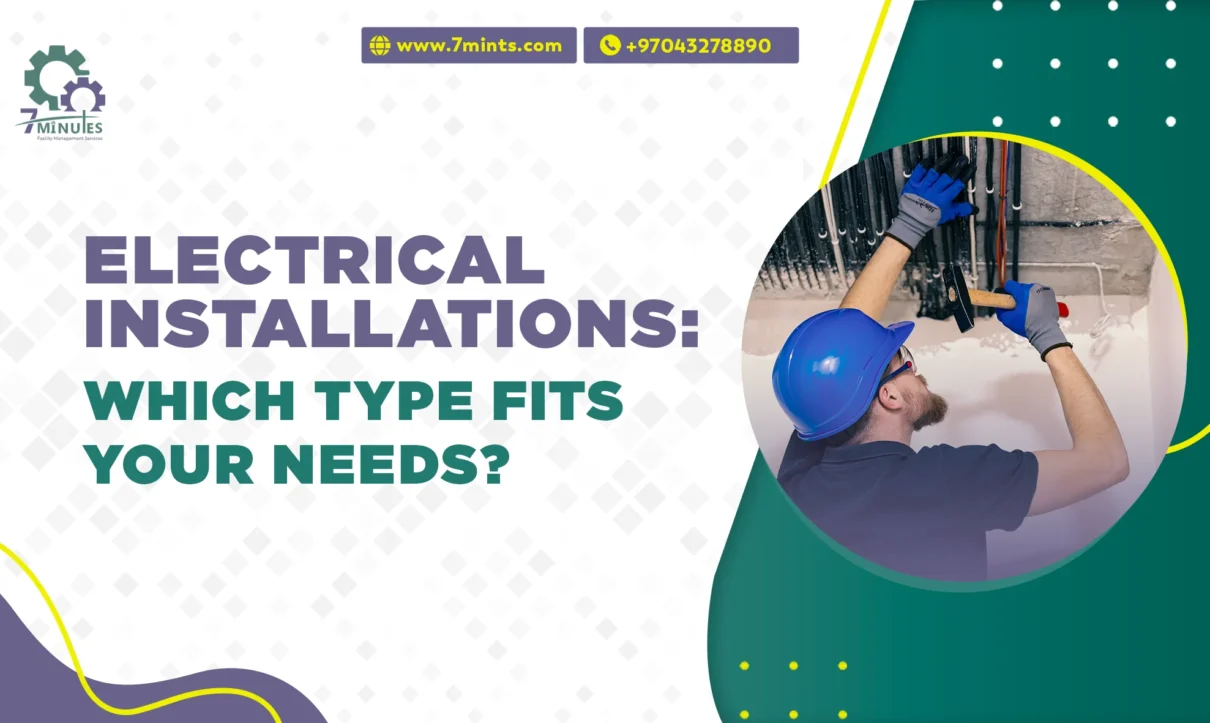
Electrical installations are essential for the safety, functionality, and efficiency of residential, commercial, and industrial properties. Whether you are constructing a new villa, renovating an office, or developing a warehouse in the United Arab Emirates (UAE), choosing the right electrical installation is important for reliable power distribution and long-term performance.
Different properties have different electrical requirements. Homes need safe wiring, lighting, and power outlets, while commercial buildings may require advanced distribution systems, emergency lighting, and energy management solutions. Industrial facilities often need specialised electrical equipment to support heavy machinery and complex operations.
Understanding the types of electrical installations can help property owners, contractors, and facility managers select suitable solutions for their projects.
What Are the Types of Electrical Installations?
Electrical installations involve the design, assembly, and connection of wiring, electrical equipment, distribution boards, lighting systems, and other components that supply power to a building.
The most suitable installation depends on the property’s purpose, power requirements, safety considerations, and future expansion plans.
The main types include:
- Residential electrical installations
- Commercial electrical installations
- Industrial electrical installations
- Low-voltage electrical installations
- High-voltage electrical installations
- Smart and energy-efficient electrical systems
Each type serves a different purpose and must be designed according to the building’s requirements and applicable electrical safety regulations.
1. Residential Electrical Installation UAE
A residential electrical installation UAE project focuses on providing safe and reliable electricity to houses, apartments, villas, and residential communities.
These installations support everyday activities such as lighting, cooking, air conditioning, charging electronic devices, and operating household appliances.
Key Components of Residential Electrical Installations
Typical residential installations include:
- Electrical wiring and power outlets
- Distribution boards and circuit breakers
- Indoor and outdoor lighting
- Earthing and electrical protection systems
- Dedicated circuits for high-power appliances
- Smoke detection and other compatible safety systems
When planning electrical installation for homes, it is important to consider the number of occupants, appliance requirements, room layouts, and future electrical demand.
For example, a villa with several air-conditioning units, an electric vehicle charger, and a smart home system may require a different electrical design from a small apartment.
Professional planning helps ensure that circuits are appropriately sized, electrical loads are distributed correctly, and protective devices are selected for the intended application.
2. Commercial Electrical Installations Dubai
Commercial electrical installations Dubai projects are designed for offices, retail shops, hotels, restaurants, shopping centres, and other business premises.
These buildings often have higher and more varied electricity demands than residential properties. Their electrical systems may also need to support business continuity, employee comfort, customer safety, and specialised equipment.
Common Commercial Electrical Requirements
Commercial installations may include:
- Electrical distribution and sub-distribution boards
- Office and retail lighting
- Emergency lighting and exit signs
- Power supplies for computers and business equipment
- HVAC electrical connections
- Backup power systems
- Energy monitoring and building automation
Effective electrical installation for commercial buildings begins with understanding the property’s operational requirements.
For instance, a restaurant may need dedicated circuits for kitchen equipment, while an office may require carefully planned power outlets, data infrastructure, and lighting controls.
Working with experienced contractors can help businesses minimise disruptions, plan for future expansion, and maintain compliance with applicable local requirements.
3. Industrial Electrical Installation UAE
An industrial electrical installation UAE project supports factories, warehouses, manufacturing facilities, workshops, and industrial plants.
These environments may use heavy machinery, motors, pumps, conveyors, production equipment, and specialised control systems. Consequently, industrial electrical installations require detailed planning and appropriate protection.
Important Industrial Electrical Components
Depending on the facility, an industrial installation may include:
- Three-phase power distribution
- Motor control centres
- Industrial switchgear and distribution panels
- Machinery power connections
- Control panels and automation systems
- Earthing and fault protection
- Emergency power and monitoring systems
Industrial installations must account for equipment starting currents, operating loads, environmental conditions, and the consequences of power interruptions.
A properly designed system can improve operational reliability, support equipment performance, and help reduce avoidable electrical faults.
Industrial work should be carried out by suitably qualified professionals in accordance with applicable technical requirements and site safety procedures.
4. Electrical Wiring Services Dubai
Reliable wiring is the foundation of every electrical installation. Electrical wiring services Dubai can include wiring design, cable installation, circuit connections, replacement of damaged wiring, and upgrades for renovated or newly constructed properties.
The wiring method and cable specifications depend on the electrical load, installation environment, circuit protection, and applicable standards.
For example, wiring in an air-conditioned office may have different environmental considerations from wiring installed in an industrial workshop or an outdoor service area.
Professional electricians assess cable sizing, circuit loading, insulation, earthing, and protective devices before completing the installation.
Property owners should avoid overloaded sockets, damaged cables, exposed connections, and unqualified electrical work because these issues can increase the risk of electric shock or fire.
5. Low-Voltage and High-Voltage Electrical Installations
Understanding voltage requirements is another important part of choosing the right electrical system.
Low Voltage Electrical Installation UAE
A low voltage electrical installation UAE project generally covers building-level electrical distribution and equipment operating within the applicable low-voltage classification.
In many buildings, low-voltage systems supply lighting, sockets, air-conditioning equipment, and other electrical loads. Some projects also include compatible control, communication, and building automation systems, although these may operate at extra-low voltages.
The design must account for load demand, circuit protection, earthing, and the requirements of the relevant utility and regulatory authorities.
High Voltage Electrical Installation UAE
A high voltage electrical installation UAE project is typically associated with specialised power distribution infrastructure, substations, transformers, and industrial or utility applications.
These installations require specialised design, equipment, testing, and safety procedures because electrical faults can have serious consequences.
High-voltage work should only be undertaken by appropriately authorised specialists. The correct classification, equipment specifications, and approval requirements must be confirmed for each project.
6. Electrical Panel Installation UAE
An electrical panel distributes electricity to different circuits and houses protective and switching equipment.
Electrical panel installation UAE services may involve installing new distribution boards, upgrading existing panels, adding circuits, or replacing equipment that no longer meets a property’s requirements.
A suitable panel should accommodate the expected electrical load, provide appropriate circuit protection, and allow safe access for inspection and maintenance.
For commercial and industrial facilities, panel selection may also need to consider motor loads, control equipment, environmental conditions, and future capacity.
Professional installation helps ensure that circuit identification, connections, earthing, and protective devices are handled correctly.
7. Smart Home Electrical Installation Dubai
Technology is changing how buildings manage electricity. A smart home electrical installation Dubai project can incorporate connected lighting, smart switches, occupancy sensors, automated controls, and compatible energy monitoring devices.
Depending on the design, homeowners may be able to control selected electrical functions through mobile applications, schedules, or integrated home automation platforms.
Smart systems can improve convenience and help reduce unnecessary energy consumption when configured appropriately.
However, compatibility with existing wiring, network reliability, device security, and future maintenance should be considered before installation.
8. Energy-Efficient Electrical Systems UAE
Energy efficiency is an important consideration for homes and businesses across the UAE, particularly where cooling and lighting contribute significantly to electricity consumption.
Energy-efficient electrical systems UAE projects may include LED lighting, occupancy sensors, efficient motors, automated lighting controls, and energy monitoring equipment.
These improvements can help reduce unnecessary electricity use and provide better visibility into operating costs.
For example, occupancy-based lighting controls can switch off selected lights when spaces are unoccupied, while energy monitoring can help facility managers identify unusual consumption patterns.
The actual savings depend on the property’s existing equipment, usage patterns, installation quality, and maintenance practices.
9. Electrical Maintenance Services Dubai
systems require regular inspection and maintenance to remain reliable. Electrical maintenance services Dubai may include checking distribution boards, inspecting connections, testing protective devices, identifying damaged wiring, and investigating recurring electrical faults.
Preventive maintenance can help detect developing problems before they cause equipment failure or operational disruption.
The inspection frequency should reflect the property’s electrical loads, equipment condition, environment, and applicable requirements.
Property owners should arrange prompt professional assessment if they notice burning smells, repeated breaker trips, unusual heat, sparking, or damaged electrical components.
How to Choose Professional Electrical Installation Services UAE
Selecting suitable electrical installation services UAE requires more than comparing prices. The contractor should understand the project’s scope, technical requirements, and applicable approval procedures.
- Project experience: Choose a contractor experienced in residential, commercial, or industrial installations relevant to your property.
- Qualifications and approvals: Verify that the contractor and personnel meet applicable licensing and authorisation requirements.
- Safety compliance: Confirm that the proposed work follows relevant electrical codes, utility requirements, and local authority regulations.
- Material quality: Check the suitability and specifications of cables, panels, switches, and protective devices.
- Testing and documentation: Ensure the project includes appropriate inspection, testing, and handover documentation.
- Maintenance support: Consider whether ongoing inspections and fault-response services are available.
Reliable professional electrical installation services Dubai should provide clear project specifications, transparent pricing, suitable materials, and a defined testing and handover process.
Conclusion
Residential installations apply to homes of homes for reasons of safety, comfort, and affordability. Contact Us as Commercial fits businesses that wish for scalability and advanced safety, and energy management. Industrial fits heavy-duty applications with core custom-made and heavy-duty power systems.
Frequently Asked Questions (FAQs)
Q1. What are the main types of electrical installations?
The main types include residential, commercial, industrial, low-voltage, and high-voltage installations. Smart electrical systems and energy management solutions may also be incorporated according to project requirements.
Q2. How do I choose electrical installation services in the UAE?
Consider the contractor’s relevant experience, qualifications, approvals, safety procedures, material specifications, testing arrangements, and maintenance support.
Q3. What is the difference between residential and commercial electrical installations?
Residential installations support household appliances, lighting, and everyday electricity needs. Commercial installations are designed for business premises and may include more extensive distribution, emergency lighting, HVAC connections, and energy management systems.
Q4. Why is professional electrical wiring important?
Professional wiring helps ensure that cables, circuits, earthing, and protective devices are appropriately selected and installed. This reduces the risk of electrical faults, overheating, and electric shock.
Q5. Are smart electrical installations worth considering?
Smart electrical installations can improve convenience, automate selected functions, and help manage energy consumption. Their value depends on the building’s requirements, device compatibility, installation costs, and expected benefits.
Q6. How often should electrical systems be maintained?
Maintenance frequency depends on the property’s type, equipment, operating conditions, and applicable regulations. A qualified electrical professional can recommend an appropriate inspection schedule.



1 Comment
Comments are closed.