

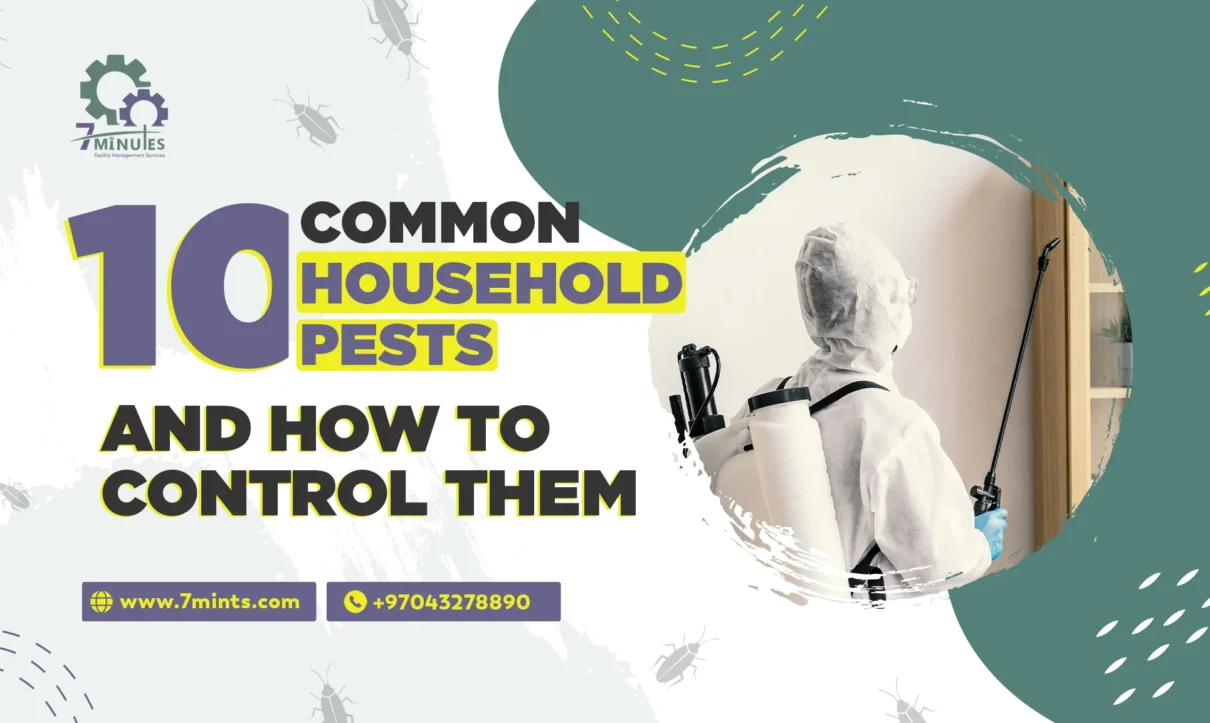
Household pest infestations are more than just an inconvenience. Household pests can contaminate food, damage property, affect indoor comfort, and create potential health concerns. Knowing how to identify the signs of an infestation and taking appropriate preventive measures can help homeowners maintain a cleaner and safer living environment.
But what are household pests, and which ones are most commonly found inside or around homes?
Household pests are insects, rodents, and other unwanted organisms that enter or live around residential properties. They are often attracted by food, moisture, warmth, shelter, waste, or accessible entry points.
In this guide, we cover the top 10 household pests, explain how to identify them, and discuss practical pest control household measures that can help prevent or manage infestations.
What Are Household Pests?
Household pests are unwanted insects, rodents, or other organisms that invade residential spaces and may cause nuisance, contamination, property damage, or health concerns. Common examples include ants, cockroaches, bed bugs, rats, mice, fleas, spiders, termites, flies, and mosquitoes.
Different pests require different approaches. For example, sealing food and cleaning surfaces can help discourage ants and cockroaches, while termites may require professional inspection and treatment.
Understanding the behavior of individual household pests is therefore an important first step in choosing an appropriate control strategy.
Top 10 Household Pests You Should Know
The following are some of the most common pests that homeowners may encounter.
1. Ants
Ants are small social insects that live in colonies and often enter homes while searching for food and water. They are commonly noticed in kitchens, pantries, around sinks, and near other food sources. Ant trails can make an infestation easy to identify. You may see groups of ants moving along the same path toward a food source or entry point.
How to Control Ants
Keep surfaces clean: Clean countertops, floors, cupboards, and other areas where food crumbs or spills may accumulate. Store food in sealed containers.
Seal entry points: Inspect cracks and gaps around windows, doors, walls, and pipes. Sealing accessible openings can reduce potential entry routes.
Use appropriate bait: Ant baits can help target colonies because worker ants may carry the bait back to the colony. Follow the product label carefully when using any pest-control product.
These simple pest control household measures can help reduce ant activity and prevent recurring problems.
Check out our latest blog post on Seven Things to Consider Before Hiring a Professional Painter.
2. Cockroaches
Cockroaches are among the most recognizable common household pests. They are attracted to food, moisture, warmth, and shelter and can often be found in kitchens, bathrooms, storage areas, and other damp locations.
Signs of cockroach activity can include live or dead insects, droppings, egg cases, unpleasant odors, or damage to food packaging.
How to Control Cockroaches
Improve cleanliness: Store food in sealed containers, clean spills quickly, remove food waste, and avoid leaving dirty dishes for extended periods.
Reduce moisture: Repair leaks and keep damp areas as dry as practical.
Seal gaps: Check gaps around doors, windows, pipes, and other openings where cockroaches may enter.
Use traps or baits: Traps and appropriately selected baits can help monitor or reduce cockroach activity. Follow product instructions carefully.
For persistent or heavy infestations, professional pest control household services can identify hiding areas and recommend an appropriate treatment plan.
3. Bed Bugs
Bed bugs are small parasitic insects that feed on blood and are usually more active at night. They can hide in mattress seams, bed frames, furniture, cracks, and other sheltered locations. They may enter homes through luggage, clothing, used furniture, or other items.
Bed bugs are included among the top 10 household pests because they can be difficult to detect during the early stages of an infestation.
How to Identify Bed Bugs
- Small dark spots on bedding
- Blood stains
- Shed skins
- Eggs or eggshells
- Live insects around mattress seams
- Repeated unexplained bites
How to Control Bed Bugs
Inspect mattresses, bed frames, furniture, and nearby cracks carefully. Wash and dry suitable bedding and clothing according to the item’s care instructions. Because bed bugs can hide in difficult-to-reach locations and may survive repeated attempts at treatment, professional pest control may be appropriate for established infestations.
4. Rats
Rats are rodents that can enter homes through openings in walls, foundations, roofs, doors, and other structural gaps. They are attracted to food, water, and sheltered nesting locations. Rats can contaminate food and surfaces and may damage electrical wiring, insulation, and other materials.
How to Control Rats
Seal entry points: Inspect walls, foundations, vents, doors, and other potential access points. Use suitable durable materials to close openings.
Remove food sources: Store food securely and keep waste in closed containers.
Use appropriate traps: Place traps in areas where signs of rodent activity have been identified, following the manufacturer’s instructions.
If there is significant activity, professional assistance is recommended. Experts can help identify entry points and determine an appropriate control strategy.
5. Mice
Mice are smaller rodents that can enter homes through surprisingly small openings. They commonly seek food, nesting materials, warmth, and shelter.
Signs can include droppings, gnaw marks, scratching sounds, nesting materials, and damaged food packaging.
How to Control Mice
Seal gaps: Inspect exterior walls, foundations, doors, windows, and utility openings and close suitable entry points.
Store food properly: Keep food in sealed containers and clean crumbs and spills promptly.
Reduce nesting opportunities: Avoid unnecessary piles of paper, cardboard, fabric, and other materials that mice could use for nesting.
Use suitable traps: Traps can be used in areas where mouse activity is identified. Follow the manufacturer’s instructions and handle traps safely.
Regular monitoring is an important part of managing these common household pests.
6. Fleas
Fleas are small insects that commonly feed on animals and can enter homes through pets or wildlife. They can quickly spread throughout areas where pets spend time.
Flea activity may result in itching and discomfort for both animals and people.
How to Control Fleas
Treat pets appropriately: Consult a veterinarian about suitable flea-control products for pets rather than using products intended for another animal or purpose.
Vacuum regularly: Pay particular attention to carpets, furniture, pet resting areas, and other locations where fleas or their eggs may be present.
Wash suitable bedding: Clean pet bedding regularly according to care instructions.
If flea activity continues despite these measures, professional pest control may be necessary to address the indoor environment.
7. Spiders
Spiders have eight legs and can enter homes through gaps, cracks, windows, doors, and other openings. Many spiders are harmless, but some species can deliver medically significant bites.
Correct identification is important, particularly if an unfamiliar or potentially dangerous spider is found inside the home.
How to Control Spiders
Seal openings: Check doors, windows, vents, and wall cracks and seal accessible gaps where appropriate.
Remove webs: Regularly remove webs from corners, ceilings, garages, storage spaces, and other areas.
Reduce insect activity: Since many spiders feed on insects, reducing other pest activity can make the environment less attractive to spiders.
If you believe a potentially dangerous spider is present, avoid handling it directly and consider professional assistance.
8. Termites
Termites are among the most destructive household pests because they feed on cellulose-containing materials such as wood. An established termite infestation can cause significant structural damage if it is not detected and addressed.
Possible warning signs include:
- Mud tubes
- Damaged or hollow-sounding wood
- Small holes in wooden structures
- Discarded wings
- Cracked or damaged wood
- Other unexplained structural changes
How to Control Termites
Inspect regularly: Check wooden structures and areas where moisture is present for signs of termite activity.
Address moisture problems: Fix plumbing leaks and other sources of persistent moisture where possible.
Seek professional inspection: If termites are suspected, professional inspection is often the safest way to determine the extent of the infestation and the appropriate treatment.
Termite control may involve specialized treatment methods, depending on the property and infestation.
9. House Flies
House flies are common around homes, especially where food waste, uncovered food, garbage, or other organic material is present. They can move between contaminated materials and food-contact surfaces, making good sanitation an important part of fly management.
How to Control House Flies
Maintain cleanliness: Clean food spills promptly and remove household waste regularly.
Cover food: Keep food covered or stored appropriately.
Use screens: Window and door screens can help reduce fly entry.
Use suitable traps: Fly traps can help monitor and reduce adult fly activity when used according to their instructions.
Removing the conditions that attract flies is an important part of managing these common household pests.
10. Mosquitoes
Mosquitoes are flying insects that can enter homes through open windows, doors, and other access points. Some mosquito species can transmit diseases, making prevention especially important in areas where mosquito-borne diseases are present.
Mosquitoes commonly breed in standing water.
How to Control Mosquitoes
Remove standing water: Regularly empty or manage water collected in containers, plant trays, buckets, drains, and other suitable breeding locations.
Install screens: Use properly fitted window and door screens to reduce mosquito entry.
Use appropriate repellents: Follow product instructions when using mosquito repellents.
Maintain outdoor areas: Keep areas around the home free from unnecessary containers or objects that can collect water.
Reducing breeding areas is one of the most important steps in mosquito management.
Common Household Pests: Signs of an Infestation
Knowing the signs of an infestation can help homeowners take action earlier.
Common warning signs include:
- Droppings or fecal marks
- Gnaw marks
- Damaged food packaging
- Insect wings or shed skins
- Nests
- Webs
- Mud tubes
- Unusual odors
- Repeated sightings
- Scratching or movement sounds
- Damage to wood or household materials
The earlier household pests are identified, the easier it may be to address the underlying problem.
Pest Control Household Prevention Tips
Preventive measures are often easier than dealing with an established infestation. A practical pest control household routine should focus on eliminating food, water, shelter, and entry opportunities.
1. Keep the Home Clean: Clean food spills and crumbs promptly, wash dishes regularly, sweep floors, and remove household waste. Good sanitation can reduce the conditions that attract many household pests.
2. Store Food Properly: Keep dry foods and other suitable food items in sealed containers. Avoid leaving uncovered food on kitchen counters for long periods.
3. Manage Moisture: Repair leaks and avoid unnecessary moisture accumulation around kitchens, bathrooms, utility areas, and outdoor spaces.
4. Seal Cracks and Gaps: Inspect areas around doors, windows, pipes, vents, foundations, and walls. Seal appropriate openings to reduce potential pest entry points.
5. Inspect Packages and Second-Hand Items: Bed bugs and other pests can enter homes through luggage, furniture, boxes, clothing, and other items. Inspect second-hand furniture and belongings carefully before bringing them indoors.
6. Keep Outdoor Areas Maintained: Remove unnecessary debris, standing water, and materials that could provide shelter for rodents and insects.
7. Monitor for Early Signs: Regularly check kitchens, bathrooms, bedrooms, storage spaces, garages, and other vulnerable areas. Early detection can make household pest management easier.
When Should You Hire Professional Pest Control?
Homeowners can often take preventive measures themselves, but professional assistance may be appropriate when an infestation is persistent, widespread, difficult to identify, or potentially hazardous.
Consider professional help when:
- Pest activity continues despite prevention
- You repeatedly see pests
- There is evidence of a large infestation
- Termites are suspected
- Rodent activity continues
- Bed bugs are difficult to eliminate
- You cannot identify the pest
- You are concerned about using pest-control products safely
A professional can inspect the property, identify the pest, locate potential sources, and recommend an appropriate treatment approach.
Why Pest Identification Matters
Not every pest should be controlled in the same way.
For example, an ant infestation may require a different approach from a termite infestation. Similarly, treating bed bugs requires different methods from managing mosquitoes or rodents.
Before selecting a treatment, identify:
- What type of pest is present?
- Where is the activity occurring?
- What is attracting the pest?
- Where could the pest be entering?
- How extensive is the infestation?
- Is professional treatment required?
Correct identification helps prevent ineffective treatment and unnecessary use of pest-control products.
Household Pest Control: Prevention Is Better Than Infestation
The best approach to managing household pests is to combine prevention, monitoring, cleanliness, and appropriate treatment.
Homeowners should avoid relying on a single method. Instead, maintain clean food-storage practices, manage moisture, seal entry points, monitor vulnerable areas, and address signs of infestation early.
For established infestations, professional pest control household services may provide a more comprehensive solution, particularly for pests such as termites, bed bugs, or persistent rodents.
Frequently Asked Questions About Household Pests
Q1. What are household pests?
Household pests are unwanted insects, rodents, or other organisms that enter or live around residential properties. Examples include ants, cockroaches, bed bugs, rats, mice, fleas, spiders, termites, house flies, and mosquitoes.
Q2. What are the top 10 household pests?
The top 10 household pests covered in this guide are ants, cockroaches, bed bugs, rats, mice, fleas, spiders, termites, house flies, and mosquitoes.
Q3. What are common household pests?
Common household pests include ants, cockroaches, rodents, bed bugs, termites, flies, mosquitoes, fleas, and spiders. The pests found in a home can vary depending on location, climate, building conditions, food availability, and moisture.
Q4. How can I control household pests naturally?
Basic prevention includes maintaining cleanliness, storing food securely, removing standing water, managing moisture, sealing entry points, and keeping indoor and outdoor areas tidy. For serious infestations, professional assessment may be appropriate.
Q5. When should I call a professional pest control company?
Professional help may be appropriate when the infestation is persistent, widespread, difficult to identify, or involves pests such as termites or bed bugs that can be difficult to eliminate with basic measures.
Q6. What is the best pest control household method?
There is no single method that works for every pest. Effective pest control household management starts with identifying the pest and removing the food, water, shelter, or entry points that support the infestation. Treatment should then be selected according to the pest and property.
Conclusion
Knowing the top 10 common household pests can help homeowners recognize potential infestations before they become more difficult to manage. Ants, cockroaches, bed bugs, rats, mice, fleas, spiders, termites, house flies, and mosquitoes can all create different challenges and require different prevention or control approaches. Understanding what are household pests is only the beginning. Homeowners should also learn how to identify warning signs, keep food properly stored, manage moisture, seal potential entry points, and monitor areas where pests are likely to appear.
Regular prevention is particularly important because common household pests can enter through small openings or arrive through food, packages, pets, luggage, furniture, and other materials. If you understand these common house pests and how to control them, contact us as they will ensure a pest-free residence for you and a healthy living condition for other family members.




1 Comment
Comments are closed.