

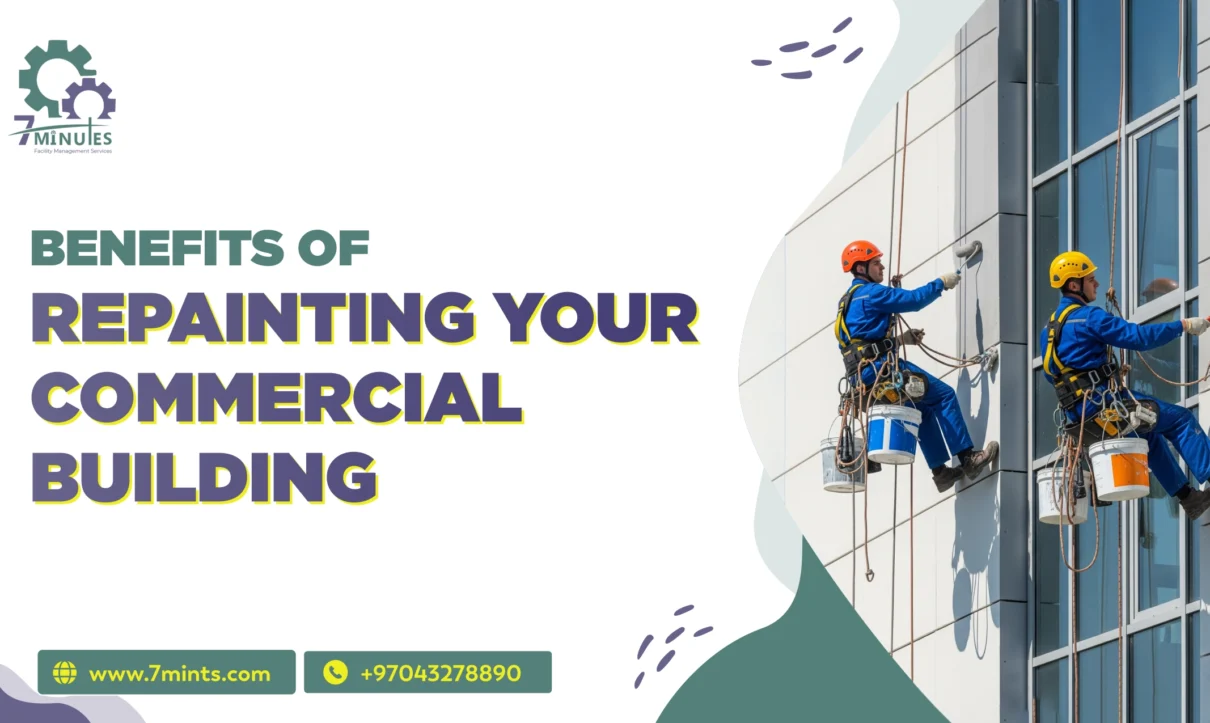
Faded walls and damp marks do not look urgent at first. They are easy to brush off, especially when you plan budgets. Then a tenant gives up and moves out, or a passerby slows down, looks once, and keeps going. After that, people remember what the place looked like and decide not to take a risk.
A lot of owners put off repainting for one simple reason. They see it as a cost that can wait. Still, the mess grows under the surface. When you finally repaint, the job is no longer small. It turns into a bigger repair bill. If you know what commercial repainting really does, you can time it earlier, before the total cost rises.
What benefits does commercial repainting bring?
Commercial repainting helps shield the building from weather. It also lifts how the property looks from the street. That matters for getting and keeping tenants. It can also support a higher value for the property.
Paint acts as the first shield against moisture, sun damage, and pollution. Because of that, repainting can reduce repair costs over time. Most commercial buildings need a new coat every 3 to 5 years. This depends on the local weather and how much the building takes daily wear. When the work is done by pros, the structure is better protected. The brand stays clear. The property keeps up with nearby competition.
Why it matters
Commercial repainting matters because paint does two jobs at once. It protects the building, and it shapes the public look of the site. Over time, paint fades. It chips. It cracks. It peels. Once that happens, the walls take more hits from rain, heat, dust, and pollution. Industry guidance points to repainting every 3 to 5 years. In harsher climates, or areas with heavy foot traffic, it needs to happen sooner.
If you skip that cycle, small coating issues can turn into bigger problems. Dampness can set in. Rust may form. Plaster can break down. Those repairs cost far more than paint itself.
The look matters as much as the protection. Tenants often connect a worn exterior with weak upkeep. Customers may see the same signs and assume the business does not care. Regular repainting fixes the surface and the shield in one step. That is why it is one of the more practical upgrades a property owner can make.
Also Read: Common Building Repair Issues
6 Main Reasons to Repaint a Commercial Building
1. Helps Guard the Building
A good paint coat acts like a shield. It blocks dampness, sun heat, and dirty air from getting into walls, timber, and steel. If that layer wears thin, tiny cracks let water slip in. Over time, plaster, concrete, and steel can lose strength. You may then see stains, rust, cracked paint, and decay. Repairs after this point cost more and take longer. Repainting on time can stop the damage early and help the building last longer. That is why it is treated as upkeep, not just style.
2. Makes the Front Look Better
New paint on the outside sends a clear message. It tells people your site is cared for and that your team stays on top of tasks. Visitors often form an opinion fast, before they read any details or step inside. A neat, bright façade can pull in passersby. A worn look can push them toward other places. When you update the outside and also refresh the entry area, the whole place feels planned and even. It stays consistent from the street onward.
3. Supports Stronger Tenant Choices
Buildings that look after themselves tend to fill sooner. They also tend to keep tenants longer. When a property looks clean, it signals that the owner will respond when issues show up. It also hints that repairs will happen without long waits. Retail and office tenants care about how the building appears to their own customers. A landlord benefits too, since repainting can help with lease renewals. It can also help reduce empty months between tenants.
4. Can Lift the Price Later
Repainting can raise how people rate the property. It can also help its market value. People who buy or review a building focus on its condition. A fresh, even finish suggests the site was maintained. That lowers the fear of costly hidden fixes. It is an easy step that often shows visible care right away.
| Benefit | Who gains most? |
| Structural protection | Owners of older buildings |
| First impression | Retail, hospitality, showrooms |
| Tenant retention | Retail, hospitality, showrooms |
| Property value | Owners planning to sell or lease |
| Rebranding | Businesses changing identity |
| Staff morale | Offices, factories, clinics |
5. Helps with Rebranding
Painting your building makes it easier to change how it looks. You can match a new logo, a fresh color set, or a shift in business direction. If you only swap signs, many people still picture the old place. New walls in the updated colors show the change right away, and the street notices it. When repainting and rebranding are planned as one task, you also share setup time. That means less cost for things like scaffolding, labor, and job scheduling.
6. Boosts Day-to-Day Comfort for Staff
Clean walls and updated interior colors can lift mood. Marks on the walls, stains, and faded areas can also wear on people over time. They may not say it, but the space can feel less welcoming when surfaces look tired. A bright and neat office supports better focus. It also gives visitors a better first impression. Interior commercial painting is not a huge expense, but it sends a message that you care about your team.
Also Read: Supply Chain Challenges Are Affecting the UAE HVAC Market
How to Plan a Commercial Repainting Project
A solid repainting job usually follows a set path. It goes from checks first to a final walkthrough at the end. If you follow the steps in order, pricing stays more stable, and the final coat holds up longer.
Step 1: Inspect the building
Go over both the exterior and the inside. Look for cracks, wet spots, flaking paint, and chalky patches. Mark any spots that need fixing before you paint. If you paint over a problem, it can come back sooner. A short written report from the check also helps when you compare contractor quotes.
Step 2: Set the scope and budget
Decide if you will paint the outside, the inside, or both. Measure the full surface area you plan to cover. Put repairs in the budget, along with any waterproofing needs and access gear. This reduces unexpected extras later. A clear scope makes it simpler for contractors to price the work.
Step 3: Pick paint and colors
Pick the right paint and colors. Use a commercial-grade product that fits your climate. Look for a finish that can handle weather or that you can clean easily. Choose shades that support your brand. Darker or well-chosen tones can hide scuffs and marks in areas people pass through often. Higher quality paint may cost more at first. It also tends to last longer. That usually means fewer repaint jobs over time, and the overall cost drops.
Step 4: Bring in a contractor who knows this work
Choose a team with real commercial painting experience. Check that they follow safety rules and carry insurance. Ask for references from past clients. Get a written estimate. Make sure it lists the materials, the number of coats, the time frame, and any warranty terms. A steady contractor helps keep the look right and reduces downtime for your business.
Step 5: Get the surface ready
Wash the walls. Fix cracks and gaps. Scrape off loose paint. Prime where it is needed. This step matters the most. Bad prep is one of the biggest causes of early failure on commercial repainting. It may take longer up front. Still, it protects what you spend on paint and labor.
Step 6: Apply the paint in layers
Use two or more coats. Allow full drying time between coats. Keep the coverage even. Use the right coat thickness. This helps the final layer hold up and keep its color longer. If you rush, you can end up with uneven patches and faster fading.
Step 7: Do a final check after the work is done
Walk through the site with the contractor. Look for missed areas, drips, and rough edges. Only sign off once touch-ups are finished. Keep the warranty documents in a safe place. This confirms the job matches what you agreed to.
How much does repainting a commercial building cost?
The price mostly depends on the size of the walls, the type of paint, how good the surface is, how easy it is to reach the areas, and the place where the work is done. As a general guide, many commercial painting jobs in India land around ₹15 to ₹40 per sq ft. Work for the outside, added scaffolding, and waterproofing usually push the cost toward the upper range. If plaster is cracked, chipped, or damp, you will need extra fixing. That will raise the final total.
Time needed is tied to the building size and how many parts can stay open while work is going on.
- Small offices or shops: 2 to 5 days
- Mid-size buildings: 1 to 3 weeks
- Big commercial projects: 3 to 6 weeks, often completed in stages
Also consider what happens if you delay repainting. When maintenance is held back, the damage grows. That means bigger repairs later, fewer tenants wanting to stay, and a weaker position in the market. So the delay cost can end up higher than the cost of doing the job now.
Conclusion
From painting with strategic intent, the commercial building gains multiple benefits, starting with curb appeal, along with protection, enhancement of employee morale, and increased value in the market. In the UAE, due to the dynamic business environment, having a nice exterior is essential for being noticed and attracting customers. Do not wait till the building starts showing age; repainting the building helps in sustaining your investment and also contributes to the growth of the business.
For a free consultation, Contact Us today and learn how our expert commercial painting services can ensure marketability, vibrancy, and the safety of your property for years to come
Frequently asked Question
Q1. When should a business building get a new coat of paint?
For many sites, every 3 to 5 years is a good rule to start with. If the weather hits hard, like heavy rain, intense sun, or heavy air pollution, you may need to do it sooner. A quick check of the site can help set the best timing.
Q2. What are the signs a building needs repainting?
Look for dull or faded color. Check for paint that is peeling or bubbling, plus any cracks. Also watch for chalky dust on the surface and damp spots. Inside, you may see scuffs, dark dirt marks, or stains on walls. Spotting these early can reduce commercial painting costs and keep issues from worsening.
Q3. Does repainting a commercial property raise its value?
Yes. A fresh coat makes the building look cared for. That tends to build trust with both buyers and tenants. It can also help with better rents, quicker leasing, and stronger resale terms.
Q4. Can you repaint without stopping work?
Yes. Most commercial painters split the job into stages. They often work after hours or on weekends. They also use low-smell, fast-drying paint so the site stays usable.
Q5. Which matters more, interior or exterior painting?
Exterior work helps guard the building first. It also sets the look people notice. Interior work matters too, since it affects how staff and customers feel inside. Some business owners do both at the same time to cut down costs and speed up the schedule.







1 Comment
Comments are closed.