

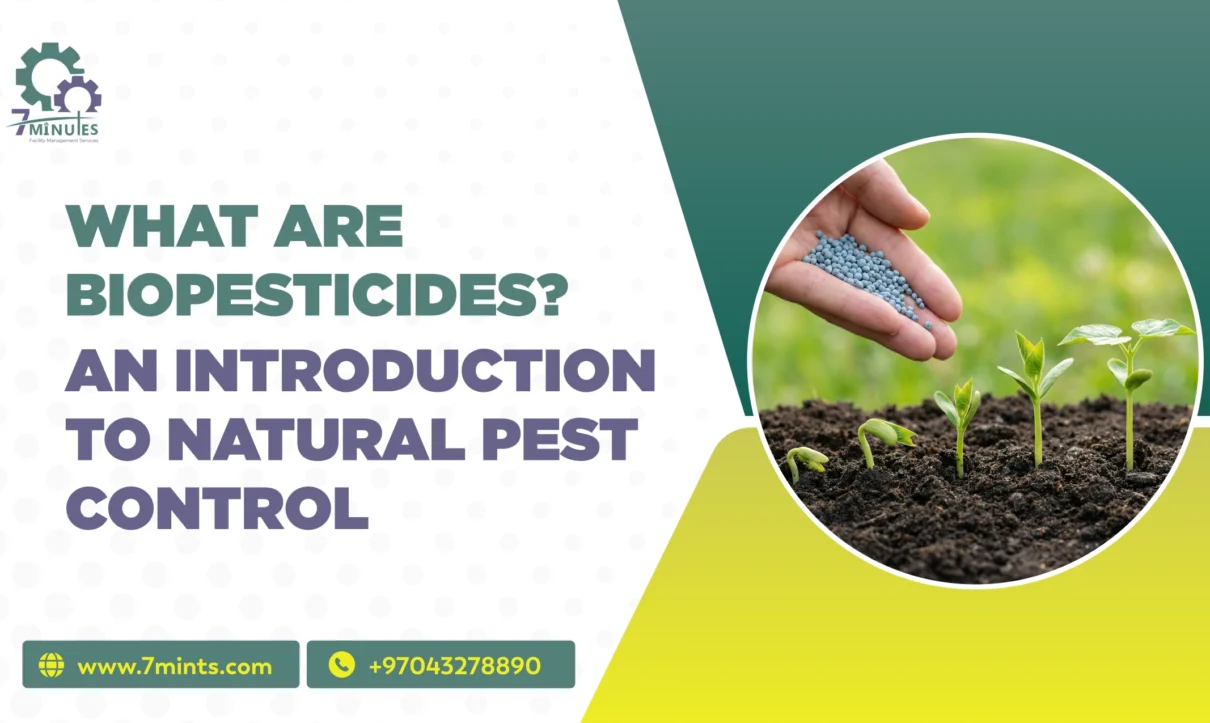
Agriculture and pest management are evolving as businesses, farmers, and agricultural professionals look for safer and more sustainable ways to protect crops. Traditional chemical pesticides have played an important role in controlling insects, weeds, and plant diseases. However, growing awareness of environmental protection, soil health, and responsible farming has increased interest in natural alternatives. Biopesticides UAE is an emerging area of interest for agricultural businesses looking to explore environmentally responsible pest management solutions.
Biopesticides are derived from natural materials such as microorganisms, plants, and certain naturally occurring substances. They help manage agricultural pests while supporting more targeted pest control practices. With increasing attention on sustainable agriculture UAE, biopesticides are becoming an important part of discussions about modern farming and environmentally responsible crop protection.
What are Biopesticides?
Biopesticides are pest management products derived from natural sources, including bacteria, fungi, viruses, plant extracts, and naturally occurring biochemical substances. They are designed to control or manage specific pests, including insects, plant pathogens, and other agricultural threats.
Unlike many conventional synthetic pesticides, certain biopesticides work through biological processes, such as infecting harmful insects, disrupting pest development, or interfering with feeding and reproduction.
The growing demand for biological pest control UAE reflects an interest in reducing unnecessary chemical inputs and adopting more sustainable agricultural practices.
Biopesticides can be used in farms, greenhouses, horticulture, landscaping, and other agricultural environments, depending on the product and its approved application.
Types of Biopesticides
Understanding the different types of biopesticides helps farmers select suitable products according to their crops, pest problems, and environmental conditions.
1. Microbial Biopesticides
Microbial biopesticides contain microorganisms such as bacteria, fungi, and viruses that help control specific agricultural pests.
For example, certain strains of Bacillus thuringiensis (Bt) produce proteins that target particular insect larvae. Other beneficial microorganisms can help manage plant diseases caused by harmful fungi and bacteria.
Microbial products are often valued for their targeted activity, although their effectiveness depends on factors such as temperature, humidity, application timing, and pest species.
2. Plant-Based Biopesticides
Plant-based biopesticides are derived from natural plant materials and extracts that contain compounds capable of managing certain pests.
Neem-based products are a common example. Certain neem formulations contain azadirachtin, a naturally occurring compound that can interfere with insect feeding, growth, and development.
Other botanical extracts may have repellent, insecticidal, or antifungal properties.
These products offer farmers additional options when developing natural pest management strategies.
3. Biochemical Biopesticides
Biochemical biopesticides contain naturally occurring substances that manage pests through non-toxic or relatively low-toxicity mechanisms, depending on the formulation.
Examples include certain pheromones used to disrupt insect mating and attractants used in pest monitoring and trapping.
These solutions can help farmers manage pest populations while reducing reliance on broad-spectrum chemical treatments.
Chemical Pesticides vs Biopesticides
Understanding chemical pesticides vs biopesticides is important when choosing an appropriate crop protection strategy.
Traditional synthetic pesticides are designed to control pests using chemically formulated active ingredients. They can provide effective and rapid pest control, but inappropriate or excessive use may contribute to pesticide resistance, environmental contamination, and harm to beneficial organisms.
Biopesticides generally use biological organisms or naturally occurring substances to manage specific pests. Many offer more targeted activity and can fit into integrated pest management programmes.
| Comparison factor | Chemical pesticides | Biopesticides |
|---|---|---|
| Source | Synthetic chemical compounds or other formulated active ingredients | Biological organisms or naturally occurring substances |
| Target activity | Varies from broad-spectrum to highly selective | Often designed for specific targets |
| Environmental impact | Depends on active ingredient and application | Depends on organism, formulation, and application |
| Pest resistance | Resistance can develop | Resistance is also possible |
| Application | Requires product-specific instructions | Requires product-specific instructions |
| Farming approach | Conventional pest control | Can support sustainable pest management |
Biopesticides are not automatically harmless or suitable for every situation. Farmers should always follow approved product labels, safety precautions, and local regulations.
Benefits of Biopesticides
The growing interest in biopesticide products is linked to several potential advantages for modern agriculture.
1. Supports Environmentally Responsible Farming
Many biopesticides are designed to target specific pests, which can help reduce unnecessary exposure of non-target organisms when used correctly.
These products contribute to the development of environmentally friendly pesticides and more responsible crop protection strategies.
2. Helps Protect Beneficial Organisms
Certain targeted biopesticides can help reduce the impact of pest management activities on beneficial insects and other organisms.
This is particularly valuable for agricultural environments that depend on pollinators and natural predators to maintain ecological balance.
3. Supports Sustainable Pest Management
The use of biological products can complement other crop protection methods, including crop rotation, monitoring, sanitation, and physical pest control.
These practices support sustainable pest management UAE by encouraging farmers to manage pest populations through a combination of appropriate techniques.
4. Helps Manage Pesticide Resistance
Repeated use of the same pesticide active ingredient can encourage pest resistance.
Introducing suitable biological products with different modes of action can help diversify pest management strategies and support resistance management.
However, resistance can also develop against biopesticides, so proper product rotation and integrated pest management remain important.
5. Offers Additional Crop Protection Options
Farmers can select suitable products according to crop type, pest species, environmental conditions, and production requirements.
The availability of organic pest control solutions UAE also provides additional options for growers seeking approved inputs compatible with their farming objectives.
Natural Pest Control Methods for Agriculture
Effective pest management does not depend on pesticides alone. Combining different natural pest control methods can help farmers manage pests more efficiently.
Some commonly used approaches include:
- Biological control: Using beneficial organisms or microorganisms to manage harmful pests.
- Crop rotation: Changing crops between growing seasons to disrupt pest life cycles.
- Companion planting: Growing selected plants together to support pest management.
- Physical barriers: Using nets, traps, and protective coverings to prevent pest access.
- Neem-based treatments: Applying suitable plant-based products against specific pests.
- Soil management: Maintaining soil health to support stronger and more resilient crops.
Combining these methods with appropriate biopesticides can create more balanced bio-based pest control solutions.
Role of Integrated Pest Management in the UAE
Integrated pest management UAE is an approach that combines biological, cultural, physical, and chemical control methods to manage pests effectively.
Rather than relying on routine pesticide applications, IPM encourages farmers to monitor pest populations, identify harmful species, understand their life cycles, and select appropriate control measures.
For agricultural operations in the UAE, this approach is particularly relevant because high temperatures, irrigation practices, and local growing conditions can influence pest activity.
An effective IPM programme may include regular crop inspections, pest monitoring traps, biological control agents, resistant crop varieties, and carefully selected pesticide applications.
This approach supports responsible agricultural pest management UAE while helping farmers protect crop quality and productivity.
Biopesticides and Sustainable Agriculture in the UAE
The UAE continues to explore agricultural technologies and practices that support efficient resource use and food production under challenging climatic conditions.
High temperatures, limited freshwater resources, and demanding growing conditions make effective crop protection important for local agricultural operations.
The adoption of Biopesticides UAE solutions can complement greenhouse farming, horticulture, landscaping, and other agricultural activities.
Farmers interested in natural pesticides for agriculture should consider the target pest, crop type, product registration, application method, and environmental conditions before selecting a treatment.
It is also important to purchase approved products from reliable suppliers and follow UAE regulatory requirements for agricultural pesticide use.
Are Biopesticides Completely Safe?
Although biopesticides are derived from natural or biological sources, they should not automatically be considered completely harmless.
Some biological products can affect non-target organisms, cause irritation, or create risks when incorrectly handled. Their safety depends on the active ingredient, formulation, application method, and exposure conditions.
Before using any product, farmers should:
- Check whether the product is approved for the intended application.
- Follow the manufacturer’s instructions.
- Use recommended protective equipment.
- Observe application rates and safety intervals.
- Store products according to label requirements.
- Consult qualified agricultural professionals when necessary.
The term non-toxic pest control solutions should therefore be used carefully, because natural origin does not guarantee zero toxicity.
Conclusion
Biopesticides are becoming an important option in modern agriculture because they provide additional ways to manage pests through biological organisms and naturally occurring substances. From microbial and plant-based products to biochemical pest management solutions, these alternatives can support more targeted and responsible crop protection.
For agricultural businesses in the UAE, combining biopesticides with integrated pest management can help improve pest control strategies while supporting environmental responsibility.
As interest in eco-friendly pest control UAE continues to grow, biopesticides can play a valuable role in building more resilient agricultural systems and encouraging sustainable farming practices.




2 Comments
Comments are closed.