

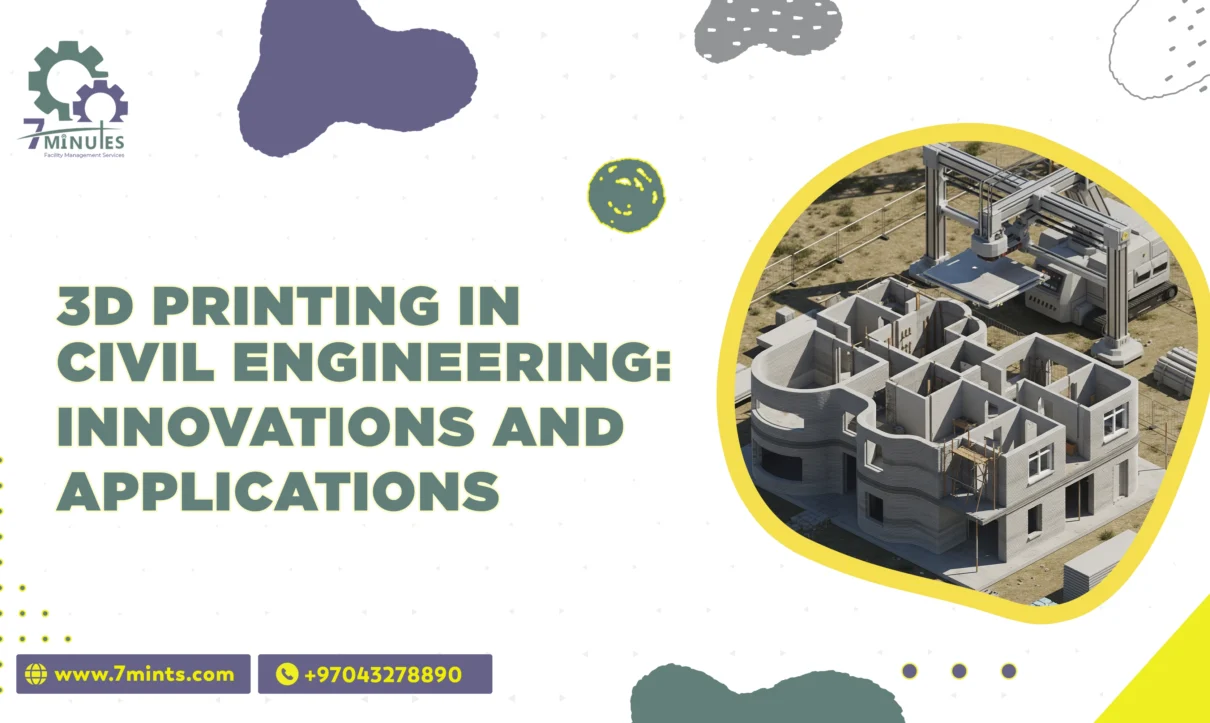
In civil engineering, 3D printing means making a structure by laying material down in thin layers. The printer uses a large-format unit, not formwork, and not heavy manual labor. A digital file drives the work. With this approach, builders can make affordable homes, print parts for bridges, and form shapes that are hard or too costly with normal methods. In regular construction, the schedule is often longer. With this approach, the build time can drop by about half to more than two-thirds. Waste can also fall, in some cases, by up to around 60%. It gives design teams more freedom than classic formwork.
If you have seen a project fall weeks late because the formwork dragged on, or you have seen the budget rise due to waste on site, you already get the issue. Civil engineering has used 3D printing to tackle that kind of delay and loss. Old building methods still lean on molds, hand work, and a lot of guesswork in waste control. With fewer workers available and material prices rising, this approach is becoming harder to justify.
What is 3D Printing in Civil Engineering?
In civil engineering, 3D printing refers to making three-dimensional structures by depositing layers of materials such as concrete, polymers, or composites under the guidance of a digital model. Essentially, the use of 3D printing is an alternative building approach, different from many traditional construction techniques with their use of molds, extensive manual work, and material wastage. Layer-by-layer construction delivers the project with greater speed while simultaneously offering designers freedom of expression to realize their most customized creations.
The technology leverages Computer-aided design (CAD) files to drive the printer, enabling engineers to create extremely complicated designs that are either difficult or impossible to produce through conventional methods. 3D printing has thus become a critical tool with which the modern civil engineer innovates their projects and tries to optimize them.
Also Read: Civil Engineering Improves Quality of Life in Urban Areas
What 3D Printing Does in Civil Work
3D printing for civil engineering is a digital way to make parts for buildings. Instead of cutting and assembling pieces, it lays material down in thin layers. Those layers stack to form a wall, a bridge span, or even a full section. The print mix may be concrete, a polymer, or a blend that combines materials. Engineers start with a CAD model that shows the shape. Then a robotic arm or a gantry guides the nozzle and pushes out the mix along a path. Layer by layer, the shape appears until it matches the model.
This shift is important. It separates design difficulty from the work hours. In older methods, a strange curve or a lattice layout usually means extra formwork. It also means more trained hands and a longer schedule. Additive manufacturing changes that. Software carries the complexity. The printer just follows the tool path from the CAD file. That can be a simple wall, or it can be an irregular, load-bearing lattice.
Engineers use it across three common material groups.
1) Concrete and mortar mixes made for extrusion and easier building
2) Polymers and composites used for lighter parts, formwork, and finishing layers
3) Metal used for structural ties, brackets, and special components
Why 3D printing in civil work is relevant now
It matters because it targets three major issues in the field. Those are labor shortages, wasted material, and slow project delivery. Many construction firms cannot hire enough skilled workers. When the timeline slips by even a week, costs rise.
Support for the idea is building quickly. BCC Research estimates the 3D printing construction market will rise from about $228.6 million in 2025 to about $6.5 billion in 2030. That is close to a 95.5% compound annual growth rate. Such a jump does not fit a minor trend. It fits a real answer to a repeated, expensive problem.
One simple way to say it: when growth sits near 95% CAGR, the tool is not only a test anymore. It is starting to show up in procurement choices and in infrastructure plans.
Check out our latest blog post on Sustainable Construction Materials: Green Solutions for the Future
How 3D Printing Works in Civil Engineering
3D printing in civil engineering usually moves through the same path. It does not matter if the goal is a small garden wall or a bigger shell for a tall structure.
1) Digital design and the model: Engineers make a CAD or BIM model. This model includes structural load calculations. It also lists material specs.
2) Slicing the model: Slicing software cuts the 3D model into thin layers. It also creates the printer path for each layer.
3) Getting the material ready: A concrete mix, a polymer mix, or a composite mix is prepared. The team checks if it can be extruded. They also test flow and buildability, meaning it can keep its shape without sagging under its own weight.
4) Setting up the printer: The printer is placed on site or in a factory. A gantry system or a robotic arm system can be used. The choice depends on whether parts will be put together later.
5) Extruding one layer at a time: The printer places material continuously. It starts at the base. Then it grows the structure upward, layer by layer, based on the toolpath.
6) Curing and checks: The printed parts cure under set conditions. Sensors and inspectors check dimensions and structural soundness.
7) Finishing and MEP work: After the main print, electrical conduits and plumbing channels get added. Finishing work is done too. Some of this can be done during printing if the design includes built-in voids. Other steps happen after the structure is done.
3D Printing in Civil Engineering Cost and Timeline
| Project Type | Typical Print Time | Estimated Cost Range | Common Printer/Method |
| Single-story residential shell | 24–48 hours | $10,000–$40,000 (structure only) | Gantry concrete printer |
| Commercial building shell | 1–3 weeks | $150,000–$1M+ | Large-format gantry or robotic arm |
| Bridge component / structural element | 2–6 weeks | Varies widely by span and material | Robotic-arm metal or concrete printing |
| Emergency shelter unit | Under 24 hours | $4,000–$15,000 | Portable concrete printer |
Main Uses for 3D Printing in Civil Engineering
In civil work, 3D printing is no longer only for prototypes. It is used for housing, commercial buildings, infrastructure, and emergency response.
1. Residential Housing: 3D-printed homes are used to tackle housing shortfalls in the US, Mexico, and the Middle East.
2. Commercial and Industrial Buildings: Offices, shops, and warehouses can be built faster. They also allow more design freedom. Curved fronts and built-in design details are possible. With older build methods, those changes often cost much more.
3. Infrastructure: Bridges and Roads: Printed parts for bridges and road sections are now getting more attention. This is true when projects need speed and smart use of materials. The MX3D pedestrian bridge in Amsterdam is often mentioned. It is made from stainless steel and printed by robotic arms. It is a well-known example of large-scale 3D printing in real structures.
4. Disaster Relief and Emergency Shelters: In urgent situations, 3D printing can help meet housing needs. Printers can use materials found nearby. They do not depend on a big crew of highly trained workers. For that reason, people use 3D printing to set up emergency and temporary homes soon after storms or other disasters.
5. Sustainable and Low-Waste Construction: With controlled material placement, there is less waste. There is less extra scrap and less formwork than in typical concrete work. Printers can also use recycled aggregates. Some systems can use biodegradable blends too. This lines up with green building goals.
Frequently Asked Question
Q1. What is 3D printing used for in civil engineering?
It can help with housing and building work. can also cover parts for bridges and pieces of road. It can support short-term emergency shelters. The process lays material down in layers from a digital model. This can reduce the need for usual molds and cut setup time.
Q2. What does a 3D-printed house cost?
A basic printed one-story shell often lands near $10,000 to $40,000. Those numbers are for the printed shell only. The full cost depends on interior tasks. It also depends on the site and local labor pay.
Q3. Is a 3D-printed building as strong as standard concrete?
With the right mix and a solid design, printed concrete can reach or beat common compressive strength. Even so, long-term durability in mixed weather is not fully proven. Designers may add extra safety room.
Q4. How long does it take to print a building?
A simple home shell can finish printing in about a day to two days. Bigger jobs, like some commercial builds, often need one to three weeks of printing. This time does not include curing, surface work, or MEP installation.
Q5. What materials are used in civil engineering 3D printing?
The usual options are made-for-print concrete and mortar, along with polymers and composite mixes. Metal can also be used, based on how well it can be pushed through the printer and how much load it must carry for the job.
Q6. Is 3D printing in civil engineering eco-friendly?
It can be. The process lays material down in tight steps, one layer at a time, so there is less waste than with formwork setups. Some printers also handle recycled stone or use composites that break down more easily, which helps meet greener building targets.
Conclusion
3D printing, while introducing an entirely new age in civil engineering, is working toward solutions to some of the biggest problems in the industry. From giving life to sustainable materials and complex geometries to creating infrastructure swiftly and economically, the technology is on the way to redefining what is possible. Contact us as the regulatory frameworks catch up and technology matures, 3D printing will become a larger part of civil engineering and will shape tomorrow’s skyline and communities.




1 Comment
Comments are closed.