

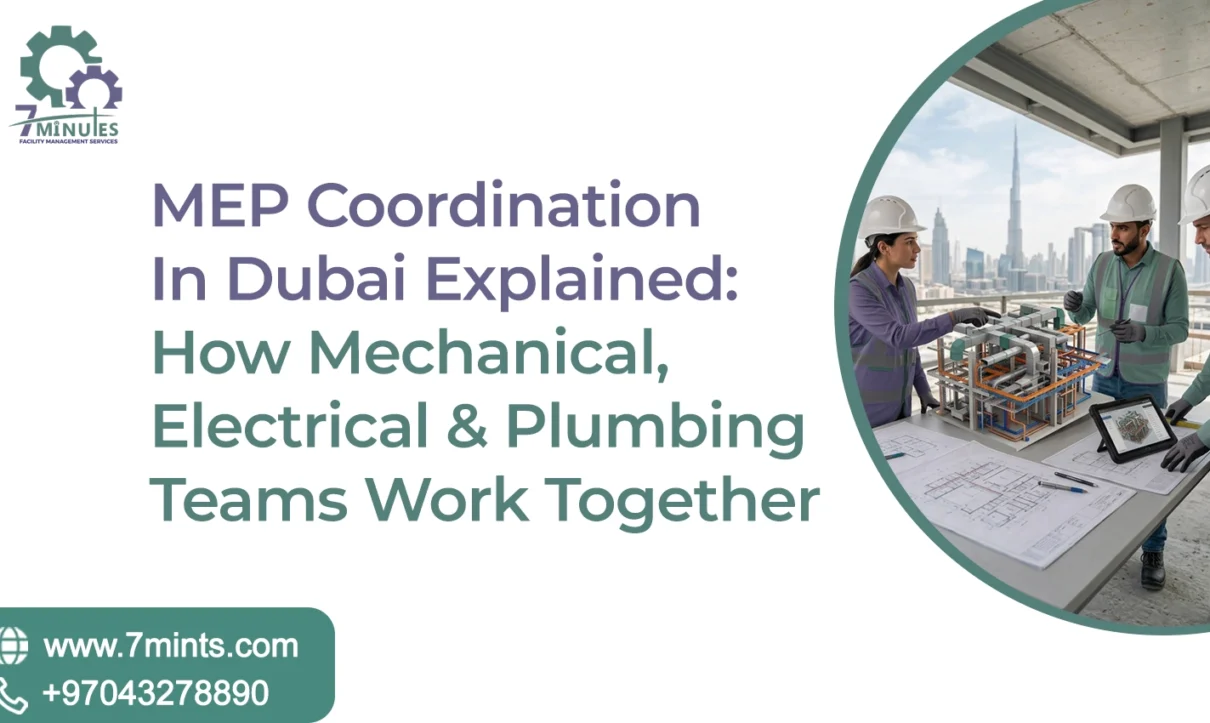
MEP coordination is the process of bringing mechanical, electrical, and plumbing designs into one aligned, clash-free setup before anything starts getting built. In Dubai, MEP coordination teams commonly rely on BIM software to overlay HVAC duct routes, electrical conduits, fire protection lines, and plumbing pipe runs into a single 3D view, then iron out the issues in ongoing coordination sessions. The goal is simple: contractors install systems correctly the first time, with fewer surprises, fewer reworks, and fewer budget bumps.
If you’ve ever seen a construction plan drift by weeks because a duct ran into a chilled water pipe or because some electrical conduit ended up straight through a beam, you already know what “poor coordination” really costs. On a high-rise in Business Bay or a hospital fit-out in Al Barsha, three separate engineering groups are pushing their own layouts into the same ceiling space—and if nobody is actually cross-checking the drawings against each other, the conflict usually shows up on site, not on paper. That’s why MEP coordination Dubai contractors are brought in, to fix things earlier so it doesn’t turn into a nasty change order later
What Is MEP Coordination?
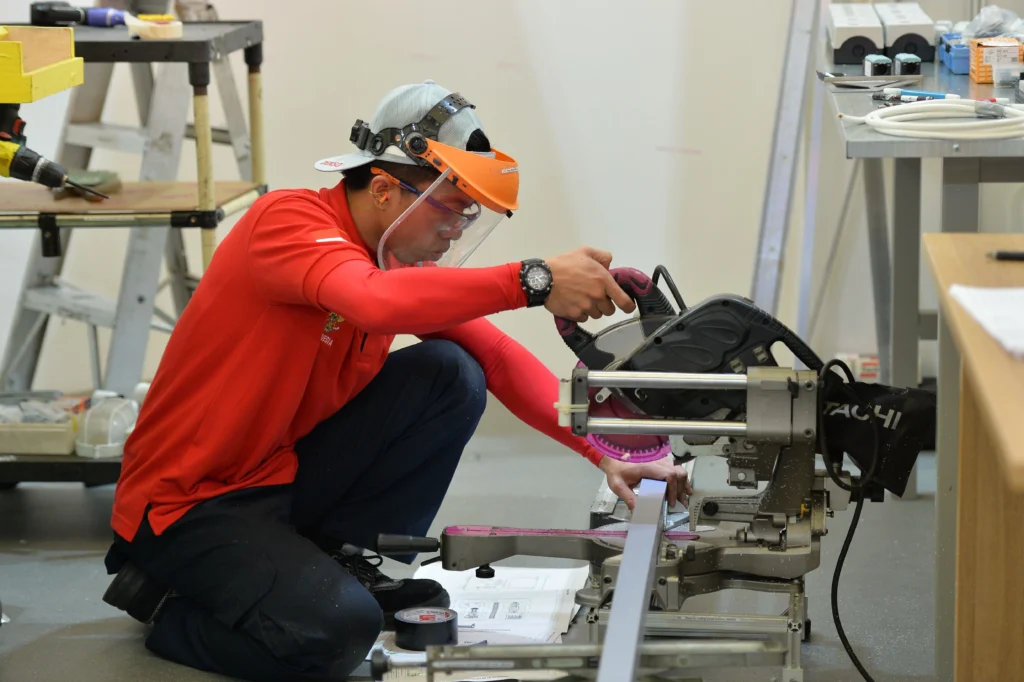
MEP coordination is this structured process of merging mechanical, electrical, and plumbing designs into one workable layout so the systems don’t physically or functionally conflict once they’re built. Each discipline—mechanical (HVAC, chillers, ductwork), electrical (power, lighting, low-voltage), and plumbing (water supply, drainage, fire protection)—is usually designed by separate teams and often in separate models. Coordination is the step where those models get federated, checked for overlaps, and then adjusted so ducts, pipes, cable trays, and even structural elements all get their own space in that crowded ceiling plenum or service shaft.
For projects across the UAE, 7mints stands with MEP coordination. Dubai teams treat this step as, honestly, anything but optional. Local bodies like Dubai Municipality and DEWA expect coordinated, code-compliant MEP drawings before permits get approved, and many master developers now ask for a clash-free BIM model as a contractual submittal. So demand for structured MEP coordination Dubai services keeps growing, right alongside the emirate’s high-rise and mixed-use pipeline.
Why MEP Coordination Matters in Dubai’s Construction Market
Bad MEP coordination is expensive, and the industry has numbers for it too. Quality failures, a lot of them linked back to uncoordinated design, cost the construction sector more than $15 billion a year just in rework. On a Dubai high‑rise with tight floor‑to‑floor heights and dense service risers, one unresolved clash between ductwork and a structural beam can halt an entire floor’s installation until teams redesign the layout. MEP coordination teams in Dubai step in precisely to eliminate this risk before it ever reaches the site.
Anyone managing MEP coordination in Dubai projects will recognize those pressure points that make this market kind a different from most, at least on paper.
1. Fast-track schedules: Developers often squeeze the design and construction timeline together, leaving almost no slack for late-stage rework.
2. Extreme cooling loads. HVAC systems here tend to be high-capacity, and they end up competing for the very same ceiling space as electrical routes, plus fire protection routing.
3. Mixed-use density. Towers that combine retail, residential, and hotel floors each bring their own MEP needs, stacked on top of one another, which makes the whole routing puzzle more sensitive.
4. Strict authority approvals. Dubai Civil Defence, DEWA, and Dubai Municipality review MEP submittals separately, so coordination mistakes can easily turn into repeated resubmission cycles. These pressures are exactly why demand for reliable mechanical, electrical, and plumbing services in Dubai has grown so quickly
Why it matters. When MEP coordination is done well, BIM clash detection has been shown to reduce field RFIs by 40 to 60 percent on typical commercial work, which basically shields both schedule and budget.
Check out our latest blog post on Mobile Apps Revolutionizing Facility Management Operations in UAE
How Mechanical, Electrical & Plumbing Teams Work Together
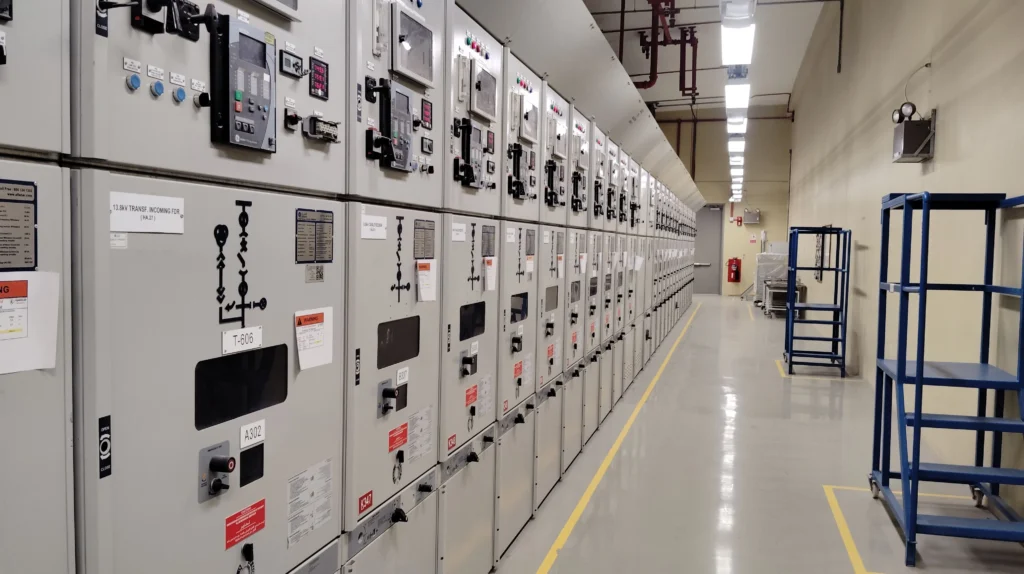
- Coordination works because it pushes three independent design groups to treat the building as one shared system, not three separate drawing packages. In practice, the cooperation follows a kind of repeatable rhythm, even when the project feels chaotic.
- Shared model environment. All three disciplines place their systems in the same coordinate space, usually in Revit, so every duct, cable tray, and pipe run sits in real 3D space rather than floating on a flat 2D sheet.
- Automated clash detection. The software then scans the federated model for physical overlaps—like ductwork crossing a beam, a pipe running through a light fixture, or a cable tray blocking a fire damper.
- Coordination meetings. Representatives from each trade meet weekly to review flagged clashes and agree on who moves what, following a clear priority order (usually structure first, then gravity-fed plumbing, then ductwork, then electrical and low-voltage last).
- Sign-off and shop drawings. Once a zone is clash-free, it’s locked and released for fabrication-ready shop drawings.
This shared rhythm is what makes MEP coordination Dubai engagements repeatable across projects of very different scales.
The MEP Coordination Process: Step by Step
For teams delivering MEP design and installation on a Dubai project, the MEP coordination Dubai process typically runs like this:
| Step | What Happens |
| 1. Design intent | Mechanical, electrical, and plumbing engineers develop concept layouts from the architectural and structural base drawings. |
| 2. Model development | Each discipline builds a detailed 3D model of their systems, sized to load calculations and equipment schedules. |
| 3. Model federation | All models—architectural, structural, and MEP—are combined into a single coordination model. |
| 4. Clash detection | Automated software runs clash tests and generates a report of every conflict, hard and soft. |
| 5. Coordination meetings | Weekly sessions resolve clashes by discipline priority and update the model. |
| 6. Client/consultant review | The coordinated model is reviewed against authority requirements and client standards. |
| 7. Shop drawing release | Clash-free zones are issued as construction-ready shop drawings for site installation. |
| 8. Site verification | Installed works are checked against the coordinated model, with as-built drawings updated for handover. |
Mini Case Study: Resolving a Ceiling Plenum Clash
Dubai MEP coordination projects don’t always make headlines, but the day-to-day wins matter just as much as the big picture. In Downtown Dubai, a commercial tower fit-out hit a pretty familiar issue during the middle of design: you know, the mechanical team supplied ductwork, the plumbing team chilled water risers, and the electrical team main cable trays all were expected to fit inside the same 600 mm ceiling void across the office floors. Without any proper coordination, it basically would have meant either a dropped ceiling under the leasable height limit or an on-site reroute that would have added weeks to handover, like several weeks, which is not exactly small.
So the coordination group pushed the federation of the three models early and then ran clash detection before the tender package went out. That way they spotted 140+ clashes just in that particular area alone. From there, they reprioritized routing; for example, the ductwork got dropped a little, the cable trays were shifted into a separate service corridor, and the riser positions were adjusted too. In the end, they cleared the conflict without losing ceiling height. The payoff was pretty clean: zero rework requests during installation, and a floor-by-floor rollout that remained aligned with the original schedule.
What MEP Coordination Costs and Duration
Budgeting for MEP coordination depends on building height, service density, and how early the process starts. Here’s a quick breakdown of typical ranges in the Dubai market:
| Item | Typical Range (Dubai Market) |
| MEP coordination cost | 1% – 3% of total MEP contract value, depending on project complexity |
| Duration for a mid-rise tower | 6 – 12 weeks, run in parallel with detailed design |
| Duration for a large mixed-use development | 3 – 6 months, phased by zone or floor |
| Common software tools | Revit, Navisworks, AutoCAD MEP, BIM 360 / Autodesk Construction Cloud |
| Meeting cadence | Weekly coordination meetings, plus ad hoc clash resolution sessions |
Common Challenges in MEP Coordination in Dubai Projects
Even experienced teams delivering MEP coordination on Dubai projects can hit the same kinds of rough spots over and over, like late design changes. If a client-led layout change happens after coordination has already started, it can reopen dozens of clashed points that were already “done.”
1. Incomplete models When one discipline sends an under-detailed model, the clash detection step can just miss the real conflicts that later show up on site.
2. Authority resubmissions: If DEWA, Dubai Civil Defense, or Dubai Municipality requests revisions, those tweaks can ripple back and disturb an already-coordinated model, sometimes more than once.
3. Subcontractor turnover. When MEP subcontractors change mid-project, it can mess with modeling standards and drag the whole review loop.
These are the exact friction points a seasoned MEP coordination Dubai partner knows how to anticipate.
Picking the Right MEP Engineering Company in Dubai
Not every firm that offers mechanical, electrical, and plumbing services in Dubai provides true 3D coordination. Some still rely on 2D overlays, which tend to catch way fewer clashes; it’s almost like searching blindly. When evaluating an MEP engineering company for Dubai developers or contractors, you should check for:
- A real BIM coordination team, not only individual discipline designers doing “coordination” on the side
- Experience with MEP project management across the full design-to-handover stretch, not just modeling
- Evidence of authority approvals, especially with Dubai Municipality, DEWA, and Dubai Civil Defence
- A willingness to share clash detection reports and coordination meeting minutes as standard project deliverables, not hidden files somewhere.
At the end of the day, the right MEP engineering company Dubai developers choose is the one that treats coordination as a core deliverable, not an afterthought.
Frequently Asked Question
Q1. What does MEP coordination mean in construction?
MEP coordination is the process of aligning mechanical, electrical, and plumbing system designs within a single shared 3D model so that physical conflicts are identified and resolved before construction starts. That’s the essence of any MEP coordination engagement in Dubai, regardless of project size.
Q2. Why is MEP coordination especially important in Dubai?
Dubai’s fast-track schedules, high-density towers, and this strict authority approval process (DEWA, Dubai Municipality, and Dubai Civil Defense) make early clash resolution essential so you don’t end up with resubmissions and extra rework that nobody wants. It’s like, you fix it sooner, or you pay more later.
Q3. Who is responsible for MEP coordination on a project?
Usually a BIM coordination team, or the lead MEP consultant, owns it, and they work together with mechanical, electrical, and plumbing subcontractors as well as the main contractor. This is typically the same team clients later turn to as their long-term MEP engineering company Dubai partner.
Q4. How long does MEP coordination take?
For a mid-rise building, it can run about 6 to 12 weeks, depending on how messy things get. For larger mixed-use developments, it might stretch to 3 to 6 months, and it’s usually done in phases, floor by floor.
Q5. How much does MEP coordination cost?
In the Dubai market, it typically lands around 1% to 3% of the total MEP contract value, though it shifts with building complexity and also how early coordination starts.
Conclusion
MEP coordination is one of the most important processes in modern construction, especially in Dubai’s complex and fast-paced building environment. By integrating mechanical, electrical, and plumbing systems, project teams can reduce clashes, improve efficiency, lower costs, and deliver better-performing buildings.
With the growing use of BIM technology, clash detection, and collaborative planning, MEP coordination has become an essential part of successful construction projects across residential, commercial, hospitality, healthcare, and industrial sectors in Dubai.




1 Comment
Comments are closed.