

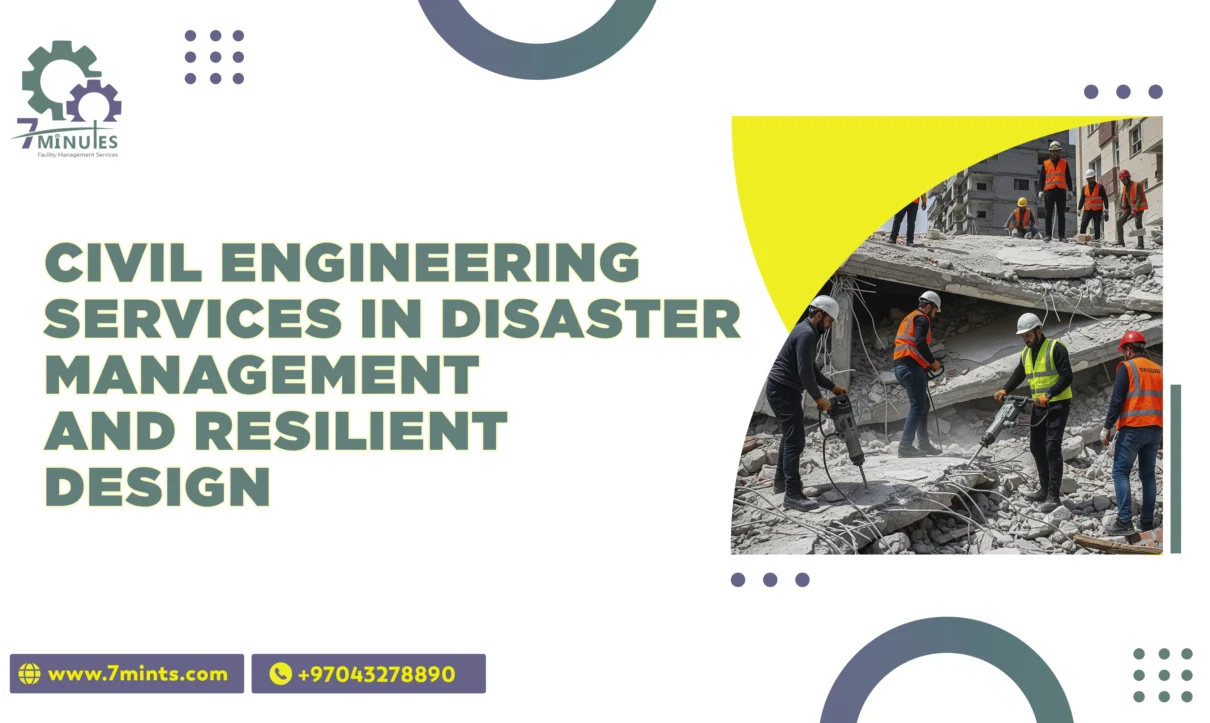
Every year, cities face storms, quakes, or floods that strike hard. Often the damage is worse than people expect, even when the work was said to be “built to code.” The problem is simple. The rules were made for past weather and risk. The world has shifted, and the old assumptions do not hold.
If you own property, plan a project, work for a city, or manage construction, you may feel stuck. The usual build steps can seem too thin for what comes next. The gap between older construction and newer needs is where civil engineering support for disaster response fits in.
What is civil engineering in disaster management?
Civil engineering in disaster management usually means three main tasks. First, teams study hazards like shaking ground, rising water, strong winds, and slope risks. Second, they design structures and networks that can handle extreme events or bounce back fast after them. Third, they upgrade older buildings so they line up with today’s safety expectations. Work can also include risk checks, structural and soil planning, choosing durable materials, and planning repairs after a disaster. The goal is fewer injuries and less financial damage.
What Is Resilient Design in Civil Engineering?
Resilient design in civil engineering is the idea of building for real disruption. The intent is to reduce sudden collapse during earthquakes, floods, and severe storms. It is also about getting back to normal use sooner. Traditional design often focuses on passing the minimum code level. Resilient design treats disruption as something that may happen, and it plans for ongoing function, not just basic survival.
Civil engineers usually frame the work around four main ideas, the four R’s:
1. Robustness: the structure’s built-in ability to take stress and still work.
2. Redundancy: extra parts or backup paths, so one failure does not trigger a chain reaction. Example: a hospital with two separate power lines.
3. Resourcefulness: the skill to move staff and supplies when the situation shifts fast.
4. Rapidity: how quickly a system can resume service after damage.
5. Callout: Even if a building clears every code check, it can still be a bad risk when it has no redundancy. One power line, one access road, or one load-bearing wall can shut down the whole place.
Check out our latest blog post on 3D Printing in Civil Engineering
Why this kind of Engineering matters
This is not just a theory. It shows up in real harm and real expenses.
- 2015, the Nepal earthquake killed more than 9,000 people. Reports point to weak construction that was not properly engineered.
- 2005, Hurricane Katrina showed what happens when a flood control system fails in one key place. The result was widespread displacement across a large area.
- 2018, the Kerala floods forced tens of thousands of people to leave their homes. Some accounts tie the worst effects to poor dam oversight and growth that was not planned well.
| Impact area | Without Resilient Design | With Resilient Design |
| Structural damage | High — often total loss | Contained, repairable |
| Downtime after disaster | Weeks to months | Hours to days |
| Rebuild cost | Full reconstruction | Targeted repair |
| Life safety risk | Elevated | Significantly reduced |
Research cited in national studies often finds that each dollar spent on disaster mitigation and resilient infrastructure brings about $4 to $6 in avoided future losses. In other words, stronger design can act like a safeguard, not just an added expense.
Mini Case Study: Level and Pump Systems in New Orleans
After Hurricane Katrina, it became obvious that New Orleans had major weak spots in flood protection. Engineers did not just patch one barrier. They redesigned the whole approach using a joined set of levees, floodwalls, and pump stations.
They also changed how they build in areas that flood. New requirements were added so new structures meet higher elevation standards. This aimed to reduce damage when high water returns.
In 2021, Hurricane Ida hit the region. It had strength similar to Katrina. This time, the improved defenses worked as planned, and the city did not see the same broad flooding that occurred 16 years earlier.
The outcome shows one practical lesson. Strong civil engineering planning can turn a large disaster into something more controlled.
Also Read: Civil Engineering Improves Quality of Life in Urban Areas
Resilience work Cost and Duration
Resilience work varies widely by scope, but here’s a general reference range for common services.
| Service | Typical Duration | Approximate Cost Range | Common Tools |
| Hazard & risk assessment | 2–6 weeks | $3,000–$25,000 | GIS mapping, hazard modeling software |
| Seismic retrofit design | 1–3 months | $15,000–$150,000+ | Structural analysis software (ETABS, SAP2000) |
| Flood-resilient site design | 2–4 months | $10,000–$100,000+ | Hydrology/hydraulic modeling (HEC-RAS) |
| Full resilient new-build design | 4–12 months | Varies by project scale | BIM, structural + geotechnical modeling suites |
| Post-disaster structural inspection | 1–5 days | $500–$5,000 per site | Drones, structural health sensors |
Conclusion
Whereas civil engineering services form the backbone of effective disaster management and resilient design, civil engineers work from risk assessment and mitigation through to rapid response and sustainable recovery to protect life and property. Contact us as they do more than develop technical solutions; they work with communities and educate people on integrating resilience into the development process at every step. As disasters become more complex, civil engineers will be instrumental in ensuring that communities are safer, stronger, and able to adapt to the future.
Frequently Asked Questions
Q1. What is “resilient design” in civil engineering?
It is about planning and building things like roads and bridges to handle big shocks with less loss. It also aims for faster recovery after the event. Meeting code basics alone is not the only goal.
Q2. What kinds of disasters do civil engineers think about?
They often focus on earthquakes, floods, hurricanes or cyclones, landslides, and wildfires. Each danger calls for a different plan. That plan covers the structure, the ground, and the materials used.
Q3. Is disaster-resilient building more expensive?
In many cases, yes. The initial added cost can be roughly 3 to 10%. Still, studies commonly find benefits later. Fewer damages and shorter downtime can reduce repair and rebuild costs.
Q4. Can older buildings be improved for disaster safety?
Yes. Engineers can do seismic upgrades to better resist shaking. For flood-prone sites, they can strengthen foundations. For strong winds, they can work on parts of the exterior structure. Done well, an old building can get closer to newer safety levels without full replacement.





1 Comment
Comments are closed.