
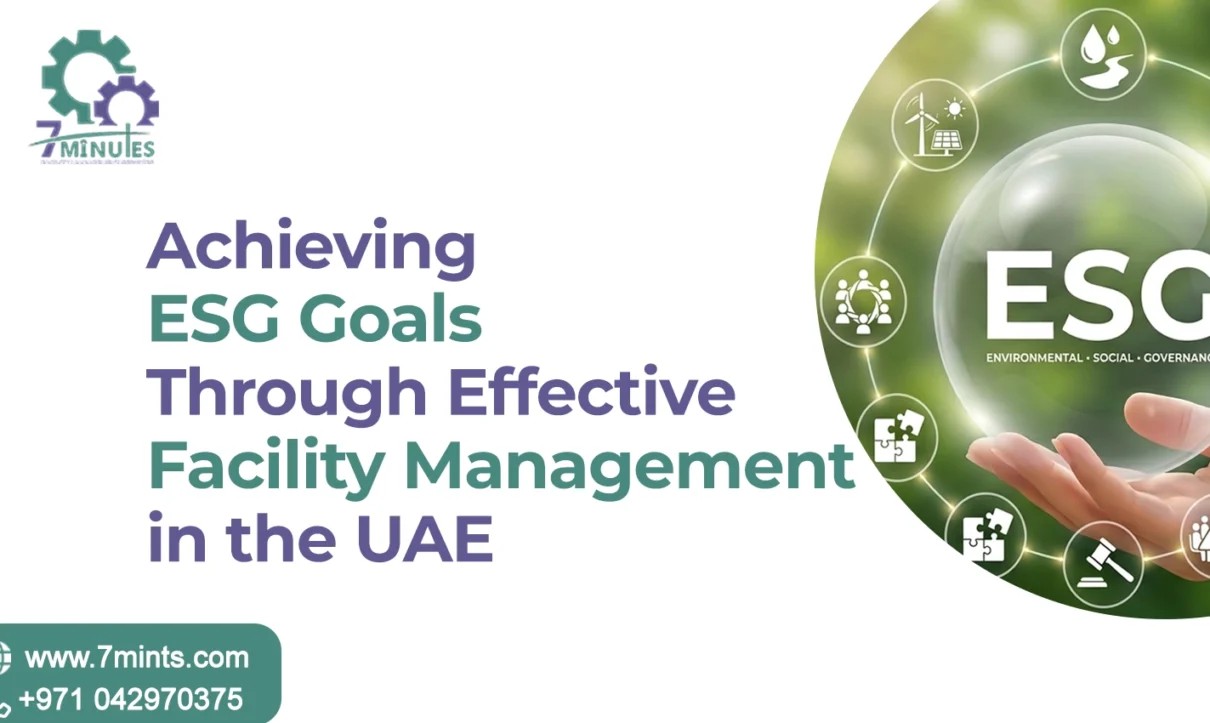
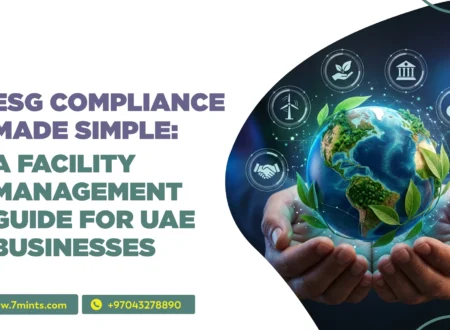
Environmental, Social, and Governance (ESG) has become a key priority for organizations operating in the UAE. As the country accelerates its sustainability initiatives through programs such as the UAE Net Zero 2050 Strategy, businesses are expected to reduce their environmental impact, improve social responsibility, and strengthen corporate governance.
Facility Management (FM) is one of the most effective ways organizations can achieve these ESG objectives. From reducing energy consumption and carbon emissions to enhancing employee well-being and ensuring compliance with environmental regulations, facility management directly influences an organization’s ESG performance.
Understanding ESG in Facility Management
ESG means environmental, social, and governance, and it’s basically a framework to judge how well a business runs beyond just its financial outcomes. In facility management, ESG is about lowering environmental impacts, raising occupant comfort and well-being, and also ensuring operations are ethical, transparent, and compliant. It encourages businesses to manage their properties in ways that benefit well-being, people, and the planet, not just one side and ignore the other.
As the UAE keeps moving forward with things like the Net Zero 2050 Strategy and more sustainable urban development, facility managers end up, yeah, being super central to how well the organisation performs on ESG. But it’s not only about fixing stuff or keeping things running. They also get pulled into energy management, waste reduction, workplace safety, and even the use of smart technologies. So facility management starts to look less like a simple operational must-do and more like a strategic function in practice.
Why ESG Matters for Businesses in the UAE
In the UAE, the government has rolled out several sustainability measures, aiming to push businesses to lower carbon emissions, use resources more efficiently, and follow environmentally responsible ways of working. Because of that, ESG compliance has become something you can’t really treat as optional, especially for companies that work across commercial, residential, healthcare, hospitality, and industrial categories.
Also, when ESG results are strong, business competitiveness improves in a real way. Investors often look first at organizations with greener operations, while customers typically lean toward brands that show both social accountability and environmental commitment. Then there’s the workforce side. People are generally more likely to stay where the workplace is safe, healthy, and inclusive. All these pieces make ESG a core part of long-term growth, not just a short-term project in the UAE.
How Facility Management Supports Environmental Sustainability
Buildings, almost every day, consume large volumes of electricity, water, and other natural resources. Effective facility management helps lower the environmental footprint by deploying energy-efficient solutions, tracking how much is being used, and keeping equipment tuned so it performs as intended.
Facility managers also roll out sustainable initiatives like recycling programs, water conservation actions, LED lighting, and smart automation tech. These kinds of improvements cut down on utility spending while lowering carbon emissions and also back broader environmental ambitions. If teams keep checking building performance, they can spot additional ways to boost sustainability and align with the UAE’s green development pushes.
Check out our latest blog post on How UAE Businesses Can Meet ESG Through Facility Management
1. Creating healthier and safer workplaces
On the social side of ESG, the emphasis is on the well-being of employees, visitors, and anyone occupying the building. Facility management helps here by keeping spaces clean, improving indoor air quality, making sure ventilation is working properly, and running recurring sanitation routines. When workplaces feel healthier, employee absenteeism tends to fall, and in return, there is usually higher comfort, better productivity, and improved overall job satisfaction, too.
Safety really matters within ESG strategies. Routine checks of fire safety systems, emergency exits, elevators, electrical equipment, and security infrastructure help reduce the odds of workplace issues and keep compliance moving along with local regulations. When staff feel safe and comfortable in day-to-day operations, companies often see better morale, stronger productivity, and improved employee retention.
2. Improving Governance Through Smart Facility Management
Governance really sits on accountability, transparency, and staying aligned with industry standards and regulations. In practice, facility management helps with that by keeping tidy maintenance records, logging inspections, watching over supplier or vendor output, and making sure the buildings follow health and safety rules. If the documentation is done properly, the whole organization can show during audits and reviews that operations were handled responsibly.
Digital facility management platforms add even more strength to governance because they deliver in-the-moment visibility into maintenance timetables, how assets perform, and what compliance work is actually happening. From there, teams get reports that are useful for management decisions while also making day-to-day operations more transparent. When governance gets better, it usually lowers business risk and, in parallel, increases stakeholder trust plus improves overall organizational credibility.
3. The Role of Smart Technology in Achieving ESG Goals
Technology has transformed how buildings are managed across the UAE. Smart Building Management Systems (BMS), Internet of Things (IoT) sensors, predictive maintenance software, and Computer-Aided Facility Management (CAFM) solutions let facility managers monitor building output in real time.
The data gathered from these smart setups supports energy use optimisation, water consumption monitoring, and indoor air quality tracking, and it helps in planning preventive maintenance in a more disciplined way. Automated updates and dashboards also make ESG reporting simpler, so organisations can follow sustainability progress with more precision. When you invest in digital facility management tools, you’re supporting long-term operational efficiency and also creating measurable ESG outcomes, which tend to matter more over time.
Conclusion
Reaching ESG ambitions takes more than simply putting sustainability policies in place; it also needs steady action across basically every angle of building operations. Facility management really becomes the bedrock for environmental accountability, day-to-day workplace comfort, and operational visibility. This happens because it helps buildings run more efficiently, with safer standards and a more sustainable rhythm. So, each change matters, whether it’s cutting down energy use or improving indoor air quality, because all of it feeds into better ESG results.
Since the UAE keeps pushing forward as a leader in regional sustainability efforts, companies that focus on strong facility management will tend to stand out and stay on track for the long haul. Contact us as Putting money into smart systems, preventive maintenance, and more eco-oriented operating habits does more than just back up ESG compliance. It also helps lower expenses, boosts corporate credibility, and supports healthier surroundings for employees, customers, and the wider community.

2 Comments
Comments are closed.