

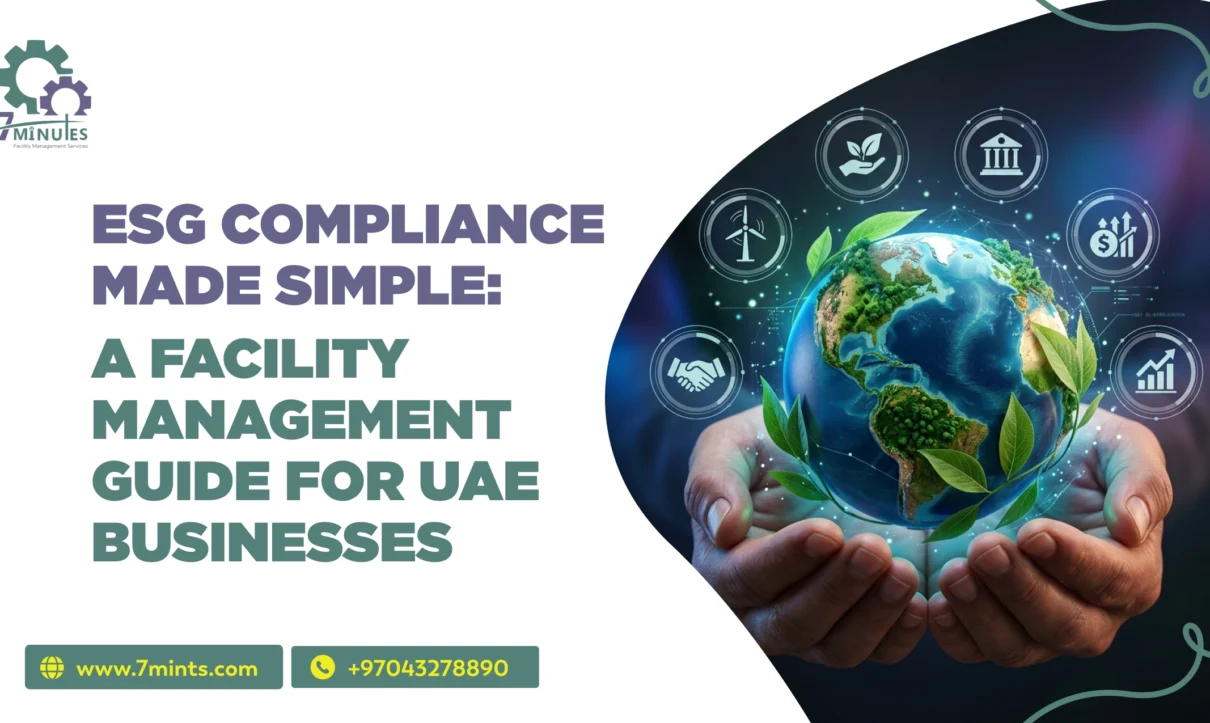
Environmental, Social, and Governance (ESG) compliance has basically turned into a big priority for businesses across the UAE. Since the country keeps leaning into sustainability, energy efficiency, and responsible business behavior, companies are usually expected to bring their day-to-day operations in line with ESG standards. If they do not adapt, there can be regulatory trouble, bigger running costs, and also reputational hits.
Facility Management, FM, is actually one of those “quiet drivers” that help businesses reach their ESG targets. Like, when an FM team cuts energy use, supports employee well-being, and keeps operational processes clear and auditable, they boost ESG results in real time. If UAE companies understand this link properly, they can build workplaces that are both sustainable and compliant while also supporting steadier long-term business outcomes.
Understanding ESG Compliance
ESG means Environmental, Social, and Governance. Basically, it’s a set of three elements used to judge a company’s sustainability and how ethical its actions look from the outside. The environmental side tends to cover energy efficiency, waste minimization, and smarter resource stewardship. The social part addresses staff welfare, ensures workplace safety, and promotes community involvement.
In the UAE, ESG compliance is getting more important, as companies try to match national sustainability initiatives and the kind of expectations global investors bring. And honestly, this can help in a practical sense; their reputation grows, plus they tend to pull in investors, customers, and talented professionals who care about sustainable business practices.
How Facility Management helps with Environmental goals
Facility management teams have a big say in shrinking a building’s environmental footprint. They keep track of energy use and roll out energy-efficient systems, and they make sure equipment is running at its best, not just on paper. When these steps are done well, businesses can lower carbon emissions and also cut utility bills at the same time, so it’s not only “good” but also useful.
More modern FM approaches also put attention on waste management, water conservation, and sustainable sourcing. Facilities can do recycling programs, use smart water systems, and switch maintenance practices toward eco-friendly methods. In the long run, facility managers support environmental compliance needs, and those actions feed directly into a company’s ESG performance, while still supporting the UAE sustainability vision.
Check out our latest blog post on Can Facility Management Improve ESG Performance? Here’s How?
1. Enhancing Social Responsibility Through Facility Management
The social part of ESG leans hard on people, so workplace safety plus employee well-being become major priorities. Facility management teams help ensure buildings offer a safe, healthy, and comfortable setting for employees, visitors, and stakeholders. This means things like air quality control, cleanliness routines, security systems, and even emergency preparedness measures.
A well-managed facility also tends to raise employee satisfaction and productivity, kind of. With more comfortable workspaces, proper lighting, steadier temperature control, and wellness-oriented amenities, people usually feel better day to day. When employees also feel safe and truly valued, businesses often see better morale, higher retention, and generally stronger organizational performance.
2. The Governance Role of Facility Management
Governance in ESG is kind of about accountability, transparency, and regulatory compliance, like you really need to show what you do and why. In that sense, facility management ends up supporting governance too, because building operations have to line up with local regulations, health and safety requirements, and also the environmental obligations. With routine inspections, audits, and proper documentation in place, organizations can show compliance in a way that feels convincing and consistent, not just vague talk.
Then there is the tech side, where technology-driven facility management systems do a lot for governance. They help with reporting that is actually accurate and performance tracking that is not guesswork. Data that comes from smart building systems lets companies monitor ESG metrics and then make choices based on that information.
3. Smart Technologies Driving ESG Success
Digital transformation is making ESG compliance easier for UAE businesses in a practical way that you can feel. Smart building tech, IoT sensors, and automated energy management systems deliver real-time insights into how facilities are performing. These tools can point out inefficiencies early and support proactive maintenance instead of waiting until something breaks or gets more expensive.
Facility managers can also lean on data analytics to measure energy use, water consumption, and carbon emissions with more precision. When organizations leverage these capabilities, they can craft measurable ESG improvement plans, then produce dependable reports for stakeholders. It’s basically a data-guided approach, and it tends to strengthen compliance efforts while also lowering operational costs.
Benefits of ESG-Focused Facility Management
When companies adopt ESG-focused facility management practices, the business advantages pile up. Lower energy consumption, well‑timed maintenance schedules, and efficient resource utilization generate meaningful cost savings. These financial benefits often make ESG initiatives feel like a sensible long-term investment, not simply an extra expense that nobody wants.
And beyond money, ESG compliance can enhance collaboration, risk readiness, and reputational strength because there is less uncertainty and more clarity about operations.When organizations manage compliance well, it stops being just a requirement and becomes part of how they operate.
Common Challenges, and How to Get Past Them
Many organizations face ESG implementation issues because of limited awareness, tighter budgets, or not having dependable data. In practice, businesses can feel stuck when they try to pin down their ESG performance in a solid way, plus they often don’t know exactly what should be fixed first. And without a straight strategy, compliance can quickly turn into a tangled, slow process.
Facility management providers can assist with these obstacles by bringing know-how, doing tech integration, and helping with strategic planning. Carrying out regular audits, setting targets that are measurable, and putting money into smart building solutions can make ESG compliance feel more straightforward. A structured path helps keep progress going and supports long-term success, too.
Best Practices for UAE Businesses
When you spotlight energy inefficiencies, waste management gaps, and even workplace safety concerns, you end up with a better base for ESG planning. Once clear objectives are in place, it becomes easier to steer sustainability actions in the right direction, in the right order.
Also, working with seasoned facility management professionals can speed up ESG progress. Regular monitoring, staff participation programs, and investing in sustainable technologies create results that actually last. By embedding ESG principles into everyday facility operations, businesses can reach compliance while still backing long-term growth.
Conclusion
ESG compliance is no longer only a regulatory checkbox; it is more like a strategic need for businesses working across the UAE. Organizations that take environmental responsibility seriously, support social well-being, and strengthen governance practices tend to be the ones that are positioned for sustainable growth. Contact us as facility management, in this case, is a key engine for moving these objectives forward and staying on track.


1 Comment
Comments are closed.