

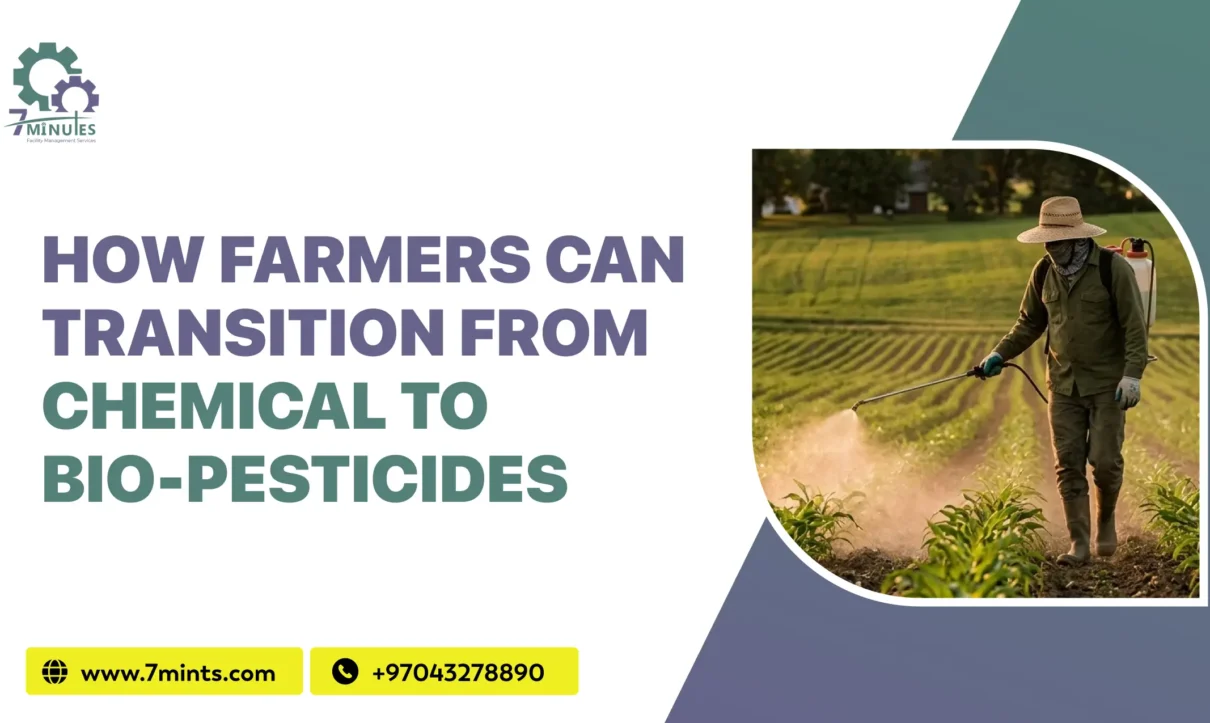
Agriculture in the United Arab Emirates faces several challenges, including high temperatures, limited water resources, soil salinity, and pest infestations. Farmers need effective crop protection methods to maintain productivity while reducing potential environmental impacts. Traditional chemical pesticides have played an important role in pest management, but growing interest in sustainable farming has encouraged the adoption of biological alternatives.
The use of bio-pesticides in UAE agriculture offers farmers an opportunity to manage pests through naturally derived substances and certain microorganisms. When selected and applied correctly, these products can support crop protection while helping farmers reduce reliance on some conventional chemical pesticides.
However, switching methods requires careful planning, suitable product selection, and regular monitoring. This guide explains how farmers can transition from chemical pesticides to bio-pesticides while maintaining crop health and productivity.
Understanding Chemical Pesticides vs Bio-Pesticides
Understanding chemical pesticides vs bio-pesticides is the first step toward making informed crop protection decisions.
Chemical pesticides are products designed to control pests using synthetic or naturally occurring active ingredients. They can provide rapid and reliable control when the product is suitable for the pest and used according to its label.
Bio-pesticides are derived from natural sources, including microorganisms, plants, and certain naturally occurring substances. Examples include microbial products containing specific bacteria or fungi and plant-derived pest control ingredients.
Bio-pesticides may offer benefits such as targeted pest control, compatibility with certain beneficial organisms, and reduced persistence for some products. However, these characteristics vary by active ingredient. Bio-pesticides are not automatically harmless, and their effectiveness can depend on temperature, sunlight, humidity, pest life stage, and application timing.
Farmers should evaluate each product based on its registered uses, effectiveness, safety requirements, and compatibility with their existing crop protection programme.
1. Identify Existing Pest Problems and Crop Requirements
Before beginning the transition from chemical to bio-pesticides, farmers should identify the pests affecting their crops and understand the severity of each infestation.
Different crops face different threats. Vegetables may be affected by aphids, whiteflies, caterpillars, or fungal diseases, while date palms and fruit crops may require specialised pest management programmes.
- Inspect crops regularly for pest activity and disease symptoms.
- Identify pests correctly before selecting a treatment.
- Record infestation levels and previous pesticide applications.
- Review crop growth stages and expected harvest dates.
- Determine the economic threshold at which intervention is necessary.
Accurate pest identification prevents unnecessary treatments and helps farmers choose suitable bio-pesticide solutions for farmers based on actual field conditions.
2. Start with Suitable Biological Pest Control Options
The next step is to explore biological pest control UAE options that match the crop, target pest, and local growing conditions.
Microbial products may contain beneficial bacteria, fungi, or other microorganisms that affect particular pests or plant diseases. For example, certain strains of Bacillus thuringiensis control specific caterpillar pests, while some beneficial fungi can help manage selected insects.
Other products use plant-derived ingredients to discourage or control particular pests.
Farmers interested in organic pest control solutions UAE should verify that the products are suitable for their crops and intended uses. The term “organic” does not guarantee that a pesticide is approved for organic production, so farmers must check applicable certification and regulatory requirements.
Selecting the right product requires matching the active ingredient to the target pest rather than choosing a product simply because it is labelled natural.
3. Adopt Integrated Pest Management
Integrated pest management UAE practices combine multiple pest control methods to reduce crop damage while avoiding unnecessary pesticide applications.
Instead of depending on one pesticide category, integrated pest management (IPM) uses monitoring, prevention, biological controls, and targeted treatments when needed.
Useful IPM practices include:
- Crop rotation where suitable.
- Removing heavily infested plant material appropriately.
- Using insect-proof nets and physical barriers.
- Maintaining field hygiene and controlling weeds that host pests.
- Encouraging beneficial insects where practical.
- Applying approved biological or chemical treatments when monitoring indicates a need.
This approach supports sustainable crop protection UAE by helping farmers manage pest populations over time and reduce avoidable chemical use.
4. Select Products Suitable for UAE Conditions
High temperatures and strong sunlight can affect the performance of some biological products. Certain microbial and plant-based formulations may lose effectiveness if exposed to unsuitable storage conditions or applied at the wrong time.
Farmers considering eco-friendly pesticides UAE should check product labels for storage temperatures, application timing, crop restrictions, compatibility information, and reapplication intervals.
For example, some products may work better when applied during cooler parts of the day or when pest populations are at a susceptible life stage. However, the correct timing depends on the specific product and pest.
Farmers should also consult qualified agricultural advisers and reliable bio-pesticide suppliers UAE to confirm product suitability, registration, and handling requirements.
5. Conduct Small-Scale Field Trials
Replacing all conventional pesticides at once can create unnecessary production risks. A gradual approach allows farmers to evaluate the performance of biological products before expanding their use.
Begin with a small plot or a manageable section of the farm. Compare the treated area with an appropriate reference area and record pest numbers, crop condition, treatment frequency, and costs.
These trials can help farmers determine whether natural pest control methods provide satisfactory results under their specific growing conditions.
If a product does not achieve the expected control, investigate possible causes such as incorrect pest identification, unsuitable timing, poor coverage, environmental conditions, or product incompatibility before deciding on the next treatment.
6. Follow Correct Bio-Pesticide Application Methods
Effective bio-pesticide application methods are essential for achieving consistent pest control.
Farmers should follow the product label and use the specified dosage, application equipment, protective measures, and timing. Applying too little may provide inadequate control, while excessive application can waste resources and may violate product directions.
- Calibrating spraying equipment.
- Ensuring suitable coverage of the targeted plant surfaces.
- Avoiding application during conditions that the product label identifies as unsuitable.
- Checking whether the product is compatible with other crop protection inputs.
- Observing required re-entry intervals and pre-harvest intervals.
Some biological products may be sensitive to tank mixing, ultraviolet exposure, or water quality. Farmers should confirm compatibility rather than assuming different products can be combined safely.
7. Work with Approved Suppliers and Agricultural Experts
Choosing trustworthy suppliers is important when adopting chemical pesticide alternatives. Farmers should verify that products are registered or authorised for the intended use in the UAE and obtain them through legitimate supply channels.
Qualified agricultural professionals can help with pest identification, product selection, application schedules, and resistance management.
Farmers should also maintain records of the product name, active ingredient, application date, crop, target pest, dosage, and observed results. These records support better decisions and help identify successful treatments over time.
8. Measure Progress and Improve Sustainability
The success of sustainable agriculture UAE initiatives should be measured through more than pesticide reduction alone. Farmers should also monitor crop damage, yield, product costs, labour requirements, and the frequency of repeat applications.
Effective agricultural pest control UAE programmes aim to protect crops while managing environmental and economic risks. Biological products can contribute to safe pest management for farms, but safety depends on correct handling, appropriate use, and compliance with product instructions.
A well-planned transition may combine microbial bio-pesticides, plant-based products, physical controls, beneficial organisms, and selected conventional treatments when necessary. This flexible strategy can support organic farming UAE goals where relevant, without assuming that every biological product is approved for certified organic production.
Conclusion
The transition from chemical pesticides to bio-pesticides represents a viable option for achieving sustainable agricultural practices. The process needs structured organization together with educational activities and gradual execution, but it delivers extensive advantages. Contact Us as the farming system becomes more sustainable through its integrated approach, which produces healthier soil, together with safer food and enhanced biodiversity. Farmers who adopt these methods contribute to environmental conservation and food safety.
Farmers can manage their transition process by learning about biopesticides and enhancing their soil health through IPM and biopesticide use while seeking help from government agencies. Proper monitoring combined with patience will lead to progressive performance enhancements. The implementation of sustainable farming practices has become essential for all modern agricultural operations.




1 Comment
Comments are closed.