

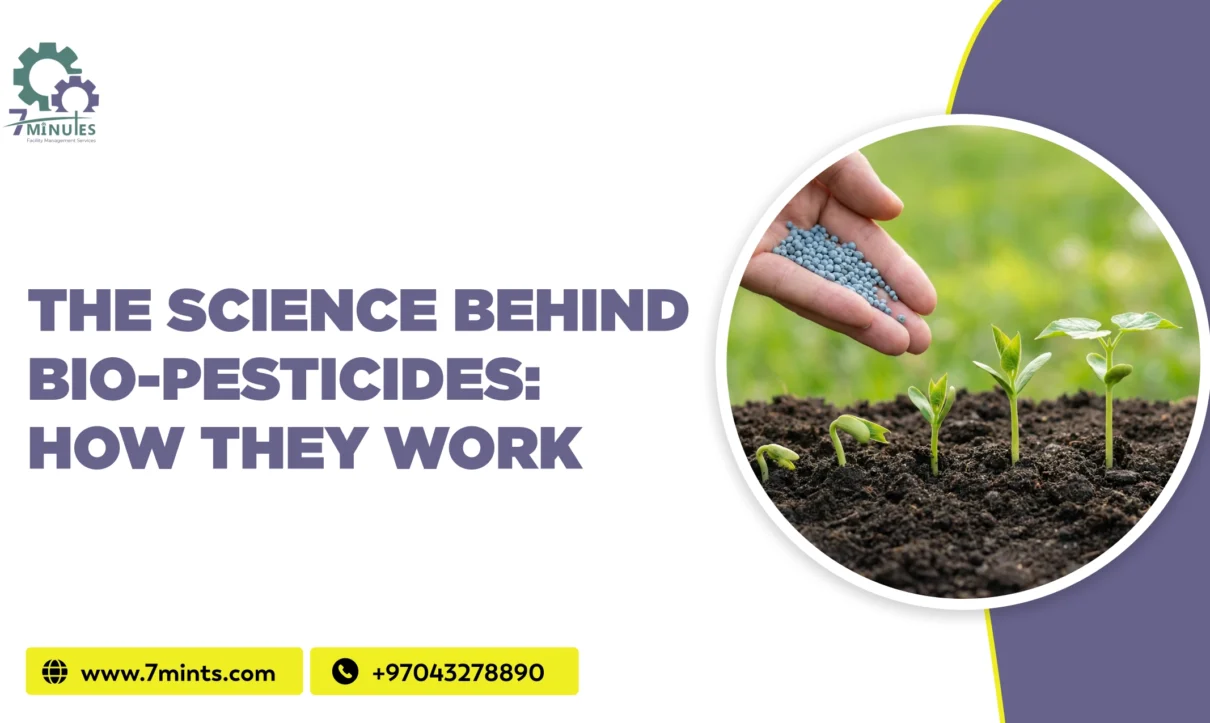
Modern agriculture faces a major challenge: protecting crops from insects, fungi, weeds, and other harmful organisms while maintaining soil health and environmental balance. Traditionally, farmers have relied heavily on synthetic chemical pesticides to control agricultural pests. However, growing awareness of environmental pollution, pesticide resistance, and food safety has increased interest in alternative pest management solutions.
This is where bio-pesticides play an important role. Developed from naturally occurring microorganisms, plants, and other biological materials, these products offer alternative approaches to managing agricultural pests. Understanding the science behind bio-pesticides helps farmers, agricultural professionals, and businesses make informed decisions about crop protection.
With advancements in agricultural biotechnology, biological pest control is becoming an important part of modern farming practices. Let’s explore how bio-pesticides work, their scientific mechanisms, benefits, and applications in sustainable agriculture.
What Are Bio-Pesticides?
Bio-pesticides are pest management products derived from natural sources such as bacteria, fungi, viruses, plants, and certain naturally occurring substances. Unlike conventional synthetic pesticides, they use biological processes or naturally derived compounds to manage specific pests.
These products can help control insects, plant diseases, nematodes, and other agricultural pests while supporting more targeted pest management strategies.
The growing demand for eco-friendly pesticides has encouraged agricultural producers to explore biological alternatives that can complement traditional crop protection methods.
Bio-pesticides are commonly used in:
- Fruits and vegetable cultivation
- Greenhouse farming
- Organic agriculture
- Horticulture and landscaping
- Commercial crop production
- Integrated pest management programmes
Their suitability depends on the crop, target pest, environmental conditions, and product formulation.
The Science Behind Bio-Pesticides: How Do They Work?
Understanding how bio-pesticides work requires looking at the biological interactions between the active ingredients and target pests.
Different bio-pesticides use different mechanisms to control harmful organisms. Some attack pests directly, while others interfere with their growth, reproduction, feeding behaviour, or ability to cause plant diseases.
The scientific processes behind these products are generally divided into several mechanisms.
1. Biological Infection and Pest Control
Certain microorganisms can infect harmful insects and disrupt their normal biological functions.
For example, Beauveria bassiana is an insect-pathogenic fungus that attaches to an insect’s outer surface, penetrates its protective covering, and develops inside its body. This infection can eventually cause the insect’s death.
Similarly, Metarhizium anisopliae is used in biological insect control against selected agricultural pests.
These microorganisms form an important category of microbial pest control solutions.
2. Disruption of Insect Feeding
Some microbial bio-pesticides produce substances that interfere with the digestive systems of target insects.
A well-known example is Bacillus thuringiensis (Bt). Certain Bt strains produce insecticidal proteins that become active in the digestive systems of susceptible insects.
These proteins bind to specific receptors in the insect gut, damaging the intestinal lining and disrupting feeding. This makes Bt an important tool for targeted insect management.
3. Suppression of Plant Pathogens
Certain beneficial microorganisms can suppress harmful fungi and bacteria responsible for plant diseases.
For example, species of Trichoderma can compete with plant pathogens for nutrients and space. Some strains also produce enzymes and other substances that help suppress disease-causing fungi.
These biological interactions support plant health and are widely studied in sustainable crop protection.
Types of Bio-Pesticides Used in Agriculture
There are several types of bio-pesticides, each developed to address specific agricultural pest management requirements.
1. Microbial Bio-Pesticides
Microbial bio-pesticides contain microorganisms such as bacteria, fungi, and viruses that control specific pests or plant diseases.
Common examples include:
- Bacillus thuringiensis for controlling susceptible insect larvae.
- Beauveria bassiana for managing selected insect pests.
- Metarhizium anisopliae for biological insect control.
- Trichoderma species for suppressing certain soil-borne plant pathogens.
These products are valuable tools for biological pest management because their activity can be targeted towards particular organisms.
2. Plant-Based Pesticides
Plant-based pesticides are derived from natural plant compounds that have insecticidal, repellent, or growth-disrupting properties.
Neem-based products are among the widely recognised examples. Azadirachtin, a compound found in neem seeds, can interfere with insect feeding, development, and reproduction.
Other botanical ingredients may be used in formulations designed to repel insects or reduce pest activity.
3. Biochemical Bio-Pesticides
Biochemical pesticides contain naturally occurring substances that control pests through non-toxic or non-lethal biological mechanisms.
- Insect pheromones used for mating disruption.
- Certain plant-derived substances that repel insects.
- Naturally occurring substances used to regulate insect growth.
These products can support targeted pest management without necessarily killing pests directly.
Major Bio-Pesticide Benefits for Modern Agriculture
The increasing adoption of biological products is driven by several bio-pesticide benefits that support more sustainable farming practices.
1. Reduced Dependence on Synthetic Chemicals
Bio-pesticides provide additional pest management options that can help farmers reduce reliance on certain conventional chemical pesticides.
However, their effectiveness depends on proper selection, application, and integration with other crop protection methods.
2. Targeted Pest Management
Many biological products work against specific pests or groups of organisms. This targeted activity can help reduce unnecessary impacts on non-target organisms when the correct product is selected and applied according to its label.
3. Support for Soil Health
Certain beneficial microorganisms can contribute to healthy soil ecosystems by interacting with plant roots, competing with harmful organisms, and supporting nutrient-related biological processes.
4. Lower Environmental Persistence in Some Products
Some bio-pesticides break down relatively quickly under environmental conditions. This may reduce long-term residue concerns compared with certain conventional pesticides.
However, persistence varies significantly depending on the active ingredient and environmental conditions.
5. Compatibility with Integrated Pest Management
Bio-pesticides can be incorporated into integrated pest management programmes alongside crop rotation, pest monitoring, biological control agents, and other appropriate crop protection methods.
Bio-Pesticides vs Chemical Pesticides: Understanding the Difference
Both biological and conventional chemical pesticides play roles in agricultural pest management. However, their sources, mechanisms, and application requirements can differ.
| Comparison Factor | Bio-Pesticides | Chemical Pesticides |
|---|---|---|
| Source | Biological organisms or naturally derived substances | Synthetic or naturally derived chemical compounds |
| Mechanism | Biological infection, feeding disruption, repellency, or other specific processes | Chemical interaction with biological targets |
| Target activity | Often relatively specific | Varies from highly specific to broad-spectrum |
| Environmental breakdown | Often relatively rapid, but product-dependent | Varies according to the active ingredient |
| Application | May require specific environmental conditions | Depends on product chemistry and application requirements |
| Resistance management | Can provide alternative modes of action | Requires resistance management and rotation |
The discussion around bio-pesticides vs chemical pesticides should not be viewed as a choice between completely safe and harmful products. Both categories require responsible handling, correct application, and compliance with product instructions.
The most appropriate solution depends on the pest, crop, environmental conditions, and farming requirements.
Factors That Influence Bio-Pesticide Effectiveness
Although biological products offer several advantages, bio-pesticide effectiveness depends on multiple factors.
Farmers should consider the following before application:
- Temperature: Some microorganisms perform better within specific temperature ranges.
- Humidity: Certain fungal bio-pesticides require suitable moisture conditions for effective infection.
- Sunlight: Ultraviolet radiation can reduce the survival of some biological active ingredients.
- Application timing: Applying products at the correct pest growth stage can improve results.
- Storage conditions: Improper storage may reduce microbial viability and product performance.
- Product compatibility: Mixing biological products with incompatible pesticides or other agricultural inputs can reduce their effectiveness.
Manufacturers must also focus on appropriate bio-pesticide formulation to maintain product stability, shelf life, viability, and field performance.
The Role of Bio-Pesticides in Sustainable Pest Management
The future of agriculture depends on protecting crop productivity while reducing unnecessary environmental impacts.
Sustainable pest management focuses on combining different techniques rather than depending on a single pest control method.
Bio-pesticides can support this approach through:
- Regular crop and pest monitoring.
- Early identification of pest infestations.
- Use of biological control agents.
- Crop rotation and field sanitation.
- Appropriate application of registered bio-pesticide products.
- Combining compatible biological and conventional control methods when necessary.
These natural pest control methods can help farmers develop more balanced crop protection strategies.
For organic farming operations, suitable registered biological products can also support organic pest control solutions, provided they meet the relevant organic certification standards.
Future of Agricultural Bio-Pesticides
The demand for agricultural bio-pesticides is expected to remain an important area of innovation as farmers explore alternatives for crop protection.
Research in agricultural biotechnology is improving microbial strain selection, active ingredient discovery, product delivery systems, and formulation technologies.
New developments are also helping researchers understand how beneficial microorganisms interact with crops, soil ecosystems, and harmful pests.
For agricultural businesses and farmers, these innovations create opportunities to adopt more targeted and environmentally friendly pest control practices.
However, successful adoption requires reliable product quality, scientific validation, appropriate regulatory approval, and farmer awareness.
Conclusion
Biopesticides represent a scientifically advanced and environmentally responsible method of pest management. The system offers effective crop protection through its natural organism- and biological process-based design. Contact Us as the system decreases environmental harm while enabling farmers to maintain their agricultural output. The system exists as a vital instrument that supports eco-friendly agricultural practices.
The significance of biopesticides will keep growing because people now understand safe food handling and environmental protection. Biological solutions now receive increased funding from farmers and researchers as well as policymakers. Bio-pesticides will achieve widespread use as a safe replacement for dangerous chemicals through proper education and support. The elements of this system work together to create a healthier and environmentally sustainable future.




16 Comments
Comments are closed.