
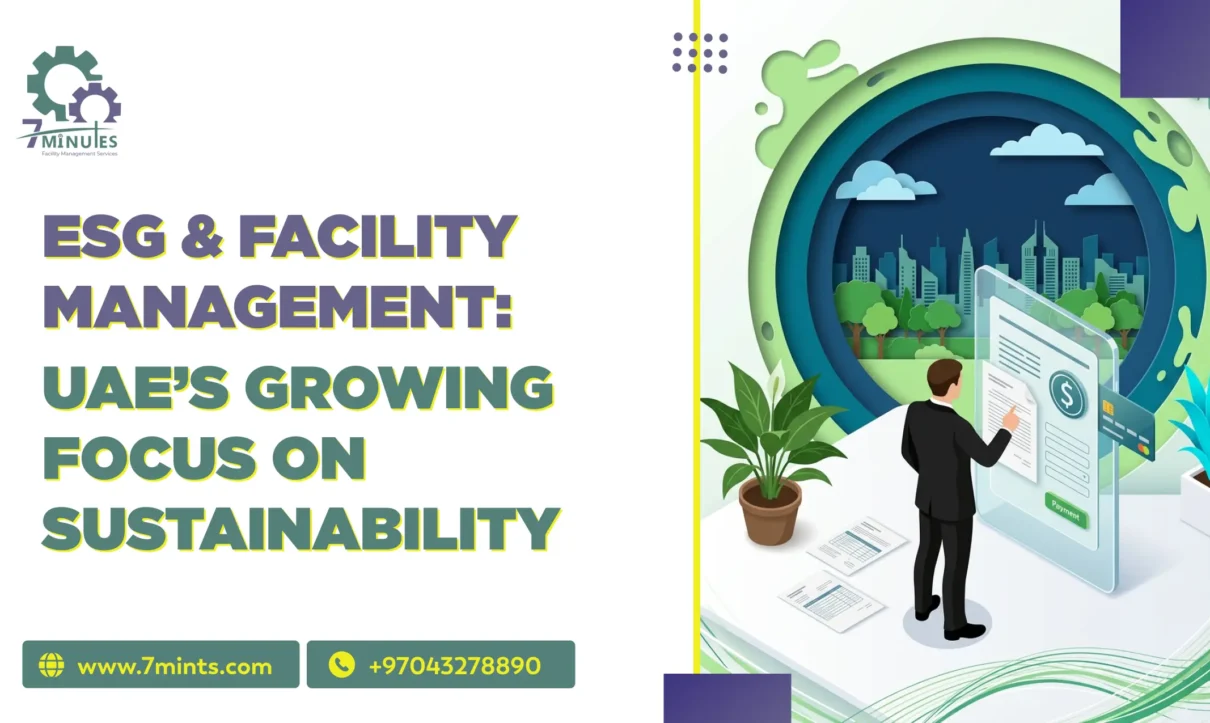
The UAE is making rapid progress toward establishing itself as a worldwide sustainable development leader through its implementation of sustainability initiatives that include facility management operations. Facility management used to provide building security services, which included cleaning tasks and equipment maintenance work, and essential operational functions. Facility managers have to deliver more services today because businesses now consider sustainable development to be their main business objective. Companies now want their buildings to operate efficiently while reducing environmental impact and improving long-term performance.
Organizations need to implement environmentally friendly operational methods because the government has introduced multiple initiatives, which include the UAE Net Zero by 2050 target, clean energy programs, and enhanced environmental protection standards. Investors, tenants, and customers now closely monitor the environmental management practices that businesses implement. The growing pressure from this trend has created an urgent need for sustainability to become a fundamental requirement in facility management operations throughout the UAE. The industry has developed new sustainable services that now function as strategic partners for businesses seeking environmentally friendly solutions.
Understanding ESG in Facility Management
ESG stands for Environmental, Social, and Governance, and these three pillars help businesses evaluate how responsibly they operate. Building maintenance in facility management requires ESG implementation, which ensures that organizations sustain environmental protection, employee health, and business ethical standards. The system enables organizations to develop sustainable business practices, which stay operational while they reduce risk exposure.
The environmental aspect targets four goals, which include decreasing energy consumption through two methods and reducing carbon emissions, water usage, and waste generation. The social aspect includes employee safety, healthier workplaces, better indoor air quality, and improved tenant satisfaction. Organizations need to follow laws while making ethical choices, creating clear reports, and maintaining proper operational procedures. The three pillars together create a solid base that supports sustainable facility management operations.
Also Read: Facility Management in the UAE’s Hospitality Industry Growth
Why Sustainability is Becoming a Priority in UAE Facility Management
1. Government Sustainability Goals
The UAE government has launched extensive sustainability initiatives that aim to decrease fossil fuel usage while constructing a more sustainable economy. The UAE Net Zero 2050 strategy promotes businesses to decrease their carbon footprint through environmentally friendly technological implementation. The policies are affecting the real estate, construction, and facility management sectors. Companies are now expected to align their operations with national sustainability goals.
Facility managers play a major role in helping organizations meet these environmental targets. The team ensures building systems run at peak performance through three methods, which include cutting energy losses and enhancing maintenance procedures and adopting eco-friendly business methods. Their contribution helps businesses stay compliant with regulations while supporting the country’s long-term sustainability vision. Facility management functions as a core element that supports environmental assessment processes.
2. Growth of Green Buildings
The United Arab Emirates shows increased green building development through both Dubai and Abu Dhabi and other major urban centers. Developers now dedicate their resources to building properties that achieve LEED certification while using less energy and maintaining better indoor air quality. The projects draw businesses that establish sustainability as their core value. The trend leads to growing requirements for dedicated management solutions within facilities.
Green buildings need ongoing assessment to preserve their energy performance, together with their environmental efficiency standards. Facility teams manage optimization for HVAC systems together with lighting performance, waste management systems, and water conservation solutions. Green buildings need appropriate handling to achieve their sustainability objectives. The work of facility teams becomes essential for achieving and sustaining green building certification.
3. Investor Expectations
Investors today prefer companies that demonstrate strong ESG performance because sustainable businesses are often seen as lower-risk investments. Commercial properties that possess efficient systems together with green certifications receive superior investment opportunities. Sustainability has become a competitive advantage in the real estate market. Property owners currently focus on implementing ESG improvements to attract investors.
Facility management companies achieve these objectives through their ability to enhance operational efficiency, together with their capacity to sustain environmental performance records. The organization assists its customers in reducing energy expenses while decreasing greenhouse gas emissions and boosting their total property efficiency. Property value increases through effective ESG implementation,,, which also secures long-term tenants for the business. The results provide advantages to both business stakeholders and investors.
You May Also Read: How UAE Businesses Can Meet ESG Through Facility Management
How Facility Management Supports ESG Goals
1. Energy Efficiency Management
Poor maintenance of equipment results in increased utility expenses and unanticipated equipment failures. Facility teams perform system evaluations to confirm that all equipment functions at its highest potential. The process generates environmental advantages together with financial advantages throughout business operations.
2. Water Conservation
The Middle East faces severe water shortages, which make water conservation critical for achieving sustainable development. Facility managers improve water efficiency through the implementation of efficient water fixtures and the monitoring of all plumbing systems to stop wasteful practices. Commercial buildings use leak detection systems to decrease water waste. The efforts promote sustainable and responsible resource management practices.
Many businesses are implementing water recycling systems together with advanced agricultural irrigation systems. The technologies decrease water consumption, which is needed for landscaping and daily operations. The process also enhances their performance in environmental and social governance.
3. Waste Management
Businesses face growing pressure to decrease their landfill waste while implementing environmentally responsible disposal methods. Facility managers establish recycling initiatives that assist organizations in effective waste material separation. The organization promotes companies to decrease their use of single-use plastic products. The project works to decrease environmental damage.
The UAE single-use plastic ban forces companies to switch to environmentally friendly solutions. Facility teams help implement these changes through better procurement and waste handling systems. Sustainable waste management helps businesses protect their environmental image. It also supports compliance with government regulations.
4. Sustainable Cleaning Practices
People who use standard cleaning products face health risks, while these products damage natural ecosystems. Facility management companies are shifting towards green cleaning solutions because these products provide safer and environmentally friendly options. The products decrease dangerous emissions that happen inside buildings.
All spaces become safer for employees and visitors because of better cleanliness, which reduces dangerous chemical exposure. Sustainable cleaning practices help businesses achieve their environmental, social, and governance targets. The small change to operations will create substantial effects after an extended period.
Role of Smart Technology in Sustainable Facility Management
1. IoT-Based Monitoring
Facility managers use smart sensors to monitor their energy consumption and water usage and equipment operation throughout the entire facility. The systems identify operational problems that worsen into major financial issues. The data analytics enables organizations to make decisions that lead to better eco-friendly results. This process results in improved control over resource consumption.
Real-time monitoring helps organizations to decrease their operational expenditures that do not add value. The facility teams have the ability to modify system operations as soon as they find abnormal system behavior. The process enhances building performance while decreasing expenses related to facilities maintenance. Building owners in the UAE increasingly adopt smart monitoring technology.
2. Predictive Maintenance
The process of predictive maintenance employs technological systems that identify equipment problems before these devices experience total breakdowns. The system reduces repair expenses while simultaneously preventing unexpected business interruptions. The system helps to extend the operational period of costly machinery. The process of preventive measures results in financial savings alongside environmental resource conservation.
Equipment that operates with inefficiency patterns leads to an excessive energy demand that exceeds actual requirements. Predictive maintenance establishes system performance standards that maintain equipment operational efficiency. The solution enables organizations to achieve their environmental sustainability objectives while improving their operational efficiency. The implementation of this method has become popular among businesses throughout the UAE.
3. Building Automation Systems
Building automation systems operate building lighting systems together with cooling systems, ventilation systems, and security systems through automated controls. The system modifies its functions in response to current occupancy conditions and actual usage patterns. The system prevents empty areas from using energy resources without any need. The system delivers substantial sustainability benefits.
The automated systems decrease the need for facility teams to perform manual tasks. The system enhances operational precision while enabling businesses to achieve reductions in their energy expenditures. The majority of smart buildings that exist in the UAE depend on automated systems for their operational needs. The pattern of automation usage within smart buildings will continue to expand according to current predictions.
4. Social Responsibility in ESG Facility Management
The social element of ESG establishes standards that create work environments that protect employee health and safety while safeguarding visitor well-being. Facility managers establish guidelines that dictate proper building ventilation, together with hygiene standards, workplace safety regulations, and indoor air quality control. The elements mentioned above determine the health status of employees and their capacity to work. The work environment, through improved spaces, creates greater satisfaction for employees.
Organizations that focus on their workers’ health security and safety will achieve better employee retention rates, together with an enhanced company image. Tenants are also more likely to stay in buildings that provide safe and comfortable spaces. Facility managers play a major role in maintaining these standards. Social responsibility functions as a fundamental element within environmental social governance frameworks.
5. Governance and Compliance
The governance process makes sure that facility management operations will execute all required legal and sustainability rules. Businesses must track emissions, waste management efforts, and operational efficiency to maintain compliance. Organizations can protect themselves from penalties by using proper reporting methods, which also establishes trust with their stakeholders. The demand for organizations to demonstrate their operations has grown in importance.
The facility management industry provides businesses with services that enable them to maintain their operational records while establishing better responsibility. They help businesses in the UAE to comply with new environmental protection standards. Strong governance systems reduce risks and improve long-term business stability. This strengthens ESG performance.
Challenges in Implementing Sustainable Facility Management
1. High Initial Investment
Small businesses face challenges because sustainable technologies require them to spend significant money up front. The first costs for smart systems, together with renewable energy solutions and green updates, will appear expensive. Companies avoid proceeding with their plans because they believe their financial situation will prevent them from doing so.
The process of reducing energy costs, together with decreasing maintenance expenses, leads to permanent financial benefits that result from these financial commitments. The enhanced operational performance of a business enables it to achieve financial recovery throughout different time periods. The implementation of sustainable infrastructure projects results in higher real estate evaluations. The project constitutes an intelligent choice that will generate profits throughout its entire timeframe.
2. Lack of Skilled Professionals
The field of sustainable facility management requires experts who possess knowledge about intelligent technologies, together with their understanding of environmental, social, and governance (ESG) standards. Companies encounter difficulties in their recruitment efforts because they need employees with specialized knowledge of sustainable development practices. The inability to find suitable employees creates difficulties for organizations that want to execute their environmentally friendly initiatives. The existing workforce shortage of skilled workers continues to be a significant problem.
Training programs and workforce development are becoming necessary to fill this gap. Companies focus on employee training programs to build their sustainability knowledge base. The project creates new employment opportunities that will benefit the UAE market. The requirement for skilled workers will keep increasing in the future.
3. Adapting Older Buildings
Sustainability principles did not guide the initial design process, which created older buildings. The process of upgrading these buildings requires both financial investment and fundamental changes to their operational systems. Property owners face difficulties that require substantial time investment to complete. The majority of organizations postpone their modernization initiatives due to the existing obstacles.
The Future of ESG in UAE Facility Management
Sustainability and smart technology will become the main focus of future facility management operations inside the United Arab Emirates. Companies will keep putting money into renewable energy solutions, environmentally friendly business practices, and their energy-efficient building management systems. The ESG reporting system will gain increased value because it serves as a tool for companies to attract potential investors. Future expansion will occur because of sustainable development efforts.
Facility managers will assume greater responsibilities to assist organizations with their environmental requirements while they strive for operational excellence. Their duties will extend beyond their basic need to provide maintenance support. Companies that implement ESG-based business practices will secure advantages that will last through time. Sustainable facility management is clearly the future.
Conclusion
ESG is transforming facility management across the UAE by making sustainability a core business priority. Facility management has evolved into a multi-functional service that companies now use to support their operational needs. The existing facility staff must now meet their obligations to help achieve environmental, social, and governance objectives. Contact Us as The industry is undergoing transformation because of this new trend, which generates fresh business opportunities.
Facility management has become important for organizations because it supports energy conservation, employee health, and regulatory compliance. Organizations that implement environmentally friendly facility operations will achieve cost reductions and increase their chances of attracting investors while building a better public image. Facility management will remain a key factor that determines business development in the United Arab Emirates because sustainability has become a vital business factor.

1 Comment
Comments are closed.