
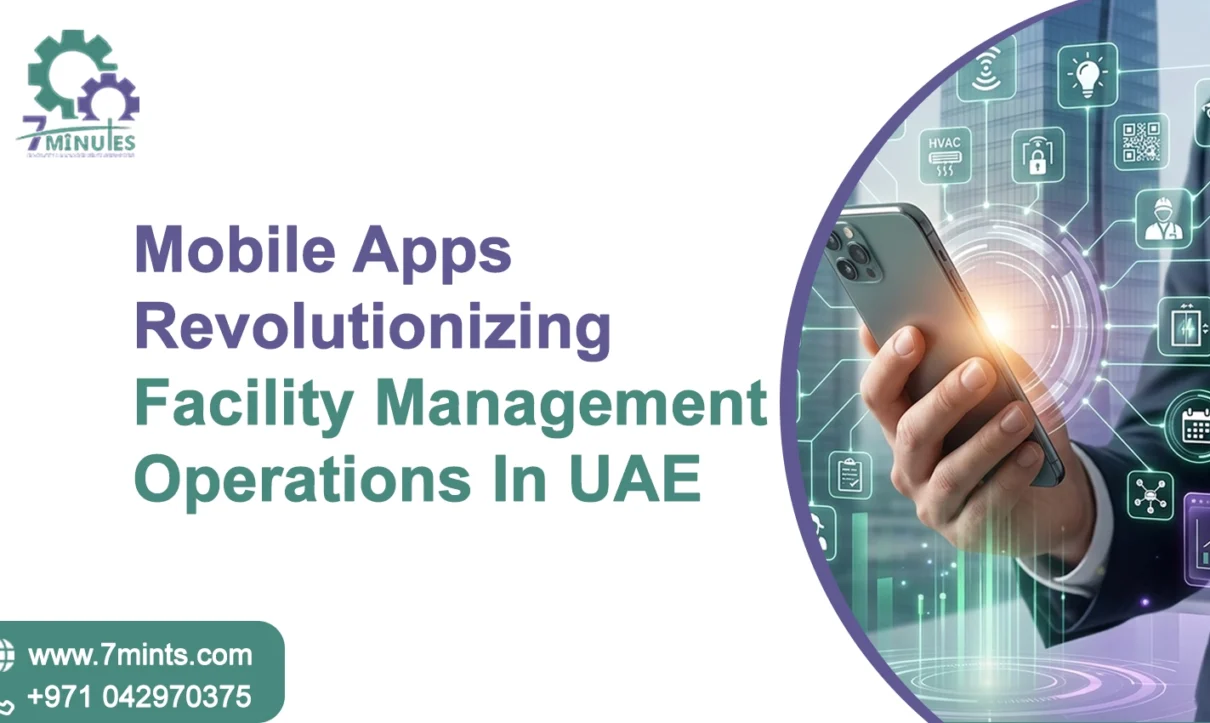
The UAE has been moving really fast, like noticeably, toward being one of the world’s more technologically advanced countries. Smart cities, intelligent buildings, and digitally connected infrastructure are basically shaping how urban life is going to look later on. As commercial towers, residential communities, hospitals, shopping malls, hotels, and even industrial facilities keep expanding, it gets harder to manage those properties without losing time. Old-style facility management, the one that depends on paperwork, spreadsheets, and manual back-and-forth, is not really enough anymore for what modern businesses expect.
Mobile applications have started acting like a proper game-changer for facility management in the UAE. These apps help facility managers, technicians, property owners, and service providers work together in real time, automate everyday operations, and handle maintenance issues faster, sometimes way faster than before. For things like preventive maintenance, asset tracking, inspections, workforce coordination, or energy monitoring, mobile tech is changing nearly every part of facility management. Across Dubai, Abu Dhabi, Sharjah, and other Emirates, organizations are shifting to mobile-first approaches to boost operational efficiency while also improving the overall experience for occupants without it feeling complicated.
Why Mobile Apps Are Becoming Essential for Facility Management
Facility management teams are basically responsible for making sure buildings stay safe, functional, comfy, and compliant with local rules and all that stuff. But when you’re dealing with literally hundreds of assets, lots of technicians, constant maintenance plans, and random emergency requests, doing it manually still tends to create delays and also awkward communication gaps. Then costs go up too, which is not ideal. Mobile applications help reduce all those little inefficiencies because they give access to the important info right away, from wherever someone happens to be.
Since smartphones and tablets are now common workplace tools, technicians can get work orders, send inspection reports, take photos, adjust job statuses, and talk to their supervisors without having to go back and forth to the office. That boosts productivity a lot, and it also cuts down on paperwork and administrative slowdowns. And in the UAE, as companies keep pushing digital transformation, mobile apps are starting to feel like a must-have investment, not some optional thing “later.”
1. Preventive Maintenance
Facility management teams are basically responsible for keeping buildings safe, functional, cozy, and aligned with local rules and all that other stuff. But when you’re handling literally hundreds of assets, tons of technicians, continuous maintenance schedules, plus the random emergency requests that show up, doing it manually still tends to cause delays and somehow also creates these awkward communication gaps. Naturally, costs jump too, which is not ideal. Mobile applications help lower a lot of those small inefficiencies, because they hand over the crucial info right away, from wherever someone is at the moment.
Since smartphones and tablets are now standard tools at work, technicians can pull work orders, send inspection reports, take photos, update job statuses, and message their supervisors without having to go back and forth to the office every time. This improves output a lot, and it also reduces paperwork and those administrative slowdowns that quietly pile up. And in the UAE, since companies keep pushing digital transformation, mobile apps are starting to feel like an investment that you actually need, not an optional thing to deal with “later.”
2. Real-Time Work Order Management
Probably one of the more visible benefits of facility management mobile apps is the way they manage work orders in real time. Instead of waiting around for phone calls, email threads, or those printed job sheets, maintenance requests can be submitted and routed instantly inside the app. Facility managers can monitor each request from the moment it’s created until it’s finally closed, all through one centralized dashboard.
Technicians get notifications straight onto their mobile devices, so they can say yes to tasks right away and start working without any real delays. That kind of transparency helps with faster responses, better responsibility, and more satisfaction among customers, whether it’s commercial or residential spaces across the UAE.
3. Preventive Maintenance
Preventive maintenance is honestly one of the best ways to cut down on equipment failures and also help keep assets longer. Mobile apps automate the whole scheduling part by pushing reminders for inspections, servicing, and those everyday routine visits.
These mobile tools also keep a full maintenance record for every asset, so it becomes easier to spot repeating problems and even anticipate what might come up next. When servicing is done regularly, it reduces those unexpected stops, minimizes downtime, and lowers the big repair costs later on. For UAE companies dealing with HVAC, elevators, generators, plumbing, and electrical systems, preventive maintenance apps support operational continuity throughout the year.
4. Improved Communication
Good communication is, kind of, the base ingredient for successful facility management. Mobile apps offer one centralized place where facility managers, technicians, vendors, and clients can align instantly. Instead of sending multiple emails or juggling phone calls, every discussion tied to a maintenance task stays within the work order itself.
Technicians can ask a question, request spare parts, upload progress photos, and notify supervisors about delays straight through the application, without any big round trips. Meanwhile, managers get full sight into what’s happening out in the field, and clients receive live-style updates about their service request or whatever is moving on-site. Somehow this kind of communication helps cut down on confusion, improves coordination a bit more, and actually supports quicker choices across facility management operations.
5. Asset Tracking and Equipment Management
Modern buildings hold thousands of useful assets, like HVAC systems, electrical panels, generators, water pumps, elevators, fire safety equipment, and security systems. But as facilities grow, tracking everything by hand becomes harder and harder, and more and more annoying. Mobile facility management applications make asset handling easier because they keep a single digital inventory for every asset, more or less in one place.
Technicians can use QR codes, NFC tags, or barcode scanning to quickly reach equipment history, warranty information, service records, maintenance schedules, and operating manuals right from their phones. This removes the constant paperwork, and it also boosts maintenance accuracy. Extra visibility into assets further helps organizations tune equipment performance and decide on replacements using real usage data, not guesses.
6. Faster Emergency Response
When a maintenance situation turns into an emergency, like water leaks, electrical failures, HVAC breakdowns, or fire system faults, it needs action fast. Mobile apps improve emergency handling by notifying the correct technicians immediately, based on where they are, what they know, and whether they’re available or not.
Facility managers can watch response times, track when a technician arrives, and even get live status updates during the whole repair run. Some advanced mobile platforms also add GPS navigation so the technicians can reach the site faster, basically with less wandering. A faster emergency response, it really helps reduce business disruptions, boosts occupant safety, and also cuts down financial losses that come from equipment failures, like when something breaks at the wrong moment.
7. Better inspection and compliance management
The UAE has strict building safety rules that call for ongoing inspections and proper documentation. Mobile inspection applications make compliance a lot less painful by swapping paper-based forms for digital checklists. Inspectors can finish assessments using smartphones or tablets, while they also capture photos, videos, GPS coordinates, and digital signatures as supporting evidence.
After that, inspection reports get saved automatically in the cloud, so they’re easy to pull up during audits or regulatory reviews. Automated reminders help ensure inspections aren’t forgotten, which supports compliance across fire safety, electrical systems, HVAC maintenance, health regulations, and environmental standards. Digital inspections also tend to improve reporting precision while lowering the administrative effort.
8. Workforce productivity and field service optimization
Managing field technicians in a smooth way is, honestly, one of the toughest parts for facility management firms. Mobile workforce management applications offer near real-time visibility into technician locations, schedules, workloads, and job progress. Managers can allocate tasks based on technician know-how, proximity, and availability, so travel time shrinks, and operational flow improves.
Technicians no longer really need to swing by the office for daily assignments because work orders are sent straight to their mobile devices. Time tracking, attendance, route optimization, and digital reporting kind of blend together inside one application. With this smoother kind of flow, maintenance teams can close out more service requests each day while still keeping a strong service quality level.
Check out our latest blog post on The Role of Facility Management in Building ESG-Compliant Organizations
9. Energy Management Through Mobile Applications
Energy efficiency has become a big priority for organizations chasing sustainability and ESG objectives in the UAE. Mobile facility management apps link up with smart building systems and IoT sensors to keep an eye on electricity, water, gas, and HVAC consumption in real time. Facility managers get immediate alerts when energy usage crosses predefined levels, even for tiny variations that might not be obvious at first.
This real-time monitoring helps businesses spot inefficiencies, catch equipment malfunctions earlier, and tune energy consumption more quickly, without waiting for the slow monthly utility statements. When energy usage drops, operational expenses also go down, and it supports environmental sustainability initiatives. That’s why mobile tech plays a key role in greener building management across commercial and residential properties.
10 Future of Mobile Facility Management in UAE
The future of facility management in the UAE seems to be moving fast, like really fast, and it feels more mobile, intelligent, and automated too. A bunch of newer tools are coming in, artificial intelligence (AI), Internet of Things (IoT), digital twins, predictive analytics, augmented reality, and cloud computing. All of this keeps pushing mobile facility management forward. In practice, these things help teams notice equipment issues earlier than expected, automate maintenance calendars, and fine-tune building performance with less hands-on work and fewer manual steps.
Also, as the UAE keeps putting money into smart cities, greener infrastructure, and digital transformation, facility management firms that actually embrace mobility tools will likely get a clearer edge. Companies that modernize their operations right now will probably be in a better place to provide steadier, higher-quality services; lower operational expenses; and match the changing expectations from property owners as well as occupants.
Conclusion
Mobile applications have kind of changed facility management in the UAE in a core way, swapping old manual routines for intelligent, connected, data-driven workflows. Stuff like work order management and preventive maintenance, inspections, asset tracking, workforce coordination, energy management, and even customer engagement. Contact us as It all improves across the board when mobile tech is used properly. These systems can raise efficiency, trim costs, support compliance more consistently, and, in the end, make occupant satisfaction feel more real.
1 Comment
Comments are closed.