

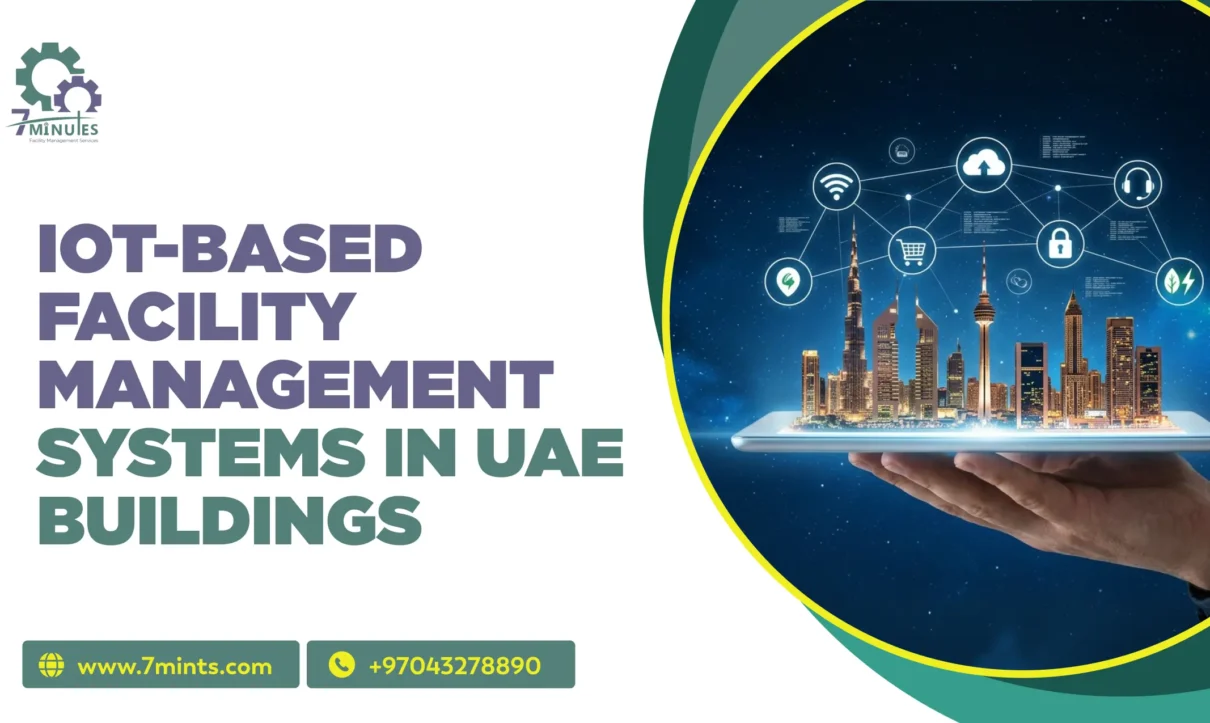
The United Arab Emirates (UAE) is currently developing its infrastructure into a worldwide center for intelligent systems that use Internet of Things (IoT) technology to operate their facilities. Property owners throughout Dubai and Abu Dhabi are implementing IoT solutions in their buildings to achieve better operational results while decreasing their expenses. Building managers use these technologies to track building assets continuously, which enables them to take rapid operational decisions. IoT technology will become more prevalent in facility management as the UAE develops its smart cities and sustainable projects.
The Internet of Things (IoT) defines a system that connects various devices and sensors together with software that operates through internet connectivity. The devices in facility management systems gather building operational data, which includes their temperature, energy consumption, equipment efficiency, and security functions. Facility managers can access this data through centralized dashboards for better decision-making. The system enables organizations to enhance their maintenance operations while minimizing waste, which results in superior building performance.
Smart HVAC Management
Buildings throughout the United Arab Emirates (UAE) use cooling systems as their primary source of energy consumption because of the region’s extreme heat conditions. The HVAC systems that use IoT technology operate through sensors that track temperature, humidity, and occupancy changes throughout different building areas. The system uses real-time information to modify cooling system functions in order to avoid wasting power. The system enables organizations to cut electricity expenses while providing a pleasant climate for both their staff members and building occupants.
The intelligent HVAC systems use predictive maintenance functionality to detect operational deficiencies at an early stage, which prevents them from developing into serious technical difficulties. The air conditioning unit will stop working when it reaches its threshold limit for performance.
The smart HVAC systems enable predictive maintenance through their capability to detect performance problems that lead to substantial operational issues. The system notifies maintenance staff when an air conditioning unit starts using excessive power beyond its normal operating range. The system enables technicians to resolve minor problems that would lead to total equipment breakdown. The approach enables companies to reduce their repair expenses while maintaining uninterrupted business operations.
Predictive Maintenance
Most maintenance systems require equipment inspection schedules together with procedures that address equipment failures after they occur. The method creates high expenses because it fails to detect problems until they reach critical levels. IoT sensors track industrial equipment, including elevators, power generators, pumps, and electrical systems, to identify patterns of abnormal behavior. This system enables facility teams to recognize problems at an early stage, which allows them to implement preventive measures before significant equipment failures occur.
Businesses can optimize their asset management through real-time performance data, which results in decreased equipment replacement needs. The system delivers critical advantages to major commercial establishments that require continuous equipment operation for their daily activities. The system enhances safety through its design, which guarantees that essential systems will function continuously without interruption.
Predictive Maintenance
Traditional maintenance methods use routine inspections and reactive repairs to fix equipment that breaks down. The approach results in high costs because problems become serious when they remain hidden. IoT sensors monitor equipment, which includes elevators, generators, pumps, and electrical systems, to determine whether they are operating normally. The system enables facility teams to identify faults at an early stage, which enables them to implement preventive maintenance measures before their equipment suffers major breakdowns.
Predictive maintenance exists to protect building equipment from unexpected operational stops while extending the time during which expensive equipment remains operational. Businesses can achieve better asset management through continuing performance monitoring rather than having to replace equipment regularly. The system provides essential advantages to large commercial buildings, hospitals, and hotels, which need to maintain their operations during equipment breakdowns. The system provides better protection because it guarantees the continuous operation of essential systems at all times.
Energy Management and Sustainability
The government of the UAE supports sustainable development through the implementation of green building regulations and the development of smart city projects. IoT systems help buildings meet these goals by tracking electricity, water, and overall resource consumption in real time. Smart meters identify areas where energy is being wasted and help facility managers take corrective action quickly. The system helps property owners achieve better operational results through two main benefits, which include reduced utility costs.
The IoT-based energy management system provides automated lighting systems as its primary advantage. The system allows lights to shut down automatically when all room occupants leave and to change their brightness according to available sunlight. Water monitoring systems can also detect excessive consumption and prevent wastage. Businesses achieve their sustainability goals through these technologies, while the systems assist in creating environmentally friendly building operations.
Smart Security Systems
Facility managers can track building access remotely and receive instant alerts if suspicious activity occurs. The system enhances response time capabilities while simultaneously safeguarding residents, employees, and visitors to the facility.
These systems deliver effective security solutions that protect shopping malls and hotels, office buildings, and residential communities throughout the UAE. The locations require strong security systems because they receive high visitor traffic, which must be managed to maintain normal operations. The system uses IoT integration to automate surveillance processes while decreasing the need for manual surveillance. The system creates a secure environment that protects all building occupants from potential threats.
Water Leak Detection
Water leakage will result in severe structural damage, together with significant financial losses, when it remains undetected until later. The Internet of Things-based leak detection systems use intelligent sensors to track both water pipeline status and residential water usage patterns throughout the day. The system activates maintenance alerts when it detects water flow patterns that deviate from established norms. The system enables organizations to conduct urgent repairs that prevent extensive property damage from occurring.
The UAE requires water conservation because the country has limited natural water resources, which must be protected. The technologies provide hotels, residential towers, and commercial buildings with operational advantages. The system enables organizations to enhance their sustainability initiatives through sustainable water resource management. Check out our latest blog post on ESG and Facility Management: UAE’s Growing Focus on Sustainability
Improved Occupant Experience
People who live in modern times expect their homes and workplaces to have intelligent technological features that provide them with convenient solutions. IoT systems improve occupant experience through smart technology, which enhances their building security and environmental control systems.
People who live and work in modern spaces demand smarter solutions that provide them with better convenience. The IoT systems create better user experiences through their automatic management of lights and temperature systems, parking operations, and visitor entry controls. Users of the building system experience personalized services that make their daily activities more efficient through these building features. The advanced building features that smart buildings provide to their tenants create higher demand for their rental spaces.
The office environment enables employees to work under optimal conditions, which provides them with automatic adjustments to lighting and temperature for their comfort needs. Mobile applications give residents the ability to operate their home systems from anywhere, which increases their convenience. Smart parking systems decrease the time drivers spend looking for available parking spaces. The benefits result in higher tenant satisfaction, which leads to increased property value.
Remote Facility Monitoring
The IoT technology enables building managers to operate their facilities from remote locations, which represents its main benefit. Facility managers can monitor multiple properties through a single dashboard without being physically present at each location. Users can access system performance data, maintenance alerts, and task scheduling functions from any location. The solution enables facility management companies to achieve better operational efficiency through time savings.
The managers use digital real-time updates to manage their operations instead of sending inspection teams to check properties. The solution decreases operational expenses while delivering better service. The system enables organizations to respond more rapidly to emergencies and technical issues.
Challenges of Implementing IoT Systems
The need for high initial expenses to install sensors, software systems, and smart infrastructure creates a major obstacle for organizations. The high expense requirements for initial technology implementation create a barrier that stops smaller businesses from proceeding.
The integration of smart technology systems into older buildings presents challenges because these structures lack the necessary design features. The facility teams must acquire adequate training to manage advanced Internet of Things tools efficiently.
Future of IoT in UAE Facility Management
UAE facility management is shifting towards digital systems, which rely on data analysis for their operations. Government initiatives such as smart city development projects are encouraging businesses to adopt advanced technologies. The Internet of Things will develop together with artificial intelligence, automation systems, and digital twin technology. These technologies will create smarter and more efficient buildings across the country.
Businesses that adopt IoT technology at an early stage will gain a competitive edge because they enter a growing real estate and facility management market. The organization can achieve cost reductions while enhancing its sustainability performance and providing improved tenant experiences. Smart building technologies have become essential requirements for success in the UAE market. They have become necessary elements that businesses need to achieve their long-term objectives.
Conclusion
The Internet of Things enables facility management systems to create new operational methods for buildings throughout the United Arab Emirates. The property owners receive multiple advantages from these technologies, which include predictive maintenance, smart HVAC systems, and security and sustainability enhancements. Contact us as the solutions enable cost reduction and operational optimization while boosting occupant contentment. The expansion of smart infrastructure development in the United Arab Emirates will lead to increased importance of Internet of Things technology in upcoming facility management systems.



1 Comment
Comments are closed.