

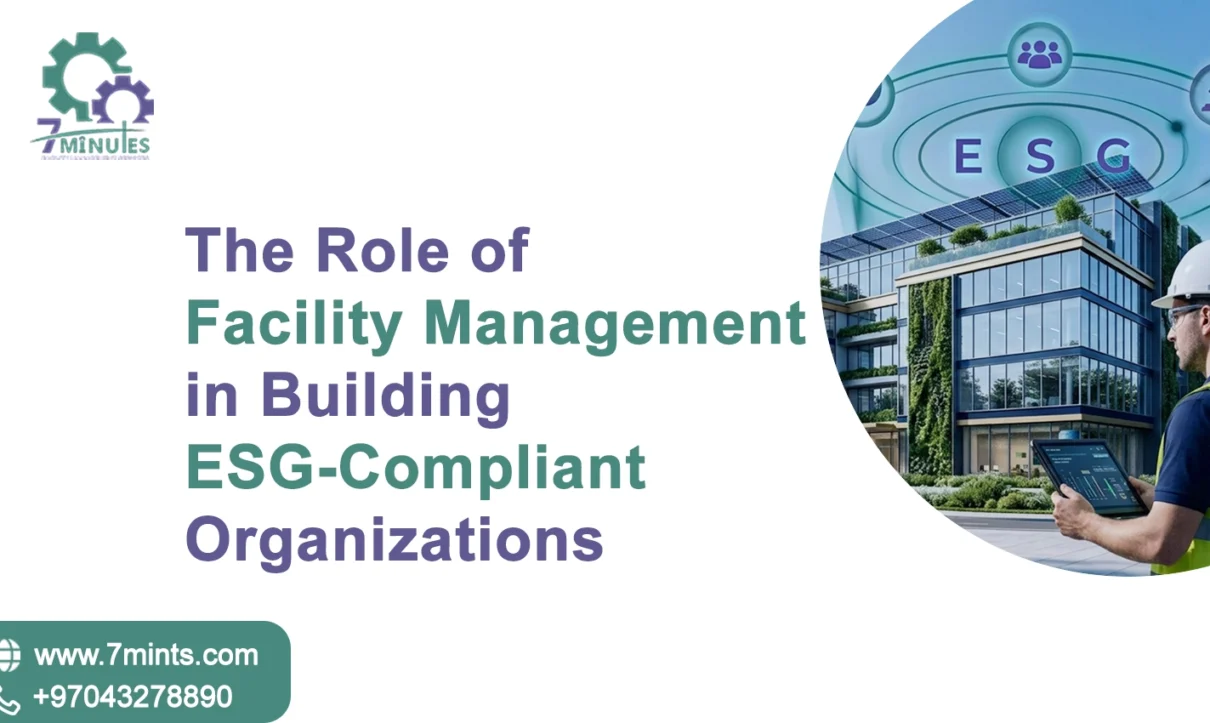
In today’s business landscape, Environmental, Social, and Governance (ESG) has turned into a strategic priority, not only a compliance thing. Investors, customers, employees, and government authorities are now looking at organizations based on how they handle sustainability, ethical governance, and social duty. Businesses that really lean into ESG tend to sharpen their brand image, while also seeing better operational efficiency and longer-term profitability.
Facility management (FM) has a major part in this because it helps companies actually reach their ESG targets. And modern FM, honestly, goes way past “keeping the building running”; it includes designing sustainable workplaces with smart operations, reliable safety levels, and people-first spaces that match up with broader environmental expectations. For example, when organizations reduce energy use, improve employee well-being, and stay aligned with regulations, facility management becomes the quiet base layer for an ESG-driven model. It’s like the everyday engine behind the big statements.
Understanding ESG and Why It Matters
ESG stands for Environmental, Social, and Governance, which is basically a framework people use to understand how an organization manages its environmental effects, treats its employees and communities, and keeps business conduct ethical. In a lot of cases, firms that show strong ESG results may see better investor confidence, more customer comfort, and even improved financial outcomes.
Across the world, including the UAE, governments are rolling out sustainability programs and rules that push organizations to cut carbon output, conserve resources, and step up workplace safety. So, naturally, businesses are putting more money into ESG-oriented operational approaches, and facility management is turning into one of the more practical ways to hit those targets, fast.
What is Facility Management?
Facility management is the professional handling of buildings, infrastructure, people, and day-to-day workplace services. It helps facilities run efficiently while also backing the organization’s main business activities.
Facility management services typically include:
- HVAC maintenance
- Electrical systems management
- Plumbing services
- MEP maintenance
- Cleaning services
- Security management
- Waste management
- Building automation
- Energy management
- Fire safety systems
- Space planning
- Asset management
These services directly influence environmental sustainability, employee productivity, operational costs, and regulatory compliance.
Check out our latest blog post on Achieving ESG Goals Through Effective Facility Management in the UAE
Why Facility Management is Essential for ESG Compliance
Organizations really struggle to hit ESG goals if building operations are not run properly at all. Commercial buildings eat a lot of electricity, water, and other natural resources, and at the same time, they push out waste and carbon emissions. Facility managers basically steer these daily routines, so they end up being key players in the organization’s sustainability path.
With a solid facility management approach, companies can dial down environmental harm, enhance the day-to-day workplace experience, keep operations more transparent and aligned, and also satisfy government requirements. That all stacks up into stronger ESG results, even if it doesn’t look like “sustainability” on the surface.
1. Energy Efficiency
Energy consumption is one of the largest operational expenses for commercial buildings. Facility managers tend to roll out energy-efficient lighting, HVAC optimization, smart building technologies, and preventive maintenance—so electricity usage drops in a steady way.
Regular equipment servicing keeps machines running with better efficiency, and it prevents that annoying, unnecessary power draw. Upgrading to LED lighting, installing occupancy sensors, and monitoring energy usage via IoT platforms also move the needle for efficiency while cutting carbon emissions.
Those efforts lower utility bills, and they help organizations reach sustainability targets without messing up workplace comfort, or so it often feels in practice.
2. Sustainable Waste Management
Waste management has become a big ESG indicator, not just a side note. Facility management teams design waste segregation systems, run recycling programs, and use responsible disposal methods to minimize landfill volume.
Lots of organizations are swapping single-use plastics for more sustainable alternatives and pushing paperless operations. Facility managers also coordinate with recycling partners to make sure waste gets processed in a responsible manner.
When waste management is done well, it reduces environmental pollution while still feeding circular economy initiatives in the long run.
3. Water Conservation
Water scarcity is turning into a worldwide worry, and water conservation is becoming a key ESG goal. Facility managers often install water-efficient fixtures, keep an eye on usage patterns, detect even small leaks, and then sort of tune irrigation schedules so everything behaves better.
Smart water monitoring tools let organizations spot odd water usage, then act faster with corrective steps. Also, rainwater harvesting and greywater recycling setups add more weight to sustainability efforts. When water use goes down, operating costs usually drop too, while the environment gets a real chance to recover, or at least not get strained so fast.
4. Green Building Maintenance
Lots of organizations chase green building credentials like LEED or WELL, just to show their sustainability commitment. Facility management helps keep buildings aligned with those requirements, mostly through ongoing, efficient maintenance. That can include indoor air quality upkeep, energy performance checks, waste management routines, and these sustainable operational habits that don’t look dramatic but matter. When maintenance is handled properly, the long-term worth of green buildings stays protected, and environmental performance tends to stay higher.
5. Social Responsibility: Creating Better Workplaces
The social part of ESG is really about employee well-being, workplace safety, diversity, and community participation. Facility management supports the day-to-day building vibe and can make workspaces healthier as well as more productive.
6. Workplace Health and Safety
Safe workplaces are critical for employee satisfaction and for keeping business continuity on track. Facility managers maintain fire protection systems, ensure emergency exits are clear, oversee electrical safety, manage HVAC performance, and keep sanitation standards up to speed.
Regular inspections, preventive maintenance, and compliance audits all help reduce workplace incidents. They also help ensure employees work in a secure environment, not just “okay” but reliably safe. Healthy buildings, overall, tend to lift morale while also cutting down absenteeism.
7. Indoor Air Quality
Indoor air quality—that’s kind of a big deal, because poor conditions can hit employee health, productivity, and the general workplace mood. Facility managers regularly do the maintenance on HVAC systems, swap out air filters, and keep an eye on ventilation performance, like really watch it over time.
When indoor spaces are cleaner, people tend to get fewer respiratory illnesses, and the workplace feels healthier overall. Modern air quality monitoring systems support organizations in keeping indoor conditions comfortable and safe, year-round. And, honestly, improved indoor environments contribute a lot to employee well-being, not just in theory but day to day.
8. Employee Experience
Today’s workforce expects places that feel comfortable, flexible, and kind of tech-forward. Facility management helps with employee satisfaction by keeping work areas clean, making infrastructure more reliable, maintaining comfortable temperatures, and offering responsive maintenance services. Smart office technologies, plus efficient space utilization, and those comfortable settings, help teams collaborate more easily, and productivity goes up. A good workplace experience also helps organizations pull in and keep talented professionals, which, well, everybody wants.
9. Accessibility and Inclusivity
ESG encourages organizations to build facilities that are accessible to everyone. Facility managers make sure G.S. meet accessibility requirements by adding ramps, elevators, accessible washrooms, clear signage, and barrier-free pathways. Inclusive facilities show that an organization is serious about diversity and about equal opportunities, not only on paper.
Smart Technology Enhancing ESG Performance
Technology is transforming facility management through automation and real-time monitoring.
Modern smart buildings use the following:
- IoT sensors
- Building Management Systems (BMS)
- AI-powered predictive maintenance
- Smart energy monitoring
- Occupancy analytics
- Automated lighting controls
- Remote equipment monitoring
These technologies help organizations reduce energy waste, improve maintenance efficiency, optimize resource utilization, and collect ESG performance data for sustainability reporting.
Digital facility management has become an essential component of modern ESG strategies.
Benefits of ESG-Focused Facility Management
| Benefit | Business Impact |
| Lower Energy Costs | Reduced operational expenses through energy efficiency |
| Improved Sustainability | Lower carbon emissions and resource conservation |
| Better Employee Well-being | Healthier, safer, and more productive workplaces |
| Regulatory Compliance | Reduced legal and operational risks |
| Enhanced Brand Reputation | Increased trust among customers and investors |
| Higher Property Value | Well-maintained sustainable buildings retain greater value |
| Operational Efficiency | Improved asset performance and reduced downtime |
| Investor Confidence | Strong ESG performance attracts responsible investors |
These benefits demonstrate why facility management is becoming a strategic investment rather than just an operational function.
Conclusion
Facility management kinda used to be mostly about keeping the physical stuff working, but now it’s become a more strategic driver of ESG results. When organisations push better energy efficiency, cut down on waste, conserve resources, improve workplace safety, and stay on top of regulatory requirements, they end up supporting operations that are more sustainable, resilient, and future-ready too.
And for businesses, if they really fold ESG principles into their facility management plan, they can often reduce operational expenses, boost their reputation, increase employee satisfaction, and still match these changing sustainability expectations. Since environmental responsibility and ethical governance are becoming the core of business growth, facility management will remain an essential role in creating ESG-aligned organisations that thrive over time.


1 Comment
Comments are closed.