

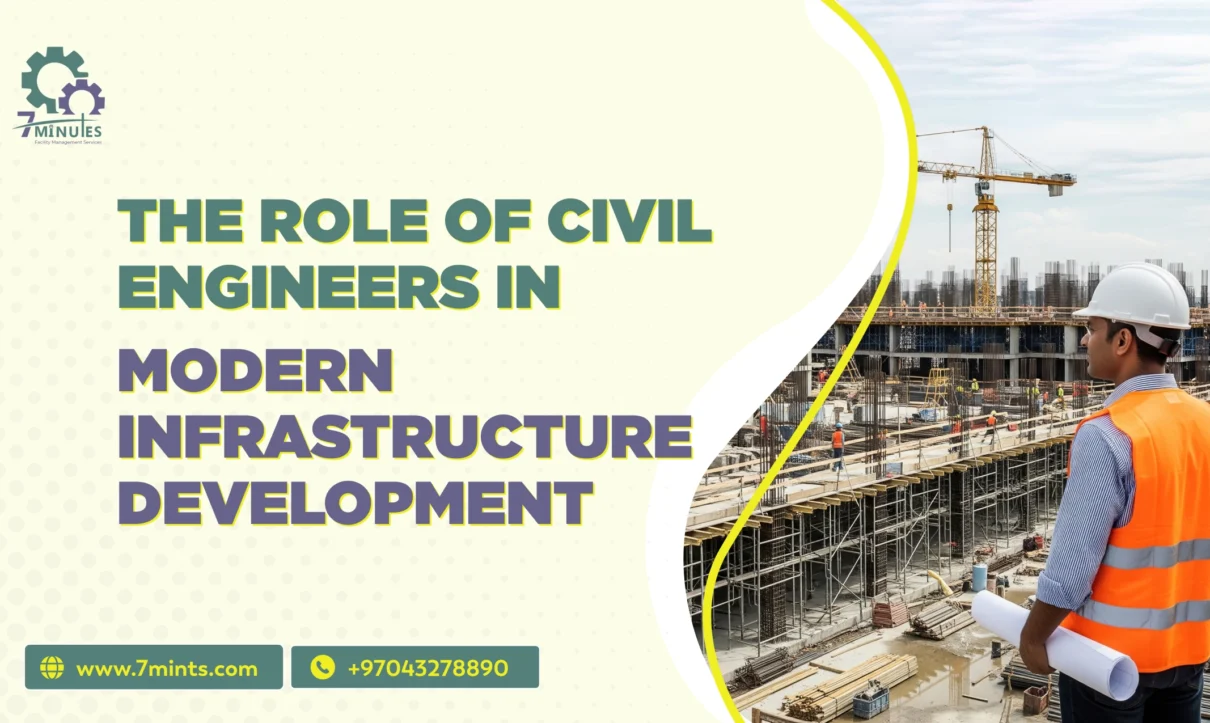
Civil engineers shape what gets built and how well it holds up later. If you look at two projects side by side, you often see a clear gap. One team meets deadlines and stays within the budget. The other runs into delays due to safety issues or problems in the design. That difference usually comes down to the civil work done before and during construction.
In the UAE, many groups feel the pressure at once. Property owners want projects to be safe and legal. Developers want approvals to move fast. Facility managers want systems that do not fail after handover. When the engineering misses key checks, the results can be costly. Fixing work late can drain budgets. Regulators may impose fines. In bad cases, the structure itself can be at risk.
Civil engineers plan and shape the built world. Their job covers the systems people rely on every day. Think roads, bridges, water supply, buildings, and travel links. In the UAE, they work from public plans. Dubai 2040 is one such plan. The engineers translate those goals into drawings that follow local rules. They also design for steady use over many years. This can prevent nasty cost changes later. It also helps avoid big structural faults.
What is the role of Civil Engineers in Infrastructure work?
Civil engineers are the link between a plan on paper and a structure in the real world. They take an idea, whether from a government plan or a private proposal, and guide it until it can stand, operate, and last. Their job usually runs across four parts. First is planning and feasibility. Next is design. Then comes construction oversight. After that, there is long-term maintenance. Through this work, they affect many city assets. Highways and airports rely on them. Drainage systems rely on them too. So do towers and other high-rise projects.
In the UAE, the need is even stronger. Big government programmes such as UAE Vision 2030 and the Dubai 2040 Urban Master Plan only work when engineers apply them in the field.
Check out our latest blog post on Top 5 Advantages of Preventative A/C Maintenance
Why Civil Engineers Matter to the UAE’s Growth
Civil engineering is a big deal in the UAE. It affects everyday life, even when people do not see it. In 2025, the construction sector was a key driver for the economy. It climbed 11.1 percent compared with the year before. Construction also made up 12.9 percent of non-oil GDP. These figures came from the Federal Competitiveness and Statistics Centre.
Strong growth like this does not come from tools and materials alone. It needs engineers who can form clear plans and manage delivery. It also needs teams who can keep large projects on time. Safety must stay in the foreground from start to finish.
When a project slips, the effects spread. It is not just the client or the contractor. Delays can push back other business activity. Trade can take a hit. Tourism can slow if areas look incomplete or are disrupted. Property values can change when trust drops. Public views may shift in a negative direction too. Civil engineers lower that risk by steering work from early planning to final handover.
Key Responsibilities of Civil Engineers in Infrastructure Projects
1. Look at whether the job can work. Civil Engineers review the site and what is already there test the soil data. They also scan for environmental impact.
2. Back up the structural design. They study how a bridge, road, or building will behave on site. check performance for local conditions. plan for stress caused by hot weather. consider the chance of movement too. This can include earthquake risk.
3. Handle rule checks. The design has to follow UAE building rules. It must also fit the needs set by Dubai Municipality and Trakhees. They align the drawings with common safety methods.
4. Supervise the site work. They follow how contractors carry out the plan. The goal stays simple: the final work should match the approved drawings. It must also meet the set quality targets.
Tools and Technologies Civil Engineers Use
Modern civil engineering in the UAE runs on digital precision, not just blueprints. Here are the tools driving faster, safer project delivery:
| Tool / Technology | Primary Use | Benefit |
| Building Information Modelling (BIM) | 3D coordination of structural, MEP, and architectural design | Reduces design clashes and rework before construction starts |
| Geotechnical survey software | Soil and foundation analysis | Prevents structural settlement and foundation failure |
| Structural analysis software (e.g., ETABS, STAAD) | Load and stress calculations | Ensures buildings withstand wind, heat, and seismic activity |
| Drone and 3D laser scanning | Site surveying and progress tracking | Speeds up site inspections and reduces manual survey error |
| Project management platforms | Scheduling, budgeting, contractor coordination | Keeps mega-projects on time and within budget |
Mini Case Study: the engineering work at Masdar City, Abu Dhabi
Masdar City shows what civil engineers can do when the goal is clear. The city has to stay comfortable in a desert climate. At the same time, it should not depend much on burning fossil fuels for cooling and on heavy water use. The design team used narrow shaded lanes to cut down on sun exposure. They also planned solar and other renewable power sources across the area. For water, they chose systems that save water across homes and shared spaces. Many people point to these choices as a strong example of low-carbon planning. The key idea is simple. Early engineering picks can shape how well a project performs for years.
Also Read: Civil Engineers Help in Disaster Management
Why solid civil engineering helps UAE infrastructure
Good civil work affects more than one part of a project. It can show up during planning, build time, and later operations.
Economic gains: dependable roads, ports, and airports help trade and tourism
Public safety: design choices that handle heat and seismic risk can lower failure risk
Lower total cost over time: better materials and efficient systems can reduce energy use and upkeep
Clear compliance: meeting UAE code rules helps avoid penalties and delays
Quick handover: BIM and other digital tools can reduce the time between design and delivery
Conclusion
Civil engineers help the UAE keep its skylines, roads, and utilities working in a safe and steady way. This happens year after year, not by luck, but through careful work. If you are starting a new site, reviewing something already in place, or running a facility that relies on solid civil engineering basics, it helps to get the plan right early. When the approach is set from the start, you can avoid expensive fixes later on.
Want solid civil engineering help for your UAE job? Reach out to 7mints. Talk with our team about planning, meeting the rules, and getting support through delivery for your next infrastructure or building project.
Frequently Asked Questions
Q1. What does a civil engineer do in infrastructure development?
A civil engineer designs and oversees physical projects. This can include roads, bridges, buildings, and water systems. They also make sure the work follows safety codes, fits the budget, and meets sustainability needs.
Q2. Why do civil engineers matter in the UAE construction scene?
They turn national plans such as UAE Vision 2030 and the Dubai 2040 Urban Master Plan into designs that are safe, legal, and ready to build. This helps a construction industry that makes up about 13% of the UAE’s non-oil GDP.
Q3. Are civil engineers only linked to new builds?
Not at all. They also check existing infrastructure and keep it in good shape. They carry out upgrades for older roads, drainage systems, and buildings, especially when daily use grows or rules change.
Q4. What do civil engineers use in current projects?
A lot depends on the site, but teams often rely on BIM for design, software for structural checks, geotechnical survey tools, and drones for site mapping. They also use project management systems to track time and costs.
Q5. How do civil engineers help with sustainability in the UAE?
They choose solar and other renewable options, water-saving systems, and materials that lower carbon impact. They also plan buildings so they use less energy over the years. That supports the country’s decarbonisation push.
Q6. How long does a civil project usually take?
It varies a lot. A small extension might finish in a few months. A large job, like a metro link, can take many years. Still, most work follows the same basic steps: feasibility, design, approval, construction, then handover.







1 Comment
Comments are closed.