

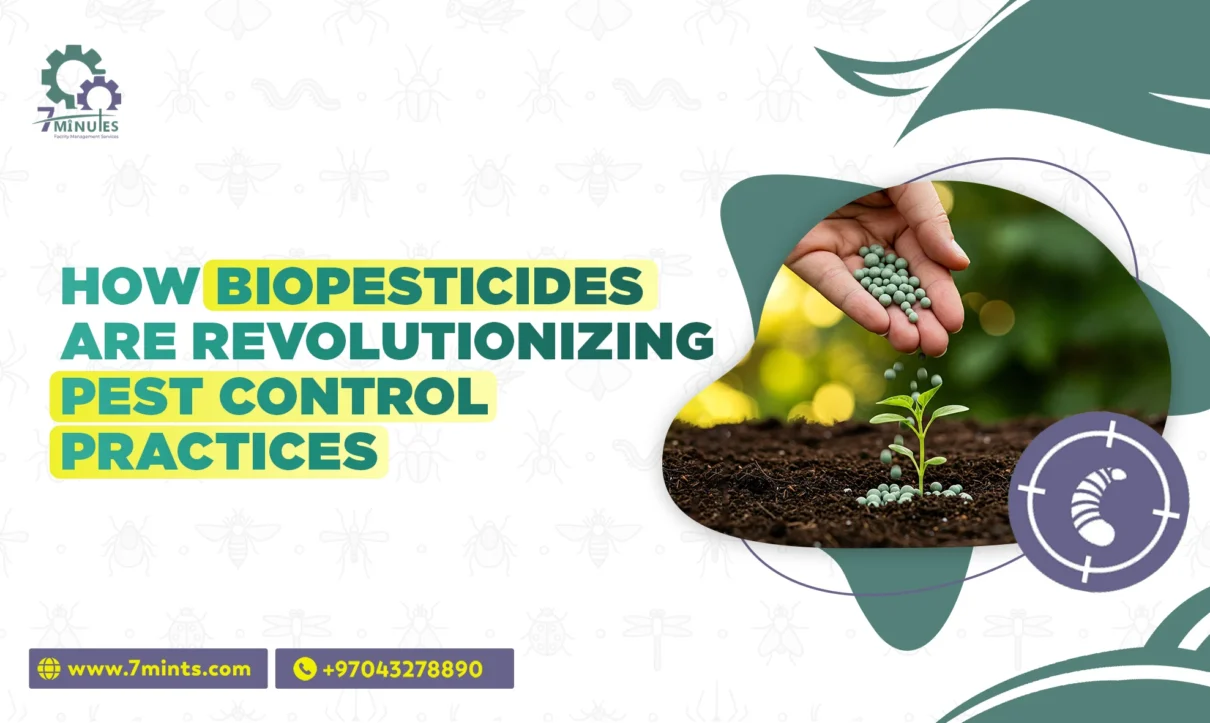
Pest management is an important part of agriculture, landscaping, and property maintenance. Traditional chemical pesticides have been widely used to control insects, fungi, weeds, and other pests. However, increasing environmental concerns and the need for safer pest management approaches have encouraged farmers and businesses to explore alternative solutions.
Biopesticides are becoming an important part of this transition. Derived from natural sources such as microorganisms, plants, and certain naturally occurring substances, they offer targeted approaches to managing pests. The growing use of biopesticides for pest control is helping reshape modern agricultural practices by supporting more environmentally conscious pest management.
In regions such as the UAE, where sustainable agriculture and efficient resource management are increasingly important, biopesticides offer opportunities to improve pest control strategies while reducing reliance on conventional chemical treatments.
1. What Are Biopesticides?
Biopesticides are pest management products derived from natural materials, including bacteria, fungi, viruses, plants, and certain naturally occurring substances. They are used to manage different types of pests while offering alternatives to some conventional synthetic pesticides.
Unlike many traditional chemical treatments, certain biopesticides target specific pest species or biological processes. Their effectiveness depends on the active ingredient, pest type, environmental conditions, and application method.
The increasing interest in biopesticides in agriculture comes from their potential role in reducing unnecessary chemical pesticide use and supporting more sustainable farming systems.
2. How Biopesticides Are Revolutionizing Pest Control
Understanding how biopesticides are revolutionizing pest control requires looking at the changing priorities of farmers, agricultural businesses, and pest management professionals.
Modern pest control is moving beyond simply eliminating pests. It increasingly focuses on protecting crops, maintaining environmental balance, and managing pest populations over time.
Biopesticides contribute to this approach through:
- Targeted pest management that can reduce impacts on non-target organisms.
- Alternative active ingredients for managing certain agricultural pests.
- Compatibility with selected integrated pest management programmes.
- Opportunities to reduce dependence on conventional chemical pesticides.
- Support for environmentally conscious agricultural practices.
However, biopesticides are not automatically harmless or effective in every situation. Correct product selection, application timing, and label compliance remain essential.
3. Chemical Pesticides vs Biopesticides
The discussion around chemical pesticides vs biopesticides is important for understanding modern pest management options.
Conventional chemical pesticides often provide rapid and effective pest control when used correctly. However, inappropriate or excessive use can contribute to pesticide resistance, environmental contamination, and risks to beneficial organisms.
Biopesticides offer different characteristics depending on their formulation and active ingredient.
| Comparison | Chemical Pesticides | Biopesticides |
|---|---|---|
| Source | Often synthetic chemical compounds | Biological organisms or naturally derived substances |
| Target | May affect a broad range of organisms or specific pests | Often designed for particular pests or biological processes |
| Environmental impact | Depends on the active ingredient and application | Can offer reduced environmental impact in suitable applications |
| Pest resistance | Repeated use can contribute to resistance | Different modes of action may support resistance management |
| Application | Depends on product formulation | Requires appropriate conditions and application methods |
The choice between these options should depend on the pest problem, crop type, product registration, effectiveness, and environmental considerations.
4. Different Types of Biopesticides
There are several categories of biopesticides, each designed to manage particular pest problems.
1. Microbial Biopesticides
Microbial biopesticides contain microorganisms such as bacteria, fungi, or viruses that help control pests. For example, certain strains of Bacillus thuringiensis (Bt) produce proteins that affect specific insect larvae.
Other microbial products use beneficial fungi or bacteria to manage selected insect pests and plant diseases.
2. Plant-Based Biopesticides
Plant-based biopesticides are derived from botanical materials that contain naturally occurring compounds with pest management properties.
Neem-based products are a familiar example. Certain botanical extracts can affect insect feeding, growth, or reproduction, depending on their formulation and target pest.
3. Bio-Based Pest Control Products
Other bio-based pest control products include naturally derived substances and biochemical compounds that influence pest behaviour or biological processes.
These products may include insect pheromones, attractants, repellents, and other substances used in targeted pest management programmes.
5. Major Benefits of Biopesticides
The growing adoption of biopesticides is linked to several potential advantages. Understanding the benefits of biopesticides helps farmers and pest management professionals select suitable products for specific situations.
- Targeted action: Certain products are designed to affect particular pests, helping reduce impacts on non-target organisms.
- Reduced chemical dependence: They can provide alternatives to selected conventional pesticide applications.
- Integrated pest management compatibility: Many biopesticides can be incorporated into broader pest management programmes.
- Environmental considerations: Some products break down relatively quickly under suitable conditions, although this varies by formulation.
- Resistance management: Using products with different modes of action can support resistance management strategies.
- Crop protection: Appropriate products can help manage specific insect pests and plant diseases.
It is important to evaluate each product individually. Natural origin alone does not guarantee safety, effectiveness, or suitability for every application.
6. Biopesticides and Eco-Friendly Pest Control Methods
The demand for eco-friendly pest control methods is increasing as agricultural businesses look for ways to protect crops while considering environmental impacts.
Biopesticides can support this transition by providing additional tools for managing insects, weeds, and plant diseases. When selected appropriately, they may help reduce the use of certain conventional pesticides.
These natural pest control solutions are particularly valuable when combined with monitoring, crop rotation, sanitation, physical barriers, and other preventive practices.
For example, farmers can monitor pest populations and apply a suitable biopesticide only when pest levels reach an established treatment threshold. This targeted approach can reduce unnecessary applications and improve resource efficiency.
7. The Role of Integrated Pest Management
Integrated pest management solutions combine different pest control techniques to manage pest populations effectively and sustainably.
Rather than relying on a single treatment, integrated pest management (IPM) uses a combination of:
- Regular pest monitoring and identification.
- Preventive measures such as crop rotation and field sanitation.
- Biological control using beneficial organisms.
- Physical and mechanical pest management methods.
- Carefully selected pesticide applications when necessary.
Biopesticides can become an important part of this approach. Their use should be based on pest identification, crop requirements, product instructions, and monitoring results.
This balanced strategy supports sustainable pest management by focusing on long-term pest control rather than repeated reactive treatments.
8. Why Biopesticides Matter for Sustainable Agriculture in UAE
Agriculture in the UAE faces specific challenges, including high temperatures, water scarcity, soil conditions, and pressure from different agricultural pests. These factors make efficient crop protection an important consideration.
The adoption of biopesticide solutions in UAE can provide farmers with additional options for managing selected agricultural pests and diseases.
Professional agricultural pest control UAE strategies increasingly benefit from approaches that consider environmental conditions, crop types, and responsible pesticide use.
For example, greenhouse farming may require targeted treatments to manage insects while protecting beneficial organisms used for biological control. Selecting suitable products and applying them under recommended conditions can improve the effectiveness of pest management programmes.
These approaches also support broader sustainable agriculture practices by encouraging efficient resource use and responsible crop protection.
9. Choosing Environmentally Friendly Pesticides
Selecting environmentally friendly pesticides requires more than checking whether a product is labelled natural or biological.
Farmers and agricultural professionals should consider:
- Whether the product is registered and approved for the intended use.
- The target pest and crop compatibility.
- Application instructions and recommended dosage.
- Environmental conditions that affect product performance.
- Potential impacts on beneficial insects and other non-target organisms.
- Storage, handling, and safety requirements.
Working with experienced agricultural specialists can help ensure that products are selected and applied correctly.
10. The Future of Biological Pest Control in UAE
The future of biological pest control UAE will depend on greater awareness, product innovation, farmer education, and access to suitable pest management technologies.
Research into microbial formulations, botanical extracts, biological control agents, and precision application techniques is creating new opportunities for agricultural pest management.
As interest in sustainable farming grows, sustainable pest control services in UAE can help businesses and agricultural operators develop more responsible pest management strategies.
The focus should be on combining effective biological products with monitoring, preventive measures, and scientifically supported application practices.
Conclusion
Biopesticides are changing how farmers and pest management professionals approach crop protection. From microbial formulations to plant-based products, these solutions offer additional tools for managing pests while supporting more sustainable agricultural practices.
Although they are not a complete replacement for conventional pesticides, biopesticides can play an important role in integrated pest management when selected and applied correctly.
By adopting suitable biological control methods, investing in monitoring, and following responsible application practices, agricultural businesses in the UAE can move towards more efficient and environmentally conscious pest management.
Frequently Asked Questions
Q1. What are biopesticides used for?
Biopesticides are used to manage agricultural pests, including certain insects, weeds, and plant diseases. Their applications depend on the active ingredient and target pest.
Q2. Are biopesticides better than chemical pesticides?
Biopesticides can offer targeted and environmentally considerate alternatives for certain pest problems. However, effectiveness depends on the product, pest, crop, and application conditions. Both types of pesticides should be used responsibly.
Q3. What are the main types of biopesticides?
The main categories include microbial biopesticides, plant-incorporated protectants, and biochemical biopesticides such as certain botanical extracts, pheromones, and other naturally derived substances.
Q4. Can biopesticides be used in organic farming?
Some biopesticides may be approved for use in certified organic farming, but approval depends on the product, active ingredient, certification standards, and applicable regulations.
Q5. How do biopesticides support sustainable agriculture?
They can provide additional pest management options, support integrated pest management, and help reduce reliance on selected conventional pesticides when used appropriately.
Q6. Are biopesticides suitable for agriculture in the UAE?
Certain biopesticides can be suitable for UAE agricultural conditions. Farmers should select registered products based on crop type, target pest, temperature, humidity, and manufacturer recommendations.




1 Comment
Comments are closed.