

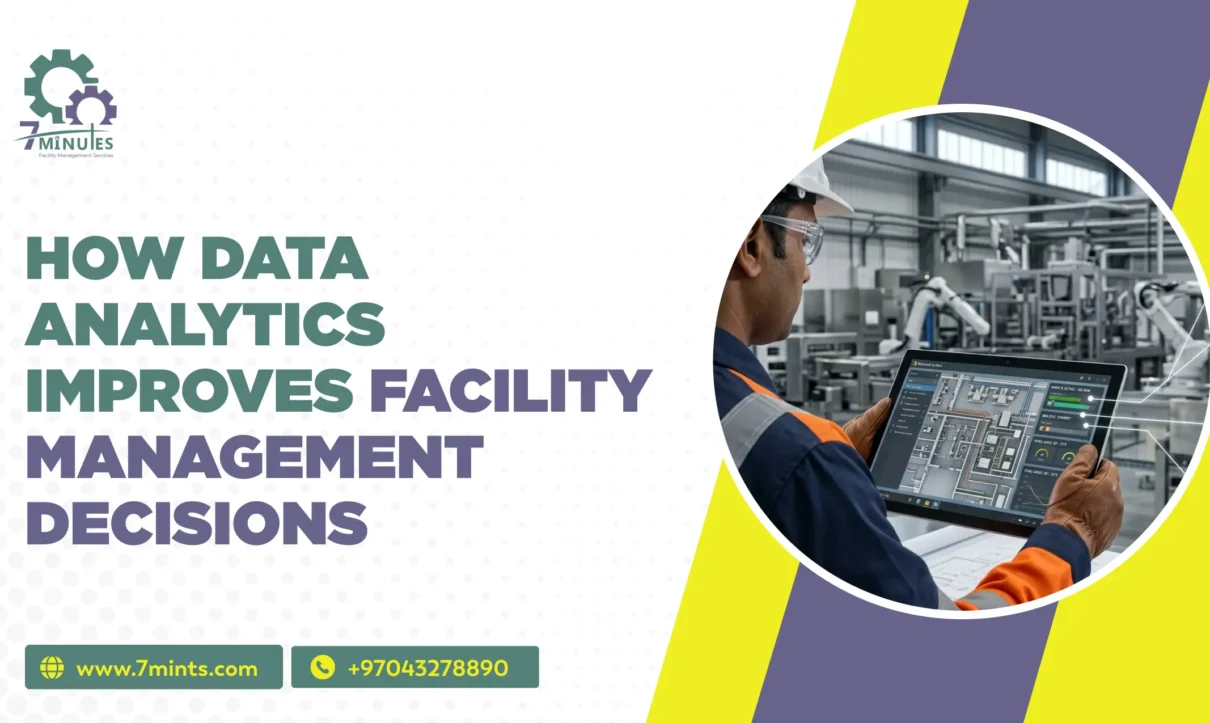
Facility management has evolved from a reactive function into a strategic business operation. Modern facilities generate large amounts of data from building management systems, IoT sensors, maintenance records, energy meters, and workplace applications. By analyzing this information, organizations can make faster, more accurate decisions that improve efficiency, reduce operational costs, and enhance occupant satisfaction.
Data analytics in facility management enables managers to move beyond guesswork and rely on real-time insights when planning maintenance, allocating resources, managing energy consumption, and improving overall building performance.
What Is Data Analytics in Facility Management?
Data analytics in facility management means gathering, examining, and understanding information from different building systems and ongoing operations. The sources can include HVAC systems, lighting systems, security setups, occupancy detectors, maintenance logs, energy meters, and other facility-related inputs.
The aim is to discover habits, movements over time, and openings for improvement. Instead of using assumptions or “just a guess,” managers can lean on evidence-based insights. That way, organizations can raise operational results, make assets last longer, and support safer plus more comfortable spaces for people inside the building.
Why Data Analytics Matters in Facility Management
Every facility produces valuable operational data. When this data is collected and analyzed properly, it reveals patterns, trends, and potential issues that may otherwise go unnoticed.
Data analytics helps facility managers:
- Identify maintenance problems before they become critical
- Optimize energy usage across buildings
- Improve space utilization
- Reduce equipment downtime
- Allocate maintenance resources more effectively
- Support long-term capital planning
These insights allow organizations to make proactive decisions rather than reacting to emergencies.
Key Areas Where Data Analytics Improves Decisions
1. Enhancing Preventive and Predictive Maintenance
One of the most meaningful benefits of data analytics is how it can improve maintenance strategies, not in some abstract way but in a real, practical way. Traditional maintenance is usually based on fixed timetables, or it just waits until equipment fails. So then you end up paying for maintenance you didn’t really need, plus sometimes you get unexpected downtime. And that’s the part nobody really wants.
With data analytics, facility managers can monitor equipment performance in real time and catch early signals that something might go wrong. Predictive maintenance uses both records and current data streams to forecast when a machine, or even a full system, may need servicing. That way, organizations can handle issues before they turn into full-blown problems. The result is less downtime, lower repair costs, and fewer disruptions to everyday operations.
2. Improving Energy Management and Sustainability
Energy consumption is often one of the largest operational expenses for many facilities. Without proper oversight, buildings can waste energy—because of inefficient equipment, awkward scheduling, or just plain unnecessary usage that nobody notices.
Data analytics helps facility managers track how much energy is being used, then spot places that look a bit off or just inefficient. When organizations look at data from energy meters, smart sensors, and building management systems, they can fine-tune energy usage and cut down on utility costs. These same findings also back sustainability targets, lowering carbon emissions, and making it easier for companies to meet environmental requirements, ESG commitments, and other related mandates.
3. Optimizing space utilization
A lot of organizations still end up with office areas, conference rooms, and shared zones that are either not fully used or, frankly, used too much. If spaces sit idle, resources go to waste, and if areas are packed, employee productivity and day-to-day comfort can take a hit.
Data analytics offers clearer visibility into how those spaces are actually operating. Occupancy sensors and workplace analytics tools can capture utilization patterns across the day and into the evening. Facility managers can then use this information to rework layouts, shift resources more wisely, and make sharper calls about what space needs to look like next. The result tends to be a smoother workplace experience while getting more value from every available square foot.
4. Supporting better budget planning
Good budgeting matters a lot in facility management. Yet forecasting future maintenance costs, energy spending, and capital investments is tough when the data is incomplete, slow, or just not trustworthy.
Facility managers use data analytics to study past spending patterns and predict future costs with greater accuracy. When teams track exactly where resources go and identify the factors driving costs upward, they build budgets grounded in reality. Their proactive planning reduces the risk of surprise charges and ensures they reserve enough money for upkeep, upgrades, and day‑to‑day operational improvements.
5. Enhancing asset performance and lifecycle management
Facilities hold many assets, like HVAC units, elevators, generators, lighting systems, and security devices. Being able to steer those assets well is essential because it keeps operations running smoothly and also helps keep replacement costs in check.
With data analytics, managers gain clearer visibility into asset performance across time. With that in mind, they can decide whether a repair, a modernization, or even a replacement is the right move. Those lifecycle choices are more informed, which in turn helps stretch the usable life of assets and improves the return on investment.
6. Improving workplace safety and risk management
Safety is still the main concern inside every facility. Facility managers have to spot possible hazards, follow relevant regulations, and keep the environment safe for employees, visitors, and anyone occupying the space.
Data analytics can help spot patterns that may hint at safety risks. Like, checking maintenance records, incident reports, and sensor data can reveal recurring issues that really do need attention. Then, facility managers can use those insights to set up preventive actions, reduce accidents, and also strengthen risk management strategies. This kind of proactive stance helps build a safer, more secure workplace.
7. Enhancing Occupant Experience
The comfort and satisfaction of building occupants affect productivity, employee retention, and customer experiences right away. If indoor air quality is off, or temperatures feel a bit wrong, and facility services are weak, it can weaken occupant well-being.
With data analytics, facility managers can monitor things like temperature, humidity, air quality, lighting, and occupancy levels. By continuously examining that information, organizations can make small refinements that improve comfort and shape healthier indoor environments. When the occupant experience gets better, satisfaction usually rises, and organizational performance often follows.
8. Enabling Real-Time Decision-Making
Facility managers often need to respond fast to shifting conditions and operational problems. If decisions are delayed, costs tend to climb, service disruptions can show up, and overall efficiency can drop, kind of quietly.
Data analytics gives real-time awareness of facility operations. Dashboards and automated reporting tools bring this together. Managers can instantly pull the critical details on building performance, maintenance status, energy use, and occupancy trends. So decisions happen sooner and with more certainty, meaning organizations can act proactively instead of just reacting.
Conclusion
Data analytics is kind of reshaping facility management because it helps enable smarter and quicker, more reasoned decisions. You see it in predictive maintenance, in energy management, and even in workplace safety, plus how occupants feel, with data-driven glimpses that allow organizations to refine basically every part of daily facility operations.
Also, as technology keeps evolving, the place of data analytics within facility management will keep getting even more important. Contact us as The groups that use data well can boost operational results, lower spending, stretch asset lifespan, and support safer, more sustainable buildings. Putting money into data analytics is not only a “nice to have” thing anymore, but it is also a strategic requirement for what’s coming next in facility management.





1 Comment
Comments are closed.