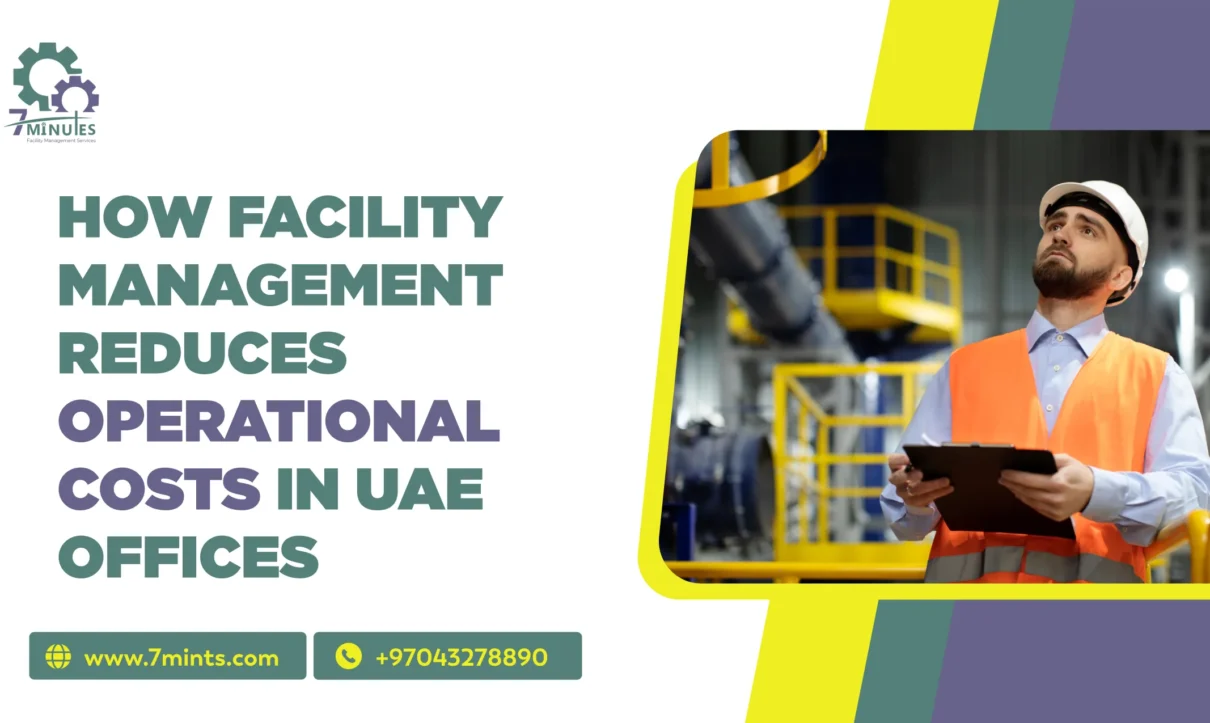
The business climate of the United Arab Emirates mandates that companies must find equilibrium between their operational costs and their requirements for operational success and production capabilities. The office space expenses in Dubai and Abu Dhabi, which include rental fees and maintenance costs, compel organizations to make cost reduction their main business goal. Facility management serves as a crucial organizational function because it enables complete control over physical resources and operational services. The solution helps businesses to decrease waste products while they improve their operational processes, which results in lower total operational costs.
1. Energy Efficiency and Utility Savings
The implementation of energy-efficient systems through LED lighting and smart HVAC technologies enables businesses to achieve energy consumption reductions according to facility management. The system functions at lower power needs while delivering matching performance standards, which results in reduced electricity costs. The UAE requires its residents to use air conditioning systems throughout the entire year, which makes energy consumption management essential for the country. Effective planning and monitoring processes need to exist for organizations that want to stop energy waste from occurring during non-business hours and in areas that do not require any operations.
Regular equipment maintenance creates the necessary conditions that maintain optimal operational efficiency without creating excessive energy costs for various cooling systems and electrical systems. The operational expenses of organizations increase because their systems consume more electricity during times of faults and when they receive insufficient system upkeep. Facility managers use scheduled maintenance programs to detect and resolve performance problems that lead to operational problems.
2. Preventive Maintenance Reduces Repair Costs
The organization uses preventive maintenance to protect equipment and systems from unexpected downtime through scheduled maintenance activities, which include equipment inspections and service work. Facility management teams create maintenance schedules to inspect critical systems like elevators, plumbing, and electrical units before problems arise. The method enables organizations to prevent equipment failures, which would lead to operational interruptions. The system helps to identify minor issues at their first detection point, which enables their resolution before they progress into expensive, complex issues.
The nature of emergency repairs makes them expensive because they need immediate support, which results in higher operational expenses. Emergency repairs create work stoppages that severely decrease both production capacity and sales income. Companies achieve continuous operational efficiency through their commitment to preventive maintenance programs. The solution provides both financial benefits and extended use of company resources.
Check out our latest blog post on The Role of Facility Management in the UAE’s Hospitality Industry Growth
3. Optimized Space Utilization
Organizations use facility management to assess their office space requirements through studies of actual space usage patterns. The organizations waste their office space budget when they choose design solutions that result in too much space for their actual needs. Facility managers assess workspace usage and suggest improvements such as flexible seating arrangements or shared workstations. The method guarantees that every square foot of space will be used to its maximum potential.
The space optimization process establishes operational efficiency while decreasing both rental expenses and operational costs in cities where rental prices reach their peak, such as Dubai and Abu Dhabi. Office space requirements for businesses should match their actual needs because excessive workspace leads to productivity losses. Organizations achieve better results through hot-desking and co-working concepts, which provide their employees with alternative workspace solutions. Organizations need less space to operate their business because they can accomplish more work at decreased expenses.
4. Outsourcing Non-Core Services
Facility management services require outsourced service providers to deliver their cleaning, security, and maintenance work through dedicated companies. The process enables organizations to eliminate the requirement for in-house workers because they need to train and pay for workers who will perform these duties. Outsourcing enables organizations to obtain specialized personnel who possess expertise in executing these functions. The process delivers enhanced service quality while decreasing expenses.
Outsourcing enables companies to concentrate on their main business functions while they delegate their operational responsibilities to their external partners. The company experiences decreased operational costs because service providers bring their own equipment and technology solutions. The system provides businesses with the capacity to expand or decrease their service operations according to their requirements. Organizations find outsourcing to be an economical solution that effectively meets their requirements.
5. Improved Asset Lifecycle Management
All office assets, which include furniture, machinery, and IT equipment, require facility management to ensure their maintenance and tracking process. The process of asset maintenance enables organizations to sustain their assets throughout their lifespan, which reduces the frequency of asset replacements. The method extends product lifespan while delivering optimum return on investment. Proper usage and care prevent unnecessary wear and tear.
The facility managers utilize asset tracking systems to track their assets, which they use to measure performance and determine when they need to conduct equipment upgrades. The facility managers use this method to avoid purchasing new equipment without need. The companies achieve better control over their capital expenditures because their decision-making process is based on accurate information. The practice results in cost reductions, which enhance financial management efficiency throughout the business.
6. Technology Integration and Automation
Modern facility management employs advanced technology through IoT devices and automation systems to achieve operational efficiency and cost reduction. The technologies enable users to monitor energy usage and equipment performance and building occupancy in real time. Businesses can use precise data to find resource waste problems, which they need to fix. The process results in better decision-making procedures, which help businesses decrease their expenses.
The process of automation eliminates manual tasks, which helps organizations reduce their expenses for both time and staff members. Automated lighting systems turn off their lights when rooms become unoccupied, while smart thermostats change temperature settings according to current occupancy levels. The process of making these minor adjustments leads to considerable financial advantages that accumulate with each passing day. Facility management gains efficiency and cost efficiency through technological advancements.
7. Compliance and Risk Management
Facility management ensures that offices comply with all local regulations and safety standards in the UAE. The required regulations, which businesses must follow, become costly to break because non-compliance results in heavy fines and legal penalties, and business shutdowns. The process of conducting regular inspections and audits enables organizations to find compliance violations that they can address before the violations develop into significant problems. The method helps businesses protect their assets from financial damage.
Another vital element of risk management involves the process of identifying potential dangers and creating plans to handle them before they occur. The assessment includes fire protection measures, electrical danger identification, and all work-related risks that might result in accidents. The organization achieves both benefits when it prevents incidents because it decreases liability expenses and protects its workers. The organization creates a secure and legally compliant work environment, which results in reduced business operating costs.
Conclusion
Facility management has evolved into a strategic function that directly contributes to cost reduction and operational efficiency. The United Arab Emirates market requires businesses to discover intelligent methods for expense management, which protects their ability to produce results. Facility management provides practical solutions to achieve this balance. Contact Us as the system makes sure that organizations use their resources in an efficient and effective manner. Organizations can achieve substantial reductions in operational expenses through their dedication to energy efficiency, maintenance, space management, and technology usage.
The implementation of these practices brings financial savings while enhancing the entire work environment. Facility management now operates as an essential requirement for businesses that want to achieve success in the future. The adoption of these strategies provides businesses with a competitive edge in their industry.