
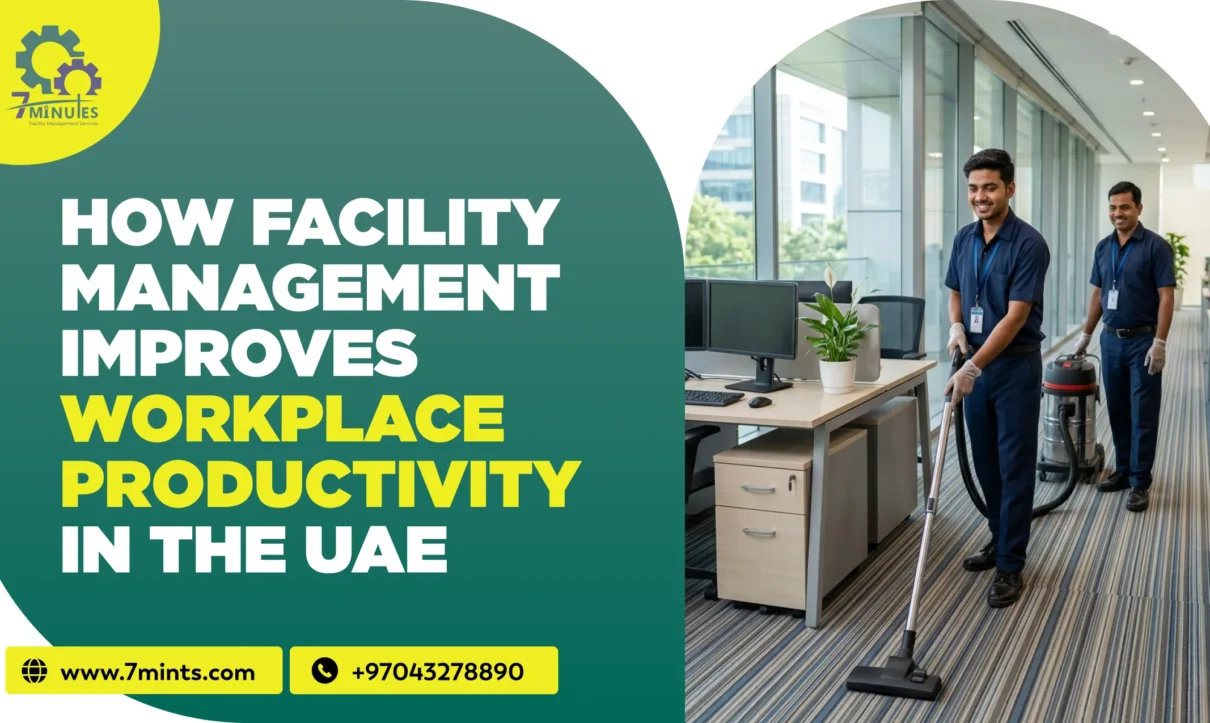
Facility management improves workplace productivity in the UAE by keeping HVAC, power, IT, and safety systems running reliably, maintaining clean and guarded premises, tuning office layouts, and reducing energy waste. When day-to-day operations are managed by trained facility management teams, staff tends to lose less time handling building problems, and they gain more time for meaningful tasks, which lifts output, cuts off sick leave trends, and reduces long-run operating costs.
Go into almost any Dubai or Abu Dhabi office on a Sunday morning, and after maybe five minutes you can usually guess if the building is truly well run. The air conditioning either feels “just right” or it doesn’t. The lift either moves cleanly or there’s this steady line of irritated staff on the ground floor. For UAE companies chasing talent and margin in one of the planet’s quickest expanding commercial scenes, these tiny annoyances compound into real losses in attention, in spirits, and in measurable billable time. Most executive groups push productivity via hiring, training, and software, but the physical workplace often quietly reverses that progress, day after day.
What Is Facility Management?
Facility management is basically the coordinated upkeep of a building’s systems, spaces, safety, and services so that the people inside can work without all that constant disruption. In the UAE, this ends up touching everything from HVAC and electrical maintenance to cleaning, security, waste handling, and space planning across the corporate, healthcare, hospitality, retail, and construction segments. And as Dubai, Abu Dhabi, and Sharjah keep pushing outward, facility management has moved from some back-office cost center to something that’s actually measurable, like a driver of employee output and longer business continuity.
Why Workplace Productivity Is becoming a bigger worry for UAE Businesses
Workplace productivity is getting squeezed in the UAE because fast commercial growth has kind of outrun how well many buildings are really maintained and operated. Businesses are pouring money into office space across the Emirates, but more space doesn’t automatically equal better results—a poorly ventilated, badly lit, or unreliable office can wipe out that progress within weeks
Why it matters: Research linked to the American Psychological Association says companies with inadequate working conditions see a 38% decrease in employee productivity. In a space where the UAE facility management industry is projected to expand from USD 7.62 billion in 2024 to USD 10.53 billion by 2029 (Mordor Intelligence), firms hiring professional FM aren’t merely caring for infrastructure—they are safeguarding output
Facility management closes that gap directly by managing the day-to-day variables—temperature, safety, cleanliness, equipment uptime—things staff can’t easily fix on their own but that quietly decide how much work gets done.
Facility management is basically the coordinated upkeep of a building’s systems, spaces, safety, and services so that the people inside can work without all that constant disruption. In the UAE, this ends up touching everything from HVAC and electrical maintenance to cleaning, security, waste handling, and space planning across the corporate, healthcare, hospitality, retail, and construction segments.
And as Dubai, Abu Dhabi, and Sharjah keep pushing outward, facility management has moved from some back-office cost center to something that’s actually measurable, like a driver of employee output and longer business continuity.
How Facility Management Improves Workplace Productivity in the UAE
Facility management helps workplace productivity by removing operational friction that slows people down, like bit by bit, one system at a time. Here are the main areas where facility management teams in the UAE usually make the biggest measurable difference.
1. Creates a Safe and Comfortable Work Environment
A safe, comfortable workplace directly supports employee focus because comfort reduces physical distraction. Facility teams keep air conditioning, lighting, and seating within the required standards, which is critical in a climate where indoor cooling isn’t really optional. Regular inspections also catch electrical faults, fire risks, and broken furniture before they turn into safety incidents, so employees can stay confident and concentrate fully on their tasks.
2. Cuts Equipment Downtime
Less downtime means daily operations keep moving—no more of those annoying sudden stops. Preventive maintenance on computers, elevators, internet infrastructure, and production machinery catches technical problems early on before they turn into full-blown outages. In UAE commercial buildings, where power systems and elevators help keep a steady beat, this ahead-of-time approach helps employees stay on schedule so they aren’t stuck waiting on repairs for hours.
3. Boosts Space Utilization
Better space utilization basically gives employees areas that match how they actually work, not just what was drawn on a plan. Facility managers examine office layouts to find underused corners, then rework them into meeting rooms, shared desks, or quieter private zones depending on what the business needs most; that way you get less overcrowding, less daily confusion, and smoother collaboration in a more natural way.
4. Keeps the Workplace Clean and Hygienic
Workplace hygiene supports employee health and helps morale remain stable through the day. Facility teams do routine cleaning around workstations, restrooms, dining zones, and common areas – especially across UAE industries like healthcare, hospitality, and retail, where hygiene rules are strict and not negotiable.
5. Boosts Energy-Saving Performance
Energy efficiency cuts the operating costs that pile up from constant cooling needs in the UAE. With electricity monitoring, smart lighting, and building automation, waste gets reduced while the internal conditions stay reliably comfortable. The savings companies make here are frequently rerouted into employee training and workplace improvements, rather than just sitting idle.
6. Helps Support Employee Well-Being
Employee well-being initiatives, delivered through facility management, can really change how people feel about actually coming to work. You see better indoor air quality, ergonomic furniture, and added amenities like wellness rooms plus cafeterias. When employees feel physically supported, there’s less stress overall, and they tend to perform with more focus.
7. Enhances Security Systems
Solid workplace security safeguards people, assets, and sensitive data, and it also minimizes the operational disruption that shows up after a security incident. Facility teams handle CCTV, emergency exit readiness, and visitor access control so employees get a steadier setting to work in without constant distraction or even that low level of fear.
8. Strengthens Business Continuity
Business continuity planning via facility management keeps things running through emergencies like fire incidents, power outages, or water leaks. When responses are fast and rehearsed, downtime shrinks, and one problem doesn’t quickly turn into bigger operational losses.
9. Lets Businesses Concentrate on Core Operations
Outsourced facility management takes maintenance, cleaning, and vendor coordination off a company’s internal shoulders. When building operations are handled by specialists, employees and managers can redirect their time toward growth strategy and customer service instead of wrestling with everyday office breakdowns.
Also Read: Facility Management in Building ESG-Compliant
Step-by-Step: Making a Productivity-leaning Facility Management Strategy
1. Do a full check of the actual workplace – like audit HVAC performance, look at equipment condition and cleanliness, and also notice security gaps across the whole site.
2. Sort out the priorities for what matters most – go after high-impact fixes first, especially anything that could turn into a safety issue or equipment that’s likely to fail. Because those things cause the most disruption, period.
3. Set up a preventive maintenance plan – basically shift from “repair it when it breaks” mode to planned inspections. Cover HVAC, elevators, and electrical systems, not just the obvious stuff.
4. Think about where people are really working – optimize space allocation. Redesign underused areas into collaborative zones or quiet focus areas based on actual usage data, not guessing.
5. Standardize cleaning and hygiene protocols; make it routine and consistent. Set schedules for workstations, restrooms, and shared spaces so it’s not random day to day.
6. Bring in energy monitoring too – deploy smart lighting and automation, so utility costs get controlled in a calmer way.
7. Build an emergency response plan Document the steps for fire, power failure, and even water damage so responses aren’t improvised.
8. Review everything quarterly – track downtime, energy use, and employee feedback to adjust the strategy over time.
Mini Case Study: A Dubai Corporate Office
A mid-sized corporate office in Dubai’s Business Bay was dealing with frequent employee complaints. Mostly about AC inconsistency and slow elevator service… plus rising absenteeism during summer months.
After a facility management provider came in to run a full building audit, the company moved away from reactive repairs. They implemented a scheduled preventive maintenance program, added smart thermostats, and also restructured underused meeting rooms into a shared collaboration hub.
Within two quarters, equipment-related complaints dropped noticeably, absenteeism eased, and staff said they were spending much less time on informal “workaround” tasks. Like relocating desks or waiting on repairs. That time basically went straight back into core work, instead of getting stuck in loops.
Frequently Asked Questions
Q1. How does facility management help workplace productivity in the UAE?
It keeps HVAC, power, security, and cleaning systems running smoothly, so the little daily disruptions don’t keep pulling employees away from focused work.
Q2. Is facility management only a thing for huge corporate offices?
No. Retail stores, healthcare facilities, hospitality venues, and even small offices can benefit from preventive maintenance, cleanliness, and smart security management.
Q3. What does facility management cost for a UAE office?
It really depends on building size and also on the service scope, usually from a few thousand to more than ten thousand AED every month across combined services.
Q4. Can facility management lower a company’s energy bills?
Yes. Smart lighting, automation, and ongoing HVAC servicing help curb the excessive cooling and power use that happens so often in UAE buildings.
Q5. What’s the difference between in-house and outsourced facility management?
In-house teams run FM internally, while outsourced providers bring specialized experience, tools, and preventive systems—usually with a better long-run cost.
Q6. How fast can a business feel productivity gains after adopting FM services?
A lot of businesses see fewer equipment issues and more even operations within one or two quarters once preventive maintenance and cleaning routines are in place.
Conclusion
Facility management boosts workplace productivity in the UAE by keeping the physical environment safe, clean, efficient, and dependable- so employees can concentrate on their real tasks rather than building problems. From HVAC uptime to space planning and security, every bit of facility management aims at the same thing: a workplace that supports performance instead of constantly interrupting it.
Ready to see what a professional facility management partner can do for your workplace? Contact 7Mints for a facility assessment tailored to your building and industry.


1 Comment
Comments are closed.