

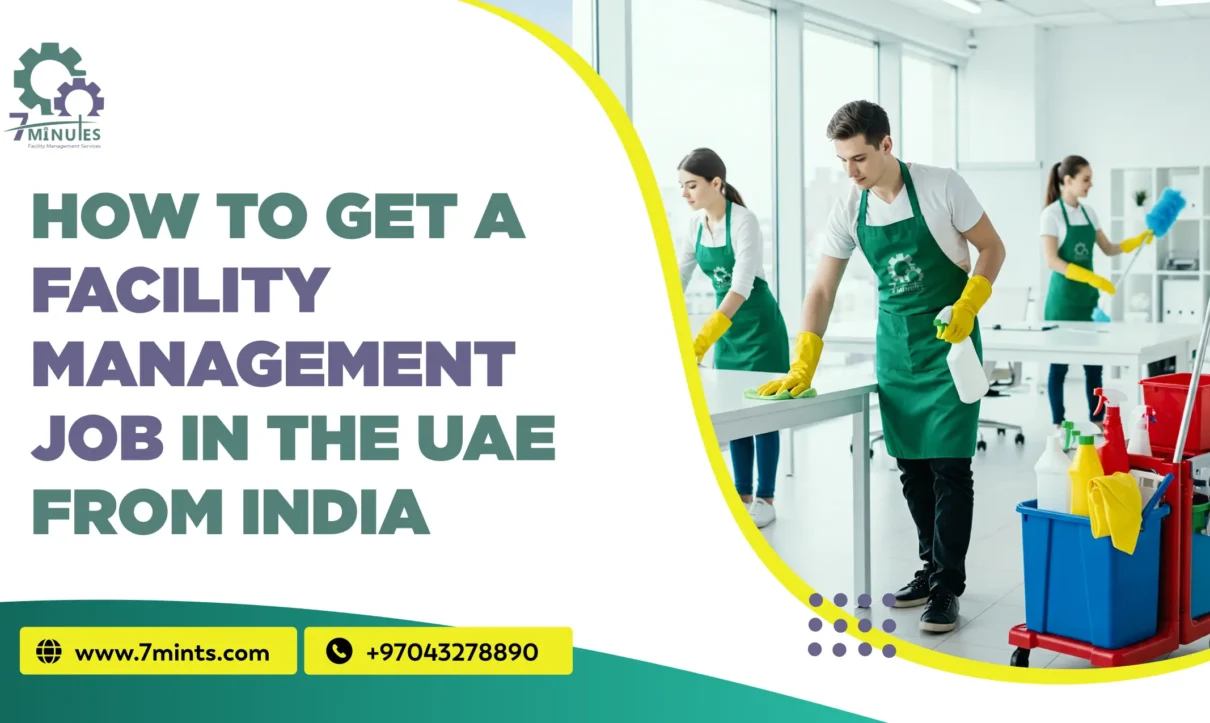
To get a facility management job in the UAE from India, you typically need a trade credential (ITI/diploma or a safety course like NEBOSH/IOSH), a UAE-formatted CV, and applications routed via verified routes—like LinkedIn, Bayt, Naukri Gulf, or 7mints. In most cases, candidates with genuine documents plus 1–3 years of experience get shortlisted in about 4–8 weeks, and then the employer sponsors the work visa after the offer is confirmed.
The UAE’s growing commercial, residential, hospitality, healthcare, and infrastructure sectors create opportunities for professionals in facility management (FM). Roles can range from technicians and supervisors to facility managers, engineers, coordinators, and operations professionals.
For candidates applying from India, getting an facility management job in the UAE is possible without first relocating. The UAE government recommends using job portals, recruitment agencies, company career pages, professional networking platforms, and online job fairs when searching for employment.
However, competition can be strong. A successful job search requires more than submitting the same CV to hundreds of vacancies. Candidates should understand the UAE FM market, target relevant roles, prepare a UAE-friendly CV, demonstrate technical skills, and follow the correct recruitment and work-permit process.
What Facility Management Jobs in the UAE Actually Involve
Facility management (FM) is basically the everyday operation and upkeep of a building’s systems. Think electrical, HVAC, plumbing, safety, and cleanliness, so the place stays working, compliant, and safe to use. In the UAE, this can run from one small retail unit all the way up to an entire airport terminal. And it’s one of the biggest blue- and grey-collar employment areas there, because Dubai and Abu Dhabi are still constructing and staffing new malls, hospitals, hotels, and residential towers each year.
FM in the UAE usually breaks down into two main directions:
1. Hard FM – electrical, HVAC, plumbing, MEP maintenance (mechanical, electrical, plumbing), and fire/life-safety systems.
2. Soft FM – housekeeping, security, pest control, landscaping, and front-of-house support.
Why UAE Facility Management Hiring Is Booming
The UAE real estate and construction pipeline is like the single biggest push behind FM hiring, and the numbers really show it: Dubai real estate alone pulled in over AED 761 billion in transactions in 2024, and every new tower, mall, or hotel that gets handed over needs a facilities team from day one. That means ongoing demand for technicians, supervisors, and engineers—not only at handover time, but for the whole operational life of the place.
For Indian candidates in particular, employers usually mention three key perks: technical training via ITI/polytechnic frameworks that are well recognised in the Gulf, a proven record working on UAE sites already, and English proficiency that actually fits multinational FM groups.
Check out our latest blog post on Facility Management KPIs Every UAE Business Should Track
Skills and Qualifications UAE Employers Look For
The first question you should be able to answer without sweating is: Do I have a recognised trade qualification for the exact role I am applying to? For technical FM roles in the UAE, most employers almost always ask for an ITI certificate, diploma, or equivalent vocational training, and then practical, real-world experience too—just having a paper certificate rarely gets you shortlisted.
After the trade credential, employers generally judge things like diagnostic and repair ability—can you troubleshoot, not only follow a checklist?
Safety awareness – do you understand permit-to-work, LOTO (lockout-tagout), and confined-space routines?
Software familiarity – any exposure to CAFM (computer-aided facility management) platforms—is becoming a clearer differentiator.
Communication – enough spoken English to log issues and coordinate with a multinational team.
Build a CV that UAE recruiters actually shortlist.
UAE recruiters are reportedly skimming your CV in under 15 seconds before they decide if they even open it all the way, so the layout and order matter just as much as the content. Keep it to two pages, start with a short profile line, and make sure your trade certification, your UAE-relevant skills, and any Gulf experience sit above the fold, not hiding halfway down the page.
- Your CV should be laid out like this, in order, and not really in any other way:
- Full name, passport details, and contact information
- A 2–3 line profile that sums up your trade and the years you’ve worked
- Certifications (ITI, diploma, NEBOSH/IOSH, and any trade licenses)
- Work experience, with measurable results (for example: “Maintained HVAC systems across a 40,000 sq. ft facility, reducing breakdown calls by 20%”)
- Key technical skills
Languages plus your passport/visa status
Try not to use long paragraphs, skip photos (unless someone asks), and remove personal details that are not linked to the job. In the UAE, employers usually care about job-credible facts, and they move fast.
Process to Get a Facility Management Job in the UAE from India
1. Identify your target role. Match your ITI/diploma/degree and experience to one specific FM title (technician, supervisor, or engineer), instead of applying widely or “just to any role”.
2. Get your certifications in order. If you don’t already have a safety credential (NEBOSH or IOSH) or a trade-specific course, enrol first before you start applying. It’s a very common shortlisting filter.
3. Build a CV formatted for UAE hiring. Keep it to two pages, include quantified achievements, and place certifications near the top.
4. Apply through verified channels. Use LinkedIn, Bayt, Naukri Gulf, Gulf Talent, and Indeed UAE. Or go via a recruitment agency registered under India’s Emigration Act, with a valid licence number clearly shown.
5. Optimise your profile with keywords. Keywords like “HVAC technicians” and maybe “MEP supervisors” and “facility managers”, plus “maintenance engineers”, do help recruiters actually find you in those searches.
6. Get ready for a multi-stage interview, because it is usually not just one. You might face an HR screening call first, then a technical round with the hiring manager, and in some cases there is even a client-facing interview, especially for roles where you deal with people.
7. Before you accept anything, verify the offer letter. Read it line by line, yes, even the parts that look the same. Confirm the salary, accommodation terms, transport, working hours, and the contract duration. Do not just glance, because those details matter.
8. Handle the visa and medical process. Once you accept the role, the employer typically starts the visa approval, the medical fitness testing, Emirates ID processing, and later the residence visa stamping.
Next, plan your relocation properly. Confirm your joining date, lock in travel arrangements, and check what documents you need to carry, like attested certificates, passport copies, and medical reports. It’s better to keep them organised earlier.
Mini Case Study: From ITI Graduate to HVAC Technician in Dubai
Rajesh, who is an ITI graduate in refrigeration and air conditioning from Uttar Pradesh, spent around eight months applying to generic “Gulf jobs” listings and honestly got no response. After he finished a short HVAC certification course, he rebuilt his CV with measurable site experience instead. Then he applied directly to three FM companies that were advertising on LinkedIn and also to one licensed recruitment agency.
He was shortlisted within about three weeks, cleared a technical video interview, and then joined a Dubai-based FM contractor as an HVAC technician roughly two months later. In his package, accommodation and transport were included. His story is pretty typical: people who go after specific roles and confirm the right channels tend to move faster than those applying in bulk.
Certifications that improve your Shortlisting Odds
Certifications signal to UAE employers that you understand international maintenance and safety standards, not just local practice. The most commonly requested ones for FM roles are
- NEBOSH (National Examination Board in Occupational Safety and Health) — safety fundamentals
- IOSH (Institution of Occupational Safety and Health) — workplace safety management
- HVAC/MEP trade certifications — role-specific technical training
- Electrical safety certification—mandatory for electricians and MEP technicians
- Facility management diploma/courses—useful for supervisory and engineer-level roles
Candidates who complete at least one recognised safety certification alongside their trade qualification typically report faster shortlisting and slightly higher starting offers.
Frequently Asked Question
Q1. Can I get a facility management job in the UAE from India without prior Gulf experience?
Yes. Many technicians and supervisors get hired directly from India if they have a valid trade certification and relevant work experience, though UAE experience can help you step into senior positions faster, for sure.
Q2. What is the minimum qualification for facility management jobs in the UAE?
Most technical roles need an ITI certificate or diploma in a related trade (electrical, mechanical, HVAC, or plumbing), and supervisory plus engineering roles usually ask for a diploma or a bachelor’s degree.
Q3. How long does the UAE work visa process take after you accept a job offer?
The whole process—employment visa approval, medical testing, Emirates ID, and residence visa stamping—typically takes three to six weeks once the employer starts it, so don’t panic too early.
Q4. Which websites are safe for applying to facility management jobs in the UAE from India?
LinkedIn, Bayt, Naukri Gulf, GulfTalent, and Indeed UAE are commonly used, verified platforms. Also cross-check any agency against the government’s licensed recruiter database, just to be safer.
Q5. What salary can a fresher expect in UAE facility management jobs?
Entry-level technicians often begin between AED 2,000 and AED 4,000 per month, plus accommodation, transport, and medical insurance in most contracts; sometimes it’s written differently.
Q6. How can I tell if a facility management job offer from the UAE is genuine?
A real offer includes a written contract, no upfront “processing fee” kind of demands, a company name and website you can actually verify, and an employer-sponsored visa, not a tourist one.
Conclusion
To obtain a facility management job in the UAE from India requires candidates to establish a recruitment strategy that includes technical expertise and understanding of the hiring system. The development of infrastructure projects, commercial expansions, and hotel operations in the UAE generates ongoing requirements for professionals who specialize in facility management. Indian workers achieve success in their careers because UAE employers recognize their dedication and technical abilities. Gulf region candidates who prepare correctly will achieve permanent employment with high salaries and professional advancement opportunities.
Candidates need to develop their technical skills while building professional resumes and using reliable job sources to apply and get ready to succeed in job interviews. The UAE employment market offers better job opportunities, together with higher salary packages to candidates who complete safety training and additional certification programs. Contact us as job seekers must maintain vigilance against fraudulent recruitment advertisements while following all established employment protocols. The Indian candidates who follow the correct procedures will achieve their goal of entering the UAE facility management field.

1 Comment
Comments are closed.