

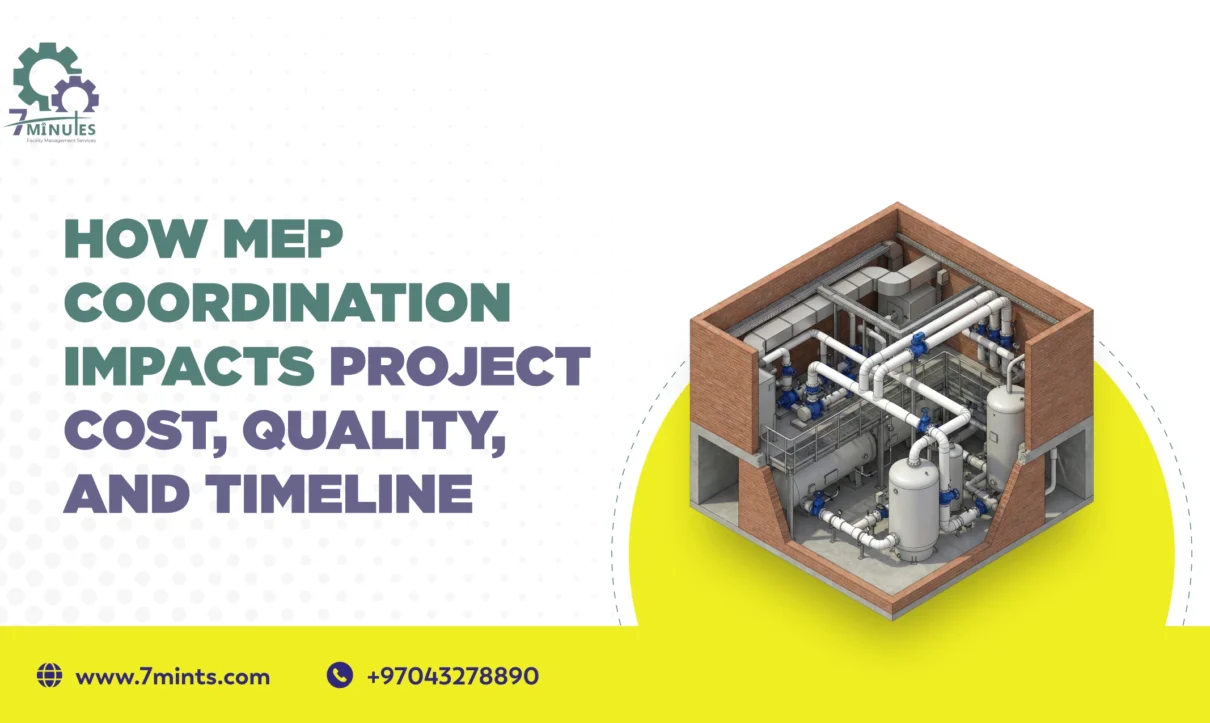
In modern construction projects, coordinating mechanical, electrical, and plumbing systems is essential for successful project execution. From residential buildings and commercial properties to large-scale infrastructure developments, multiple building services must work together without creating conflicts or unnecessary delays. This is where MEP coordination in construction plays an important role.
MEP coordination involves planning, designing, and integrating mechanical, electrical, and plumbing systems to ensure they fit within the building structure and function efficiently. Poor coordination can lead to design errors, installation conflicts, increased expenses, and project delays. On the other hand, effective coordination improves construction efficiency, controls costs, and maintains quality standards.
For construction companies, developers, and contractors, understanding the relationship between MEP coordination, project cost, quality, and timelines is essential for delivering successful projects.
What Is MEP Coordination in Construction?
MEP coordination is the process of aligning mechanical, electrical, and plumbing systems with architectural and structural designs before and during construction.
Mechanical systems include HVAC equipment, ventilation, and air conditioning. Electrical systems cover power distribution, lighting, wiring, and safety equipment. Plumbing systems include water supply, drainage, and sanitary installations.
Effective mechanical electrical plumbing coordination ensures that these systems have sufficient space and can operate without interfering with other building components.
For example, HVAC ducts, electrical cable trays, and plumbing pipes may need to pass through the same ceiling or service corridor. Without proper planning, these installations can overlap, creating problems during construction.
A structured MEP design coordination process helps identify these issues early and provides practical solutions before installation begins.
1. How MEP Coordination Impacts Project Cost
Project cost is one of the most important considerations in construction. Poor planning and coordination can increase expenses through material wastage, labour inefficiencies, design changes, and repeated installation work.
The MEP coordination impact on project cost becomes particularly noticeable when conflicts are discovered after construction has already started.
Reduces Construction Rework
When mechanical, electrical, and plumbing systems are not properly coordinated, contractors may discover that pipes, ducts, and cable trays occupy the same space. Resolving these conflicts after installation can require dismantling and reinstalling completed work.
Effective coordination supports construction rework prevention by identifying design conflicts before they become expensive site problems.
Controls Material and Labour Expenses
Proper planning helps contractors determine material quantities, installation requirements, and labour schedules more accurately. This reduces unnecessary material purchases and avoids repeated work.
These improvements contribute to MEP coordination cost savings and support better construction project cost management.
Minimises Unexpected Expenses
Changes made during construction can affect multiple teams and increase project expenditure. Coordinated drawings and early design reviews help reduce unexpected modifications.
As a result, project managers can maintain better control over budgets and allocate resources more effectively.
2. How MEP Coordination Improves Project Quality
The relationship between MEP coordination and project quality is important because building systems must function safely, efficiently, and reliably after project completion.
Poorly coordinated installations can result in accessibility problems, maintenance difficulties, insufficient space, and system performance issues.
Improves Installation Accuracy
Coordinated drawings provide contractors with clearer information about equipment locations, pipe routes, duct dimensions, and cable tray arrangements.
This improves MEP installation accuracy and helps reduce mistakes during execution.
Supports Better System Performance
Proper coordination ensures that HVAC, electrical, and plumbing systems are integrated into the building design. It also helps maintain adequate access for equipment operation and future maintenance.
Improves Safety and Compliance
MEP coordination allows project teams to review installation requirements and identify potential safety concerns before construction.
This helps contractors plan suitable routes, equipment clearances, and service access while following applicable project specifications and regulatory requirements.
3. How MEP Coordination Affects Project Timeline
Construction schedules depend on multiple teams completing their activities in the correct sequence. When MEP systems are not coordinated, installation conflicts can interrupt work and delay other construction activities.
The relationship between MEP coordination and project timeline is particularly important in projects involving multiple contractors and specialised installation teams.
Prevents Installation Delays
When contractors receive coordinated drawings, they can understand installation locations and avoid conflicts with other building services.
This reduces unnecessary site discussions, redesign work, and installation interruptions.
Improves Team Collaboration
MEP coordination brings architects, structural engineers, MEP consultants, and contractors together during the planning stage.
Clear communication helps teams resolve technical issues before they affect construction activities.
Supports Better Project Scheduling
An effective MEP project scheduling strategy considers the sequence of mechanical, electrical, and plumbing installations.
For example, contractors may need to coordinate HVAC duct installation with ceiling work, electrical cable routing, and plumbing pipe arrangements.
Better planning helps maintain workflow continuity and reduces the risk of delays.
4. The Importance of MEP Clash Detection
MEP clash detection is an important part of the coordination process. It identifies situations where different building systems overlap or interfere with each other.
Common examples include:
- HVAC ducts conflicting with structural beams.
- Electrical cable trays overlapping with plumbing pipes.
- Drainage pipes interfering with ceiling installations.
- Mechanical equipment lacking sufficient maintenance clearance.
- Electrical installations conflicting with architectural elements.
Identifying these problems during the design stage allows engineers to adjust layouts before installation.
Modern construction projects often use BIM MEP coordination to create coordinated 3D models and identify potential conflicts between different building systems.
This approach helps project teams visualise installation requirements and make informed design decisions.
5. Understanding the MEP Coordination Process
A structured MEP coordination process helps ensure that all building services are planned and integrated effectively.
The process generally involves the following stages:
1. Design Review: Review architectural, structural, mechanical, electrical, and plumbing drawings to understand project requirements.
2. Model Development: Prepare coordinated drawings or 3D models representing different building services.
3. Clash Detection: Identify overlapping systems, spatial conflicts, and installation challenges.
4. Conflict Resolution: Discuss identified issues with relevant consultants and contractors and agree on suitable solutions.
5. Drawing Approval: Update and finalise coordinated drawings for construction use.
6. Site Coordination: Monitor installation activities and resolve any unexpected site conditions.
Following these stages improves communication and supports more efficient project execution.
6. Common MEP Coordination Challenges
Despite its benefits, MEP coordination can involve several challenges, particularly in complex construction projects.
Some common MEP coordination challenges include:
- Incomplete or outdated architectural and structural drawings.
- Poor communication between consultants and contractors.
- Limited ceiling and service shaft space.
- Changes in equipment specifications.
- Conflicts between installation schedules.
- Late design modifications.
- Inadequate coordination between different building services.
Addressing these challenges requires proper planning, regular coordination meetings, updated drawings, and collaboration between project stakeholders.
7. Why BIM MEP Coordination Is Important for Modern Construction
Building Information Modelling (BIM) has improved the way construction teams plan and coordinate building services.
BIM MEP coordination uses digital models to represent mechanical, electrical, and plumbing systems within a shared building environment.
It offers several advantages:
- Better visualisation of building services.
- Early identification of design conflicts.
- Improved communication between project teams.
- More accurate installation planning.
- Reduced design errors and construction rework.
- Better documentation for project execution.
By using BIM-based coordination, construction professionals can improve planning accuracy and make informed decisions before work begins on site.
8. MEP Coordination in Dubai and the UAE
Construction projects in Dubai and across the UAE often involve complex building designs, multiple contractors, and strict project requirements. Effective MEP coordination in Dubai is therefore important for maintaining construction quality, controlling costs, and completing projects according to planned schedules.
Commercial buildings, residential towers, hotels, hospitals, and industrial facilities all require properly coordinated mechanical, electrical, and plumbing systems.
Professional MEP coordination solutions UAE help developers, consultants, and contractors manage building services more effectively.
Working with experienced MEP professionals can improve design integration, identify installation conflicts, and support efficient project delivery.
Conclusion
Effective MEP coordination is essential for controlling construction costs, maintaining quality, and meeting project deadlines. From early design reviews and clash detection to installation planning and site coordination, every stage contributes to successful project execution.
By investing in proper MEP design coordination, construction companies can minimise design errors, prevent unnecessary rework, improve installation efficiency, and maintain better control over project resources.
Whether developing a residential property or a large commercial building, implementing professional MEP coordination solutions helps create efficient, reliable, and well-integrated building systems.
Frequently Asked Question
Q1. What is MEP coordination in construction?
MEP coordination is the process of integrating mechanical, electrical, and plumbing systems with architectural and structural designs to avoid conflicts and improve construction efficiency.
Q2. How does MEP coordination reduce project costs?
It reduces costs by identifying design conflicts early, preventing construction rework, minimising material wastage, and improving labour planning.
Q3. What is MEP clash detection?
MEP clash detection identifies conflicts between building services, such as HVAC ducts, electrical cable trays, plumbing pipes, and structural elements.
Q4. How does MEP coordination improve project timelines?
It helps prevent installation conflicts, reduces redesign work, improves communication, and supports better construction scheduling.
Q5. Why is BIM important for MEP coordination?
BIM provides 3D visualisation of building services, helping project teams identify clashes, improve design accuracy, and plan installations more effectively.





1 Comment
Comments are closed.