

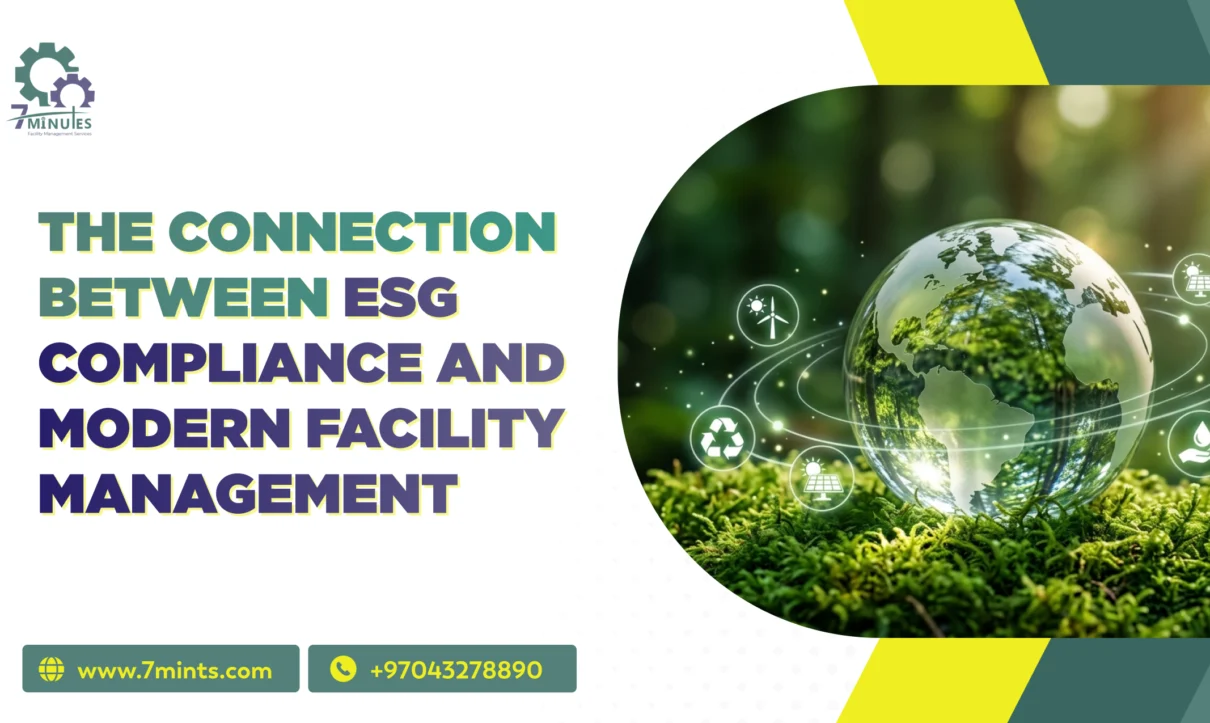
Environmental, Social, and Governance, usually called ESG, has turned into a huge priority for companies worldwide. Organizations are not judged only by profit numbers anymore but also by how they handle environmental impact, employee welfare, and corporate governance in day-to-day reality. Investors, customers, and regulatory bodies seem to lean more and more toward firms that can show sustainable and ethical practices. So ESG ends up being a major lever for long-term growth and reputation management, not just a “nice to have.”
Modern Facility Management, or FM, is pretty important for getting these ESG targets done. Facility managers supervise building operations, resource consumption, workplace safety, and sustainability initiatives that end up affecting ESG outcomes. By using efficient routines and adopting smart technologies, FM can lower environmental impact and also support safer plus more productive spaces for people. Because of this, the link between FM and ESG compliance is strong, and FM is basically an essential contributor, not a side activity.
Understanding ESG Compliance
ESG compliance is a practical framework that supports organizations in acting responsibly while still trying to grow commercially and, at the same time, manage environmental and social duties. On the environmental side, it is about cutting carbon emissions, conserving resources, and limiting waste. The social side deals with employee health and welfare, workplace safety, diversity, and even community involvement. Governance covers transparency, ethical leadership, accountability, and simply sticking to regulations.
Businesses are increasingly adopting ESG principles because stakeholders now expect more corporate responsibility, like not just profits but also that sort of broader duty. When a company shows solid ESG results, it can help its brand reputation a lot, pull in investors, and also build real customer trust. On top of that, governments are bringing in tighter sustainability rules, so ESG compliance is turning into a business requirement, not really a nice-to-have. Organizations that decide to take ESG early usually end up more ready for what’s coming next, both challenges and opportunities.
The Role of Facility Management in ESG Goals
Facility management really acts like the day-to-day engine for a lot of ESG initiatives inside an organization. Facility managers handle efficient building operations, track energy use, keep safety standards on track, and manage resources the right way. All those small choices made every day can directly affect environmental results, worker comfort, and regulatory compliance. So it’s pretty clear that facility management is a key part of any strong ESG approach.
Modern facility management is not only about routine upkeep or repairs and the usual stuff. It’s also about putting sustainability programs into motion, bringing smart technologies into use, and constantly finding ways to raise operational efficiency. Facility managers often collaborate with senior leaders so that building activities line up with wider ESG objectives.
Check out our latest blog post on How Facility Management Supports ESG Compliance in the UAE?
1. Environmental Responsibility through Facility Management
One of the main ways facility management helps with ESG compliance is, kind of, through environmental sustainability programs, more or less. Facility managers set up energy-efficient systems, they tune how buildings run a bit, and they add resource conservation steps to reduce environmental impact. As a result, organizations can bring down carbon emissions while also trimming everyday operational costs. Environmental responsibility really has become a central issue in many of today’s facility management approaches, you know.
Facility managers also get involved with waste reduction and more sustainable resource stewardship. Recycling schemes, water-saving drives, and procurement choices that are environmentally sensible help shape a greener workplace. On top of that, smart building tools improve efficiency by monitoring energy and resource use in real time, and honestly, it’s pretty useful. When these pieces align, organizations can meet sustainability targets and strengthen ESG performance.
2. Energy Efficiency and Carbon Reduction
Energy efficiency is one of the most effective ways organizations have to improve their ESG results. Facility managers often lean on newer instruments like smart lighting configurations, automated HVAC controls, and energy tracking platforms to reduce unnecessary energy use. In the real world, these actions help drop utility bills while at the same time curbing greenhouse gas output. When energy efficiency gets better, it backs environmental sustainability and the bottom line that actually matters financially.
Reducing carbon emissions has turned into a major concern for companies everywhere. Facility managers add real value by introducing renewable power choices, swapping out dated systems, and putting in energy-saver programs that do not just look good on paper. These moves help organizations reach sustainability targets and stay aligned with environmental rules. And as carbon reduction keeps gaining importance, facility management is still one of the key engines for delivering results you can measure.
Conclusion
The link between ESG compliance and modern facility management is stronger than it was before in today’s business climate. Facility managers help drive environmental sustainability as well as social responsibility and governance aims, mainly through reliable building operations plus workplace management that feels well-managed. Contact us as their work supports regulatory compliance and improves operational efficiency, as well as stakeholder confidence. Since ESG expectations keep expanding, the role of facility management will continue to grow, no doubt.
For UAE businesses in 2026, integrating ESG principles into facility management is not only a way to meet evolving compliance expectations but also an opportunity to reduce costs, improve operational resilience, and enhance long-term business value. By leveraging smart technologies, preventive maintenance, and sustainable building practices, organizations can transform their facilities into strategic assets that drive measurable ESG success.
1 Comment
Comments are closed.