

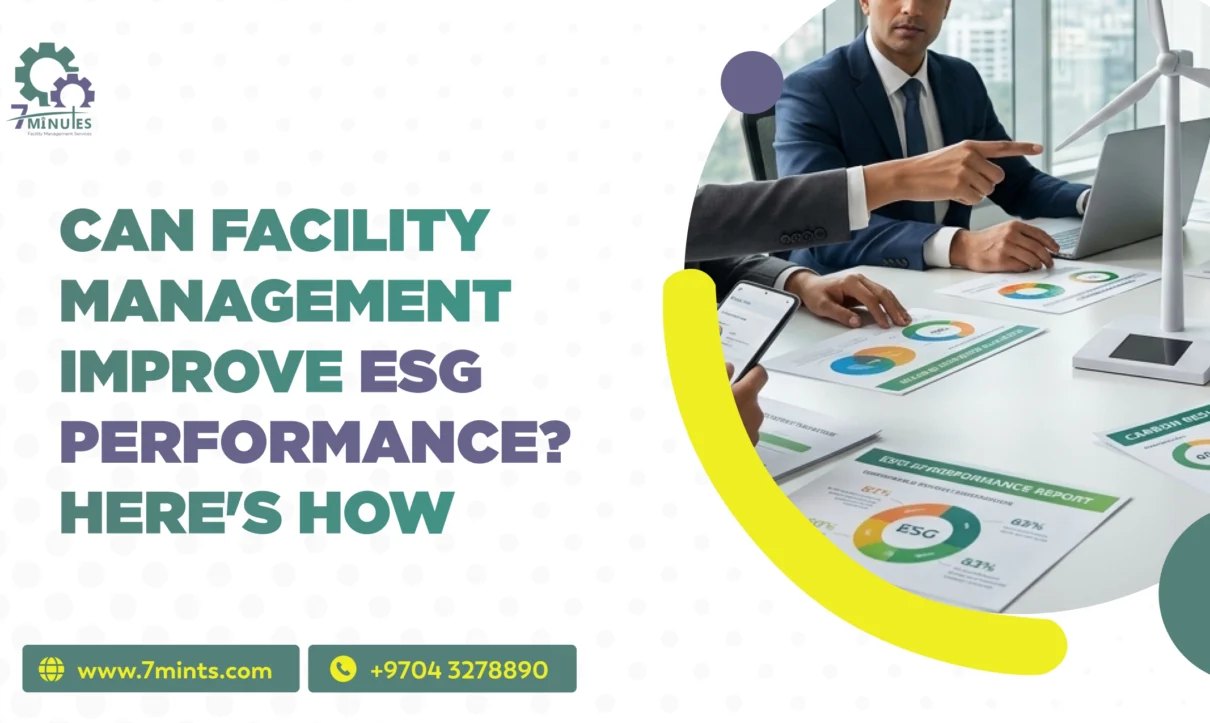
Environmental, Social, and Governance, or ESG, performance is now a big priority for organizations across the UAE and also beyond. Day to day, businesses face extra pressure from investors, customers, and government authorities to act responsibly and run things more sustainably. Organizations that work on improving ESG results usually see stronger reputations, higher confidence from stakeholders, and steadier, long-term growth. And as sustainability keeps shaping business choices, ESG turns into a real make-or-break element for corporate success.
Facility Management, also called FM, matters a lot when it comes to reaching ESG targets. Facility managers look after different parts of building operations, like energy use, building care, workplace safety, and the way resources are managed. Since these day-to-day actions affect both environmental results and social results, facility management can shape ESG outcomes more than people think. When facility managers use better sustainable routines, they achieve efficiency gains while still supporting the broader sustainability aims.
Understanding the Link Between Facility Management and ESG
Facility management is about handling and keeping an organization’s physical assets and infrastructure in working order. This covers things like building maintenance, energy management, waste handling, security, and workplace support services. Because those operations influence how many resources are consumed and how employees are doing day to day, there is a direct effect on ESG performance. Solid facility management helps companies run responsibly while also lowering environmental stress and operational dangers.
As businesses start putting more weight on sustainability, facility management sort of shifts away from just the usual upkeep stuff. Like, today, facility managers are kinda expected to contribute to environmental targets, employee comfort, and governance compliance. With careful strategic planning plus newer tech tools, facility management helps organizations line up day-to-day operations with ESG goals. And yeah, that’s why FM turns into this mandatory piece in any sustainability plan that actually works.
How Facility Management Helps Hit Environmental Goals
1. Cutting Energy Use
Energy use is still one of the major drivers behind a building’s environmental footprint. Facility managers can reduce consumption by rolling out energy-aware lighting systems, improving HVAC equipment, and using smart building technologies. This mix helps shrink electricity draw while still keeping rooms comfortable to work in. Less energy usage helps the planet, too, but it also gives real cost relief in a practical sense.
Regular maintenance and monitoring are, in a way, just as crucial for boosting energy efficiency. Facility managers can spot inefficient equipment, catch system faults, and kind of fine tune day-to-day operational performance through routine checkups. Preventive maintenance helps sidestep unnecessary energy wastage and also extends the lifespan of building assets. So, by the end, organizations can cut carbon emissions while also strengthening everyday operational sustainability.
2. Improving Waste Management
Waste management is another major area where facility management shows up in ESG performance. Facility managers can set up recycling programs, encourage waste segregation habits, and keep reminding employees to limit avoidable waste. These steps reduce the volume of refuse hauled to landfills, and they help build more sustainable routines across the workplace. When waste management is done well, it also signals a company’s environmental accountability.
Also, beyond reducing waste itself, facility managers can partner with environmentally responsible disposal and recycling providers. They can introduce reusable materials and support circular economy practices across the organization. That way, organizations conserve resources while keeping the overall environmental footprint lower. Strong waste management practices then feed directly into ESG reporting results and sustainability targets
3. Supporting Sustainable Resource Use
Sustainable resource management is pretty essential for businesses that want to, uh, improve their environmental performance in a real way. Facility managers can put water-saving technologies in place, keep an eye on how much is being used, and then spot chances to cut down on waste. When resources are managed more efficiently, organizations often see lower operating costs, and they usually end up decreasing their environmental footprint too. In other words, responsible resource use backs up both financial needs and sustainability goals… kinda at the same time.
Facility managers can also nudge teams toward environmentally friendly products and materials around the workplace. Things like eco-friendly cleaning supplies, sustainable construction materials, and energy-efficient equipment all help create greener operations. These steps make it easier for an organization to reduce its reliance on non-renewable resources. Over time, this whole sustainable resource management approach tends to strengthen ESG performance overall, and it supports longer-term environmental objectives without as much drama.
Check out our latest blog post on The Connection Between ESG Compliance and Modern Facility Management
How Facility Management Enhances Social Responsibility
1. Creating Healthier Work Environments
Employee health and well-being are kind of key parts of the social side of ESG, but it also feels like people miss that, at times. Facility managers help build a healthier workplace by paying attention to proper ventilation, keeping things tidy, and boosting indoor air quality in a very practical way. When the working conditions feel comfortable, it can nudge employee productivity, mood, and the general sense of job satisfaction. On top of that, a healthy workplace usually means less absenteeism, and it supports long-term wellness for the workforce as well.
Regular cleaning routines and preventive maintenance efforts really matter for hygiene and for safety, too. Facility managers make sure office rooms, shared areas, and basically the whole facility stay clean and functional throughout the year. These actions help lower health risks and create a more pleasant environment for employees, specifically. Organizations that put effort into employee well-being often end up with stronger involvement and better retention results.
2. Enhancing Workplace Safety
Workplace safety is a major responsibility in facility management work. Facility managers do continuous checks, identify possible hazards, and make sure that safety equipment stays fully operational. When safety measures are handled well, accidents are less likely, and employees are shielded from unnecessary dangers. A safe workplace also sends a signal, maybe indirectly, that the organization cares about its people.
Beyond physical safety, facility managers get dragged into emergency preparedness and crisis management, too. They sketch evacuation routes, run safety drills, and then verify compliance with local health and safety rules. These early, proactive moves help organizations respond more effectively when things go wrong while also cutting operational disruption.
Workplace safety is one of those core responsibilities in facility management operations, and honestly, it’s not something managers can just brush off like “it will be fine” or whatever. Facility managers do regular inspections, they look for possible hazards early, and they make sure all safety gear stays fully operational. When safety measures are handled the right way, they help limit workplace accidents and protect employees from avoidable risks. A safe work setting basically tells everyone inside and outside the organization that the organization actually cares about its people, and that really matters.
Also, it’s not only about physical safety. Facility managers step into emergency readiness and crisis management as well. They build evacuation plans, they run safety drills, and they keep things aligned with local health and safety regulations. Doing this ahead of time lets the organization respond properly during emergencies and can reduce operational disruptions. Solid safety routines also often boost employee confidence, and they can even support stronger ESG performance, which is pretty hard to ignore these days.
3. Supporting Employee Experience
Modern facility management tends to lean toward bettering the overall employee experience in the workplace, more or less. When offices are designed well, with cozy workstations and areas that actually encourage teamwork, people often work with more focus and even more job satisfaction. Employees are generally more motivated when their day-to-day needs are supported and when there is room for professional growth. In the end, a positive workplace experience can make the organizational culture feel stronger and also boost employee loyalty.
Facility managers can bring in wellness-centered initiatives, too, like relaxation zones, green spaces, and ergonomic furniture. These kinds of elements bring physical comfort and mental calm at the same time, so the work environment feels better. When organizations invest in staff comfort, they commonly notice improvements in performance and in workplace engagement. And yes, these efforts also reinforce the social part of ESG and raise overall workforce satisfaction.
How Facility Management Strengthens Governance Standards
1. Keeping Regulatory Compliance on Track
Regulatory compliance is a key piece of good corporate governance, no doubt. Facility managers assist organizations in meeting environmental, health, and safety regulations by keeping good records and putting approved operational procedures in place. This helps cut down the odds of legal penalties, sudden operational problems, and reputational harm. It also signals that the organization behaves responsibly and ethically.
Routine audits and on-site inspections support ongoing adherence to required standards. Facility managers watch for any changes in regulations, and then they roll out the necessary updates to policies and procedures. This “stay ahead ” approach helps organizations dodge compliance problems before they start. Strong compliance work supports transparency and accountability and often improves ESG ratings.
2. Improving Data Collection and Reporting
Getting accurate data is really important if you want to measure and later report ESG performance. In practice, facility management systems gather information about energy use, waste output, water intake, and overall building condition. That data lets organizations follow progress related to sustainability targets and also pinpoint where things can be tweaked. When reporting is dependable, it also supports better choices and more thoughtful strategic planning.
Technology has made ESG reporting way more efficient, and yes, usually more accurate than it used to be. For example, smart building setups plus digital monitoring tools can share real-time views on facility operations. Facility managers can then use those insights to fine-tune performance and show clear, measurable improvements on the ESG side. In the end, improved reporting boosts transparency too, and it helps reinforce stakeholder trust across the organization.
3. Enhancing Risk Management
Risk management is another governance task that facility management supports, quite directly. Facility managers figure out operational risks, evaluate weak points, and put preventive actions in place to safeguard company assets. Preventive maintenance, along with stronger asset management plans, reduces the chance of device failures and also lowers operational interruptions. Overall, effective risk management backs long-term business steadiness.
Emergency response planning is also a pretty key chunk of facility-related risk management. In practice, facility managers build up strategies to deal with those unexpected, kind of awkward moments like power outages, natural disasters, or even security incidents. And yeah, the whole point is that these preparations let orgs keep going—business continuity even when everything gets difficult. When risk management is strong and steady, it boosts resilience, and it also aligns with the bigger ESG objectives, not just on paper but in day-to-day reality.
The Future of ESG-Driven Facility Management
As ESG requirements keep changing and kind of tightening over time, facility management will probably end up doing more of the heavy lifting for sustainability goals. Companies are moving faster toward smart technologies, renewable energy solutions, and operational strategies that are driven by data. With those tools, facility managers can boost efficiency and still reduce environmental impact, which sounds simple but takes real work. Honestly, the future of facility management is tied closely to the future of sustainable business operations, like almost glued together in a way.
Digital transformation is also expected to speed up ESG-focused facility management initiatives. Advanced analytics, Internet of Things (IoT) devices, and automated building systems give deeper visibility into how facilities perform. That visibility helps organizations make more grounded decisions, which tend to improve sustainability outcomes. Firms that choose innovation rather than waiting too long will be better placed to meet future ESG expectations and the next round of industry standards.
Conclusion
Facility management has sort of become a powerful tool to push ESG performance across organizations. You know, through energy efficiency efforts, sustainable resource stewardship, workplace safety programs, and compliance-first operations, facility managers end up contributing in a very direct way to environmental, social, and governance objectives. Their work helps companies run in a more responsible manner while still boosting overall business performance. Contact us as in the end, facility management is now more and more seen as a strategic function, not just an operational necessity.
Organizations that put money into ESG-driven facility management practices can also grab long-term advantages like lower costs, better stakeholder ties, and an improved corporate reputation. And when sustainability gets folded into day-to-day activities, businesses can build workplaces that are more resilient and more ready for what’s next. Facility management offers a practical route for translating ESG ambitions into tangible and measurable outcomes. In today’s competitive market, using facility management to reach ESG wins is no longer optional; it is essential.


1 Comment
Comments are closed.