
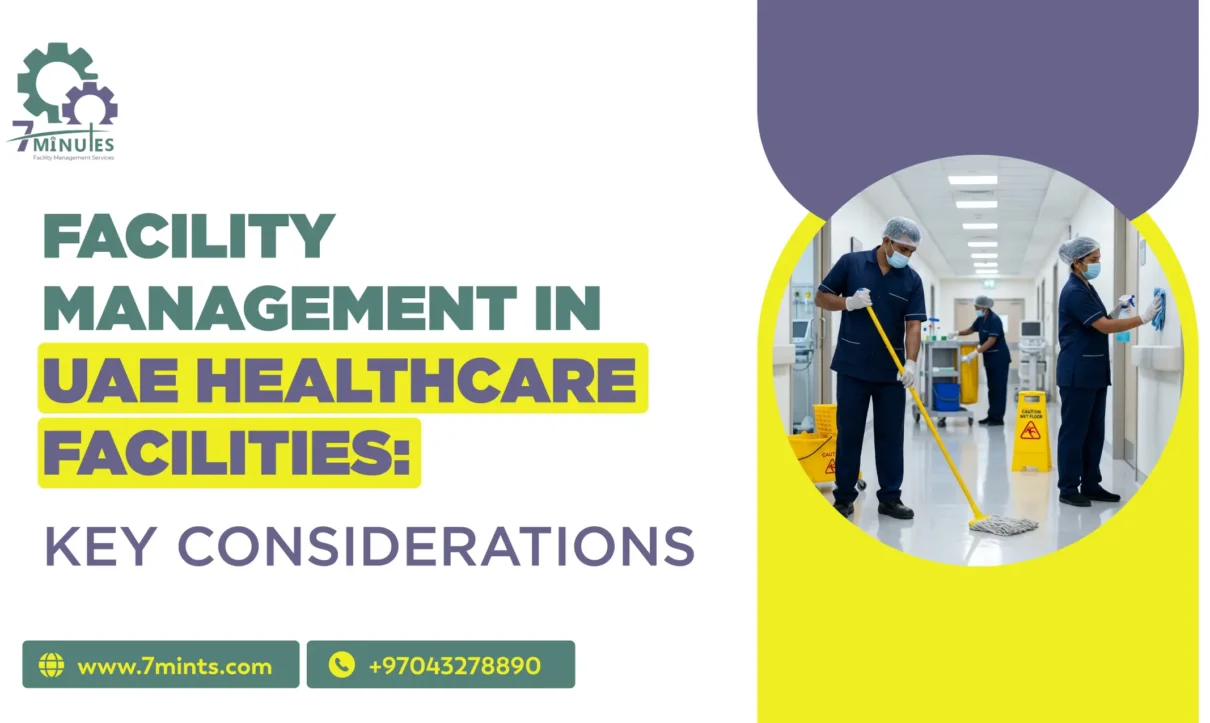
The healthcare industry in the UAE is growing pretty fast, mostly because there are increasing investments in medical infrastructure, newer healthcare technologies, and, of course, more demand for quality patient care. Lots of new hospitals, clinics, and focused medical centers are popping up across the country. Because of that, facility management in UAE healthcare facilities becomes kind of a must-have piece, not just a background activity. When it is done well, it keeps things safe, efficient, and compliant, plus it backs up patient care standards that everyone expects.
It is also different from regular commercial buildings. Hospitals and healthcare facilities run 24/7, so they need uninterrupted services. So, every part of the facility has to stay working, including HVAC systems in healthcare facilities, along with electrical infrastructure and medical equipment support services. If something even small stops working, it can mess with patient treatment, safety, and the whole healthcare operation. That’s why hospital facility management services are such a big factor for operational excellence and for patient satisfaction, too.
At the same time, modern healthcare facilities deal with more and more pressure, like healthcare compliance with UAE requirements, infection control in hospitals, sustainability expectations, and ongoing technological changes. Facility managers have to juggle all of that without losing the thread on strict regulatory standards. Many organizations are leaning into smart healthcare facilities, digital facility management practices, and predictive maintenance healthcare solutions, which can boost efficiency and reduce risks. And as healthcare infrastructure expands, facility management will keep on playing a major role, though the exact approach might shift.
The Importance of Facility Management in UAE Healthcare Facilities
In UAE healthcare facilities, the role of facility management is kind of a big deal, because without it, nothing really stays steady for long. Facility management services in the UAE is tasked with making sure healthcare buildings stay functional, safe, and comfortable for patients, visitors, and the people who work there every day. In practice, this covers day-to-day infrastructure oversight, maintenance work, cleaning operations, access control and security systems, plus environmental controls that keep everything regulated. When healthcare facilities run smoothly, it can directly support patient safety and even help staff stay more productive. And if this is done poorly, healthcare organizations can get hit with operational hiccups that eventually reduce service quality.
But it’s not just about keeping things operating. Facility management also helps with longer-term cost control and smarter resource use. With healthcare asset management strategies, the team can slow down deterioration and help extend the service life of equipment and the supporting infrastructure. Good planning usually leads to fewer last-minute repairs and a smoother flow of performance. Overall, this gives healthcare organizations more breathing space to focus on improving patient care and medical services, instead of constantly reacting to avoidable issues.
1. Ensuring Infection Control and Hospital Hygiene
Infection control in hospitals is like one of the most important responsibilities in healthcare facility management, really. Healthcare environments have vulnerable patients, who may be at higher risk of infections. Keeping strict hospital hygiene management practices helps lessen the spread of harmful bacteria, viruses, and other pathogens, even when it feels routine. Facility management teams have a crucial role in rolling out procedures that support infection prevention and patient safety.
Healthcare facilities also need full cleaning and disinfection programs that cover patient rooms, surgical theaters, waiting areas, and common spaces. Regular sanitation on high-touch surfaces helps reduce contamination chances because people touch everything. Facility management teams coordinate housekeeping services, check the cleaning standards, and make sure they follow healthcare facility safety requirements. These actions help a lot in building a sterile environment management system inside hospitals.
Healthcare organizations must also pay attention to clinical waste management and medical waste disposal, including medical waste disposal in the UAE. Correct segregation, collection, and disposal of hazardous waste materials helps stop contamination, and it protects healthcare workers. An effective waste management system supports healthcare compliance management while keeping a safer environment for everyone inside the facility.
2. Preventive Maintenance for Critical Healthcare Infrastructure
In healthcare, the infrastructure can’t really “pause,” because hospitals rely on systems that have to stay on almost always. Preventive maintenance programs help organizations cut down equipment failures and also prevent sudden disruptions that can be really hard on staff and patients. Usually, facility managers set up recurring inspections, plus servicing tasks, so critical units run more smoothly. This kind of earlier planning improves dependability and strengthens patient safety in practice.
When it comes to hospital maintenance management, it usually means dealing with electrical systems, water supply networks, elevators, HVAC systems, and the fire protection equipment, too. These components support everyday medical operations, and they must work continuously, not “sometimes.” With routine inspections, managers can spot early wear or deterioration before it turns into a bigger breakdown. That simple action lowers operational risk and also boosts the overall effectiveness of the healthcare infrastructure.
More recently, preventive maintenance is shifting to predictive maintenance healthcare technologies. AI for facility management and IoT in hospitals makes it possible for providers to follow equipment behavior in real time. Sensors detect abnormal patterns and send warnings well before a failure shows up. This data-informed facility management method tends to increase efficiency, reduce stoppages, and bring down maintenance expenses, mostly over time.
Another essential layer is healthcare asset lifecycle management. Good healthcare asset management makes sure medical equipment stays dependable and also compliant with the relevant rules. In the end, this helps with better patient care, plus operational excellence across the whole facility.
3. Smart Healthcare Facilities and Digital Transformation
In the UAE, the healthcare sector is really leaning more and more into digital transformation to boost operational efficiency and also patient care. Smart healthcare facilities kind of rely on several advanced technologies like Building Management Systems (BMS for short), Artificial Intelligence AI, and the Internet of Things (IoT) to oversee and steer day-to-day facility operations. With these upgrades, healthcare providers can make decisions that are more grounded, using fresh, real-time data. And somehow, because of that, facility management services in the UAE are turning out to be more proactive, quicker, and also cost-effective, not just in theory but in practice.
Smart building management systems let facility managers observe critical infrastructure from one centralized platform. They follow temperature, humidity, lighting, energy consumption, and equipment performance all around the facility. When routine processes are automated, healthcare facilities can lower operational costs while still keeping conditions steady for patients and staff. In a way, this supports healthier healthcare facility operations and better use of resources, too.
Then there is CAFM software for healthcare solutions; it’s also changing how people handle facility management. Computer-aided facility management systems let organizations manage maintenance timelines, track assets properly, and keep an eye on service requests in a more efficient way. These digital facility management tools tend to increase clarity, and they strengthen communication between different departments. If workflows get streamlined, healthcare teams can spend less time chasing tasks and more time delivering quality patient care, without the extra noise.
4. Smart healthcare facilities and the digital shift
In the UAE, the healthcare sector is now moving pretty fast toward digital transformation, mainly to boost day-to-day operational work and also patient support. Smart healthcare facilities basically lean on a mix of advanced technologies like Building Management Systems (BMS), Artificial Intelligence (AI), and the Internet of Things (IoT) so they can watch, coordinate, and control different facility operations.
With these kinds of upgrades, healthcare providers can usually make better choices based on live information rather than guesswork. Because of that, facility management services in the UAE are gradually getting more proactive, quicker, and also more cost-conscious, in a practical sense.
Smart building management systems let facility managers keep an eye on key infrastructure from one centralized dashboard. They can record temperature, humidity, lighting, energy usage, and even equipment performance across the entire site. When routine tasks get automated, hospitals and clinics can cut operational expenses while still keeping conditions steady for patients and staff.
5. Healthcare Asset Management and Equipment Support
Healthcare asset management and equipment support is one of those things people don’t always notice until something goes wrong. In healthcare facilities, medical equipment keeps showing up in everything, from diagnosing to monitoring patients, so it has to stay operational, compliant, and on hand. When teams manage healthcare assets well, patient safety improves along with day-to-day efficiency. Typically, facility management staff end up handling the whole run, basically the entire lifecycle of healthcare equipment, not only the “use it today” part.
On top of that, medical equipment support services matter for keeping diagnostic and treatment devices reliable. Facility managers tend to coordinate closely with biomedical engineers to schedule the maintenance work and make sure everything meets healthcare regulations. This together plan reduces operational exposure, and it also supports steadier quality patient care overall.
6. Clinical Waste Management and Environmental Safety
In healthcare facilities, a mix of waste shows up all the time, especially hazardous materials that really need specialized handling and disposal. Clinical waste management is basically a key part of healthcare facility management, because if waste is handled incorrectly, it can bring serious health issues and environmental problems, not just a “minor inconvenience.” When healthcare organizations run solid waste management programs, they’re often able to stay in line with rules and practically protect public health.
Also, medical waste disposal in the UAE regulations typically expects healthcare facilities to segregate waste based on defined categories. Infectious waste, pharmaceutical waste, sharps, and chemical waste must be treated separately so contamination stays as low as possible. In most places, facility management teams manage the full sequence—collection, storage, transportation, and disposal steps. In the end, these combined efforts support environmental safety and overall healthcare facility compliance, sort of quietly but consistently.
7. Emergency Preparedness and Risk Management
Healthcare facilities really have to be ready to respond in a way that keeps patient care going, even if something unexpected happens that messes with operations. Emergency preparedness healthcare programs are built to help organizations handle risks linked with fires, power outages, natural disasters, and public health emergencies, but they also have the wider goal of keeping everything steady when conditions get chaotic. In that sense, facility management teams take a big part, developing these response strategies and then putting them into action.
A key responsibility for facility managers is basically making sure emergency systems stay fully functional. That means fire detection systems, suppression equipment, emergency lighting, and backup power generators are in the right shape all the time. Regular testing and maintenance matter because without them, those systems might not behave as expected when it counts. Hospital maintenance management also supports the reliability of these essential safety measures, and you can’t really separate that from day-to-day operations.
Then there is healthcare risk management, which is more than just reacting after something goes wrong. It includes finding possible hazards and putting preventive actions in place to limit their impact.
Check out our latest blog post on Top Facility Management Careers in the UAE for 2026
8. Sustainability in Healthcare Facility Management
Sustainability has become a major priority for healthcare organizations across the UAE. Sustainable healthcare facilities usually aim to cut their environmental footprint while also improving operational effectiveness and cost savings, which sounds simple but is hard to do consistently. Facility management teams, therefore, play a leading role in rolling out green initiatives that align with long-term sustainability objectives.
Energy management in hospitals is one of the most effective pathways to boost sustainability. Healthcare facilities tend to use a lot of energy because of constant equipment usage, continuous lighting, and climate control demands, and that’s where improvements can make a noticeable difference.
The Future of Healthcare Facility Management in the UAE
The future of facility management across UAE healthcare facilities is going to be shaped by technological innovation, sustainability, and changing patient expectations. Healthcare orgs are putting more and more money into smart healthcare facilities, you know, ones that use digital tech to boost operational efficiency. And yes, these kinds of investments will keep altering how healthcare facilities operate over the next few years, kind of steadily.
Then there’s IoT in hospitals, which will expand how connected everything is, including equipment, infrastructure, and management systems. With real-time monitoring, healthcare providers can respond fast when something is off, and that should improve service delivery. These smart tools also help the broader healthcare digital transformation and make healthcare environments more resilient, not just “better on paper.”
Sustainability will still be a major focus. Healthcare organizations will keep working toward green hospitals in the UAE initiatives, using renewable energy solutions and rolling out carbon reduction strategies. These efforts support national sustainability targets, but they also help long-term operational performance.
Conclusion
Facility management in UAE healthcare facilities is one of those core jobs that actually keeps the whole system steady, for patient safety too, not just “operations.” It supports operational efficiency and regulatory compliance in ways people don’t always see, until something goes wrong. Think infection control in hospitals and healthcare compliance management; it’s also tied to predictive maintenance healthcare solutions and healthcare asset management. So basically, it affects nearly every part of healthcare delivery, from the background stuff to the daily routines. When it’s done well, the facility stays safe, dependable, and really more patient-focused.
Since healthcare infrastructure keeps expanding across the UAE, the value of healthcare facility management will grow even faster. Healthcare organizations will need to put money into hospital maintenance services in the UAE, plus smart healthcare facilities and digital facility management solutions, because demand is rising. Contact us as these steps help with operational performance, and at the same time, they tend to raise patient satisfaction and even support better healthcare outcomes.
Also, organizations that put sustainability, innovation, and compliance near the center will be in a stronger position over the long run. If providers adopt best practices in healthcare facility operations, they can build resilient, future-ready healthcare environments. Facility management will keep being a cornerstone of healthcare excellence, and it will support the UAE’s goal of world-class healthcare services, even as standards keep moving forward.

1 Comment
Comments are closed.