
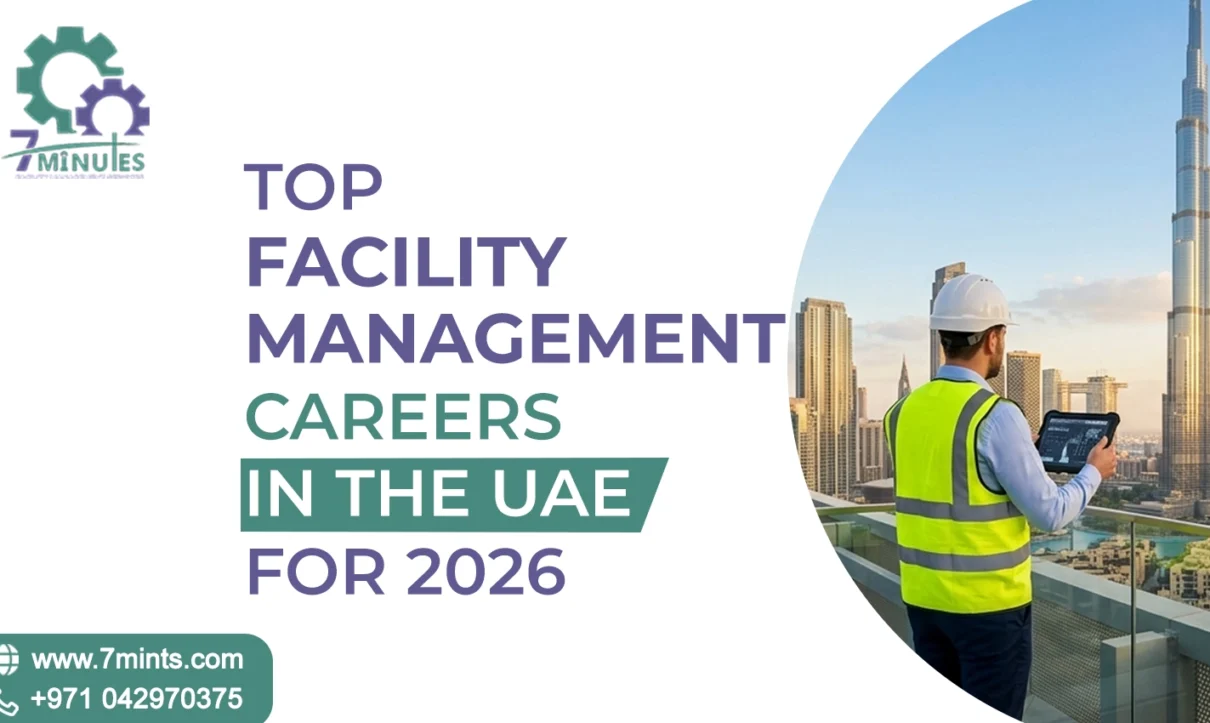
The UAE facility management industry is expected to see real growth in 2026, mostly because the country keeps pouring investment into infrastructure, commercial real estate, smart cities, and more sustainable developments. At the same time, businesses are paying more attention to keeping workplaces running in a smooth, productive way, so there’s a clear demand for qualified facility management people. And as fresh residential, commercial, and industrial projects keep popping up across the UAE, the need for specialized facility management services just keeps widening. So yes, for people who want to enter the field, or even move up faster, this period should offer a wide selection of career paths.
Modern facility management isn’t only about building maintenance and cleaning anymore; it has moved beyond that in a way. Today, it also includes smart building management systems, Internet of Things (IoT) devices, predictive maintenance approaches, and CAFM software platforms. These tools allow organizations to boost day-to-day operational efficiency, cut down costs, and make the work environment feel better for people who use them. Because of that, many employers are actively looking for professionals who can handle both the traditional facility operations and the newer digital systems at the same time.
In this article, we’re going to look at the top facility management careers in the UAE for 2026, what skills you’ll actually need for each role, and what future options might open up in an industry that’s changing so fast. Whether you’re coming straight from college, you’re an experienced technician already, or you’re aiming for career advancement, it helps to map these career paths. That way, you can make clearer decisions. The facility management sector in the UAE does not just stay open; it keeps expanding—growth, specialization, and professional development are all there if you match the right requirements.
Why Facility Management Careers Are Growing in the UAE
1. Expansion of Smart Buildings
The UAE is moving quickly toward being a global leader in smart city plans, and a lot of new projects now include advanced building tools and automated systems. These smart buildings use linked solutions for lighting, security, HVAC systems, and energy monitoring. So, as more organizations adopt the technology, the need for facility management professionals who actually understand smart building operations keeps going up. Most companies want people who can make sure these systems run smoothly and still reach strong performance targets.
Smart building management, basically, helps organizations raise energy efficiency, cut operational expenses, and keep occupant comfort on track. In recent years, facility managers have been given more responsibility for supervising building automation systems and tracking performance using digital dashboards.
2. Increased Focus on Sustainability
Sustainability has become a major priority for businesses, developers, and government organizations across the UAE. Lots of companies are trying to cut down their environmental footprint while also boosting operational efficiency and hitting their sustainability targets. In this whole setup, facility management professionals basically do a lot of the heavy lifting, especially when it comes to putting green building practices into action, lowering energy usage, and running waste reduction initiatives. Because of that, sustainability know-how has gained way more weight inside the industry, more than before.
The UAE government’s commitment to sustainable development has also pushed organizations to put money into environmentally responsible facility management strategies. People who really understand energy management systems, renewable energy solutions, and environmental compliance expectations are in strong demand. Their know-how helps companies meet sustainability goals but still keeps operations running smoothly and efficiently.
3. Growing Adoption of CAFM Software
Computer-Aided Facility Management (CAFM software) has started to become a sort of an essential tool for how modern facility management actually runs. When you digitize facility management routines, businesses often see improvements in efficiency, less manual workload, and smoother operational choices. And because people now depend on CAFM software more and more, it’s creating a noticeable demand for professionals who have solid digital management know-how.
CAFM software basically lets facility managers pull up current, real-time insights on building conditions and what maintenance is needed. It also helps support predictive maintenance ideas so companies can avoid expensive equipment breakdowns and the downtime that comes with them. Since more firms are joining digital transformation efforts, the specialists who can set up and run CAFM systems tend to stay in high demand. In the UAE, understanding these platforms is turning into a key requirement for many facility management jobs.
What is Facility Manager
A facility manager is the person tasked with overseeing the full set of building operations and maintenance needs. Their work includes managing maintenance schedules, coordinating service providers, making sure rules and regulations are followed, and keeping safe working conditions. Facility managers are, in a way, crucial for making sure buildings run efficiently and still align with the organization’s goals. They also act as that central coordination point for lots of different facility-related efforts.
The responsibilities of facility managers have grown a lot, mainly because smart building technologies and digital management systems have become more common. Today’s facility managers need to juggle operational efficiency, cost control, and sustainability.
The responsibilities of facility managers have grown a lot, mostly because smart building technologies and digital management systems have been adopted everywhere. These days, modern facility managers have to juggle operational efficiency and cost control, plus sustainability targets, and—somehow—tenant satisfaction too. That means the job is both difficult and, honestly, very rewarding for people who are aiming at leadership roles.
Key Skills Required for Facility Manager
For a facility manager to succeed, they need solid leadership and communication skills, since they coordinate with maintenance teams, contractors, vendors, and all kinds of internal stakeholders. When communication is clear, facility operations usually run more smoothly, and problems get handled promptly. Leadership matters just as much because facility managers often oversee multiple teams and manage projects that get pretty complicated. Their ability to make decisions based on real information affects day-to-day operations in a direct way.
On top of that, technical knowledge is now a must-have for facility managers in 2026. Employers increasingly look for candidates who actually understand CAFM software, smart building management systems, predictive maintenance strategies, and sustainable practices. Understanding asset management and regulatory compliance also boosts career opportunities a lot. So, professionals who mix technical know-how with good management discipline tend to be in a strong spot for long-term progress, especially within the UAE facility management industry.
CAFM Software Specialist
A CAFM software specialist basically handles and fine-tunes computer-aided facility management systems that organizations use so their facilities run more smoothly and, honestly, more organized. Most of the time, they collaborate with facility managers, maintenance teams, and the IT departments to boost the overall workflow speed and operational performance. And yeah, as digital transformation moves through the UAE, the CAFM specialist’s role is getting more and more important, quickly.
In modern organizations, they produce a lot of facility-related data, like maintenance schedules, asset records, occupancy details, and energy usage statistics. CAFM software specialists help turn that data into practical insights so leadership can make better decisions. They do it by automating the usual tasks and by improving how easily information can be found and used.
Key Skills Required for CAFM Software Specialist
For this role, people need solid technical know-how for CAFM software platforms and also facility management technologies. On top of that, they need the ability to sort out technical challenges and provide practical user support. In many cases, employers tend to prefer candidates who can manage software upgrades and keep day-to-day system operations running without drama.
Analytical reasoning and problem-solving ability matter just as much for CAFM Software Specialists. These experts regularly review performance metrics and catch opportunities for operational refinement. If someone already has familiarity with predictive maintenance, asset lifecycle management, and workplace management solutions, it can strengthen their profile in a real-world way. Because organizations keep shifting toward digital facility management approaches, the demand for these specialized capabilities will keep increasing.
Sustainability Manager
A sustainability manager tends to focus on shaping and rolling out environmental plans that actually push resource efficiency up while also lowering the operational impact. Typical work includes bringing down energy consumption, handling waste initiatives with coordination, and encouraging more environmentally mindful behaviors. In the UAE, sustainability managers are now acting as significant contributors to overall organizational success.
Key Skills Required for Sustainability Manager
Successful sustainability managers need a solid command of environmental rules, sustainability frameworks, and green building certifications. Knowing benchmarks like LEED, plus other green building programs, really boosts professional reputation. Also, they have to keep up with new sustainability movements and fresh technological innovations. Their capability to use industry best practices in real projects directly shapes organizational results, outcomes, and decisions.
Project management and analytical skills are equally important for the job. Sustainability efforts commonly include several stakeholders, and that means there’s a lot of careful scheduling and coordination involved. Managers must inspect information, track progress, and report performance gains in a clear way to leadership groups.
Smart Building Manager
The growing adoption of smart building technologies has pushed strong demand for smart building managers across the UAE. These specialists oversee advanced systems that steer lighting, HVAC operations, security infrastructure, and energy management platforms. They aim to ensure building services run efficiently while also improving occupant comfort and productivity. Smart building managers are kind of the hub of modern facility management operations.
Smart buildings produce huge amounts of operational information from sensors, automation setups, and connected devices. A person in this role will review this stream to spot patterns, enhance performance, and resolve risks before they turn into bigger problems.
Key Skills Required for Smart Building Manager
People working in this area typically need deep knowledge in building automation systems, IoT technologies, and smart infrastructure platforms, not just theory. Being able to understand how different building subsystems talk to each other is sort of the core part, because that’s what keeps the operational flow smooth. Employers generally look for someone who can run these technologies securely and in a practical, everyday way.
Smart building managers tend to bring strong analytical skills and real troubleshooting talent, and honestly, that combination is a big deal. They have to read system data, catch those performance hiccups early, then propose sensible fixes, not just guess. And if they also understand predictive maintenance tools plus energy management systems, it can really upgrade career prospects.
Maintenance Manager
Maintenance managers make sure that building assets, and basically all equipment, stay working properly and reliably. They are in charge of planning maintenance tasks, leading technical teams, and coordinating repair efforts. Honestly, this role is still one of the most essential positions inside facility management organizations.
More recently, predictive maintenance technology has shifted how maintenance work gets managed. Instead of waiting for equipment to fail first, organizations can now use sensors together with analytics tools to catch likely problems earlier. Maintenance managers oversee these programs and confirm that maintenance resources get sent to the right places on time.
Key Skills Required for Maintenance Manager
Technical expertise is basically a fundamental requirement for maintenance managers. They have to grasp mechanical systems, electrical, plumbing, and overall building systems so they can make decisions that actually make sense. Also, understanding asset management principles and maintenance planning strategies is equally important. Together, these skills support steady facility performance while keeping operational costs under control, more or less.
Leadership and team management abilities are another big part of success. Maintenance managers often supervise big teams, and they coordinate activities across more than one location. Employers tend to favor people who can mix technical knowledge with strong leadership, because that blend usually saves time and avoids confusion.
Future Outlook for Facility Management Careers in the UAE
The future of facility management careers in the UAE seems pretty exceptional, honestly, because the country keeps pouring money into infrastructure, smart cities, and sustainable development projects. More and more organizations are starting to realize how much professional facility management matters, not only for operational efficiency but also for how people actually experience buildings day to day. As that awareness grows, more employment opportunities show up in different specializations and departments. People who already have modern technical skills, or can pick them up fast, are probably going to do best.
Facility management professionals will need to keep moving, like through ongoing learning, because if they don’t update their technical knowledge and digital abilities, they’ll fall behind. That means there will be higher demand for specialists who can handle technological environments that are more complex than before, you know, the ones.
Also, sustainability is not going anywhere. It’s going to stay a big driver, since businesses face more pressure to improve environmental outcomes and reduce how many resources they consume. Facility management professionals who truly understand energy efficiency, sustainability reporting, and green building operations will likely have the strongest career prospects. These capabilities are turning into core parts of modern facility management strategies, rather than optional extras.
Conclusion
Facility management has really been turning into a more fast-paced, technology-driven field, and it is now creating wide career paths across the UAE. You can see this in the roles that are being talked about a lot, like CAFM Software Specialist, Sustainability Manager, Smart Building Manager, Maintenance Manager, Energy Manager, and HSE Manager. By 2026, these positions are expected to get a noticeable boost in demand, not just a little. Overall, they tend to open doors for career advancement, deeper specialization, and long-term stability in a sector that keeps expanding.
On top of that, the region is actively adopting smart building technologies, sustainability efforts, predictive maintenance solutions, and CAFM software platforms, and this is reshaping facility management in a very direct way. Contact Us as many organizations are now searching for people who can bring together technical know-how, good leadership, and analytical thinking. The individuals who focus on strengthening those skills will probably be more ready to compete and succeed in the job market.
So, for anyone aspiring to work in facility management, honestly, this is a good time to start building the right competencies and to look into career options within the UAE. The industry keeps growing, while technology keeps advancing, and sustainability remains a key priority, which builds a solid base for what comes next. If professionals stay current with the latest trends and keep developing targeted expertise, they can shape a rewarding career in one of the UAE’s quickest-growing sectors.

1 Comment
Comments are closed.